
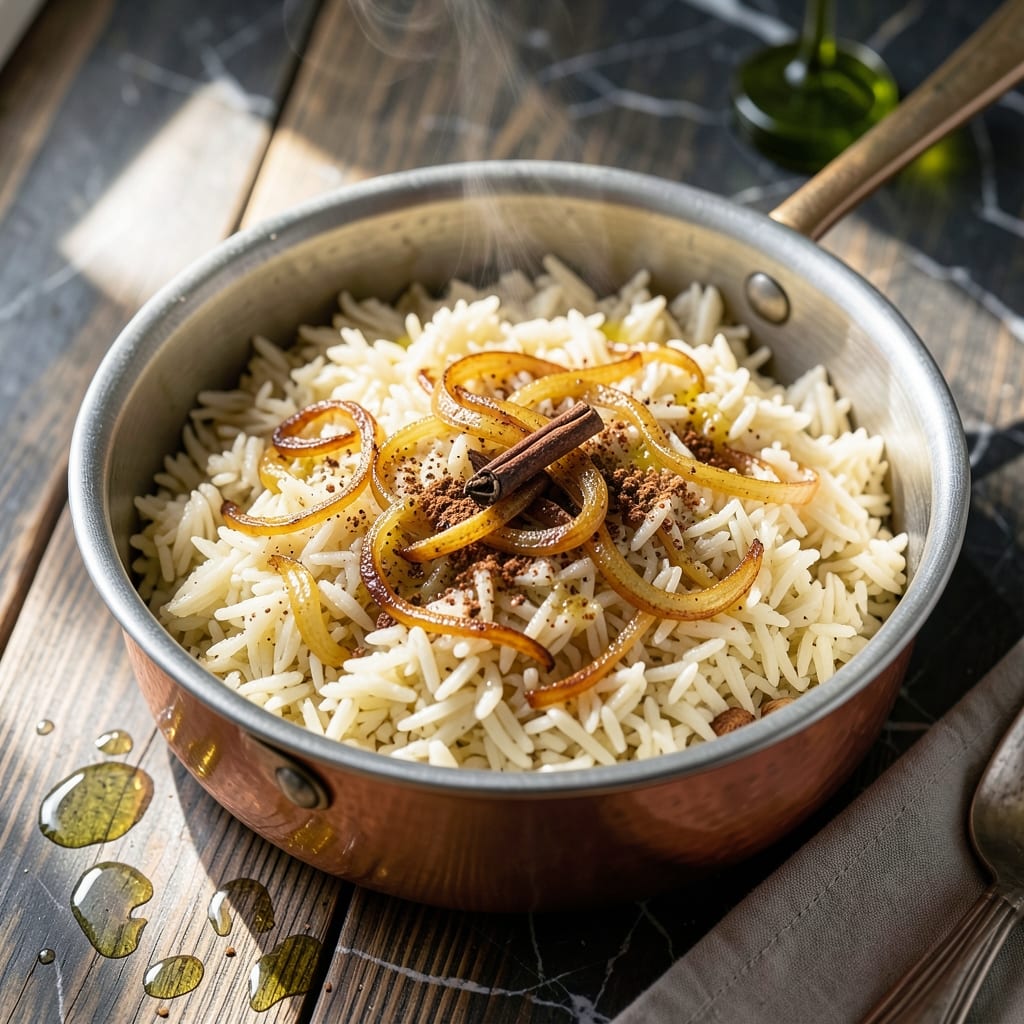
This fragrant Middle Eastern pilaf transforms simple ingredients into a dish with rich cultural roots. Caramelized onions and aromatic spices create layers of flavor that define traditional Bismillah rice.
With precise cooking times and temperatures, you’ll achieve perfectly fluffy grains every time. The technique ensures the rice absorbs all the spices while maintaining its distinct texture.
Ingredients for Bismillah Rice
Aromatic spices, caramelized onions, and fluffy basmati rice create this traditional Middle Eastern pilaf with rich cultural depth.
| Ingredient | Amount | Notes |
|---|---|---|
| Basmati Rice 🍚 | 2 cups | Rinsed until water runs clear |
| Yellow Onions 🧅 | 3 whole | Thinly sliced for caramelizing |
| Ghee 🧈 | ½ cup | Clarified butter for richness |
| Ground Cinnamon 🌿 | ½ tsp | Freshly ground preferred |
| Ground Cumin 🌿 | 1 tsp | Toasted for deeper aroma |
| Ground Cardamom 🌿 | ½ tsp | Essential for authentic flavor |
| Ground Cloves 🌿 | ¼ tsp | Use sparingly for warmth |
| Ground Allspice 🌿 | ¼ tsp | Balances the spice blend |
| Bay Leaves 🍃 | 2 whole | Removed before serving |
| Chicken Stock 🍲 | 3 ½ cups | Low-sodium preferred |
| Salt 🧂 | 1 ½ tsp | Adjust to taste at end |
| Black Pepper 🌶️ | ½ tsp | Freshly ground preferred |
| Slivered Almonds 🥜 | ⅓ cup | Toasted for garnish |
| Raisins 🍇 | ⅓ cup | Optional for sweet contrast |
The rice is non-negotiable—basmati delivers the right texture and fragrance. Indian or Pakistani grocery stores often carry high-quality options at better prices than mainstream supermarkets. For the ghee, Patel Brothers or any South Asian market will have authentic clarified butter. The whole spices can be ground fresh with a mortar and pestle, but pre-ground from Penzeys works in a pinch.
No ghee? Clarified butter or neutral oil will do, though the flavor won’t be as rich. Skip the raisins if you prefer savory over sweet—dried apricots chopped fine make a good alternative. For a vegetarian version, vegetable stock replaces chicken stock seamlessly. The almonds can be swapped for pistachios or cashews (toast them first).
Store spices in airtight containers away from light for 6-12 months. Cooked rice keeps 3-4 days refrigerated but tastes best fresh. The caramelized onions can be made ahead and reheated gently—they’ll keep for 1 week in the fridge.
Why You’ll Love This Recipe
- One Pot Wonder: I just dump everything in and let the basmati soak up the ghee and spices—no fancy steps.
- Warm Spice Magic: The cinnamon and cumin toasted in ghee with onions? Honestly, it smells like a hug in a pot.
- Feeds the Crowd: I make a big batch for family dinners and it disappears faster than I can serve it.
- Budget Stretch: Basmati rice and a few pantry spices feed my family for days without breaking the bank.
Step-by-Step Instructions for Fragrant Middle Eastern Pilaf
Master this technique for perfectly textured rice with layers of aromatic depth and sweetness.
Step 1: Caramelize Onions and Toast Spices
Heat 0.5 cup Ghee in a heavy-bottomed pot over medium-low heat. Add all 3 whole Yellow Onions, thinly sliced, and cook for 20-25 minutes, stirring occasionally, until deep golden brown and sweetly fragrant. This slow caramelization builds the foundation of flavor.
Once onions are deeply colored, add 0.5 tsp Ground Cinnamon, 1 tsp Ground Cumin, 0.5 tsp Ground Cardamom, 0.25 tsp Ground Cloves, and 0.25 tsp Ground Allspice. Toast for 30 seconds until aromatic. Immediately add 2 cups Basmati Rice and stir to coat every grain in the spiced ghee.
Step 2: Toast Rice and Add Liquids
Continue toasting the rice with the onions and spices for 2 minutes, stirring constantly. The grains should turn slightly translucent at the edges and release a nutty aroma. Watch carefully—this step enhances the rice’s natural flavor but can burn if left unattended.
Add 3.5 cups Chicken Stock, 2 whole Bay Leaves, 1.5 tsp Salt, and 0.5 tsp Black Pepper. Stir once to distribute the spices evenly, then resist the urge to stir again. The liquid should come to a gentle simmer—this prevents the rice from breaking.
Step 3: Cook Rice to Perfection
Once simmering, reduce heat to low, cover tightly with a lid, and cook for 15 minutes. The steam should be visible but gentle. After this time, turn off the heat and let the rice sit, covered, for an additional 10 minutes—this final rest allows the grains to absorb any remaining liquid.
Do not peek or stir during cooking. The rice is done when all liquid is absorbed and the grains are tender with a slight bite. Remove and discard the bay leaves before proceeding.
Step 4: Prepare Garnishes and Serve
While the rice rests, toast 0.33 cup Slivered Almonds in a dry skillet over medium heat for 2-3 minutes until golden brown and fragrant. Transfer to a plate to cool. If using, plump 0.33 cup Raisins by soaking in warm water for 5 minutes, then drain.
Fluff the rice gently with a fork to separate the grains. Transfer to a serving platter and top with toasted almonds and raisins. The contrast of sweet, nutty elements against the fragrant spiced rice creates the signature balance of this dish.
Pro Tips For Making Bismillah Rice
- Soak the Rice: Rinse and soak the basmati rice for at least 30 minutes before cooking—this keeps the grains long and separate, and I learned this the hard way after ending up with mushy rice more than once.
- Caramelize the Onions: Cook the yellow onions in ghee over medium-low heat until deep golden brown, about 15-20 minutes; rushing this step leaves them undercooked and harsh.
- Toast the Spices: Add the ground cinnamon and cumin to the hot ghee for 20-30 seconds before adding rice—this wakes up their flavors, and skipping it makes the dish taste flat.
- Use Enough Ghee: Don’t skimp on the ghee—about 3 tablespoons for 1 cup of rice guarantees rich, fragrant grains that don’t stick together.
Regional Styles of These Flavors
Levantine Tradition
In the Levant, this dish often includes vermicelli noodles toasted in the ghee before adding rice. The noodles add a subtle crunch and golden color. I add ½ cup broken vermicelli with the spices for this authentic touch. 🌟
Gulf States Approach
In the Gulf, they favor a sweeter profile with dates and rose water. Replace raisins with ¼ cup chopped dates and add 1 tsp rose water to the stock. The floral aroma pairs beautifully with the warm spices.
North African Version
Moroccan cooks add ½ tsp ground coriander and ¼ tsp saffron threads soaked in 2 tbsp warm water. The saffron gives the rice a stunning golden hue and luxurious flavor.
Turkish Style
In Turkey, they often use butter instead of ghee and add ½ cup currants with the almonds. The currants are smaller and more tart than raisins, creating a nice contrast.
I also add 1 tsp dried mint at the end for a fresh finish. 💫
Indian Influence
Indian versions incorporate 1 tsp garam masala with the other spices. Some also add ½ cup frozen peas with the stock for extra color and texture. This reflects the dish’s journey along ancient spice routes.
Nutrition Facts
Frequently Asked Questions
Can I substitute regular butter for ghee?
Yes, but clarified butter works best. Regular butter can burn at high temperatures. Use unsalted butter and clarify it first by melting and skimming off the milk solids.
Why is basmati rice required here?
Basmati’s long grains stay separate and absorb spices well. Its natural fragrance complements the dish’s aromatic profile. Other rice types may turn mushy or lack flavor.
How do I fix undercooked rice?
Add ¼ cup hot stock, cover, and cook on low heat for 5-10 minutes. Let it rest off heat for 5 minutes to finish steaming. Avoid stirring to keep grains intact.
Can I make this ahead of time?
Cooked rice keeps 3-4 days refrigerated. Reheat gently with a splash of water to restore moisture. Caramelized onions can be made 1 week ahead.

- Jollof Rice Sauce Recipe: West African Tomato and Spice Infusion - September 25, 2026
- Japanese Rice Soup Recipe: Umami-Rich Comfort in a Bowl - September 25, 2026
- Homemade Cream Of Rice Recipe: Silk-Smooth Breakfast in Minutes - September 25, 2026