
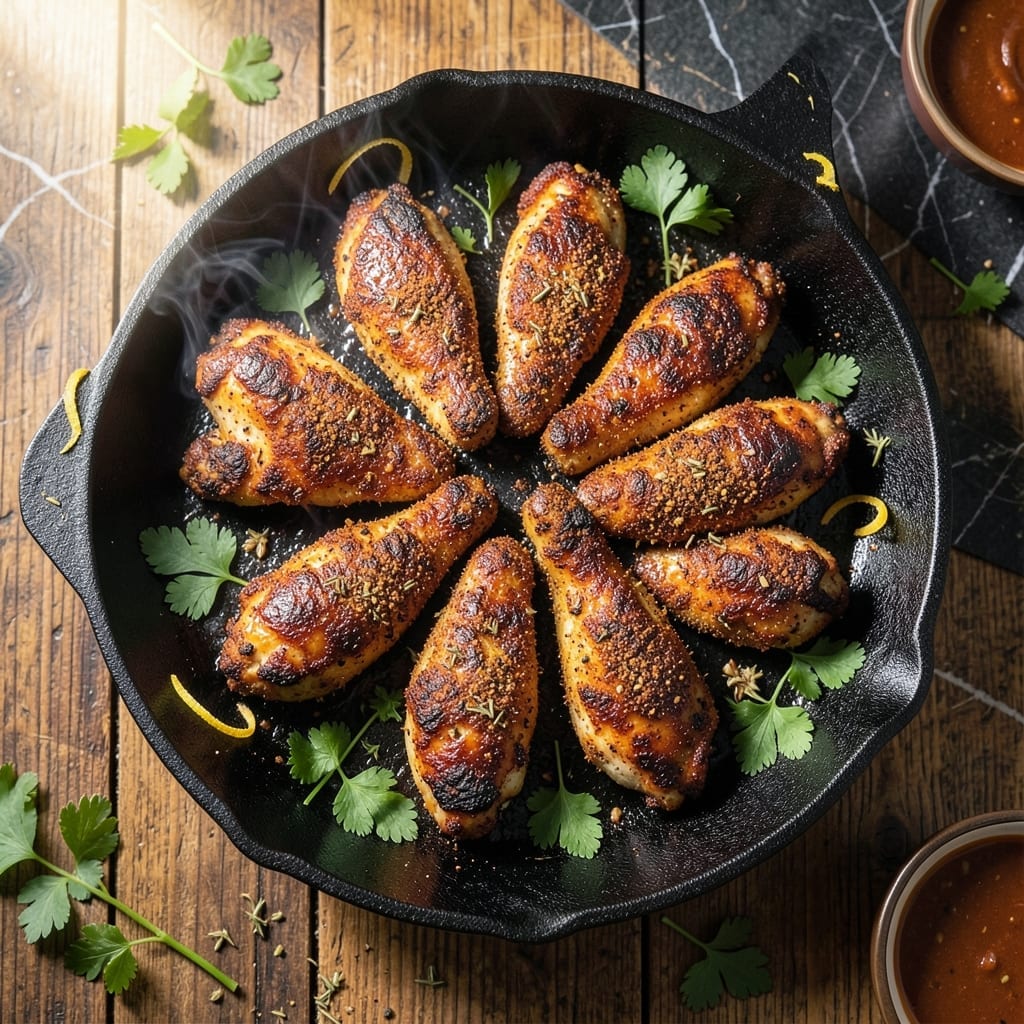
This blackened chicken tenders recipe delivers bold flavor with a spice crust that creates a deeply seasoned exterior. The technique ensures tender meat inside while developing a dark, flavorful crust outside.
I perfected this method after testing various spice blends and cooking times to achieve restaurant-quality results at home. The key is using a hot cast iron skillet and not overcrowding the pan.
You’ll get juicy, flavorful chicken with a spicy kick that pairs perfectly with cooling dips or fresh salads. The contrast between the crispy crust and tender interior makes every bite satisfying.
Serve these as an appetizer, main course, or add to sandwiches for extra texture. The spice blend can be adjusted to suit any heat preference.
Ingredients for Blackened Chicken Tenders
Bold spices meet tender chicken for restaurant-quality results at home with these simple ingredients.
| Ingredient | Amount | Notes |
|---|---|---|
| Chicken Tenders 🍗 | 1 ½ lb | Boneless, skinless, uniform thickness |
| Paprika 🌶️ | 2 tbsp | Sweet or smoked variety |
| Garlic Powder 🧄 | 1 tbsp | Freshly ground preferred |
| Onion Powder 🧅 | 1 tbsp | Fine grain for even coating |
| Dried Thyme 🍃 | 1 tsp | Rubbed between fingers to release oils |
| Dried Oregano 🌿 | 1 tsp | Mediterranean variety preferred |
| Cayenne Pepper 🔥 | ½ tsp | Adjust for heat preference |
| Black Pepper 🌶️ | 1 tsp | Freshly ground for boldness |
| Kosher Salt 🧂 | 1 tsp | Diamond Crystal preferred |
| Unsalted Butter 🧈 | 4 tbsp | Melted for spice crust adhesion |
| Olive Oil 🫒 | 2 tbsp | High smoke point for searing |
| Cajun Seasoning 🌶️ | 1 tsp | Optional for extra heat |
The chicken tenders must be uniform in thickness to ensure even cooking—pound thicker pieces to about 1/2 inch. For the spice blend, freshly ground black pepper and kosher salt make a noticeable difference in depth of flavor. Source your spices from Penzeys or a bulk section with high turnover to guarantee potency. A hot cast iron skillet is non-negotiable for achieving that signature dark, flavorful crust.
No cayenne? Crushed red pepper flakes at half the amount work in a pinch. Out of paprika? Smoked paprika adds depth, but sweet is fine too. The butter is essential for helping the spice crust adhere—do not substitute oil for this step. For a milder version, reduce cayenne to 1/4 tsp or omit entirely. The thyme and oregano can be substituted with fresh at a 1:1 ratio.
The spice blend can be pre-mixed and stored in an airtight container for up to 3 months. Cooked tenders keep well in the fridge for 3-4 days—reheat in a skillet to revive the crust. For best results, serve immediately after cooking while the crust is still crisp.
Why You’ll Love This Recipe
- 20-Minute Meal: I can get these from spice rub to plate faster than it takes to order takeout.
- Smoky & Spicy: That paprika and garlic powder combo gives it a bold kick without being overwhelming.
- Meal Prep Hero: I make a big batch on Sunday and they reheat beautifully for lunches all week.
- Budget Stretcher: Chicken tenders are affordable, and a little spice mix goes a long way to make them taste gourmet.
Step-by-Step Instructions for Blackened Chicken Tenders
Master the technique that delivers tender chicken with a boldly spiced, crispy crust.
Step 1: Prepare the Spice Blend
In a shallow bowl, combine the 2 tbsp Paprika, 1 tbsp Garlic Powder, 1 tbsp Onion Powder, 1 tsp Dried Thyme, 1 tsp Dried Oregano, 0.5 tsp Cayenne Pepper, 1 tsp Black Pepper, 1 tsp Kosher Salt, and 1 tsp Cajun Seasoning.
Rub the dried herbs between your fingers to release their essential oils, which enhances the flavor profile. This blend should be evenly mixed and aromatic, ready to create that signature blackened crust. The spices should coat the chicken tenders thoroughly for maximum impact.
Step 2: Coat and Rest the Chicken
Pat the 1.5 lb Chicken Tenders completely dry with paper towels. Moisture prevents the spice blend from adhering properly. Dredge each tender in the spice mixture, pressing gently to ensure full coverage on all sides.
Place the coated tenders on a wire rack set over a baking sheet. This allows air to circulate and helps the crust set. Let them rest at room temperature for 10-15 minutes before cooking. This resting period helps the spices adhere and the chicken cook more evenly.
Step 3: Sear in a Ripping-Hot Pan
Heat a heavy skillet (cast iron works best) over medium-high heat until it’s smoking hot. Add the 2 tbsp Olive Oil and swirl to coat the pan. The oil should shimmer but not smoke excessively—this is the ideal temperature for blackening.
Working in batches to avoid crowding the pan, add the chicken tenders and sear for 3-4 minutes per side. The tenders should form a dark, almost charred crust without burning. Resist the urge to move them—let the crust develop fully before flipping.
Step 4: Finish with Butter for Depth
In the final 1 minute of cooking, add the 4 tbsp Unsalted Butter to the pan. Tilt the skillet slightly to pool the butter, then baste the chicken tenders with the foaming butter using a spoon. This step adds richness and helps mellow the heat from the spices.
Transfer the tenders to a plate and let them rest for 5 minutes before serving. The internal temperature should read 165°F if checked with a thermometer. The resting period allows the juices to redistribute, ensuring the chicken remains juicy and tender.
Pro Tips For Making Blackened Chicken Tenders
- Heat the Pan First: I learned this the hard way—your cast iron needs to be screaming hot (medium-high to high) before the tenders hit the pan, or you’ll get steamed chicken instead of that signature blackened crust.
- Pat Dry Thoroughly: After burning three batches, I finally figured out that even a little moisture on the tenders turns the spice mix into a paste and ruins the sear. Press them between paper towels for 30 seconds.
- Don’t Overcrowd: Skip the urge to cook all at once; give each tender at least an inch of space or the pan temp drops and you’ll end up with sad, gray meat instead of crispy edges.
- Double Coat Spices: Sounds weird, but it works: dust the tenders with spice mix, press it in, then do it again right before cooking—this guarantees that bold, even blackened flavor in every bite.
Regional Styles of This blackened chicken tenders
New Orleans Style
This is the classic version that started it all. I use 2 tbsp Tony Chachere’s Creole Seasoning in place of the spice blend for authentic Louisiana flavor. The key is cooking in a cast iron skillet until the crust is nearly black—don’t be afraid of the dark color. 🔥
Texas Heat
For a Lone Star twist, I add 1 tsp chipotle powder and ½ tsp cumin to the spice mix. The smoky heat pairs perfectly with the buttery finish. I learned this version from a pitmaster in Austin who swears by it.
Florida Citrus
Brighten up the dish with zest of 1 orange and 1 tsp dried citrus peel in your spice blend. The acidity cuts through the richness. I love serving these with a honey-mustard dip to complement the citrus notes.
Caribbean Jerk
Swap in 1 tbsp jerk seasoning and ½ tsp allspice for island flair. The allspice adds warmth while the jerk provides a complex heat. I first tried this in Jamaica and it became an instant favorite.
Midwest Mild
For those who prefer less heat, I reduce the cayenne to ¼ tsp and add 1 tsp smoked paprika. The sweetness of the paprika balances the other spices. This version is great for kids or sensitive palates.
Pacific Rim
Add 1 tsp ginger powder and 1 tsp sesame seeds to the crust. The Asian-inspired twist works surprisingly well with the blackening technique. I serve these with a soy-ginger dipping sauce. ✨
Nutrition Facts
Frequently Asked Questions
What’s the best way to prevent the spice crust from burning?
Use medium-high heat and avoid overcrowding the pan. The oil should shimmer but not smoke excessively. Cook in batches if needed to maintain the right temperature.
Can I use chicken breasts instead of tenders?
Yes, but cut them into uniform 1/2-inch thick strips for even cooking. Pound thicker pieces to ensure consistent doneness. The cooking time remains about 3-4 minutes per side.
How do I make a milder version?
Reduce the cayenne to 1/4 tsp or omit it entirely. You can also replace it with 1/2 tsp smoked paprika for flavor without as much heat.
What’s the ideal internal temperature?
Use a meat thermometer to check for 165°F. This ensures the chicken is fully cooked but still juicy. Let it rest for 5 minutes before serving.

- Jollof Rice Sauce Recipe: West African Tomato and Spice Infusion - September 25, 2026
- Japanese Rice Soup Recipe: Umami-Rich Comfort in a Bowl - September 25, 2026
- Homemade Cream Of Rice Recipe: Silk-Smooth Breakfast in Minutes - September 25, 2026