
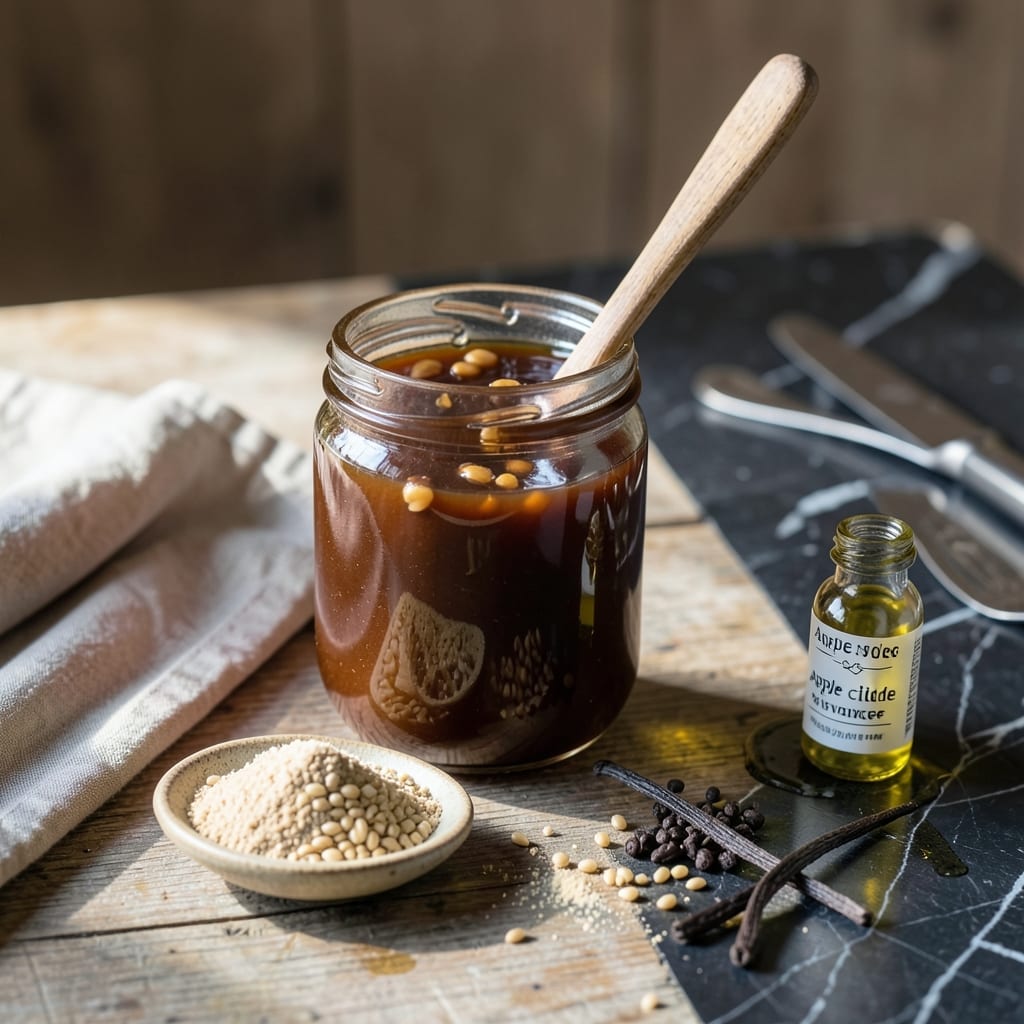
This natural sweetener offers a deeper, more complex flavor than refined sugar, with rich caramel notes that elevate any dish. I discovered its versatility while testing alternatives for a family dessert, and it quickly became a pantry staple.
The process involves slowly cooking brown rice with enzymes to break down the starches into simple sugars. The result is a thick, golden syrup that pours smoothly and blends seamlessly into recipes. It’s a foolproof way to add sweetness without overpowering other flavors.
Use it in beverages, baked goods, or as a topping for pancakes and waffles. Its mild, nutty undertones complement both sweet and savory dishes, making it a versatile addition to any kitchen.
Store it in an airtight container, and it will keep for months, ready to enhance your next creation.
Ingredients for Brown Rice Syrup
Six simple ingredients transform into this golden, caramel-like natural sweetener.
| Ingredient | Amount | Notes |
|---|---|---|
| Brown Rice 🌾 | 2 cups | Short or medium grain preferred |
| Water 💧 | 4 cups | Filtered for best results |
| Barley Malt Powder 🌾 | 2 tbsp | Natural enzyme source |
| Apple Cider Vinegar 🍏 | 1 tsp | Helps prevent crystallization |
| Vanilla Extract 🌿 | 1 tsp | Pure extract for flavor |
| Sea Salt 🧂 | ¼ tsp | Fine grain preferred |
The brown rice is key here—short or medium grain works best because they break down more easily into sugars. I grab mine in bulk from Whole Foods or Natural Grocers (cheaper than the tiny bags at regular stores). The barley malt powder acts as the enzyme catalyst; look for it in the baking aisle or near the health food section. It’s not expensive, and a little goes a long way.
No barley malt? Malted barley syrup can work in a pinch, but you’ll need to adjust the ratio (use about one-third the amount). If you’re avoiding gluten, brown rice syrup might seem ironic to make with barley, but most store-bought versions use enzymes derived from fungi or bacteria—this is the traditional method. The vinegar isn’t optional (don’t skip this part)—it balances the sweetness and keeps the syrup from crystallizing.
This keeps for 6-12 months in an airtight container at room temperature. The flavor deepens over time, almost like a mild caramel. If it thickens in storage, just warm the jar in a bowl of hot water to loosen it up.
Why You’ll Love This Recipe
- One Pot Magic: I just toss the brown rice, water, and barley malt powder in a pot and let it simmer—no fancy steps.
- Sweet Caramel Notes: The apple cider vinegar balances the syrup’s sweetness so it’s rich but not cloying.
- Pantry Staple: I use this in granola, dressings, even as a coffee sweetener. Honestly, it’s my new sugar substitute.
- Budget Friendly: Brown rice and a few extras make gallons for pennies. Between us, it’s cheaper than store-bought.
Step-by-Step Instructions for Brown Rice Syrup
This process transforms simple ingredients into a rich, caramel-like natural sweetener.
Step 1: Cook the Brown Rice Until Soft
Combine the 2 cups Brown Rice and 4 cups Water in a large pot. I prefer short or medium grain for this because it breaks down more easily. Bring to a boil over high heat, then reduce to low and cover.
Simmer for 45-50 minutes until the rice is extremely soft and most of the water is absorbed. You want the grains to be so tender they almost dissolve when pressed between your fingers. Stir occasionally to prevent sticking, especially toward the end when the mixture thickens.
Step 2: Blend with Barley Malt Powder
Transfer the cooked rice to a high-powered blender. Add the 2 tbsp Barley Malt Powder and blend until completely smooth. The barley malt contains natural enzymes that will help break down the rice starches into sugars.
This step is crucial—keep blending until there are absolutely no grainy bits left. I usually let it run for 2-3 minutes, scraping down the sides as needed. The mixture should look like a thick, creamy porridge at this point.
Step 3: Cook Down to Syrup Consistency
Pour the blended mixture into a large, heavy-bottomed pot. Add the 1 tsp Apple Cider Vinegar, 1 tsp Vanilla Extract, and 0.25 tsp Sea Salt. The vinegar helps prevent crystallization, while the vanilla adds depth to the flavor.
Cook over medium-low heat for 1-1.5 hours, stirring frequently, especially as it thickens. You’ll notice the color deepen to a rich amber as the natural sugars caramelize. The syrup is ready when it coats the back of a spoon and drizzles slowly.
Step 4: Strain and Cool
Pour the hot syrup through a fine-mesh strainer to remove any remaining solids. I find that pressing with a silicone spatula helps extract all the liquid. Let it cool to room temperature—it will thicken slightly as it cools.
Once cooled, transfer to a clean glass jar. The syrup should be thick but still pourable, with a consistency similar to honey. Store in the refrigerator where it will keep for up to 3 months.
Pro Tips For Making Brown Rice Syrup
- Simmer Low and Slow: Keep the heat at a gentle simmer for at least 3-4 hours—I learned this the hard way after burning my first batch trying to rush it. The rice needs time to break down completely.
- Rinse the Rice Well: Always rinse the brown rice until the water runs clear, or your syrup will have a bitter aftertaste. Sounds tedious, but it actually changes the outcome.
- Skip the Substitutes: Barley malt powder isn’t just for flavor; it’s crucial for the enzyme reaction that turns starches into sugar. Resist the urge to swap it with honey or maple syrup.
- Strain Through Cheesecloth: After cooking, strain the liquid through damp cheesecloth—not just a fine sieve—to remove every last grain. My grandmother swore by this, and she was right.
Wine and Beer Pairings for This brown rice syrup
Sweet Wine Pairings
I love pairing this syrup with Moscato d’Asti from Italy—its light bubbles and peach notes complement the caramelized depth. For a bolder option, try Sauternes from France, where honeyed apricot flavors harmonize beautifully. 🍷
Dessert Beer Matches
A Belgian Dubbel with dark fruit and caramel notes creates a perfect match. Portland Brewing’s MacTarnahan’s Amber Ale offers a malty sweetness that pairs wonderfully with the syrup’s rich undertones. Serve chilled for best results.
Cocktail Creations
Use 1 tbsp of syrup in a whiskey sour for a deeper flavor profile. It also works beautifully in a Brown Rice Old Fashioned—just swap simple syrup with this creation. The vanilla notes add complexity to bourbon or rye.
Non-Alcoholic Options
For a festive touch, stir 2 tbsp into sparkling cider for a kid-friendly treat. I also enjoy it in chai tea—add 1 tsp to your cup before pouring hot tea for a naturally sweetened beverage.
Cheese Pairings
Serve with aged Gouda or Pecorino Romano for a sweet-savory contrast. Drizzle over a cheese board with nuts and dried fruit for an elegant presentation. The nutty notes in the syrup echo beautifully in these cheeses.
Nutrition Facts
Frequently Asked Questions
Can I use white rice instead?
No, white rice lacks the enzymes needed for proper conversion. Brown rice contains the bran layer which is essential for breaking down starches into sugars during the process.
Why does the recipe include vinegar?
The apple cider vinegar prevents crystallization and balances sweetness. Just 1 tsp makes a big difference in texture and flavor without adding noticeable sourness.
How long does homemade syrup last?
Properly stored in an airtight container, it keeps for 6-12 months at room temperature. The flavor actually improves over time, developing deeper caramel notes.
Can I skip the blending step?
No, blending is crucial to break down the rice completely. Without this, you’ll end up with a grainy texture instead of a smooth, pourable syrup.

- Jollof Rice Sauce Recipe: West African Tomato and Spice Infusion - September 25, 2026
- Japanese Rice Soup Recipe: Umami-Rich Comfort in a Bowl - September 25, 2026
- Homemade Cream Of Rice Recipe: Silk-Smooth Breakfast in Minutes - September 25, 2026