
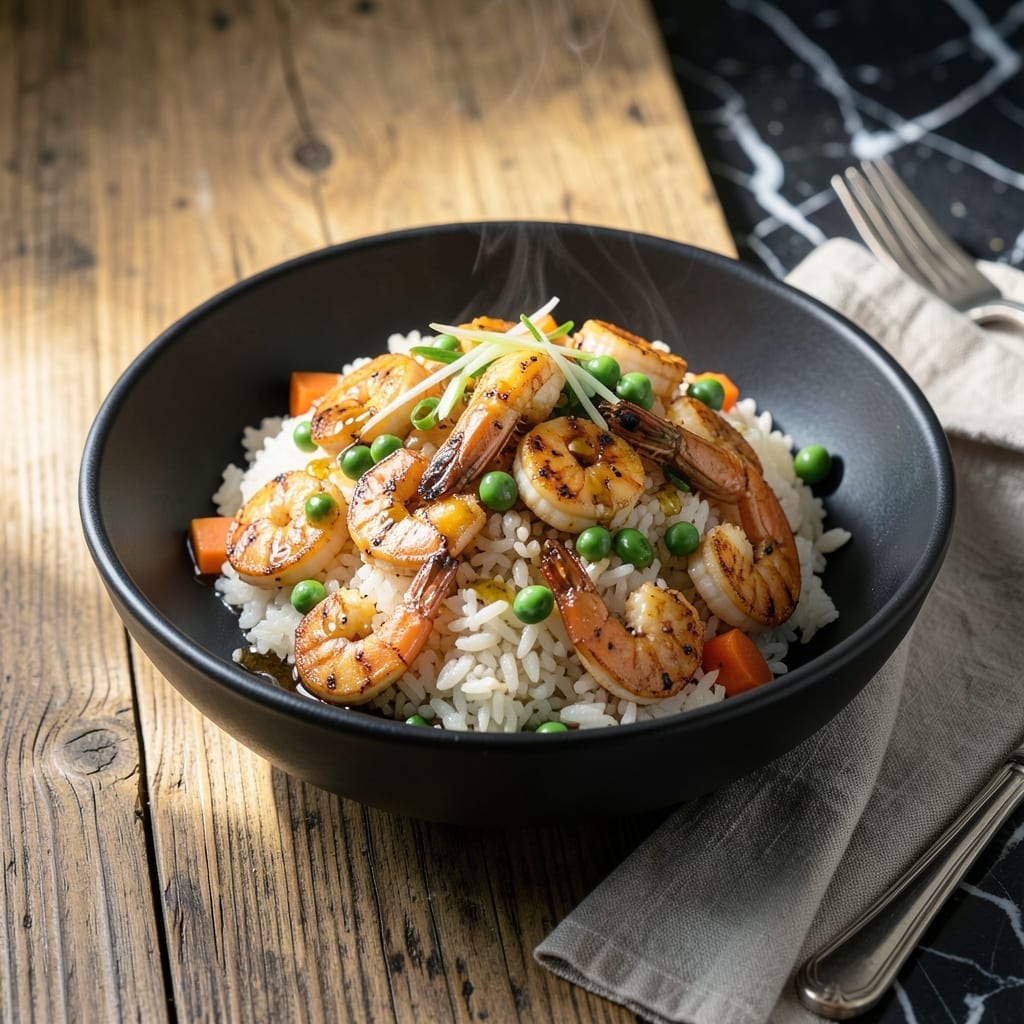
This Korean shrimp fried rice delivers bold, wok-charred flavor with minimal effort. The secret lies in high heat cooking that creates that signature smoky depth while keeping the shrimp perfectly tender.
Fresh vegetables add color and crunch, balancing the rich umami from soy sauce and sesame oil. The dish comes together in under 30 minutes, making it ideal for busy weeknights when you crave restaurant-quality results at home.
Each bite offers a perfect harmony of textures—shrimp that snaps when bitten, rice with just the right amount of crispness, and vegetables that retain their natural sweetness. The finish of green onions and sesame seeds adds the final touch.
Serve this as a main course or alongside your favorite Korean dishes for a complete meal that satisfies every time.
Ingredients for Korean Shrimp Fried Rice
Fresh shrimp, day-old rice, and bold Korean flavors come together quickly here.
| Ingredient | Amount | Notes |
|---|---|---|
| Medium Shrimp 🍤 | 1 ½ lb | Peeled, deveined, tails off |
| Cooked White Rice 🍚 | 4 cups | Day-old, chilled preferred |
| Soy Sauce 🫕 | 3 tbsp | Low-sodium or regular |
| Sesame Oil 🫒 | 1 tbsp | Toasted for best flavor |
| Carrots 🥕 | 2 whole | Peeled, diced small |
| Frozen Peas 🌱 | 1 cup | Thawed or straight from freezer |
| Green Onions 🧅 | 4 whole | Thinly sliced, whites and greens separated |
| Large Eggs 🥚 | 2 whole | Beaten for scrambling |
| Garlic Cloves 🧄 | 4 cloves | Minced or pressed |
| Vegetable Oil 🛢️ | 2 tbsp | High smoke point for wok |
| Gochujang 🌶️ | 1 tbsp | Korean red pepper paste |
| Sesame Seeds 🌰 | 1 tsp | Toasted for garnish |
| Salt 🧂 | ½ tsp | Adjust to taste |
| Black Pepper 🌶️ | ¼ tsp | Freshly ground |
The shrimp is key here—wild-caught from Whole Foods or Trader Joe’s if you can swing it, but any fresh or thawed frozen works (just pat them dry). Day-old rice is non-negotiable for that perfect texture, so plan ahead or use leftover takeout rice. The gochujang can be found at H Mart or any Asian market, or grab the Sempio brand at Amazon.
No gochujang? Sriracha plus a pinch of sugar gets you close. Frozen peas can be swapped for diced zucchini or bell peppers. Brown rice works at a 1:1 ratio if you’re avoiding white. The sesame oil isn’t optional—it’s what gives that authentic Korean flavor. If you’re out of fresh garlic, garlic powder at one-third the amount is fine.
Leftovers keep 3-4 days in the fridge and reheat beautifully. The flavors actually deepen overnight. Freeze portions for up to 2 months—perfect for those nights you crave takeout but want to stay in.
Why You’ll Love This Recipe
- One Pan Meal: I toss everything in my skillet and it’s done in 15 minutes flat.
- Umami Bomb: The soy sauce and sesame oil combo gives it that rich, savory depth I crave.
- Weeknight Hero: Between us, it’s my go-to for busy evenings when I need dinner fast.
- Stretch Your Dollar: I use leftover rice and a handful of shrimp to make a filling meal for four.
Step-by-Step Instructions for Korean Shrimp Fried Rice
Here’s the method that delivers perfect wok char and balanced flavors every time.
Step 1: Prep and Season the Shrimp
Pat the 1.5 lb Medium Shrimp dry with paper towels—this prevents steaming in the pan. Season them with 0.5 tsp Salt and 0.25 tsp Black Pepper, tossing gently to coat evenly. Set aside while you prep the rest of the ingredients.
I always keep the shrimp chilled until ready to cook to maintain firm texture. This seasoning step ensures every bite of shrimp carries flavor, not just the sauce.
Step 2: Scramble Eggs and Sauté Aromatics
Heat 1 tbsp Vegetable Oil in a wok or large skillet over high heat until shimmering. Pour in the 2 whole Large Eggs and scramble quickly with a spatula until just set but still slightly runny—about 30-45 seconds. Remove and set aside.
In the same pan, add the remaining 1 tbsp Vegetable Oil and sauté the minced 4 cloves Garlic Cloves and diced 2 whole Carrots for 2-3 minutes until the carrots start to soften. The garlic should be fragrant but not browned.
Step 3: Cook Shrimp and Vegetables
Add the seasoned shrimp to the pan in a single layer. Cook undisturbed for 1-2 minutes until the undersides turn pink and opaque. Flip and cook another 1 minute until just cooked through. Remove the shrimp and set aside with the eggs.
To the same pan, add the 1 cup Frozen Peas and the white parts of the 4 whole Green Onions. Stir-fry for 1-2 minutes until the peas are heated through and the onions are fragrant.
Step 4: Combine with Rice and Sauce
Add the 4 cups Cooked White Rice to the pan, breaking up any clumps with your spatula. Drizzle the 3 tbsp Soy Sauce, 1 tbsp Sesame Oil, and 1 tbsp Gochujang evenly over the rice. Stir-fry for 3-4 minutes until the rice is heated through and starts to develop a slight char.
Return the shrimp and scrambled eggs to the pan. Toss everything together for 1-2 minutes until fully combined and the rice has absorbed all the saucy goodness. The gochujang will give it a subtle spicy-sweet depth.
Step 5: Finish and Garnish
Taste and adjust seasoning if needed—remember the soy sauce is already salty. Stir in the green parts of the 4 whole Green Onions and transfer to serving bowls. Sprinkle with 1 tsp Sesame Seeds for that final touch of nuttiness.
Serve immediately while hot. You’ll love how the shrimp stays juicy, the rice gets that coveted wok-hei (breath of the wok) flavor, and every bite is packed with umami and a hint of spice from the gochujang.
Pro Tips For Making Korean Shrimp Fried Rice
- Use Day-Old Rice: Fresh rice turns to mush in the wok—I learned this the hard way after three sad, sticky batches. Day-old, cold rice from the fridge holds its shape and fries up with that perfect chewy texture. —
- Pat Shrimp Dry: Skip this and your shrimp will steam instead of sear. A quick pat with a paper towel guarantees that golden crust and locks in the flavor. —
- High Heat Only: Crank the burner to max and keep it there. After burning my first attempt on medium, I realized Korean fried rice needs that blazing heat to get the wok hei (that smoky breath of the wok) and prevent sogginess. —
- Sesame Oil Last: Add it at the very end, off the heat. I was skeptical until I tried it—tossing it in early makes the oil bitter, but finishing with it gives that bright, nutty aroma that defines the dish.
Make-Ahead Tips for This Dish
Prep Ahead Strategy
Cook your 4 cups rice the day before—this is non-negotiable for that perfect texture. Cold rice fries up crispier and absorbs sauces better. I always make extra rice for dinner the night before specifically for fried rice the next day. 💡
Shrimp Prep
Peel, devein, and pat dry your 1.5 lb shrimp up to 24 hours ahead. Store them in an airtight container with a paper towel to absorb moisture. Season just before cooking to prevent the salt from drawing out too much liquid.
Veggie Prep
Dice your 2 carrots and slice the 4 green onions the night before. Store them in separate containers to maintain freshness. The peas can stay frozen until cooking day—no thawing needed.
Sauce Mix
Combine your 3 tbsp soy sauce, 1 tbsp sesame oil, and 1 tbsp gochujang in a small bowl. This saves time during the high-heat cooking process. I use a glass measuring cup for easy pouring.
Egg Mixture
Beat your 2 eggs with a pinch of salt and pepper the morning of cooking. Keep them covered in the fridge until ready to use. This small step makes the scrambling process smoother and faster.
Storage Tips
Prepped ingredients keep well in the fridge for 1-2 days. For the rice, spread it on a baking sheet to cool quickly before refrigerating. This prevents clumping and ensures even cooling. ❄️
Nutrition Facts
Frequently Asked Questions
Can I use fresh rice instead of day-old?
Fresh rice will turn mushy when stir-fried. Day-old rice is drier and fries up with the perfect texture. Spread hot rice on a baking sheet to cool quickly if you’re in a pinch.
What’s the best substitute for gochujang?
Mix 1 tbsp sriracha with 1 tsp sugar for similar heat and sweetness. Alternatively, use 1 tbsp gochugaru (Korean chili flakes) plus 1 tsp honey.
How do I prevent the shrimp from getting rubbery?
Pat them completely dry before cooking and remove from the pan as soon as they turn opaque. Overcooking is the main culprit for tough shrimp.
Can I add other vegetables?
Try bell peppers, zucchini, or mushrooms. Cut them small and stir-fry before adding the rice to ensure even cooking.

- Jollof Rice Sauce Recipe: West African Tomato and Spice Infusion - September 25, 2026
- Japanese Rice Soup Recipe: Umami-Rich Comfort in a Bowl - September 25, 2026
- Homemade Cream Of Rice Recipe: Silk-Smooth Breakfast in Minutes - September 25, 2026