
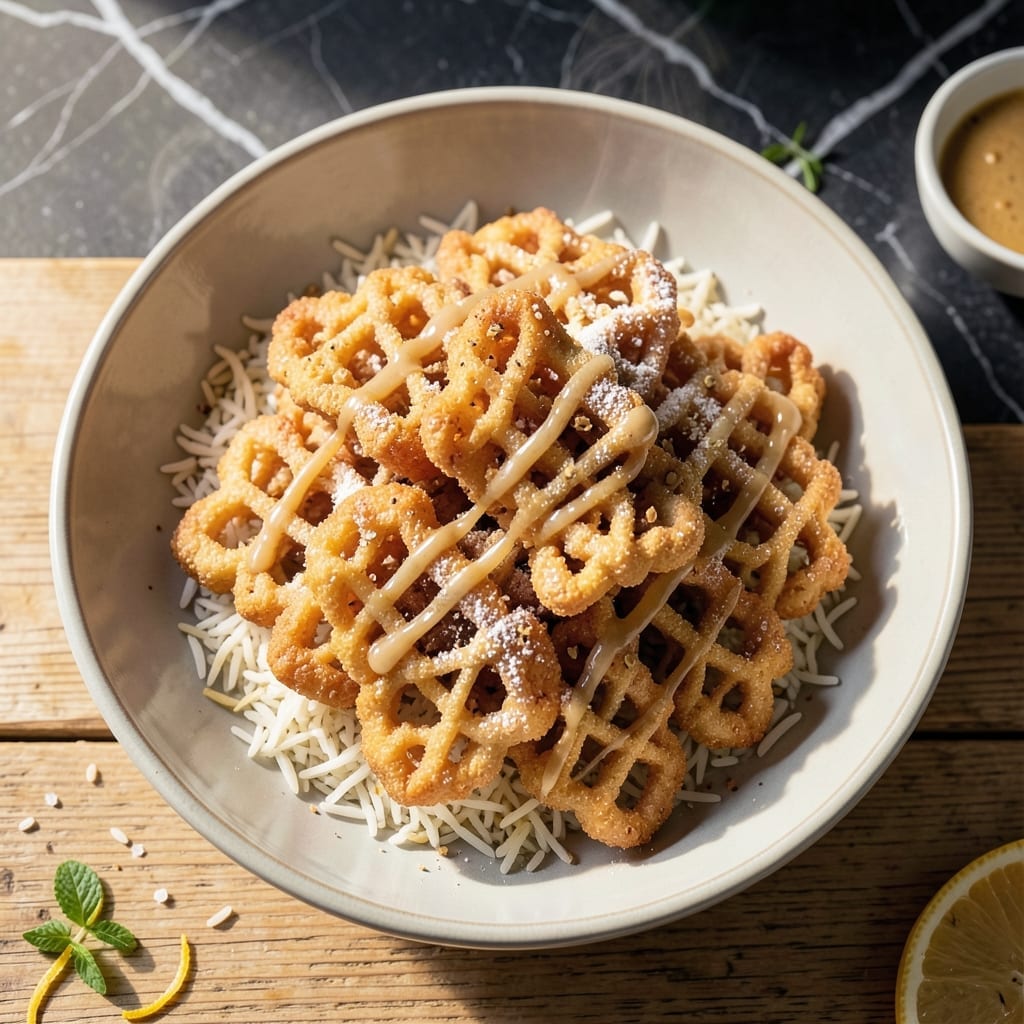
I spent years perfecting crispy textures in my home kitchen, and these golden rice puffs are the result.
This recipe transforms simple rice into airy, crispy bites with a delicate crunch. The technique requires precision but delivers consistent results every time.
The secret lies in proper drying and frying temperatures that create that signature lightness. Each bite offers a satisfying contrast of textures that’s hard to resist.
Serve as a snack or appetizer when you want something both elegant and approachable. The process is straightforward once you understand the fundamentals.
Ingredients for Rice Puff
Transform simple rice into crispy golden bites with these pantry staples and a few extras.
| Ingredient | Amount | Notes |
|---|---|---|
| Jasmine Rice 🍚 | 2 cups | Uncooked, long-grain preferred |
| Water 💧 | 4 cups | For cooking rice |
| Cornstarch 🌾 | ¼ cup | For crispy coating |
| Salt 🧂 | 1 tsp | Fine sea salt preferred |
| Neutral Oil 🫒 | 4 cups | For deep frying, high smoke point |
| Garlic Powder 🧄 | 1 tsp | Optional for seasoning |
| Onion Powder 🧅 | 1 tsp | Optional for seasoning |
| Smoked Paprika 🌶️ | ½ tsp | For depth of flavor |
| White Pepper 🌶️ | ¼ tsp | For subtle heat |
| Rice Vinegar 🍯 | 1 tbsp | For tangy finish |
| Green Onions 🧅 | ¼ cup | Thinly sliced for garnish |
| Sesame Seeds 🌿 | 1 tbsp | Toasted, for garnish |
The rice is everything here. Jasmine or long-grain white gives you that perfect airy texture—avoid sticky varieties like sushi rice. Bulk bins at Asian markets often have the freshest selection. If you’re buying pre-packaged, check the expiration date (old rice makes a difference). The cornstarch is your secret weapon for that ultra-crispy coating—Bob’s Red Mill is a reliable brand.
No jasmine rice? Basmatis works but needs an extra rinse to remove excess starch. Out of cornstarch? Arrowroot powder at the same amount is a great swap. For oil, peanut or avocado oil handles high heat best. Skip the garlic or onion powder if you want a neutral flavor. The vinegar adds brightness—apple cider vinegar works too if that’s what you’ve got.
Dried rice keeps indefinitely in a cool, dark place. Once cooked and puffed, these are best eaten fresh but can be reheated in a 400°F oven for about 5 minutes. The garnishes (green onions, sesame seeds) add freshness—store them separately until serving.
Why You’ll Love This Recipe
- Five Ingredient Magic: I love that it only needs jasmine rice, cornstarch, salt, water, and oil—nothing fancy, just pantry staples.
- Crispy Outside, Soft Inside: The cornstarch gives them that addictive crunch while keeping the center light and fluffy.
- Weeknight Hero: Honestly, these come together faster than takeout, and my kids devour them straight from the pan.
- Budget-Friendly Bites: A cup of rice makes a big batch, so it’s my go-to when I need to stretch a meal without stretching my wallet.
Step-by-Step Instructions for Crispy Rice Puffs
This method ensures that perfect balance of airy interior and shatteringly crispy exterior every time.
Step 1: Cook and Dry the Jasmine Rice
Combine the 2 cups jasmine rice with the 4 cups water in a medium saucepan. Bring to a boil, then reduce heat to low, cover, and simmer for 15 minutes until the water is fully absorbed and the rice is tender.
Spread the cooked rice on a rimmed baking sheet in an even layer. Refrigerate uncovered for at least 2 hours or up to overnight. This drying step is crucial—you want the grains to firm up and lose excess moisture so they’ll puff dramatically when fried rather than turn greasy.
Step 2: Season and Coat the Rice
In a large bowl, gently break up the chilled rice with your hands. Sprinkle over the 1 tsp salt, 1 tsp garlic powder, 1 tsp onion powder, 0.5 tsp smoked paprika, and 0.25 tsp white pepper. Toss lightly to distribute the seasonings evenly without mashing the grains.
Drizzle the 1 tbsp rice vinegar over the rice and toss again. The vinegar adds a subtle tang and helps the coating adhere. Then, sprinkle the 0.25 cup cornstarch over everything and toss once more until each grain is lightly dusted. The cornstarch creates that ultra-crispy shell when it hits the hot oil.
Step 3: Fry to Golden Perfection
Heat the 4 cups neutral oil in a heavy pot or deep fryer to 375°F. Use a deep-fry thermometer for accuracy—oil that’s too cool will make the puffs soggy, while oil that’s too hot will burn the outside before the inside heats through.
Working in batches to avoid overcrowding, carefully drop spoonfuls of the seasoned rice into the hot oil. Fry for 2-3 minutes until the puffs turn deep golden brown and float at the surface. They’ll expand dramatically as the moisture inside turns to steam. Use a slotted spoon to transfer them to a paper towel-lined plate to drain.
Step 4: Garnish and Serve Immediately
While the puffs are still hot, sprinkle them with the 0.25 cup green onions and 1 tbsp sesame seeds. The residual heat will slightly wilt the green onions and toast the sesame seeds, adding freshness and nuttiness to each bite.
Serve the puffs right away while they’re at peak crispiness. They’re best enjoyed fresh, with a light, airy center and a shell that shatters at the slightest pressure. If you must hold them, keep them in a single layer on a wire rack to maintain their texture, but don’t wait too long—the magic is in that first crunch.
Pro Tips For Making Rice Puff
- Soak the Rice: I learned this the hard way—give jasmine rice a 30-minute soak in cold water before cooking. It guarantees even expansion and prevents those dreaded hard centers in your puffs.
- Dry Thoroughly: After cooking, spread the rice on a tray and let it air-dry for 10 minutes. Sounds tedious, but it’s the only way to get that perfect crispness when frying.
- Skip Overcrowding: Resist the urge to fry all the rice at once—overcrowding the pan steams the puffs instead of crisping them. Work in batches, about 1 cup at a time.
- Cornstarch Last: Toss the cooked rice in cornstarch just before frying, not earlier. Doing it too soon makes the puffs gummy instead of light and airy.
Storing and Reheating This Dish
Room Temperature Storage
These puffs are best eaten immediately, but they’ll hold their crispness for 1-2 hours at room temperature. Arrange them in a single layer on a wire rack to allow air circulation. I learned this the hard way after that disastrous dinner party where they turned soggy. 💡
Refrigerator Storage
Place cooled puffs in an airtight container with a paper towel lining the bottom. They’ll keep for 2-3 days in the fridge, though the texture won’t be as perfect. Store garnishes like green onions and sesame seeds separately to maintain freshness.
Freezing for Later
For longer storage, freeze un-garnished puffs in a single layer on a baking sheet first, then transfer to a freezer bag. They’ll keep for 1 month. This prevents them from sticking together. I always use freezer bags from my regular grocery store.
Oven Reheating
Preheat oven to 400°F and spread puffs on a baking sheet. Warm for 5-7 minutes until crisp. This method works best for reviving their texture. Watch closely to prevent burning.
Air Fryer Reheating
Set air fryer to 375°F and heat puffs for 2-3 minutes. Shake the basket halfway through. This quick method restores most of the original crispness. Perfect for weeknight cooking reality.
Nutrition Facts
Frequently Asked Questions
What’s the best rice type for this?
Use jasmine or long-grain white rice for the airiest texture. Avoid sticky varieties like sushi rice, which won’t puff properly. The grains need to stay separate for that perfect crispiness.
Can I bake instead of fry?
Baking won’t achieve the same light, airy texture. Frying at 375°F creates the steam needed for puffing. For a lighter option, try an air fryer at the same temperature for 3-4 minutes.
Why did my puffs turn out soggy?
Sogginess usually means the rice wasn’t dry enough before frying. Refrigerate cooked rice uncovered for at least 2 hours to remove excess moisture. Also, ensure oil is hot enough before adding the rice.
How do I make them extra crispy?
Toss the rice in cornstarch before frying for an ultra-crispy shell. Also, fry in small batches to avoid overcrowding, which lowers oil temperature. The cornstarch coating makes all the difference.

- Jollof Rice Sauce Recipe: West African Tomato and Spice Infusion - September 25, 2026
- Japanese Rice Soup Recipe: Umami-Rich Comfort in a Bowl - September 25, 2026
- Homemade Cream Of Rice Recipe: Silk-Smooth Breakfast in Minutes - September 25, 2026