
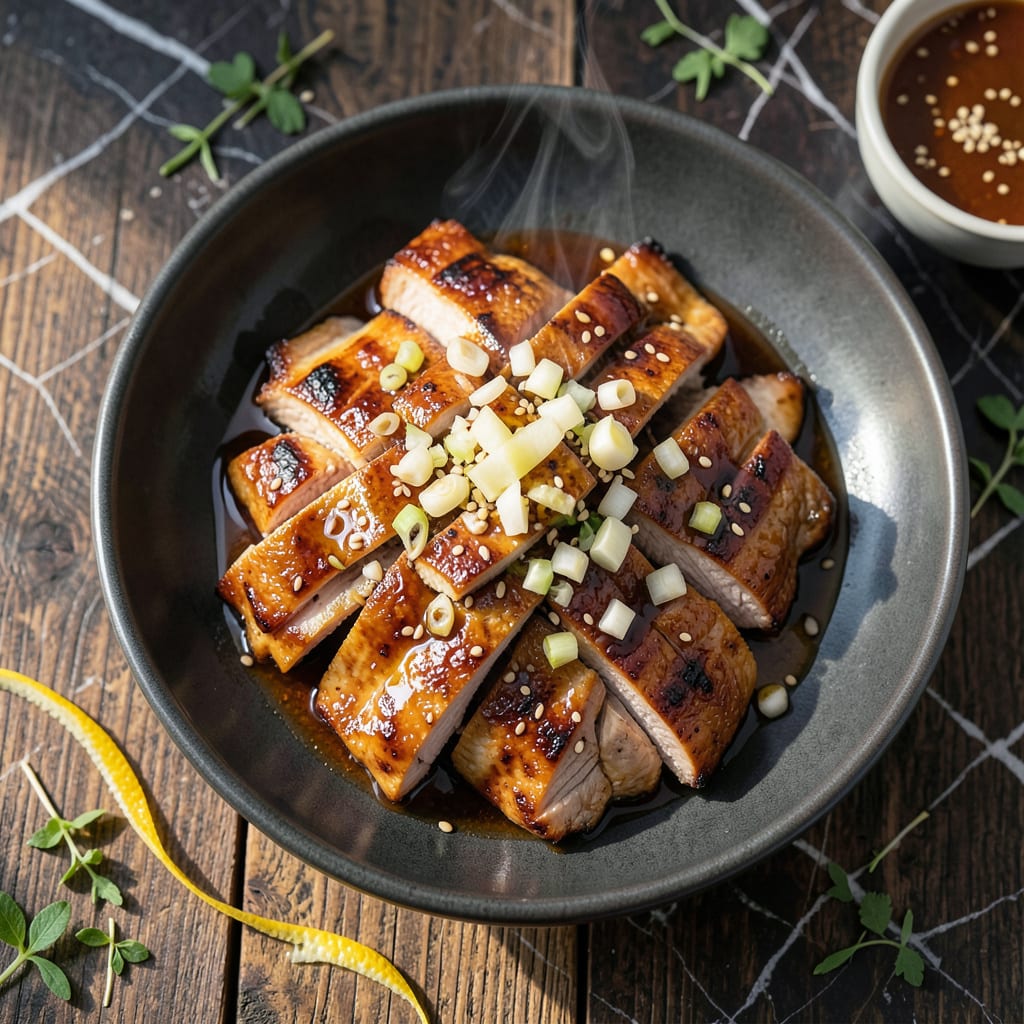
This recipe transforms ordinary chicken into something extraordinary with a sweet-savory Korean marinade. The secret lies in the balance of brown sugar, soy sauce, and fresh garlic that tenderizes the meat beautifully.
With just 30 minutes of marinating time, you’ll achieve tender, flavorful chicken that’s perfect for grilling, stir-frying, or broiling. Serve it with steamed rice and quick-pickled vegetables for a complete meal.
Ingredients for Bulgogi Sauce Recipe Chicken
Every ingredient here builds that signature sweet-savory balance for fall-off-the-bone chicken.
| Ingredient | Amount | Notes |
|---|---|---|
| Boneless Skinless Chicken Thighs 🍗 | 1 ½ lb | Thinly sliced for marinating |
| Brown Sugar 🍚 | ½ cup | Packed, for sweetness balance |
| Soy Sauce 🫒 | ½ cup | Low-sodium preferred for control |
| Fresh Garlic Cloves 🧄 | 6 cloves | Minced finely for even distribution |
| Asian Pear 🍐 | ½ whole | Grated for natural tenderizer |
| Sesame Oil 🫒 | 2 tbsp | Toasted variety for depth |
| Rice Vinegar 🍶 | 2 tbsp | Balances sweetness with acidity |
| Gochujang 🌶️ | 1 tbsp | Korean chili paste for heat |
| Fresh Ginger 🌿 | 1 tbsp | Grated for aromatic warmth |
| Green Onions 🧅 | 4 whole | Thinly sliced for garnish |
| Toasted Sesame Seeds 🌰 | 1 tbsp | For finishing touch |
| Black Pepper 🌶️ | ½ tsp | Freshly ground for best flavor |
[recipeingredientscaler]
The chicken thighs are non-negotiable. Boneless, skinless ensures even marinating and quick cooking. Look for thighs with good marbling at Whole Foods or your local butcher—this fat renders down during cooking, keeping the meat juicy. The Asian pear is the secret weapon (found at H Mart or Korean markets), but a ripe Bosc pear works in a pinch for tenderizing.
No gochujang? Sriracha plus 1 tsp sugar mimics the sweet heat, though the depth won’t be identical. Out of rice vinegar? Apple cider vinegar at half the amount works. For a gluten-free version, swap soy sauce for tamari. The brown sugar can be light or dark, but avoid substitutes like honey—they lack the molasses notes that complement the soy.
Marinate the chicken in a sealed container for up to 24 hours—the flavors deepen overnight. Cooked bulgogi keeps 3-4 days refrigerated or freezes beautifully for 3 months. Always bring chilled meat to room temperature before cooking for even doneness.
Why You’ll Love This Recipe
- One Bowl Marvel: I toss everything—the soy, brown sugar, grated pear—straight into one bowl, mix, and let the chicken soak up all that flavor.
- Sweet-Savory Magic: The brown sugar and garlic in the sauce caramelize on the chicken thighs, giving that sticky, finger-licking glaze.
- Freezer Friendly: Honestly, I double the sauce and freeze half for next time—just thaw and marinate fresh chicken.
- Budget Stretcher: Between us, chicken thighs stay juicy and cost half of what breasts do, without sacrificing any taste.
Step-by-Step Instructions for Bulgogi Sauce Chicken
Master the technique for perfectly tender, flavor-packed results with this authentic method.
Step 1: Prepare and Marinate the Chicken
Thinly slice the 1.5 lb boneless skinless chicken thighs into ¼-inch strips. This increases surface area for maximum marinade absorption. Place the slices in a large bowl.
In a separate bowl, whisk together the 0.5 cup soy sauce, 0.5 cup brown sugar, 2 tbsp sesame oil, 2 tbsp rice vinegar, 1 tbsp gochujang, minced 6 cloves fresh garlic cloves, grated 0.5 whole Asian pear, grated 1 tbsp fresh ginger, and 0.5 tsp black pepper until the sugar dissolves.
Pour the marinade over the chicken, ensuring all pieces are well coated. Cover and refrigerate for at least 4 hours or overnight for optimal tenderness and flavor penetration.
Step 2: Cook the Marinated Chicken
Heat a large skillet or grill pan over medium-high heat. Remove the chicken from the marinade (reserve the marinade) and arrange the strips in a single layer in the hot pan. Cook undisturbed for 3-4 minutes per side until deeply caramelized and cooked through.
Work in batches to avoid overcrowding the pan, which would cause steaming instead of searing. You’ll see the edges become dark brown and slightly crisp—that’s the sugar in the marinade creating that signature bulgogi crust.
Step 3: Reduce the Marinade into a Glaze
Pour the reserved marinade into the same pan and bring to a boil over medium-high heat. Reduce the heat to medium and let it simmer for 5-7 minutes, stirring frequently, until it thickens into a glossy glaze that coats the back of a spoon.
The sauce should reduce by about half and become syrupy. This step is crucial for intensifying the flavors and achieving the perfect consistency to cling to the chicken.
Step 4: Combine and Finish
Return all the cooked chicken to the pan with the reduced glaze. Toss to coat the pieces evenly, cooking for an additional 1-2 minutes until everything is heated through and the chicken is fully glazed.
Transfer to a serving platter and garnish with thinly sliced 4 whole green onions and 1 tbsp toasted sesame seeds. The green onions add a fresh crunch while the sesame seeds provide a nutty finish to each bite.
Pro Tips For Making Bulgogi Sauce Recipe Chicken
- Marinate overnight: I learned this the hard way—chicken needs at least 4 hours in the bulgogi sauce to really absorb the flavors, but 12 hours (yes, even in the fridge) makes it next-level tender.
- Grate the pear: Skip the chunks and finely grate the Asian pear into the sauce—it dissolves completely and thickens the marinade without leaving stringy bits.
- Sear on high: Crank the heat to medium-high when cooking the thighs so the brown sugar caramelizes properly; anything lower and you’ll get steamed chicken instead of that sticky, glossy coating.
- Slice thinly: Cut the boneless thighs into ¼-inch strips before marinating—they cook faster and soak up way more of that garlic-soy-pear goodness.
Perfect Pairings for This Recipe
Side Dish Pairings
Steamed jasmine rice is the classic companion—its mild flavor soaks up that glossy bulgogi sauce beautifully. I use a 1:1.5 rice-to-water ratio in my rice cooker for perfect texture every time. For variety, try cauliflower rice for a low-carb alternative.
Fresh Accompaniments
Quick-pickled cucumbers cut through the richness with their crisp acidity. Thinly slice 1 English cucumber and toss with ¼ cup rice vinegar, 1 tsp sugar, and a pinch of salt. Let sit for 20 minutes before serving. 🥒
Wine Pairings
A lightly chilled Riesling with its hint of sweetness complements the dish’s savory-sweet balance. I prefer a Korean makgeolli for authenticity—its effervescence and mild tang enhance the bulgogi flavors. Avoid heavy tannic reds that clash with the soy sauce.
Vegetable Options
Stir-fried bok choy with garlic maintains the Korean theme. Sauté 4 baby bok choy halves in 1 tbsp sesame oil for 3-4 minutes until tender-crisp. Alternatively, a simple spinach salad with sesame dressing works wonders.
Extra Toppings
Set out small bowls of kimchi and pickled radish for customizable plates. I always include extra toasted sesame seeds and sliced green onions for garnishing. These add crunch and freshness to every bite. ✨
Beverage Alternatives
For non-alcoholic options, green tea (hot or iced) cleanses the palate. A Sprite with lime offers a refreshing contrast to the dish’s richness. I keep both on hand for different preferences at my dinner table.
Nutrition Facts
Frequently Asked Questions
Can I use chicken breast instead of thighs?
Yes, but thighs stay juicier due to higher fat content. If using breasts, slice ¼-inch thick and reduce cooking to 2-3 minutes per side to prevent dryness.
How long can I marinate the chicken?
Marinate for 4 hours minimum or up to 24 hours for deepest flavor. Beyond that, the meat can become mushy from the pear’s enzymes.
What if I don’t have an Asian pear?
Use a ripe Bosc pear or ¼ cup grated apple as a substitute. The natural enzymes still tenderize, though the flavor profile may vary slightly.
Can I make this ahead of time?
Cooked bulgogi keeps 3-4 days refrigerated. Reheat gently in a pan with a splash of water to prevent drying.

- Jollof Rice Sauce Recipe: West African Tomato and Spice Infusion - September 25, 2026
- Japanese Rice Soup Recipe: Umami-Rich Comfort in a Bowl - September 25, 2026
- Homemade Cream Of Rice Recipe: Silk-Smooth Breakfast in Minutes - September 25, 2026