
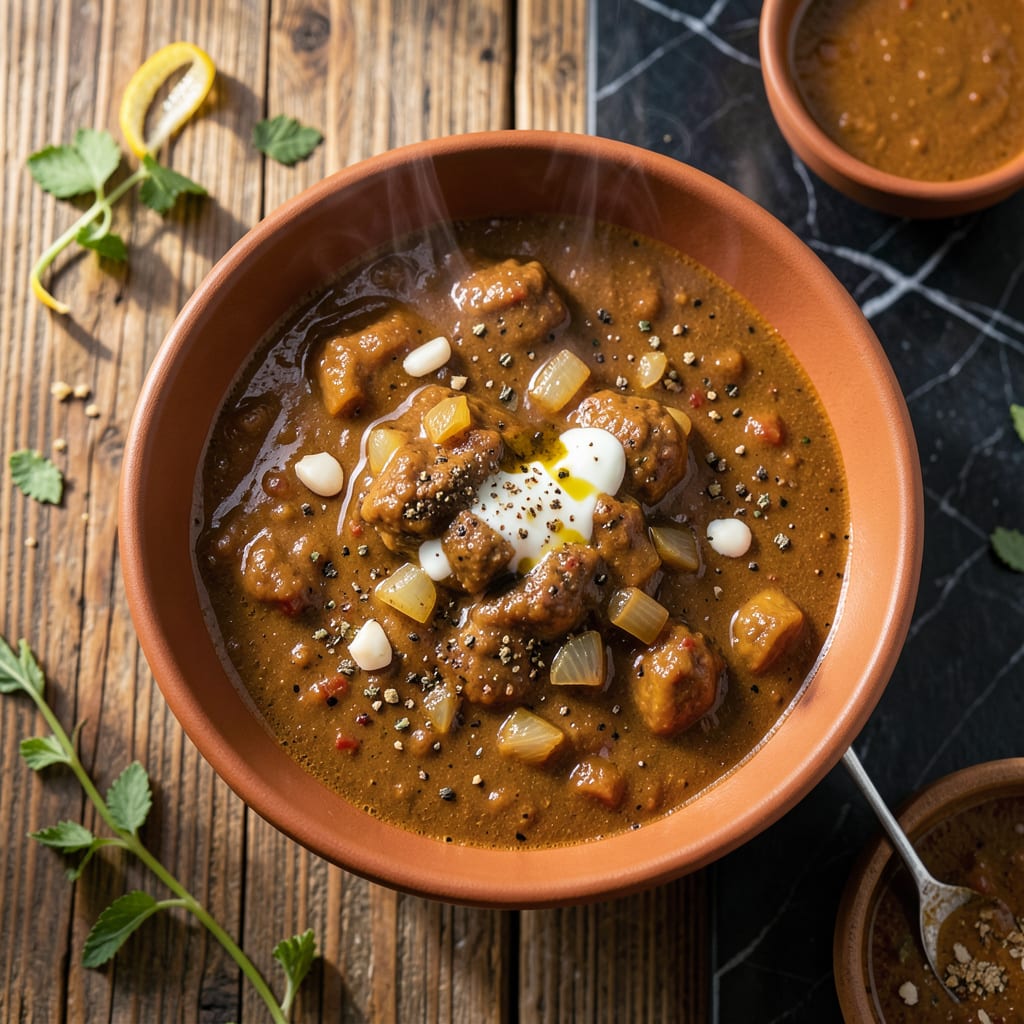
This sauce transforms any meal with its velvety tomato-cream base and aromatic spices. I developed this version to capture the authentic flavors of Indian restaurants without the long simmering time.
With just 20 minutes and pantry staples, you can create a rich, restaurant-quality sauce. The secret is blooming whole spices in hot oil before adding the other ingredients.
Ingredients for Butter Chicken Curry Sauce
Pantry staples plus cream and tomatoes create this restaurant-worthy sauce.
| Ingredient | Amount | Notes |
|---|---|---|
| Unsalted Butter 🧈 | ½ cup | Divided for blooming and finishing |
| Vegetable Oil 🫒 | 2 tbsp | Neutral flavor for blooming spices |
| Yellow Onion 🧅 | 1 whole | Finely diced for base flavor |
| Garlic Cloves 🧄 | 4 cloves | Minced for aromatic depth |
| Fresh Ginger 🌿 | 1 tbsp | Finely grated for zing |
| Tomato Puree 🍅 | 1 ½ cups | Smooth texture essential |
| Heavy Cream 🥛 | 1 cup | Full-fat for velvety richness |
| Garam Masala 🌶️ | 1 tbsp | Freshly ground preferred |
| Ground Cumin 🌿 | 1 tsp | Toasted for warmth |
| Ground Coriander 🌿 | 1 tsp | Balances the spices |
| Kashmiri Red Chili Powder 🌶️ | 1 tsp | For color, not heat |
| Salt 🧂 | 1 tsp | Adjust to taste later |
[recipeingredientscaler]
The spices are non-negotiable here. Penzeys or a well-stocked Indian grocery will have the best garam masala and Kashmiri chili powder (that vibrant red stuff that’s more about color than heat). Fresh ginger and garlic make a difference—don’t use the jarred kind. The tomato puree? San Marzano cans if you’re feeling fancy, but standard store-brand works too.
No Kashmiri chili? Sweet paprika plus a pinch of cayenne gets you close. Heavy cream can be swapped for half-and-half (slightly less rich) or coconut cream for a dairy-free twist. The butter is key for that authentic flavor, but ghee works even better if you’ve got it. Short on time? Skip the blooming and just add ground spices with the onions.
This sauce keeps 5 days in the fridge and freezes beautifully for 3 months. Reheat gently—don’t boil or the cream might separate. I always make a double batch because once you taste it, you’ll want it on everything.
Why You’ll Love This Recipe
- One Pot Wonder: I can make this rich sauce in a single pan while the rice cooks. Honestly, the cleanup is almost as satisfying as the meal.
- Garlic-Ginger Magic: The fresh ginger and garlic simmered in butter create that deep, aromatic base I crave every time.
- Meal Prep Hero: I double the batch and freeze portions—then it’s just reheat and add protein for a fast weeknight dinner.
- Budget Stretcher: Between us, a little butter and those pantry spices transform cheap chicken into something restaurant-worthy.
Step-by-Step Instructions for Butter Chicken Curry Sauce
This method delivers a velvety, aromatic sauce with perfect balance every single time.
Step 1: Bloom the Aromatics in Fat
Heat the 2 tbsp vegetable oil and 0.5 cup unsalted butter in a heavy-bottomed pot over medium heat. I use a Dutch oven for even heat distribution. Once the butter melts and begins to foam, add the finely diced yellow onion.
Cook for 8-10 minutes, stirring occasionally, until the onions turn translucent with golden edges. This is your flavor foundation—don’t rush it. The onions should soften completely but not brown. Add the minced garlic cloves and grated fresh ginger during the last minute.
Step 2: Toast the Spices for Depth
Stir in the 1 tsp ground cumin, 1 tsp ground coriander, 1 tbsp garam masala, and 1 tsp Kashmiri red chili powder. Toast for 30-45 seconds until the mixture becomes fragrant—you’ll notice the spices darken slightly and release their oils.
This toasting step is non-negotiable. It transforms raw spices into something complex and aromatic. Watch closely and don’t let them burn; burnt spices taste bitter. Add the 1 tsp salt and stir to combine completely with the onion mixture.
Step 3: Build the Sauce Base with Tomato
Pour in the 1.5 cups tomato puree and stir well to incorporate all the spices and onions. The mixture will thicken slightly as the tomato cooks down. Reduce heat to medium-low and let it simmer for 10-12 minutes, stirring occasionally.
You want the tomato to cook until it loses its raw edge and the oil begins to separate at the edges of the pot. This visual cue tells you the tomato has concentrated and the flavors have melded. The sauce should look thick and glossy, with a deep red color.
Step 4: Finish with Cream for Luxurious Texture
Reduce heat to low and slowly pour in the 1 cup heavy cream, stirring constantly to prevent curdling. This is where the magic happens—the cream transforms the sauce from rustic to restaurant-quality.
Simmer for another 5-7 minutes until the sauce reaches your desired consistency. It should coat the back of a spoon with a velvety texture. Taste and adjust salt if needed, though remember the sauce will reduce slightly more as it rests.
For the final touch, I always stir in that last bit of reserved unsalted butter off the heat. This adds a glossy sheen and extra richness that makes all the difference.
Pro Tips For Making Butter Chicken Curry Sauce
- Brown the Onions: Cook the yellow onions until deeply golden—about 10-12 minutes on medium-low heat. I learned this the hard way: undercooked onions make the sauce taste raw and thin.
- Grate the Ginger: Skip the mincing and grate fresh ginger instead. It releases more juice and flavor, and you won’t be picking out fibrous bits from your sauce later.
- Skip the High Heat: Butter burns easily, so keep the flame at medium when adding it to the oil. After burning two batches, I finally figured out that slow and steady wins the race here.
- Bloom the Spices: Add your spices to the butter-oil mix and let them sizzle for 30 seconds before adding liquids. Sounds weird, but it works—this wakes up the flavors in a way that’s noticeable.
Essential Equipment for This Recipe
Heavy-Bottomed Pot
I always reach for my 5.5-quart Le Creuset Dutch oven for this sauce. The heavy enameled cast iron distributes heat evenly, preventing hot spots that can burn your spices. A stainless steel sauté pan works too, but avoid thin aluminum pots—they heat unevenly and can lead to scorching. 🔥
Wooden Spoon
A wooden spoon is essential for stirring the blooming spices and scraping up all those flavorful browned bits. I prefer one with a long handle to keep my hands away from the heat. Unlike metal spoons, wood won’t scratch your cookware or react with acidic ingredients like tomatoes.
Fine Grater
For the fresh ginger, a microplane grater is my go-to. It extracts the maximum juice and finesse from the root, which is crucial for the sauce’s smooth texture. A box grater works in a pinch, but you’ll lose some of that precious ginger juice to the cutting board.
Immersion Blender
While not strictly necessary, an immersion blender makes quick work of achieving that silky-smooth consistency. I use mine to blend the sauce right in the pot after adding the cream. If you don’t have one, a regular blender works—just let the sauce cool slightly and work in batches.
Instant-Read Thermometer
To ensure perfect temperature control, I keep my ThermoWorks instant-read thermometer handy. It helps me monitor that the sauce never exceeds 180°F when adding the cream, preventing curdling. This small tool gives me confidence that I’m nailing the texture every time.
Air-Tight Containers
For storing leftovers, I use glass containers with locking lids. They’re perfect for keeping the sauce fresh in the fridge for up to 5 days. The glass won’t absorb odors or stains from the turmeric and other spices, and I can see exactly what’s inside. ✨
Nutrition Facts
Frequently Asked Questions
Can I use coconut milk instead of cream?
Yes, full-fat coconut milk works perfectly for a dairy-free version. Use the same 1 cup amount and add it slowly while stirring. The flavor will be slightly different but still delicious.
What if my sauce curdles when adding cream?
Remove from heat immediately and whisk vigorously. If it persists, blend with an immersion blender to smooth it out. Always use room temperature cream and add slowly to prevent this.
How long can I store this sauce?
It keeps in an airtight container in the fridge for up to 5 days. For longer storage, freeze for 3 months. Reheat gently on low to maintain the creamy texture.

- Jollof Rice Sauce Recipe: West African Tomato and Spice Infusion - September 25, 2026
- Japanese Rice Soup Recipe: Umami-Rich Comfort in a Bowl - September 25, 2026
- Homemade Cream Of Rice Recipe: Silk-Smooth Breakfast in Minutes - September 25, 2026