
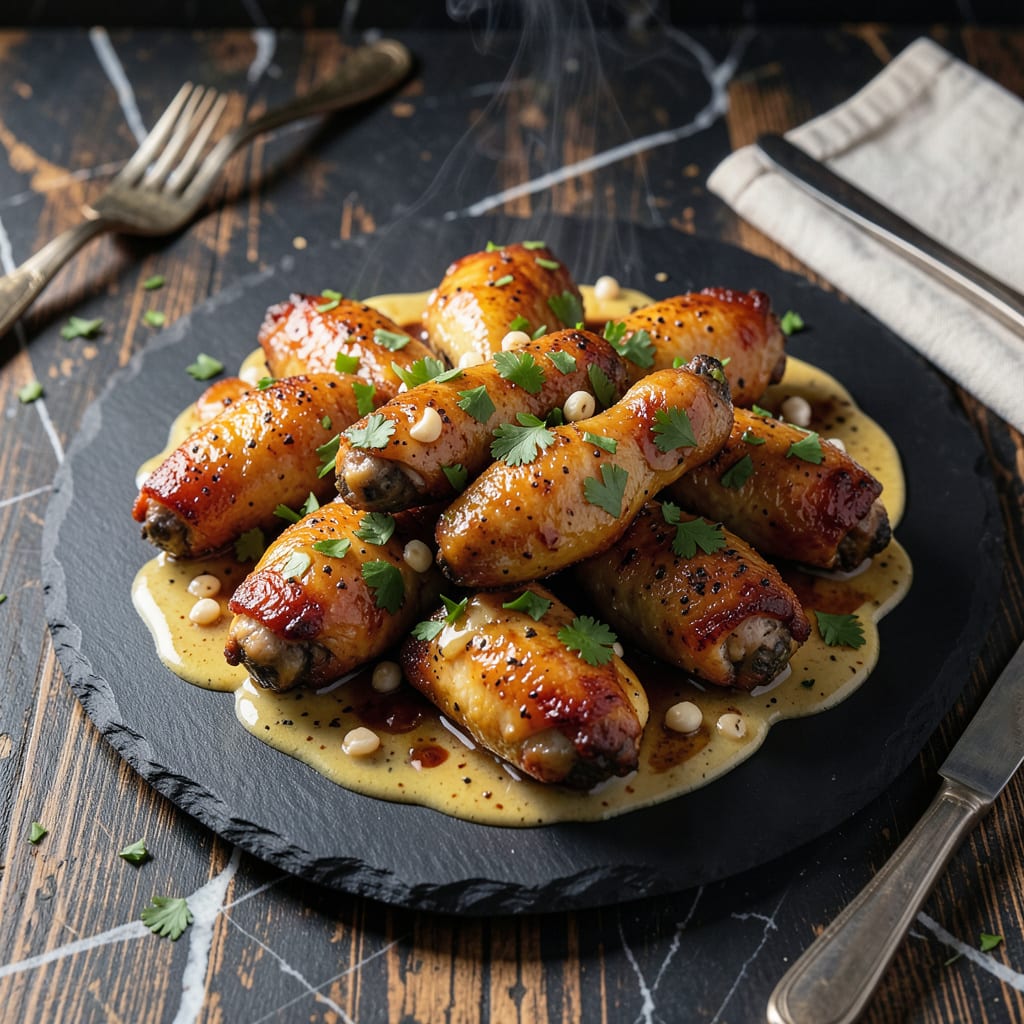
This sauce transforms ordinary wings into a restaurant-quality dish with minimal effort. The combination of rich butter and aromatic garlic creates a glossy, flavorful glaze that clings perfectly to every bite.
Ready in under 10 minutes, it delivers a balance of savory depth and sticky coating that makes wings irresistible. Use it for tossing, dipping, or brushing on grilled meats.
Ingredients for Butter Garlic Chicken Wing Sauce
Nine ingredients create this glossy, aromatic glaze that elevates any dish instantly.
| Ingredient | Amount | Notes |
|---|---|---|
| Unsalted Butter 🧈 | ½ cup | Melted for smooth consistency |
| Garlic Cloves 🧄 | 8 cloves | Minced for maximum flavor infusion |
| Fresh Parsley 🌿 | ¼ cup | Finely chopped for garnish |
| Worcestershire Sauce 💧 | 1 tbsp | Adds umami depth to sauce |
| Hot Sauce 🌶️ | 1 tbsp | Frank's RedHot preferred for tang |
| Honey 🍯 | 2 tbsp | Balances acidity and spice |
| Lemon Juice 🍋 | 1 tbsp | Freshly squeezed for brightness |
| Salt 🧂 | ½ tsp | Kosher salt for even seasoning |
| Black Pepper 🌶️ | ¼ tsp | Freshly ground for best flavor |
[recipeingredientscaler]
The butter is non-negotiable here—use high-quality unsalted so you control the salt content. Plugrá or Kerrygold are top choices for that rich, velvety base. Garlic should be fresh (the jarred stuff lacks punch), and don’t skimp on quantity—it’s doing most of the flavor work. For the hot sauce, Frank’s RedHot is the gold standard, but any vinegar-based sauce works in a pinch.
No Worcestershire? Soy sauce at half the amount adds similar depth. Honey can be swapped for maple syrup (vegan) or agave, but adjust sweetness to taste. If you’re out of fresh parsley, dried at one-third the amount works, though it won’t have the same vibrant pop. The lemon juice brightens everything—don’t skip it, but bottled is fine if fresh isn’t available.
This sauce keeps 1 week in the fridge in an airtight container. For longer storage, freeze in ice cube trays for up to 3 months. Reheat gently to restore that glossy texture—microwave works, but a saucepan on low prevents separation.
Why You’ll Love This Recipe
- Five Minute Sauce: I melt the butter, toss in the garlic, and let it sizzle while I chop parsley—that’s it.
- Buttery Garlic Bomb: The rich butter soaks into every crevice, and the garlic? Roasted just enough to mellow but still pack a punch.
- Game Day Staple: Honestly, I double the batch and keep it warm in a slow cooker—guests keep coming back for more wings.
- Pantry Friendly: Between us, I always have these ingredients on hand, so cravings never stand a chance.
Step-by-Step Instructions for Butter Garlic Chicken Wing Sauce
Master this technique for a glossy, restaurant-quality sauce with balanced sweetness, heat, and garlic depth.
Step 1: Melt Butter and Bloom Garlic
In a heavy-bottomed saucepan over medium-low heat, melt the 0.5 cup unsalted butter until just bubbling. I use medium-low to prevent browning—this keeps the butter’s rich flavor clean and prevents it from separating.
Add the 8 cloves minced garlic cloves and sauté for 1-2 minutes until fragrant and just beginning to turn golden at the edges. Watch closely; garlic burns easily and bitter garlic will ruin your sauce. Stir constantly to ensure even cooking.
Step 2: Build Flavor Foundation
Pour in the 1 tbsp Worcestershire sauce, 1 tbsp hot sauce, 2 tbsp honey, and 1 tbsp lemon juice. Stir to combine, then increase heat to medium and bring to a gentle simmer.
This is where the magic happens: the Worcestershire adds umami depth, the hot sauce provides tangy heat, the honey balances with sweetness, and the lemon juice brightens the whole mixture. Simmer for 3-4 minutes until the sauce thickens slightly and becomes glossy.
Step 3: Season and Finish
Reduce heat to low and stir in the 0.5 tsp salt and 0.25 tsp black pepper. Taste and adjust seasoning—remember, the sauce will concentrate slightly as it cools, so err on the side of under-seasoning at this stage.
The sauce should now be smooth, fragrant, and have a beautiful sheen. It will coat the back of a spoon but still be pourable. This consistency is perfect for tossing with wings to create that coveted sticky coating.
Step 4: Incorporate Fresh Herbs
Remove the saucepan from heat and stir in the 0.25 cup finely chopped fresh parsley. The residual heat will soften the parsley slightly while preserving its vibrant color and fresh flavor.
Let the sauce rest for 2-3 minutes to allow the flavors to meld completely. The parsley adds a pop of color and herbal freshness that cuts through the richness of the butter and garlic, creating a perfectly balanced sauce.
Pro Tips For Making Butter Garlic Chicken Wing Sauce
- Low and Slow Heat: I learned this the hard way—garlic burns in seconds over high heat. Keep the flame at medium-low to let the butter melt gently without scorching the garlic.
- Mince Garlic Fine: Sounds weird, but it works: the smaller the garlic pieces, the more evenly they infuse the butter. Aim for a near-paste consistency for maximum flavor.
- Skip the Salt Early: Resist the urge to salt before tasting—Worcestershire and hot sauce already bring plenty of sodium. Adjust with salt only at the end if needed.
- Use Room-Temp Butter: After burning three batches, I finally figured out that cold butter can separate. Let it sit out for 15-20 minutes first so it melts smoothly into the sauce.
Essential Equipment for Perfect Results
Saucepan Selection
I always use a 2-quart heavy-bottomed saucepan for this sauce. A heavy base prevents hot spots that could burn your garlic. My go-to is All-Clad stainless steel—it conducts heat evenly and lasts forever. Avoid nonstick for sauces; the high heat needed for reduction can damage the coating.
Accurate Measuring
For precise ingredient ratios, use liquid measuring cups for the butter and honey. I love OXO Good Grips with clear markings. For small quantities like Worcestershire, 1 tbsp measuring spoons ensure accuracy. Garlic should be minced fine—my Wüsthof 8-inch chef’s knife handles this perfectly.
Whisk for Smoothness
A balloon whisk is essential for emulsifying the butter into the liquid ingredients. I prefer silicon-tipped whisks to avoid scratching my pots. Stir constantly during simmering to prevent separation. This creates that glossy, restaurant-quality finish we all love.
Temperature Control
An instant-read thermometer helps monitor sauce temperature. Keep it below 250°F to prevent butter from breaking. I use a ThermoWorks Thermapen for precision. Low and slow is key—rushing with high heat will ruin the texture.
Storage Solutions
For leftovers, use glass airtight containers—I recommend Pyrex with snap-lids. They’re microwave-safe and don’t absorb odors. For freezing, silicone ice cube trays portion the sauce perfectly for future use. Always cool completely before sealing. 💡
Nutrition Facts
Frequently Asked Questions
Can I use salted butter instead?
Yes, but reduce added salt to 0.25 tsp. Salted butter contains about 0.25 tsp salt per 0.5 cup, so adjust to avoid oversalting. Taste before final seasoning.
How do I fix separated sauce?
Remove from heat and whisk in 1 tsp cold water or ice cube until smooth. Low heat helps re-emulsify. Never boil vigorously.
What can I substitute for honey?
Use 2 tbsp maple syrup or agave for similar sweetness. Brown sugar works too—dissolve 2 tbsp in 1 tsp warm water first.
How long does it last in the fridge?
Store in an airtight container for up to 1 week. Reheat gently on low heat, stirring constantly. Freeze for up to 3 months.

- Jollof Rice Sauce Recipe: West African Tomato and Spice Infusion - September 25, 2026
- Japanese Rice Soup Recipe: Umami-Rich Comfort in a Bowl - September 25, 2026
- Homemade Cream Of Rice Recipe: Silk-Smooth Breakfast in Minutes - September 25, 2026