
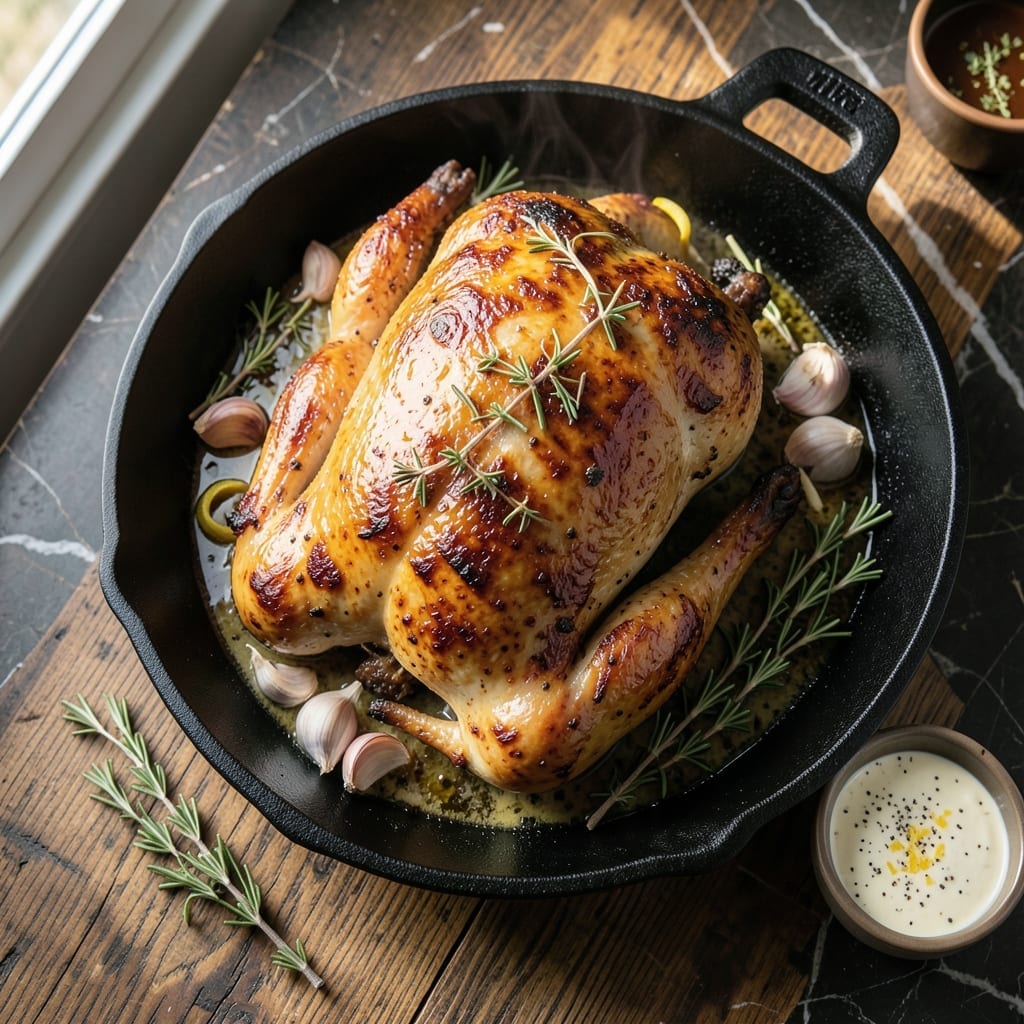
This buttermilk roast chicken delivers a golden crust and tender meat with minimal effort. The acid in buttermilk breaks down proteins, ensuring juicy results every time.
Marinating the chicken overnight in buttermilk and herbs creates flavorful, moist meat. The buttermilk forms a thick coating that helps the skin crisp beautifully in the oven.
Roasting at high heat produces perfectly browned skin while locking in natural juices. The herb-infused buttermilk creates a delicious base for pan gravy.
Serve with roasted vegetables to soak up every last drop of those herb-infused juices. This method guarantees impressive results with simple techniques.
Ingredients for Buttermilk Roast Chicken
Fourteen ingredients create this herb-marinated roast chicken with crisp golden skin and juicy meat.
| Ingredient | Amount | Notes |
|---|---|---|
| Whole Chicken 🍗 | 3 ½ lb | Pat dry, giblets removed |
| Buttermilk 🥛 | 2 cups | Full-fat for best coating |
| Fresh Thyme Sprigs 🌿 | 4 sprigs | Stems removed before serving |
| Fresh Rosemary Sprigs 🌿 | 2 sprigs | Chopped or whole |
| Garlic Cloves 🧄 | 6 cloves | Smashed for marinade |
| Dijon Mustard 🟡 | 2 tbsp | Smooth, not whole grain |
| Lemon 🍋 | 1 whole | Zested and juiced |
| Kosher Salt 🧂 | 1 ½ tbsp | Diamond Crystal preferred |
| Black Pepper 🌶️ | 1 tsp | Freshly ground coarsely |
| Unsalted Butter 🧈 | 3 tbsp | Melted for basting |
| Olive Oil 🫒 | 1 tbsp | For high-heat roasting |
| Carrots 🥕 | 3 whole | Peeled, cut into chunks |
| Yukon Gold Potatoes 🥔 | 1 ½ lb | Peeled, cut into wedges |
| Yellow Onion 🧅 | 1 whole | Quartered for roasting |
The chicken quality is paramount. Source a fresh, air-chilled whole chicken—approximately 3.5 pounds yields four generous servings. Buttermilk must be full-fat; reduced-fat versions lack the richness to create that crucial thick coating. Whole Foods or a trusted butcher shop will have the best selection of pastured birds. For the herbs, seek out organic thyme and rosemary with vibrant color and strong aroma.
Short on fresh herbs? Dried thyme and rosemary at one-third the amount work in the marinade. No buttermilk? Whole milk with 1 tbsp white vinegar per cup gets close. The Dijon can be swapped for whole-grain mustard if you prefer texture. For the vegetables, any root vegetable works—parsnips or sweet potatoes are excellent alternatives to carrots and potatoes.
Marinate the chicken in buttermilk for up to 24 hours for optimal tenderness. Roast immediately after marinating for best skin crisping. Leftovers keep refrigerated for 3-4 days and reheat beautifully in a 350°F oven for 15-20 minutes, covered loosely with foil.
Why You’ll Love This Recipe
- One Pan Magic: I just toss the chicken in buttermilk with garlic, thyme, and rosemary, then roast—no complicated steps, no mess.
- Flavor Bomb: The buttermilk tenderizes the meat while the herbs and garlic pack every bite with rich, savory depth.
- Weeknight Hero: Honestly, it’s my go-to for busy evenings—minimal prep, hands-off cooking, and dinner’s ready when we are.
- Leftovers Gold: The chicken tastes even better the next day in sandwiches or salads, stretching one meal into two effortlessly.
Step-by-Step Instructions for Buttermilk Roast Chicken
Master the technique for tender, herb-infused meat with a perfectly golden, crisp exterior.
Step 1: Prepare the Buttermilk Marinade
In a large bowl, whisk together the 2 cups buttermilk, 2 tablespoons Dijon mustard, zest of the lemon, 1.5 tablespoons kosher salt, and 1 teaspoon black pepper until fully combined. The mustard emulsifies the marinade while the buttermilk’s acidity tenderizes the meat.
Add the 3.5 lb whole chicken to the bowl, ensuring it’s completely submerged. For maximum flavor penetration, I gently lift the skin and rub some marinade directly onto the meat underneath. Cover and refrigerate for at least 12 hours, or up to 24 hours for deeper flavor development.
Step 2: Prepare the Aromatics and Vegetables
Remove the chicken from the marinade and pat it thoroughly dry with paper towels—this is crucial for achieving crispy skin. Let it sit at room temperature for 30 minutes while you prepare the aromatics.
Chop the 3 whole carrots into 2-inch chunks, the 1.5 lb Yukon Gold potatoes into wedges, and quarter the yellow onion. Smash the 6 cloves garlic cloves lightly, keeping the skins on. These will roast alongside the chicken, absorbing the rendered fat and buttermilk marinade.
Step 3: Truss and Begin Roasting
Preheat your oven to 425°F. Truss the chicken by tying the legs together with kitchen twine, then tuck the wings under the body. This compact shape ensures even cooking and prevents the wing tips from burning.
Place the chicken breast-side up on a rack in a roasting pan. Scatter the prepared vegetables, 4 sprigs fresh thyme sprigs, and 2 sprigs fresh rosemary sprigs around the chicken. Drizzle the 1 tablespoon olive oil over the vegetables and chicken skin. Roast for 30 minutes to start the browning process.
Step 4: Baste and Finish Roasting
After 30 minutes, remove the pan from the oven. The skin should be starting to turn golden brown. Melt the 3 tablespoons unsalted butter and brush it generously over the chicken skin. This basting step enhances browning and adds richness.
Return the pan to the oven and continue roasting for 45-60 minutes, basting with the pan juices every 20 minutes, until the skin is deep golden brown and crisp. The internal temperature should reach 165°F in the thickest part of the thigh when tested with an instant-read thermometer.
Step 5: Rest and Serve
Transfer the chicken to a cutting board, leaving the vegetables in the pan. Tent the chicken loosely with foil and let it rest for 15 minutes—this allows the juices to redistribute for moist, flavorful meat.
Squeeze the juice from the lemon over the resting chicken for a final brightness. Carve the chicken and serve with the roasted vegetables, spooning the herb-infused pan juices over everything. The buttermilk marinade ensures the meat stays succulent while the high-heat roasting creates that coveted crisp skin.
Pro Tips For Making Buttermilk Roast Chicken
- Dry the Skin First: Pat the chicken thoroughly dry before the buttermilk bath—I learned this the hard way after steaming my bird instead of roasting it.
- Marinate Overnight: Give it a full 12-24 hours in the buttermilk with smashed garlic and herb sprigs. The flavor difference between 2 hours and overnight is non-negotiable.
- Skip the Crowded Pan: Use a rack or elevate the chicken on chopped veggies so air circulates underneath. Steer clear of setting it directly in the pan or you’ll get soggy skin.
- Rest Before Carving: Tent it with foil and let it sit 10-15 minutes after roasting. Sounds weird, but it works: all the juices stay inside instead of running onto the cutting board.
Pro Cooking Tips for This Recipe
Trussing Perfection
Tie the legs together with kitchen twine and tuck wings under the body. This compact shape prevents burning and ensures even cooking. I use 18-inch twine for a 3.5 lb chicken to secure it tightly. 💡
Marinade Penetration
For maximum flavor, gently lift the skin and rub marinade directly onto the meat. The buttermilk’s acidity tenderizes while the Dijon emulsifies. I marinate for the full 24 hours when possible.
Drying is Key
Pat the chicken thoroughly dry after marinating—this is non-negotiable for crispy skin. Use paper towels and change them often. Let it sit at room temp for 30 minutes before roasting.
Basting Technique
Baste every 20 minutes with melted unsalted butter and pan juices. This creates layers of flavor and maximizes browning. I use a silicon basting brush for even coverage.
Temperature Monitoring
Check internal temp in the thickest part of the thigh—not the breast. Use an instant-read thermometer and pull at 165°F. The temp will rise 5-10°F during resting.
For perfect results, rotate the pan 180° halfway through cooking for even browning. 🔥
Nutrition Facts
Frequently Asked Questions
Why does buttermilk make chicken more tender?
The acid in buttermilk breaks down proteins in the meat, similar to brining. This results in juicier, more tender chicken every time.
Can I marinate the chicken for just a few hours?
For best results, marinate for at least 12 hours. A quick 4-hour marinade will still help, but the flavor and tenderness won’t be as pronounced.
How do I know when the chicken is fully cooked?
Use a meat thermometer inserted into the thickest part of the thigh. It’s done at 165°F. The juices should also run clear, not pink.
What can I use instead of buttermilk?
Mix 1 cup whole milk with 1 tablespoon vinegar or lemon juice. Let it sit for 5 minutes to thicken before using.

- Jollof Rice Sauce Recipe: West African Tomato and Spice Infusion - September 25, 2026
- Japanese Rice Soup Recipe: Umami-Rich Comfort in a Bowl - September 25, 2026
- Homemade Cream Of Rice Recipe: Silk-Smooth Breakfast in Minutes - September 25, 2026