
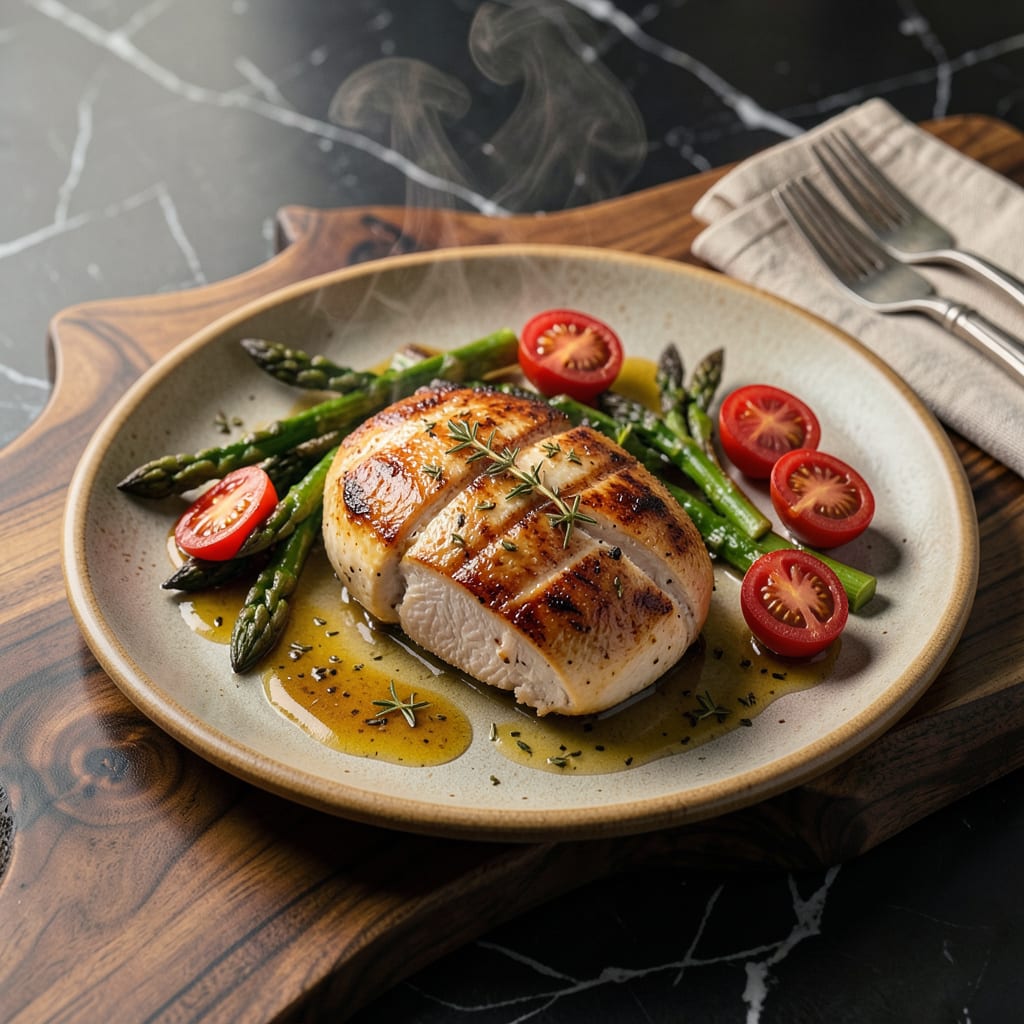
Yes, you can safely recook undercooked chicken if you return it to the oven, stovetop, or grill immediately and cook until it reaches an internal temperature of 165°F (74°C). Avoid letting it sit at room temperature first to prevent bacterial growth.
The key here is acting fast—once chicken dips below 140°F (60°C), bacteria like Salmonella can multiply rapidly. 🔥 I always recommend using a meat thermometer to verify doneness, as visual cues alone can be misleading. The recooking process works because high heat disrupts the protein structure of pathogens, effectively neutralizing them. Just remember that repeatedly heating chicken can affect texture, so consider adding a splash of broth or covering it with foil to retain moisture.
💡 In This Article
- Why Recooking Undercooked Chicken Can Be Safe or Risky
- Step-by-Step Guide to Safely Recooking Chicken
Why Recooking Undercooked Chicken Can Be Safe or Risky
The safety of recooking chicken hinges on understanding bacterial behavior. Undercooked poultry often harbors pathogens like Salmonella and Campylobacter, which thrive between 40°F (4°C) and 140°F (60°C)—the “danger zone.” When chicken lingers in this range, bacteria can double every 20 minutes, turning a minor risk into a serious health hazard.
The key is immediate action: returning chicken to high heat quickly prevents this exponential growth. 🔥
Heat destroys these pathogens by denaturing their proteins. At 165°F (74°C), the internal temperature recommended by the USDA, bacterial cell walls rupture and enzymes deactivate. This isn’t just a guess—studies show that Salmonella is eliminated within seconds at this temperature.
However, if chicken sits at room temperature for more than 2 hours (or 1 hour above 90°F/32°C), toxin production may begin, making recooking ineffective. ✨
What most people overlook is the protein structure change during recooking. The first cooking session begins breaking down collagen and coagulating proteins. When you recook, these proteins tighten further, potentially squeezing out moisture.
This is why recooked chicken often feels drier—it’s not just about losing juices, but how the muscle fibers contract under repeated heat exposure. 💫
The risk factor also depends on how the chicken was initially handled. Cross-contamination from raw juices or improper storage before cooking can introduce additional bacteria. I always recommend recooking within 30 minutes of discovering it’s underdone, and never using the microwave for this purpose—it creates uneven hot spots that may leave some areas underheated. ⚡
Here’s what’s actually happening at the microbial level: when you recook properly, you’re essentially giving the chicken a second pasteurization. The heat penetrates deeper the second time because the meat’s structure has already been altered by the first cooking.
This is why using a meat thermometer is non-negotiable—visual cues like color change become unreliable after the first cook. 🌟
Consider these critical temperature milestones:
- Below 40°F (4°C): Bacterial growth pauses (refrigerator safe zone)
- 40-140°F (4-60°C): Rapid bacterial multiplication occurs
- 140-160°F (60-71°C): Bacteria begin dying but toxins may persist
- 165°F (74°C)+: Instant bacterial death and protein denaturation
The takeaway? Time and temperature are your two critical controls.
Act within that 30-minute window, hit 165°F (74°C) uniformly, and you’ve effectively reset the safety clock. But let that chicken sit too long at room temperature, and you’re playing microbial roulette—no amount of recooking can undo toxin production once it’s begun. 💛

- Jollof Rice Sauce Recipe: West African Tomato and Spice Infusion - September 25, 2026
- Japanese Rice Soup Recipe: Umami-Rich Comfort in a Bowl - September 25, 2026
- Homemade Cream Of Rice Recipe: Silk-Smooth Breakfast in Minutes - September 25, 2026