
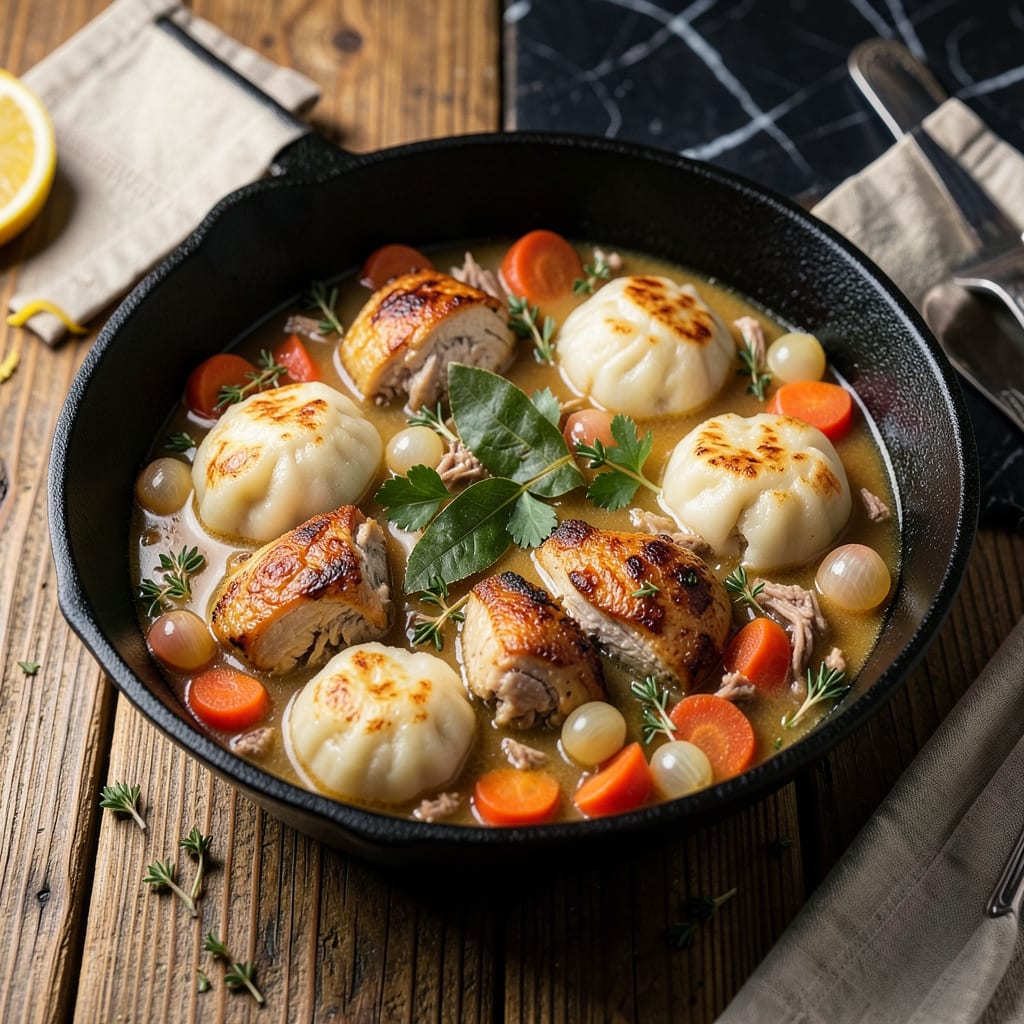
Dumplings dissolve when the dough lacks proper gluten development, the liquid is too hot when added, or the dough is overworked. Use cold broth, minimal stirring, and the right flour-to-liquid ratio for firm dumplings.
This common frustration happens because gluten strands need time to form a stable network before facing heat. 🔥 When you add dumplings to boiling broth, the sudden temperature shock causes the proteins to seize up before they can properly bind. I’ve found that even small mistakes like overmixing or using warm liquid can break down the dough’s structure completely.
The secret lies in treating the dough gently and controlling the cooking environment. Think of it like making pie crust—you want just enough handling to bring it together, then let it rest before cooking. The broth temperature should be at a gentle simmer, not a rolling boil, to give the dumplings time to set properly.
💡 In This Article
- Why Dumpling Dough Breaks Down in Chicken Broth
- Step-by-Step Fixes for Perfect Chicken and Dumplings
Why Dumpling Dough Breaks Down in Chicken Broth
Here’s what’s actually happening at a molecular level: When flour mixes with liquid, glutenin and gliadin proteins begin forming elastic gluten strands. These strands need 5-10 minutes of rest to fully develop before cooking.
If you drop dumplings into boiling broth too soon, the heat causes the proteins to coagulate instantly—like scrambling eggs—before they can form a strong network. The result? A weak structure that crumbles apart. 🔥
The broth temperature makes all the difference. At 212°F (boiling), starch granules in the flour absorb water too rapidly and burst, while proteins tighten up too quickly. This creates a gummy, fragile texture instead of tender yet sturdy dumplings.
I’ve found the sweet spot is 180-190°F—hot enough to cook through but gentle enough to allow gradual gluten development. Think of it like tempering chocolate: controlled heat prevents shocking the ingredients.
Fat plays a crucial stabilizing role that many overlook. When you add 2 tablespoons of butter or shortening per cup of flour, it coats the protein strands, preventing them from over-bonding during mixing. This creates a more tender dumpling that still holds its shape.
Without this fat barrier, gluten develops too aggressively during mixing, then collapses when heated. The difference is like comparing flaky pie crust to tough bread dough. ✨
Overmixing is the silent killer of good dumplings. Each stir after the ingredients are just combined develops more gluten—great for bread, disastrous for dumplings. I recommend mixing just until the dough comes together (about 10-12 strokes), then letting it rest. The resting period allows the gluten to relax naturally.
You’ll know it’s ready when the dough holds together but still feels slightly shaggy, not smooth like pizza dough.
Liquid ratios create another common pitfall. The ideal consistency should resemble thick pancake batter—pourable but not runny. For every 1 cup of flour, you’ll want 1/4-1/3 cup liquid (milk, water, or broth). Too much liquid creates a weak matrix that can’t withstand simmering, while too little makes dense, gummy dumplings.
The perfect batch should float like little clouds, not sink like stones. 💫
Consider how acidity affects your broth too. Tomato-based or vinegar-heavy broths can weaken gluten structure through protein denaturation. If your recipe includes acidic ingredients, reduce them by 25-30% or add a pinch of baking soda to neutralize. This small adjustment preserves the dumplings’ integrity while maintaining flavor balance in your chicken and dumplings.
The final secret lies in the cooking method. Dumplings should be dropped onto the broth’s surface, then left undisturbed for the first 5 minutes. This allows a protective “skin” to form before any gentle stirring. Think of it like making poached eggs—the initial undisturbed cooking time is critical for maintaining shape.
After that initial setting period, you can nudge them occasionally to prevent sticking. 🌟

- Jollof Rice Sauce Recipe: West African Tomato and Spice Infusion - September 25, 2026
- Japanese Rice Soup Recipe: Umami-Rich Comfort in a Bowl - September 25, 2026
- Homemade Cream Of Rice Recipe: Silk-Smooth Breakfast in Minutes - September 25, 2026