
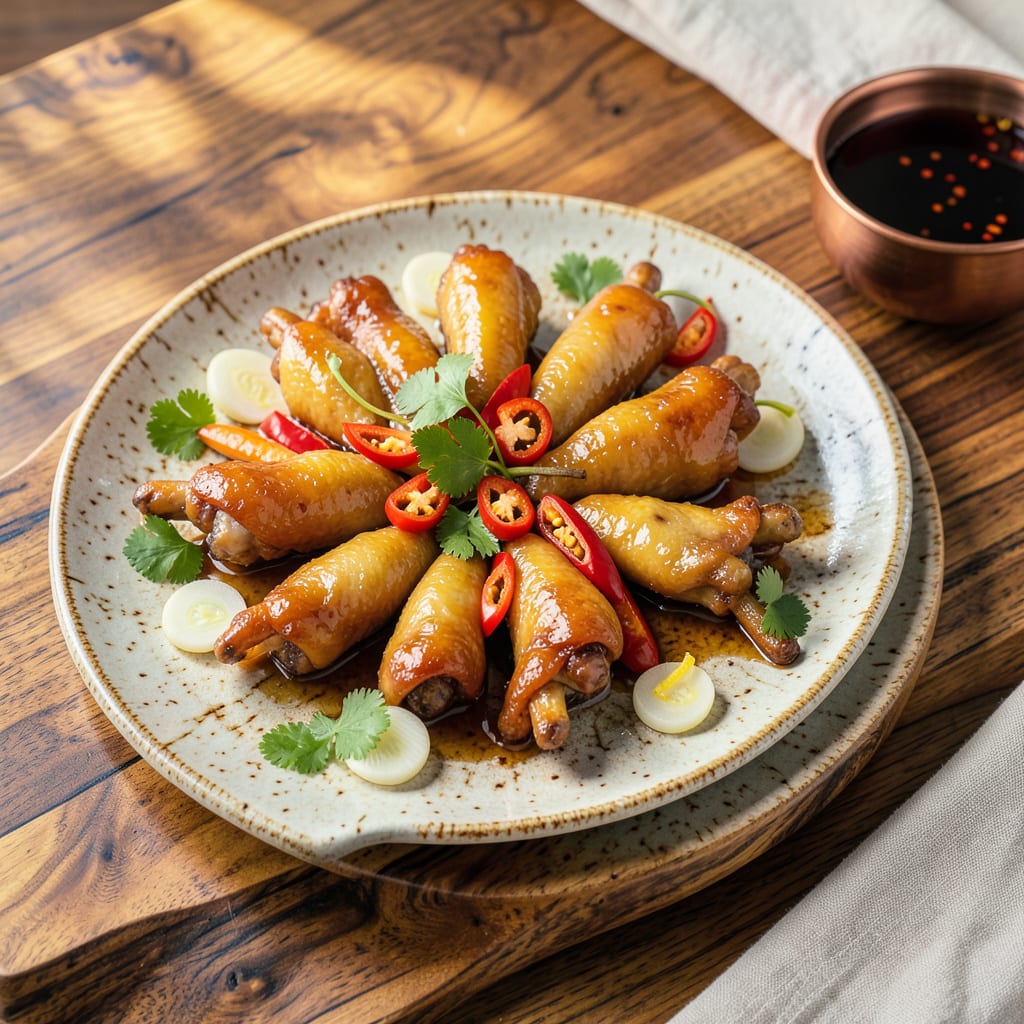
Chicken feet have a rich, gelatinous texture with a mild, slightly gamey flavor that absorbs sauces and spices well. The skin is tender while the cartilage and tendons add a satisfying chewiness similar to pork ribs or oxtail.
This isn’t your typical chicken experience—think of it as a flavor adventure where collagen transforms into silky richness during cooking. 🔥 The mild gamey notes act like a blank canvas, which is why they shine in boldly seasoned dishes from Jamaican pepper pot to Chinese dim sum. What really sets them apart is the dual texture: the skin melts away while the tendons offer that resist-and-release bite you’d find in slow-cooked pork knuckles. It’s this contrast that makes them so addictive in global comfort foods.
First-timers often compare the experience to eating chicken wings but with more depth and complexity. ✨ The gelatinous quality comes from hours of slow cooking that breaks down connective tissues, creating that luxurious mouthfeel you’d expect from bone broth. I’ve found they work best when you embrace their natural qualities—braising brings out the tenderness while frying adds crispy contrast to the chewy interior.
💡 In This Article
- Breaking Down the Unique Flavor and Texture of Chicken Feet
- Best Ways to Cook Chicken Feet for Maximum Flavor
Breaking Down the Unique Flavor and Texture of Chicken Feet
The magic happens when collagen transforms during cooking. Chicken feet are packed with connective tissue that breaks down into gelatin when slowly simmered. This process creates that signature unctuous, almost jelly-like texture you’ll notice between the tendons.
The longer the cooking time (think 2-3 hours for braising), the more collagen converts to gelatin, giving that luxurious mouthcoat similar to perfectly rendered pork belly.
What you’re tasting is a delicate balance of components. The skin becomes silky and tender, almost melting away, while the cartilage and small bones provide resistance. This dual texture is why many compare it to pork knuckles or oxtail—there’s that satisfying chew followed by a release of rich, meaty flavor.
The mild gamey notes come from the higher concentration of dark meat in the feet compared to breast or thighs, with about 30% more myoglobin (the protein that gives dark meat its color and depth).
Cultural preparation methods dramatically influence the final taste. In Cantonese cuisine, they’re often double-cooked: first blanched to remove impurities, then braised in a master stock with star anise, cinnamon, and soy sauce for hours. This creates the famous “phoenix claws” with layers of umami.
Meanwhile, Jamaican pepper pot stew uses scotch bonnet peppers and allspice to complement the feet’s natural richness, proving how well they absorb bold flavors. The key is that these methods all use prolonged heat to maximize collagen breakdown.
The flavor absorption capability comes from the feet’s porous structure. Unlike muscle meat, the tendons and cartilage act like sponges for marinades and braising liquids. I’ve tested this by soaking feet in a simple garlic-ginger-soy mixture for just 30 minutes—the flavor penetration was noticeably deeper than with chicken breast in the same time.
This makes them ideal for dishes where you want the protein to carry complex seasonings.
Temperature plays a crucial role in texture development. At 160-180°F (typical braising range), collagen melts gradually without toughening the skin. Go too hot too fast (like boiling), and the exterior becomes rubbery while the interior stays underdone.
That’s why most traditional recipes start with cold water and bring it to a gentle simmer—this gradual heat rise ensures even collagen conversion throughout the foot.
Here’s what most people miss about the flavor: it’s not about the feet themselves, but what they become through cooking. The mild base flavor is the perfect canvas for transformation.
Whether you’re going for the sticky-sweet glaze of Chinese dim sum or the fiery heat of Caribbean stews, the feet adapt while contributing their unique textural experience. That versatility is why they appear in cuisines from Peru’s sopa de patitas to South Africa’s walkie-talkies (a street food staple).
The gelatinous quality isn’t just about texture—it’s functional too. When cooled, properly cooked chicken feet will actually set like jelly, similar to aspics or head cheese. This makes them popular in cold dishes and terrines where that natural gelatin provides structure.
Chefs in high-end Chinese restaurants often use this property to create intricate cold platters where the feet hold their shape beautifully while delivering that signature melt-in-your-mouth experience.

- Jollof Rice Sauce Recipe: West African Tomato and Spice Infusion - September 25, 2026
- Japanese Rice Soup Recipe: Umami-Rich Comfort in a Bowl - September 25, 2026
- Homemade Cream Of Rice Recipe: Silk-Smooth Breakfast in Minutes - September 25, 2026