
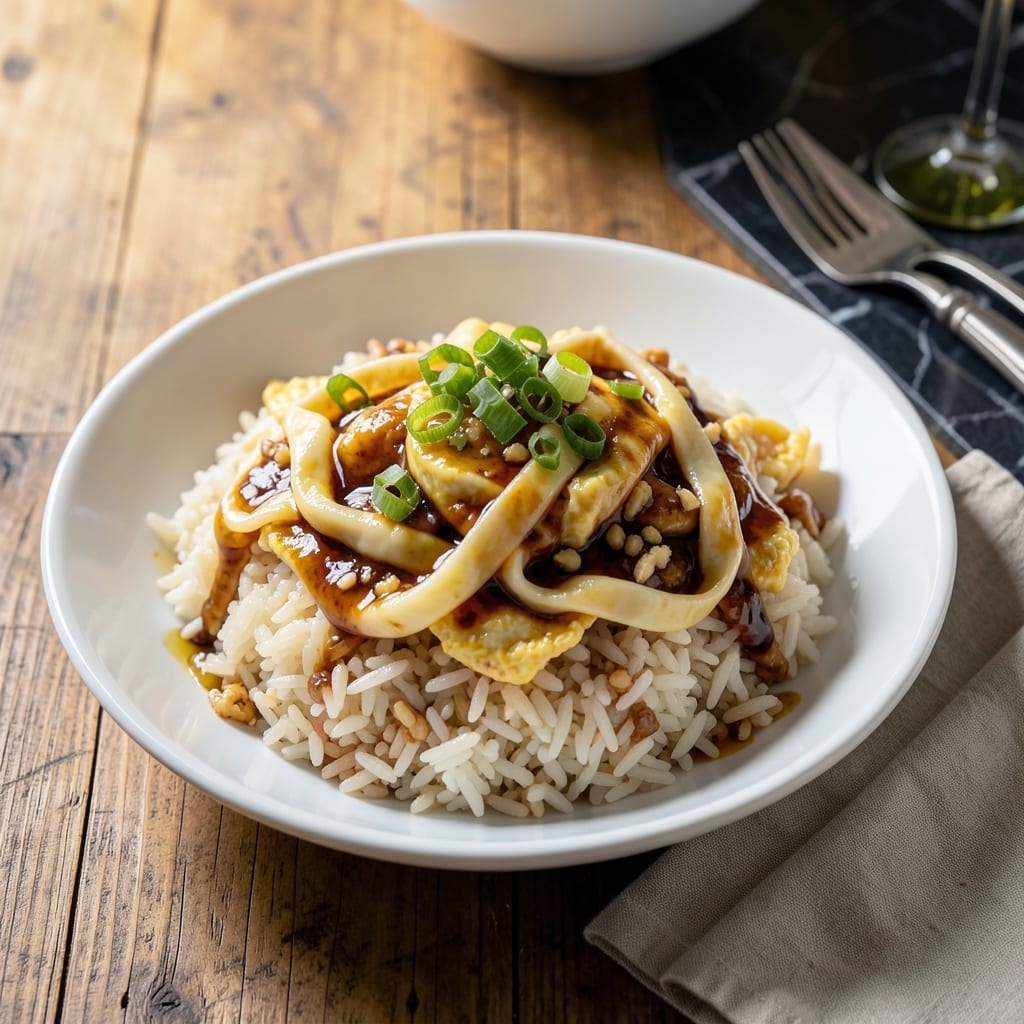
This wok-seared dish delivers restaurant-quality Cantonese rice with perfect texture and depth of flavor. The key is high heat and the right sequence of ingredients.
Each bite features fluffy rice, umami-rich seasonings, and soft scrambled egg pieces. The technique ensures authentic taste without complicated steps.
Ingredients for Cantonese Rice
Restaurant-quality Cantonese rice starts with these carefully selected, authentic ingredients for depth and texture.
| Ingredient | Amount | Notes |
|---|---|---|
| Jasmine Rice 🍚 | 3 cups | Day-old, chilled overnight |
| Large Eggs 🥚 | 4 whole | Lightly beaten for scrambling |
| Green Onions 🧅 | 4 whole | Thinly sliced, whites and greens separated |
| Light Soy Sauce 🫒 | 2 tbsp | For seasoning and umami depth |
| Dark Soy Sauce 🫒 | 1 tbsp | For color and complexity |
| Shaoxing Wine 🍷 | 1 tbsp | Chinese cooking wine, substitute dry sherry |
| Sesame Oil 🫒 | 1 tsp | Toasted, for finishing aroma |
| Peanut Oil 🫒 | 3 tbsp | High smoke point for wok searing |
| Garlic Cloves 🧄 | 2 cloves | Minced finely for even distribution |
| Fresh Ginger 🌿 | 1 tbsp | Minced or grated for zing |
| Frozen Green Peas 🌱 | ½ cup | Thawed, for texture contrast |
| Carrot 🥕 | 1 whole | Small diced for color and crunch |
| White Pepper 🧂 | ½ tsp | Ground, for authentic Cantonese flavor |
| Granulated Sugar 🍚 | ¼ tsp | Balances saltiness in soy |
| Kosher Salt 🧂 | ½ tsp | Adjust to taste at finish |
Jasmine rice is non-negotiable for authentic texture. Look for Thai-grown brands like Elephant or Three Ladies at Asian markets or well-stocked supermarkets. Day-old, chilled rice is essential—it won’t clump or turn mushy during high-heat wok cooking. For the soy sauces, Pearl River Bridge is the gold standard for both light and dark varieties, available at H Mart or 99 Ranch.
No Shaoxing wine? Dry sherry at a 1:1 ratio works in a pinch. Peanut oil’s high smoke point is ideal, but avocado or vegetable oil can substitute. Fresh ginger and garlic are mandatory—jarred minced versions lack the necessary punch. For a vegetarian version, skip the egg and add diced tofu for protein. The peas and carrots can be swapped for bell peppers or corn.
Cooked rice keeps in the fridge for 3-4 days before using. The finished dish is best served immediately but reheats well in a wok or skillet with a splash of water. Store-bought rice? Spread it on a tray and chill overnight to dry it out properly for optimal texture.
Why You’ll Love This Recipe
- One Pan Meal: I toss everything in a single wok—jasmine rice, eggs, and soy sauces—then let the flavors meld while I set the table.
- Umami Bomb: Honestly, that first bite with the dark soy sauce caramelizing the rice and the light soy keeping it bright? I make extra just to snack on.
- Weeknight Hero: Between us, this is my Tuesday dinner savior—ready before the kids finish their homework.
- Budget Stretcher: A handful of rice, a couple eggs, and soy sauces I already have. Feeds four for less than a fiver.
Step-by-Step Instructions for Cantonese Rice
Master the wok technique for perfectly seared rice with rich umami and fluffy scrambled egg bites.
Step 1: Prepare and Season the Rice Base
Begin by breaking up the 3 cups Jasmine Rice with your hands to separate the grains. This prevents clumping during cooking. Heat 1 tablespoon Peanut Oil in a wok over high heat until it begins to shimmer. Add the minced Garlic Cloves and Fresh Ginger, stirring constantly for 30 seconds until fragrant.
Immediately add the rice, pressing it into the wok with your spatula. I ensure even contact with the hot surface to create that signature wok hei flavor. Drizzle the 2 tbsp Light Soy Sauce, 1 tbsp Dark Soy Sauce, 0.25 tsp Granulated Sugar, and 0.5 tsp White Pepper over the rice, then toss everything together to distribute the seasonings evenly.
Step 2: Incorporate Vegetables for Texture
Push the rice to one side of the wok and add the remaining 2 tablespoons Peanut Oil to the empty space. Once hot, add the small diced Carrot and cook for 1-2 minutes until it begins to soften. Then add the thawed Frozen Green Peas and the white parts of the Green Onions.
Stir-fry for another 1-2 minutes until the vegetables are tender but still vibrant. I fold them into the rice mixture, ensuring every grain gets coated with the aromatic oil and vegetable essence. The goal is to maintain the rice’s integrity while infusing it with layers of flavor.
Step 3: Scramble the Eggs Directly in the Wok
Create a well in the center of the rice mixture. Pour the lightly beaten Large Eggs into the well and let them sit undisturbed for 10-15 seconds to begin setting at the edges. Then, gently scramble the eggs with your spatula, breaking them into small, fluffy curds.
Once the eggs are mostly set but still slightly runny, mix them into the rice. The residual heat will finish cooking the eggs perfectly. I add the 1 tbsp Shaoxing Wine at this stage, letting the alcohol cook off while its depth of flavor melds with the dish.
Step 4: Finish and Garnish for Serving
Drizzle the 1 tsp Sesame Oil over the rice and toss everything together one final time. The sesame oil adds a nutty aroma that ties all the flavors together. Taste and adjust seasoning with the 0.5 tsp Kosher Salt if needed, though the soy sauces may have already provided enough saltiness.
Transfer to a serving plate and garnish with the green parts of the Green Onions. The dish should have distinct layers of texture—tender rice, crisp vegetables, and soft egg bites—with a rich, savory depth from the soy and wine. Serve immediately while hot.
Pro Tips For Making Cantonese Rice
- Use Day-Old Rice: Fresh rice is too moist and will turn mushy—I learned this the hard way after ruining two batches. Cook your jasmine rice the night before and refrigerate it uncovered for that perfect dry texture.
- Scramble Eggs First: Beat the eggs with a pinch of light soy sauce, then scramble them in hot oil before adding rice. This keeps them fluffy and prevents that sad, rubbery texture.
- High Heat Only: Crank the wok to smoking hot before adding anything. After burning my first attempt on medium, I realized the rice needs that intense heat to get that classic slightly charred flavor.
- Dark Soy Last: Add the dark soy sauce at the very end—just a teaspoon or two for color. I used to dump it in early and ended up with bitter, over-darkened rice.
Flavor Customization for This Dish
Spicy Kick Addition
For heat lovers, add 1-2 tsp Sriracha or 1 tbsp chili garlic sauce when incorporating the soy sauces. I recommend Lee Kum Kee Chili Garlic Sauce for authentic flavor. A pinch of red pepper flakes works too. 🌶️
Protein Boost Variations
Add ½ cup diced char siu pork or cooked shrimp with the vegetables. For vegetarian, use firm tofu cubes pan-fried until golden. These additions make the dish more substantial while keeping the authentic Cantonese profile.
Extra Umami Layer
Stir in 1 tbsp oyster sauce with the soy sauces for deeper flavor. I use Lee Kum Kee Premium Oyster Sauce. A dash of fish sauce (about ½ tsp) adds another dimension of umami without overpowering.
Fresh Herb Garnish
Beyond green onions, try cilantro leaves or Thai basil for a fresh finish. These herbs add brightness that cuts through the richness. Chop them finely and sprinkle just before serving for maximum impact.
Crunchy Texture
Add ¼ cup chopped roasted peanuts or cashews at the end for crunch. Toast them in a dry pan for 2-3 minutes until fragrant before adding. This contrast elevates the dish’s mouthfeel considerably.
Citrus Brightness
A squeeze of lime juice (about 1 tbsp) right before serving adds a zesty note. The acidity balances the soy’s saltiness beautifully. I sometimes add a bit of orange zest for a subtle citrus aroma. 💡
Nutrition Facts
Frequently Asked Questions
Why use day-old rice for this dish?
Day-old rice is drier and firmer, preventing mushiness during high-heat cooking. Fresh rice contains too much moisture and will clump together.
Can I substitute brown rice for jasmine?
Brown rice works but will have a chewier texture. Cook and chill it the same way, but expect a nuttier flavor and less authentic result.
What’s the best wok heat setting?
Use high heat throughout for proper searing and wok hei flavor. If your stove isn’t powerful, cook in smaller batches to maintain temperature.
How do I fix bland-tasting rice?
Add a splash of soy sauce or sesame oil at the end. A pinch of sugar or white pepper can also boost flavor depth.

- Jollof Rice Sauce Recipe: West African Tomato and Spice Infusion - September 25, 2026
- Japanese Rice Soup Recipe: Umami-Rich Comfort in a Bowl - September 25, 2026
- Homemade Cream Of Rice Recipe: Silk-Smooth Breakfast in Minutes - September 25, 2026