
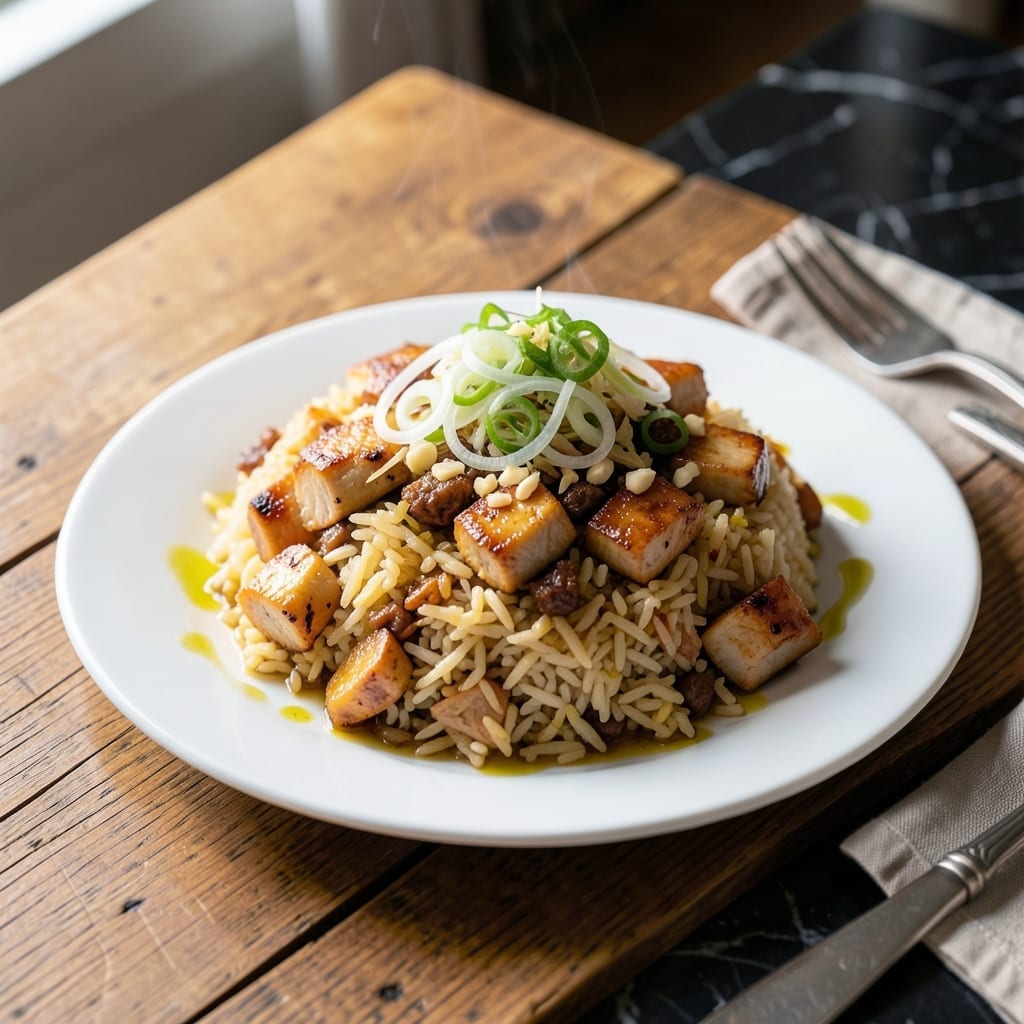
This classic dish brings authentic Cantonese flavors to your home kitchen with minimal effort. The salted fish adds a unique umami depth that transforms simple ingredients into something extraordinary.
What makes this version special is the perfect balance between the briny fish and tender chicken, all brought together with fragrant scallions. The wok-tossed technique ensures every grain of rice gets coated in that irresistible flavor.
Ingredients for Cantonese Salted Fish Chicken Fried Rice
Authentic Cantonese flavors start with these pantry staples and fresh proteins for a truly remarkable dish.
| Ingredient | Amount | Notes |
|---|---|---|
| Salted Fish 🐟 | ½ cup | Diced, Chinese preserved variety |
| Chicken Breast 🍗 | 1 lb | Boneless, skinless, diced |
| Jasmine Rice 🍚 | 3 cups | Day-old, cooked and cooled |
| Scallions 🧅 | 4 whole | Thinly sliced, white and green parts separated |
| Garlic Cloves 🧄 | 3 cloves | Minced finely |
| Ginger Root 🌿 | 1 tbsp | Freshly grated |
| Soy Sauce 🫒 | 2 tbsp | Light or all-purpose |
| Oyster Sauce 🍚 | 1 tbsp | Optional for extra depth |
| Sesame Oil 🫒 | 1 tsp | Toasted for aroma |
| Vegetable Oil 🫒 | 3 tbsp | High smoke point preferred |
| Large Eggs 🥚 | 2 whole | Beaten lightly |
| White Pepper 🧂 | ½ tsp | Ground, for authentic flavor |
| Salt 🧂 | ½ tsp | Adjust to taste |
The salted fish is non-negotiable for authentic flavor. Look for Chinese preserved salted fish at Asian markets—brands like Silver Swan or Amoy are reliable. The chicken should be fresh and diced uniformly for even cooking. Jasmine rice is ideal (day-old works best), but long-grain white rice can substitute. Freshness matters with scallions and ginger—vibrant green stems and firm roots signal quality.
No salted fish? Anchovy fillets at one-third the amount offer similar umami (though not identical). For a vegetarian approach, miso paste mixed with a pinch of MSG mimics the depth. Oyster sauce can be omitted, but adds complexity. The rice must be cold—freshly cooked will turn mushy. Use leftover takeout rice if you’re in a pinch. Sesame oil brands vary; Kadoya is a trusted choice.
The dish is best served immediately, but leftovers keep 2-3 days in the fridge. Reheat in a wok or skillet to revive the texture. Salted fish keeps indefinitely in its original packaging, but store opened portions in an airtight container to preserve freshness. The ginger and scallions can be prepped a day ahead and refrigerated.
Why You’ll Love This Recipe
- 20-Minute Meal: I can go from fridge to plate faster than my kids can argue over bedtime. Just chop, sizzle, and stir.
- Umami Bomb: The salted fish and garlic hit that perfect salty-savory note that makes jasmine rice taste ridiculous.
- Lunchbox Hero: Pack it cold for work or reheat for a midnight snack—it holds up beautifully. Honestly, better the next day.
- Pantry Savior: A little salted fish stretches far, and chicken breast keeps it budget-friendly without skimming on flavor.
Step-by-Step Instructions for Cantonese Salted Fish Chicken Fried Rice
Master the wok technique and timing to achieve that signature smoky aroma and layered umami flavor.
Step 1: Prepare the Aromatics and Proteins
Finely mince the 3 cloves garlic cloves and grate the 1 tbsp ginger root together on a cutting board. This combination forms the flavor base of your dish. Thinly slice the 4 whole scallions, keeping the white and green parts separate for layered texture and presentation.
Dice the 1 lb chicken breast into ½-inch pieces and lightly season with 0.5 tsp salt and 0.5 tsp white pepper. Soak the 0.5 cup salted fish in cold water for 5 minutes to reduce excess saltiness, then drain and pat dry. Beat the 2 whole large eggs lightly in a bowl until just combined.
Step 2: Stir-Fry Chicken and Salted Fish
Heat 2 tbsp vegetable oil in a wok or large skillet over high heat until shimmering. Add the diced chicken and stir-fry for 3-4 minutes until the pieces turn opaque white with no pink remaining. Remove the chicken and set aside.
In the same wok, add the remaining 1 tbsp vegetable oil and the soaked salted fish. Stir-fry for 1-2 minutes until the fish becomes light golden brown and releases its aromatic oils. Be careful not to overcook, as salted fish can turn bitter if burned.
Step 3: Combine Rice and Aromatics
Add the minced garlic, grated ginger, and white parts of the scallions to the wok. Stir-fry for 30 seconds until the garlic turns light golden and the mixture becomes fragrant. Immediately add the 3 cups jasmine rice, breaking up any clumps with your spatula.
Drizzle the 2 tbsp soy sauce, 1 tbsp oyster sauce, and 1 tsp sesame oil over the rice. Stir-fry for 2-3 minutes until the rice is uniformly coated and heated through. The grains should be separate and slightly crispy at the edges.
Step 4: Incorporate Eggs and Finish
Push the rice to one side of the wok and pour the beaten eggs into the empty space. Scramble the eggs quickly until just set but still slightly runny. Fold the eggs into the rice mixture, ensuring even distribution.
Return the cooked chicken to the wok and stir-fry for an additional 2 minutes until everything is well combined and heated through. Taste and adjust seasoning if needed, keeping in mind that salted fish and soy sauce are already salty. Garnish with the green parts of the scallions before serving.
Pro Tips For Making Cantonese Salted Fish Chicken Fried Rice
- Use Day-Old Rice: Fresh rice turns mushy—spread leftover jasmine rice on a tray and refrigerate overnight to get that signature dry, separate texture.
- Soak the Salted Fish: Rinse and soak the salted fish in water for 10-15 minutes before cooking to mellow the saltiness without losing its umami punch.
- Precook the Chicken: Dice the chicken breast first, then quickly pan-fry or blanch it before adding to the rice—this keeps it juicy instead of tough from overcooking.
- Crisp the Fish First: Pat the fish dry, then pan-fry it until golden before breaking it into chunks; this intensifies the flavor and adds crunch to every bite.
Essential Equipment for This Recipe
Wok Selection
For authentic results, use a carbon steel wok with a flat bottom—brands like Made In or Joyce Chen offer great home options. A 14-inch diameter gives you enough surface area to toss ingredients properly. I’ve found this makes all the difference in achieving that classic wok hei flavor. 🔥
High Heat Source
A gas stove with at least 15,000 BTU output is ideal for the high heat needed. If you have an electric stove, look for a wok with a flat base and use the highest setting. I recommend a wok ring to stabilize round-bottom woks on Western stoves.
Essential Utensils
A wok spatula (also called a wok chan) is non-negotiable—the thin, angled blade lets you toss ingredients efficiently. Pair it with a long-handled ladle for sauces. I keep mine from Asian markets for about $10 each.
Rice Prep Tools
Use a rice cooker for perfectly cooked jasmine rice—Zojirushi models are my go-to. A fine-mesh strainer helps rinse the rice thoroughly before cooking. For day-old rice, spread it on a baking sheet to cool and dry out slightly.
Knife and Board
A sharp 8-inch chef’s knife makes quick work of dicing chicken and aromatics. I use a bamboo cutting board to protect my knife edge. Keep a bench scraper nearby to gather chopped ingredients efficiently.
Finishing Touches
A microplane gives you perfectly grated ginger, while kitchen shears make quick work of slicing scallions. I always have a small bowl ready for beaten eggs and a tongs for handling the salted fish pieces carefully. 💡
Nutrition Facts
Frequently Asked Questions
Can I use fresh fish instead of salted?
No, fresh fish won’t give the same umami depth. For a substitute, use 1/4 cup anchovy fillets or 1 tbsp miso paste with a pinch of MSG for similar briny flavor.
Why use day-old rice?
Fresh rice is too moist and will turn mushy when stir-fried. Day-old rice has dried slightly, creating separate grains that absorb flavors better. Spread leftover rice on a tray to accelerate drying.
How do I prevent the salted fish from overcooking?
Stir-fry it for only 1-2 minutes over high heat until golden. Soaking it in cold water for 5 minutes first reduces saltiness and prevents bitterness. Remove it immediately if it starts to darken.
Can I make this without a wok?
A large skillet works, but use high heat and cook in batches. A wok’s shape and material create the signature wok hei flavor, but a heavy-bottomed pan can approximate it.

- Jollof Rice Sauce Recipe: West African Tomato and Spice Infusion - September 25, 2026
- Japanese Rice Soup Recipe: Umami-Rich Comfort in a Bowl - September 25, 2026
- Homemade Cream Of Rice Recipe: Silk-Smooth Breakfast in Minutes - September 25, 2026