
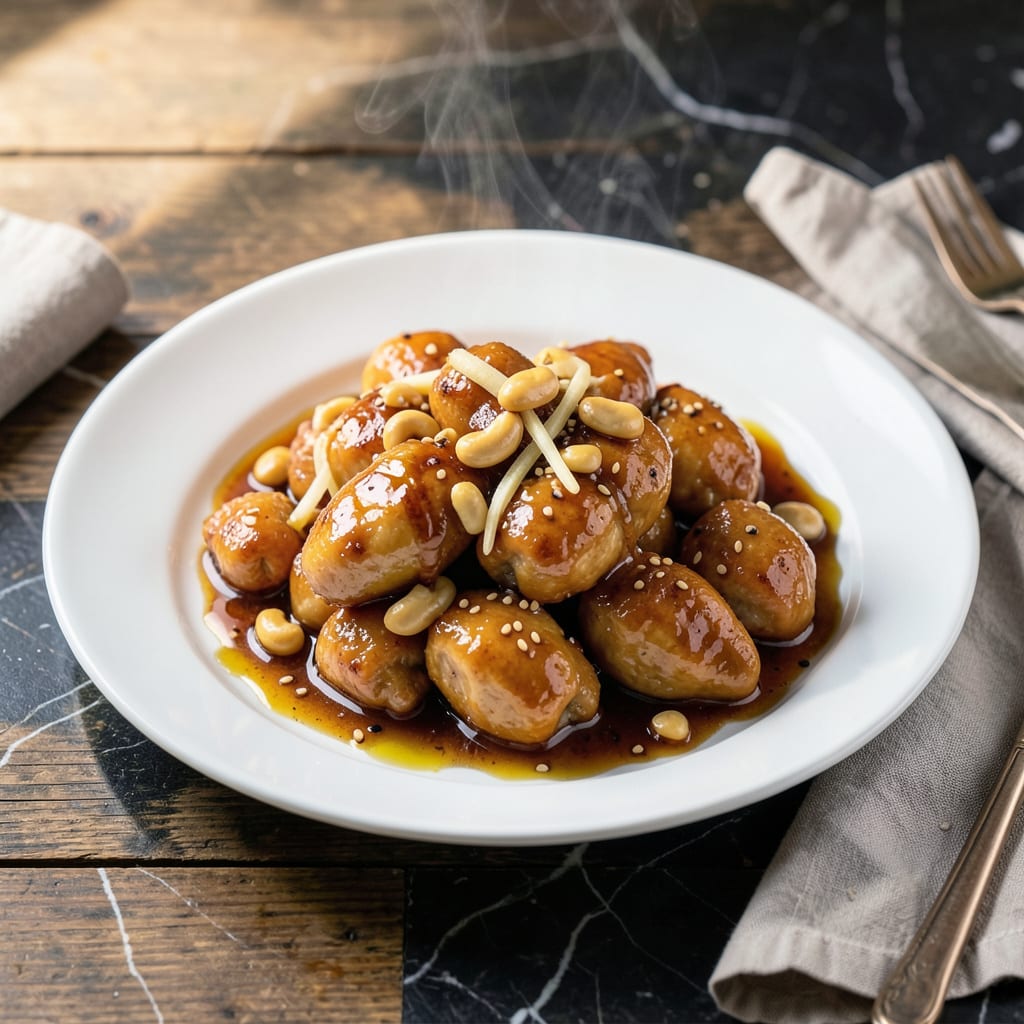
This Chinese-style cashew chicken sauce delivers a velvety texture and balanced sweet-savory depth that elevates any stir-fry. I developed this recipe to capture authentic takeout flavor without complicated techniques.
With just 10 minutes of cooking, you’ll have a glossy glaze that clings to proteins and vegetables. The secret is toasting the cashews first to release their natural oils, then building layers of flavor with garlic, ginger, and a touch of rice vinegar.
Ingredients for Cashew Chicken Sauce Recipe Chinese
Ten ingredients transform into that glossy, restaurant-quality glaze you crave in every bite.
| Ingredient | Amount | Notes |
|---|---|---|
| Raw Cashews 🌰 | ¾ cup | Lightly toasted first for depth |
| Low-Sodium Soy Sauce 🫒 | ½ cup | Tamari for gluten-free option |
| Rice Vinegar 💧 | 2 tbsp | Unseasoned for clean acidity |
| Honey 🍯 | 3 tbsp | Balances savory elements perfectly |
| Oyster Sauce 🫒 | 2 tbsp | Essential for umami depth (use vegetarian oyster sauce if needed) |
| Fresh Ginger Root 🌿 | 1 tbsp | Finely minced for even distribution |
| Garlic Cloves 🧄 | 3 cloves | Minced to release full flavor |
| Sesame Oil 🫒 | 1 tbsp | Toasted for nutty aroma |
| Cornstarch 🌾 | 1 tbsp | Slurry with water for thickening |
| Water 💧 | 2 tbsp | For cornstarch slurry |
[recipeingredientscaler]
The cashews are non-negotiable here—raw and unsalted so you control the flavor. I grab mine from Trader Joe’s or the bulk bins at Whole Foods (cheaper, and you can get exactly what you need). Toast them in a dry pan until golden and fragrant before adding liquids. The oyster sauce is doing heavy lifting for umami, so don’t skip it. Kikkoman or Lee Kum Kee are reliable brands you’ll find in most supermarkets.
No oyster sauce? Hoisin or fish sauce can sub in a pinch (use half the amount and add a pinch of sugar). Honey can be maple syrup or agave for vegan versions. Low-sodium soy is key—regular can make the sauce too salty. If you’re gluten-free, tamari works perfectly. The cornstarch slurry is what gives that velvety texture, so don’t skip it (or use arrowroot powder at a 1:1 ratio).
Sauce keeps 5-7 days in the fridge—stir before using as it thickens when cold. Freezes beautifully for 3 months in airtight containers. I make a double batch and freeze in ice cube trays for quick stir-fries later.
Why You’ll Love This Recipe
- One-Pan Wonder: I toss everything in one skillet—cashews toast while the sauce simmers, saving me from a sink full of dishes.
- Sweet-Savory Magic: The honey and oyster sauce create this sticky, umami-rich glaze that clings to every cashew and piece of chicken.
- Meal Prep Star: I double the batch on Sunday and it reheats beautifully for lunches all week. (Yes, even on a Tuesday night)
Step-by-Step Instructions for Cashew Chicken Sauce
Here’s my tested method for building layers of flavor into this silky, restaurant-worthy sauce.
Step 1: Toast the Raw Cashews for Depth
Heat a dry skillet over medium heat and add the 0.75 cup Raw Cashews. Stir frequently for 3-4 minutes until they turn light golden brown and become fragrant. You’ll notice their aroma intensify—that’s your signal they’re ready.
Immediately transfer them to a plate to cool. This prevents them from continuing to cook and potentially burning. Toasting the cashews first brings out their natural nuttiness, which adds incredible depth to the finished sauce.
Step 2: Build the Flavor Base with Aromatics
In a saucepan, heat the 1 tbsp Sesame Oil over medium heat. Add the 1 tbsp minced Fresh Ginger Root and 3 minced Garlic Cloves, stirring constantly for 30-45 seconds until fragrant but not browned.
Be careful not to let the garlic burn—it turns bitter quickly. The ginger should sizzle gently and release its pungent aroma. This aromatic foundation is crucial for authentic Chinese flavor in your sauce.
Step 3: Combine the Liquid Ingredients
Pour in the 0.5 cup Low-Sodium Soy Sauce, 2 tbsp Rice Vinegar, 3 tbsp Honey, and 2 tbsp Oyster Sauce. Stir well to combine and bring to a gentle simmer over medium heat.
Let the mixture simmer for 2-3 minutes, stirring occasionally. You’ll see it start to thicken slightly as the honey dissolves completely. The vinegar’s acidity will balance the richness of the other ingredients beautifully.
Step 4: Thicken to Silky Perfection
In a small bowl, whisk together the 1 tbsp Cornstarch and 2 tbsp Water until smooth. Slowly pour this slurry into the simmering sauce while stirring constantly.
Continue cooking for 1-2 minutes until the sauce reaches your desired consistency—it should coat the back of a spoon with a velvety sheen. The sauce will transform from thin and liquid to thick and glossy as the cornstarch activates.
Step 5: Incorporate the Cashews and Finish
Stir in the toasted Raw Cashews and let the sauce simmer for an additional 1 minute to allow the flavors to meld together. The cashews should be fully coated in the sauce and slightly softened.
Remove from heat and let the sauce cool slightly before using. It will thicken a bit more as it cools. Taste and adjust seasoning if needed, though the balance should be perfect as written—sweet, savory, tangy, and umami all in one silky package.
Pro Tips For Making Cashew Chicken Sauce Recipe Chinese
- Toast the Cashews: Dry-toast the raw cashews in a pan over medium heat for 3-4 minutes until golden—I learned this the hard way after my first batch turned out soggy in the sauce. It adds a nutty depth you can’t get from raw cashews alone.
- Balance the Sweetness: Taste as you go and adjust the honey carefully; I used to overdo it until I realized the oyster sauce already brings its own sweetness. A teaspoon at a time is the safest approach.
- Skip the Raw Vinegar: Bloom the rice vinegar in the pan for 30 seconds before adding other liquids—sounds weird, but it mellows the sharpness and blends better with the soy and oyster sauce.
- Thin with Water: If your sauce thickens too much, add warm water a tablespoon at a time instead of more soy sauce. After burning one batch, I finally figured out this keeps the flavor balanced without diluting it.
Storing and Reheating Leftovers
Refrigerator Storage
Let the sauce cool completely before transferring to an airtight container—I use glass mason jars. Store in the fridge at 40°F or below for up to 5-7 days. The flavors actually deepen as it rests. ❄️
Freezer Storage
This sauce freezes beautifully for up to 3 months without texture issues. Portion into ice cube trays for single-serving uses, then transfer to a freezer bag. Leave ½ inch headspace in containers to prevent expansion cracks.
Stovetop Reheating
Gently reheat in a small saucepan over low-medium heat, stirring frequently. Add 1-2 tsp water if it seems too thick. It will return to its silky consistency in 3-4 minutes. Avoid boiling to prevent separation.
Microwave Reheating
Microwave in 20-second intervals at 50% power, stirring between each, until just warmed through. Cover with a damp paper towel to prevent drying. This method works best for small portions. 🔥
Reviving Separated Sauce
If your sauce separates after storage, whisk in 1 tsp warm water at a time until smooth. The cornstarch will re-activate with gentle heat and moisture. I find this happens most with frozen sauce.
Nutrition Facts
Frequently Asked Questions
Can I use roasted cashews instead of raw?
Yes, but toast them briefly in a dry pan for 1-2 minutes first. This ensures they release their oils and blend well with the sauce. Skip this step only if they’re already well-toasted and fragrant.
How can I make this sauce gluten-free?
Swap the soy sauce for tamari and verify your oyster sauce is gluten-free. Many brands now offer gluten-free versions that work perfectly without altering the flavor.
Why did my sauce turn out too thin?
This usually means the cornstarch slurry didn’t cook long enough. Return it to medium heat and stir constantly for another 1-2 minutes until it thickens properly.
Can I prepare this sauce ahead of time?
It keeps well in the fridge for 5-7 days and freezes for up to 3 months. Reheat gently and stir before using.

- Jollof Rice Sauce Recipe: West African Tomato and Spice Infusion - September 25, 2026
- Japanese Rice Soup Recipe: Umami-Rich Comfort in a Bowl - September 25, 2026
- Homemade Cream Of Rice Recipe: Silk-Smooth Breakfast in Minutes - September 25, 2026