
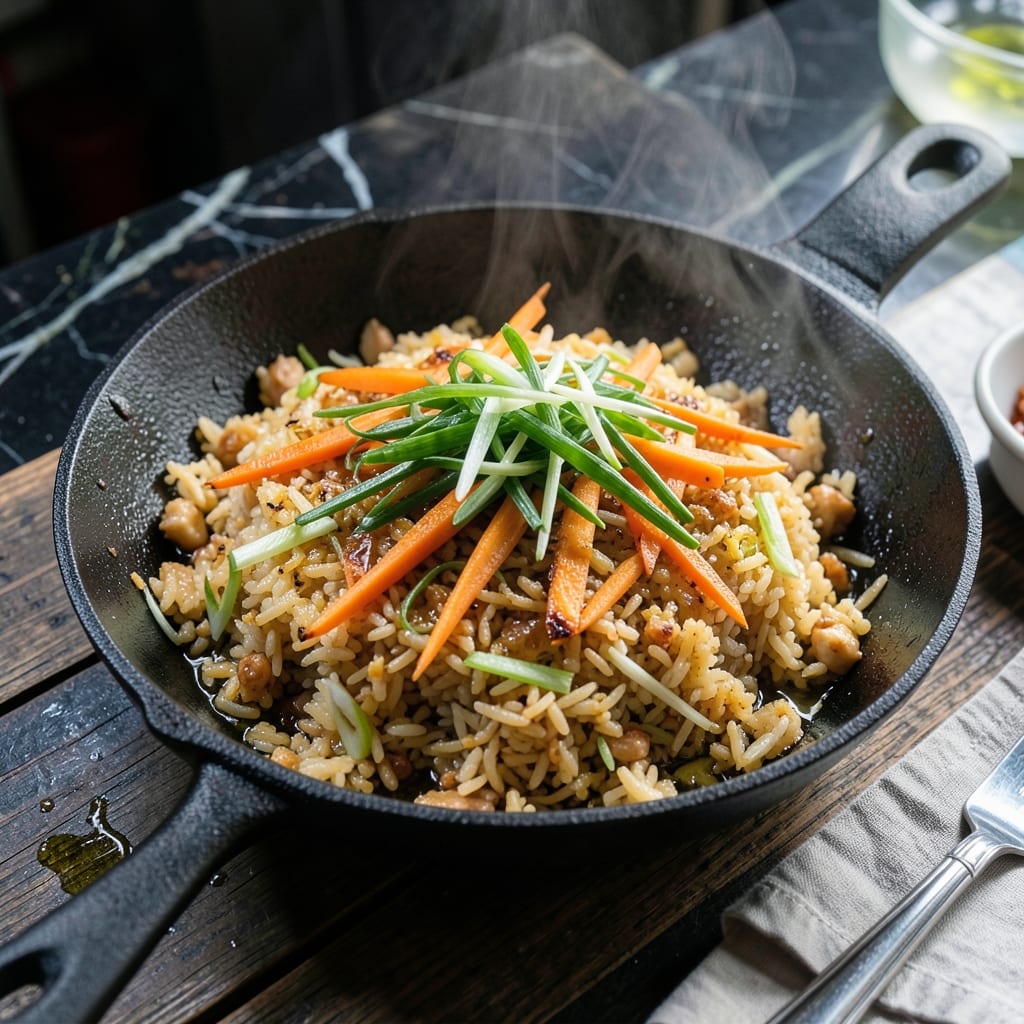
This Cantonese wok-fried dish delivers restaurant-quality results at home with simple ingredients.
Master the technique for perfectly seared rice with tender vegetables and savory depth in every bite.
Ingredients for Chaofan Rice
Restaurant-quality Cantonese fried rice starts with these carefully selected ingredients for authentic flavor and texture.
| Ingredient | Amount | Notes |
|---|---|---|
| Jasmine Rice 🍚 | 3 cups | Day-old, cooked and chilled |
| Vegetable Oil 🫒 | 3 tbsp | High smoke point preferred |
| Garlic Cloves 🧄 | 4 cloves | Minced finely for even distribution |
| Fresh Ginger 🌿 | 1 tbsp | Peeled and grated fresh |
| Green Onions 🧅 | 4 whole | Thinly sliced, whites and greens separated |
| Carrots 🥕 | 1 cup | Finely diced for quick cooking |
| Frozen Peas 🌱 | ¾ cup | Thawed before cooking |
| Large Eggs 🥚 | 3 whole | Lightly beaten for scrambling |
| Soy Sauce 💧 | 3 tbsp | Low-sodium preferred for control |
| Oyster Sauce 🍚 | 1 tbsp | Essential for authentic Cantonese flavor |
| Sesame Oil 🫒 | 1 tsp | Toasted for finishing aroma |
| Salt 🧂 | ½ tsp | Adjust to taste after cooking |
| White Pepper 🌶️ | ¼ tsp | Freshly ground for best flavor |
| Char Siu 🍖 | ¾ cup | Diced, traditional Cantonese BBQ pork |
The rice is critical here—day-old jasmine rice (cooked and thoroughly chilled) prevents mushiness. For authentic Cantonese flavor, source char siu from a reputable Chinese BBQ shop or Asian market. High smoke point vegetable oil is essential for achieving the proper wok hei. I recommend Koon Chun or Lee Kum Kee brands for the oyster and soy sauces for consistent quality.
No char siu? Diced cooked chicken or shrimp work well, or omit entirely for a vegetarian version. Fresh ginger and garlic are non-negotiable—powdered versions lack depth. For gluten-free, swap soy sauce for tamari. The eggs can be omitted if needed, but they add richness. Frozen peas are fine (no need to thaw first), but fresh work too if available.
Leftover chaofan keeps 3-4 days refrigerated in an airtight container. Reheat in a skillet with a splash of water to restore moisture. For best results, cook in small batches—overcrowding the wok steams instead of sears. Freezing isn’t recommended as it affects texture.
Why You’ll Love This Recipe
- 20-Minute Meal: I can have this from pantry to plate faster than takeout arrives—just rice, garlic, and ginger sizzling in oil.
- Garlic-Ginger Punch: That first bite with the crispy garlic and zingy ginger? Ridiculously good.
- Weeknight MVP: Honestly, it’s my Tuesday night lifesaver—great hot, cold, or stuffed in a wrap the next day.
- Stretch a Dollar: A big batch costs pennies, and leftovers taste even better after the flavors meld overnight.
Step-by-Step Instructions for Cantonese Wok-Fried Rice
Master the wok toss with this authentic method for perfect texture and flavor balance.
Step 1: Prepare the Aromatics and Protein
Mince the 4 cloves Garlic Cloves finely and peel and grate the 1 tbsp Fresh Ginger. Thinly slice the 4 whole Green Onions, keeping whites and greens separate. This prep ensures even distribution of flavor throughout the dish.
Dice the 0.75 cup Char Siu into small, uniform pieces for consistent texture. Lightly beat the 3 whole Large Eggs in a small bowl until just combined—over-beating creates tough scrambled eggs in your fried rice.
Step 2: Stir-Fry Vegetables and Aromatics
Heat a wok or large skillet over high heat until smoking. Add 2 tbsp Vegetable Oil and swirl to coat. Immediately add the 1 cup Carrots and stir-fry for 2 minutes until slightly softened but still crisp.
Push the carrots to one side, add the remaining 1 tbsp Vegetable Oil, then add the minced garlic, grated ginger, and white parts of the green onions. Stir-fry for 30 seconds until fragrant—don’t let the garlic burn or it will turn bitter.
Add the 0.75 cup Frozen Peas and stir-fry for another 1 minute until heated through. The peas should retain their bright green color and slight snap.
Step 3: Cook Eggs and Combine with Rice
Push all vegetables to one side of the wok. Pour the beaten eggs into the empty space and scramble quickly with a spatula until just set but still slightly runny, about 45 seconds. This creates soft, tender egg ribbons throughout the dish.
Add the 3 cups Jasmine Rice, breaking up any clumps with your spatula. Stir-fry for 2-3 minutes until the rice is heated through and begins to develop a slight toasted aroma. The grains should be separate and dry-looking, not clumped together.
Step 4: Season and Finish
Drizzle the 3 tbsp Soy Sauce and 1 tbsp Oyster Sauce evenly over the rice mixture. Add the 0.5 tsp Salt and 0.25 tsp White Pepper. Stir-fry for another 2 minutes until everything is well combined and the rice has absorbed the sauces.
Return the diced char siu to the wok along with the green onion greens. Stir-fry for 1 minute just to heat through. Remove from heat and drizzle with the 1 tsp Sesame Oil, tossing gently to incorporate. The sesame oil adds a fragrant finishing note without overpowering the other flavors.
Pro Tips For Making Chaofan Rice
- Use Day-Old Rice: Fresh rice turns mushy—spread leftover jasmine rice on a tray and refrigerate overnight so it dries out and fries up fluffy.
- Prep Aromatics Fine: Mince the garlic and ginger to the size of rice grains; bigger pieces burn or taste raw in the final dish.
- Hot Oil, Fast Stir: Crank the heat to high and keep the wok moving—if the oil smokes before adding rice, you’re doing it right.
- Salt in Layers: Hit the oil with a pinch of salt before the aromatics, then another pinch with the rice; builds flavor without over-salting at the end.
Storing and Reheating This chaofan rice
Refrigerator Storage
Let the fried rice cool to room temperature for no more than 2 hours before transferring to airtight containers. In the fridge at 40°F or below, it stays fresh for 3-4 days. The flavors actually deepen as the ingredients meld together. ❄️
Freezing Not Recommended
While you technically can freeze chaofan, I don’t recommend it. The rice grains lose their signature texture and become mushy upon thawing. If you must freeze, use within 1 month and expect a softer result.
Skillet Reheating
My preferred method: Heat a nonstick skillet over medium heat, add a splash of vegetable oil, then spread the rice in an even layer. Stir occasionally for 3-4 minutes until hot. Add a tablespoon of water if it looks dry.
Microwave Reheating
For quick meals, microwave individual portions covered with a damp paper towel. Heat on 70% power for 1-2 minutes, stir, then repeat until reaching 165°F. This prevents rubbery rice.
Reviving Texture
If your chaofan seems dry after storage, sprinkle 1-2 teaspoons of water over it while reheating in the skillet. This restores moisture without making it soggy. Stir frequently for even heating. 💡
Nutrition Facts
Frequently Asked Questions
Can I use freshly cooked rice instead of day-old?
Fresh rice has too much moisture and will turn mushy. Always use day-old rice that’s been chilled in the fridge for at least 4 hours. This creates the perfect dry texture for frying.
What can I substitute for char siu?
Try diced cooked chicken, shrimp, or tofu for protein. For authentic flavor, marinate with a little soy sauce and honey before cooking.
How do I get that smoky wok flavor at home?
Use a well-seasoned wok on maximum heat and cook in small batches. The high heat creates wok hei, that prized smoky aroma. Avoid overcrowding the pan.
Why did my fried rice turn out soggy?
This usually happens from either too much liquid or not enough heat. Always start with cold rice and cook on high heat to evaporate moisture quickly.

- Jollof Rice Sauce Recipe: West African Tomato and Spice Infusion - September 25, 2026
- Japanese Rice Soup Recipe: Umami-Rich Comfort in a Bowl - September 25, 2026
- Homemade Cream Of Rice Recipe: Silk-Smooth Breakfast in Minutes - September 25, 2026