
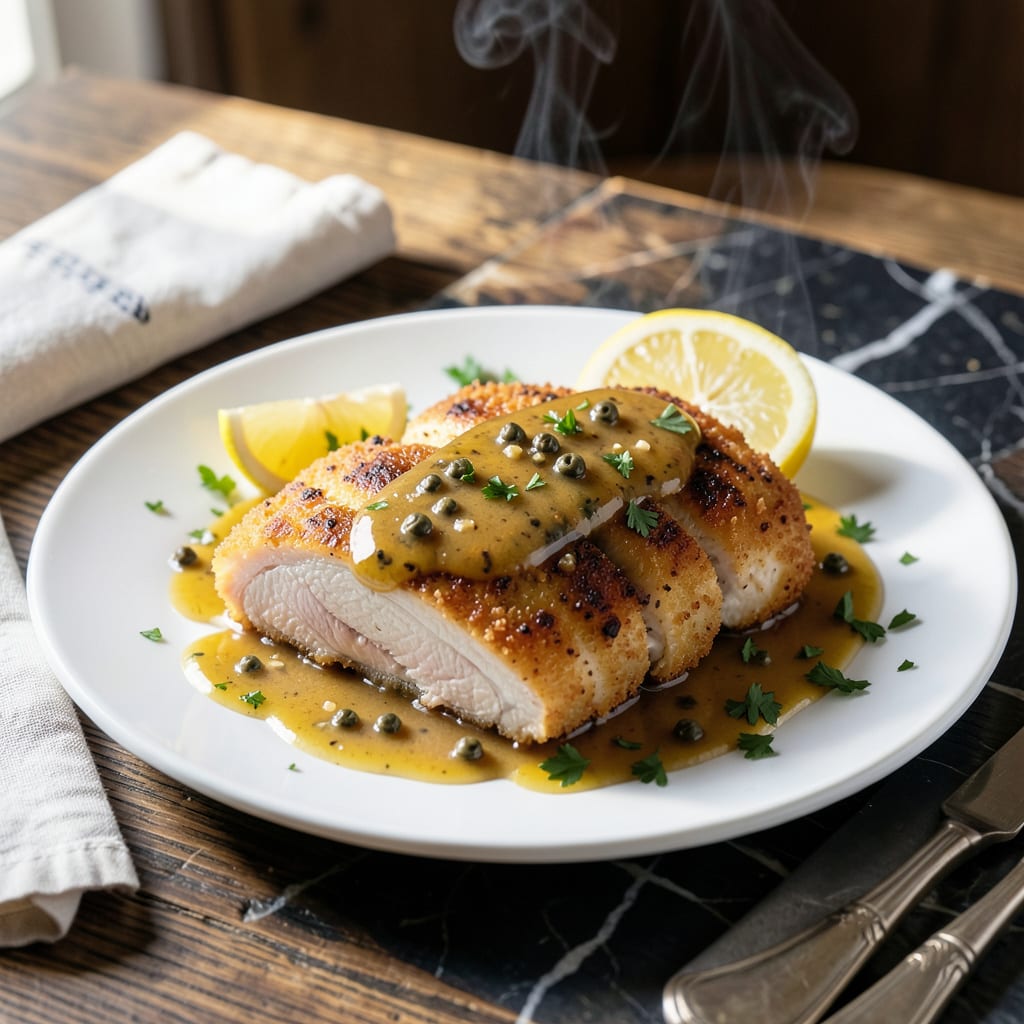
This sauce captures the essence of Cheesecake Factory’s signature piccata with its bright lemon-caper combination. The emulsion technique creates a velvety texture that clings perfectly to chicken or pasta.
With just 10 minutes of cooking time, you’ll achieve restaurant-style results at home. The balanced acidity and briny capers make this sauce versatile for various dishes.
Ingredients for Cheesecake Factory Chicken Piccata Sauce
Ten ingredients create this bright, velvety lemon-caper sauce with restaurant-quality finesse.
| Ingredient | Amount | Notes |
|---|---|---|
| Unsalted Butter 🧈 | ½ cup | Divided for sauce and finishing |
| All-Purpose Flour 🌾 | 2 tbsp | For thickening the sauce |
| Chicken Broth 🍲 | 1 cup | Low-sodium preferred for control |
| Fresh Lemon Juice 🍋 | ½ cup | About 4-5 large lemons |
| Capers 🌿 | 3 tbsp | Drained and rinsed briefly |
| Garlic Cloves 🧄 | 3 cloves | Minced finely for even distribution |
| Shallot 🧅 | 1 whole | Finely diced for subtle flavor |
| Dry White Wine 🍷 | ¼ cup | Such as Sauvignon Blanc |
| Heavy Cream 🥛 | ¼ cup | For rich, velvety texture |
| Dijon Mustard 🟡 | 1 tsp | For depth and tang |
[recipeingredientscaler]
The foundation of this sauce is quality unsalted butter—Plugrá or Kerrygold deliver the clean flavor needed for emulsions. Use low-sodium chicken broth (I prefer Swanson or homemade) to control seasoning. Fresh lemon juice is non-negotiable; bottled lacks the vibrant acidity. Capers should be in brine (not vinegar)—look for Mezzetta or Divina brands at most supermarkets. The white wine doesn’t need to be expensive—any dry variety works perfectly.
No white wine? Substitute with additional chicken broth plus 1 tsp lemon juice. Out of capers? Chopped green olives add similar brininess at a 1:1 ratio. The heavy cream can be replaced with half-and-half for a lighter version, though the texture won’t be as luxurious. For a gluten-free option, swap the flour for cornstarch (use 1 tbsp mixed with 1 tbsp cold water). Dijon mustard is key, but yellow mustard works in a pinch (add an extra squeeze of lemon).
This sauce is best served immediately but can be held warm for 30 minutes with occasional whisking to maintain the emulsion. Store leftovers in an airtight container in the fridge for up to 3 days—reheat gently over low heat, whisking constantly. Freezing isn’t recommended as it can break the emulsion.
Why You’ll Love This Recipe
- One Pan Magic: I love that this comes together in a single skillet—just melt the butter, whisk in flour, then add broth, lemon, and capers.
- Bright & Zesty: The fresh lemon juice cuts through the richness of the butter, and those capers add the perfect briny pop.
- Weeknight Hero: Honestly, it’s my go-to for busy evenings when I need a restaurant-worthy sauce fast.
- Budget Stretch: A little flour and broth go a long way, and leftovers taste even better the next day over pasta or chicken.
Step-by-Step Instructions for Lemon-Caper Piccata Sauce
Master the restaurant technique for this bright, tangy sauce with professional precision and timing.
Step 1: Sauté Aromatics in Butter
Melt ¼ cup of the unsalted butter in a heavy saucepan over medium heat. When the foaming subsides, add the finely diced shallot and cook for 2-3 minutes until translucent and fragrant.
Add the minced garlic cloves and cook for an additional 30 seconds, stirring constantly to prevent browning. The garlic should release its aroma without taking on any color, as burnt garlic will impart bitterness to the finished sauce.
Step 2: Create the Roux and Deglaze
Sprinkle the 2 tbsp all-purpose flour over the shallot-garlic mixture and cook for 1-2 minutes, stirring constantly, to form a light blonde roux. This step removes the raw flour taste and builds the sauce’s base.
Slowly pour in the ¼ cup dry white wine, whisking continuously to prevent lumps. The mixture will thicken momentarily, then loosen as the alcohol cooks off. Simmer for 1-2 minutes until the liquid reduces by half and the raw alcohol scent dissipates.
Step 3: Build the Sauce Base
Gradually whisk in the 1 cup chicken broth and ½ cup fresh lemon juice. Bring to a gentle simmer and cook for 5-7 minutes until the sauce begins to thicken slightly and coats the back of a spoon.
Stir in the 3 tbsp capers and 1 tsp Dijon mustard. The capers should be evenly distributed throughout the sauce, and the mustard will add depth while balancing the acidity. Maintain a low simmer to prevent curdling in the next step.
Step 4: Finish with Cream and Butter
Reduce heat to low and slowly whisk in the ¼ cup heavy cream. The sauce should become velvety and slightly thickened. If it appears too thin, simmer for an additional 2-3 minutes.
Remove from heat and whisk in the remaining ¼ cup unsalted butter, one piece at a time, until fully emulsified. The sauce should have a glossy, restaurant-quality sheen. Taste and adjust acidity with additional fresh lemon juice if needed, though the original measurements should yield perfect balance.
Pro Tips For Making Cheesecake Factory Chicken Piccata Sauce
- Brown the Butter: Cook the unsalted butter until it turns a light golden brown before adding flour—this adds a nutty depth that makes the sauce taste richer than the restaurant version.
- Use Room-Temp Lemon: Always use fresh lemon juice at room temperature; cold juice can cause the sauce to break or look curdled, and you’ll lose that bright, smooth finish.
- Skip Pre-Salting Broth: Since chicken broth varies in saltiness, taste the sauce before adding any extra salt—I learned this the hard way after oversalting three batches.
- Drain the Capers: Rinse and drain capers well before adding them, or the extra brine will thin out the sauce and make it taste harsh instead of tangy and balanced.
Best Sauces and Condiments for This Dish
Classic Pairings
This bright lemon-caper sauce pairs perfectly with pan-seared chicken breasts or tender veal cutlets. I love serving it over linguine pasta for a complete meal that feels straight from the restaurant kitchen.
Vegetable Sides
For a lighter option, drizzle over steamed asparagus or roasted broccoli. The acidity cuts through the richness of the vegetables beautifully. A simple spinach salad with lemon vinaigrette complements the sauce’s citrus notes. 🥗
Seafood Applications
Try this sauce with grilled shrimp or seared scallops for a coastal twist. The briny capers enhance seafood’s natural flavors while the lemon brightens each bite.
Sauce Enhancements
For extra richness, stir in 1 tbsp of chopped parsley just before serving. A pinch of red pepper flakes adds subtle heat that balances the tanginess perfectly.
Dipping Options
Use as a dip for crusty bread or fried calamari. The emulsion’s velvety texture makes it ideal for dipping, and the bold flavors stand up to hearty appetizers. 💡
Storage Tips
Keep any extra sauce in an airtight container in the fridge for up to 3 days. Reheat gently over low heat while whisking to maintain the smooth consistency.
Nutrition Facts
Frequently Asked Questions
Can I use bottled lemon juice instead?
Fresh is strongly recommended for the bright, vibrant flavor. Bottled lacks complexity and may taste flat or artificial in this delicate emulsion.
Why does my sauce look separated?
This usually means the emulsion broke. Fix it by whisking in 1 tsp cold water or a splash of cream off heat until smooth again.
What can I substitute for capers?
Try chopped green olives or 1 tsp caper brine for similar brininess. Both work well in a pinch.
How do I make it gluten-free?
Replace the flour with 1 tbsp cornstarch mixed with 1 tbsp cold water. Add it in Step 2 instead of the roux.

- Jollof Rice Sauce Recipe: West African Tomato and Spice Infusion - September 25, 2026
- Japanese Rice Soup Recipe: Umami-Rich Comfort in a Bowl - September 25, 2026
- Homemade Cream Of Rice Recipe: Silk-Smooth Breakfast in Minutes - September 25, 2026