
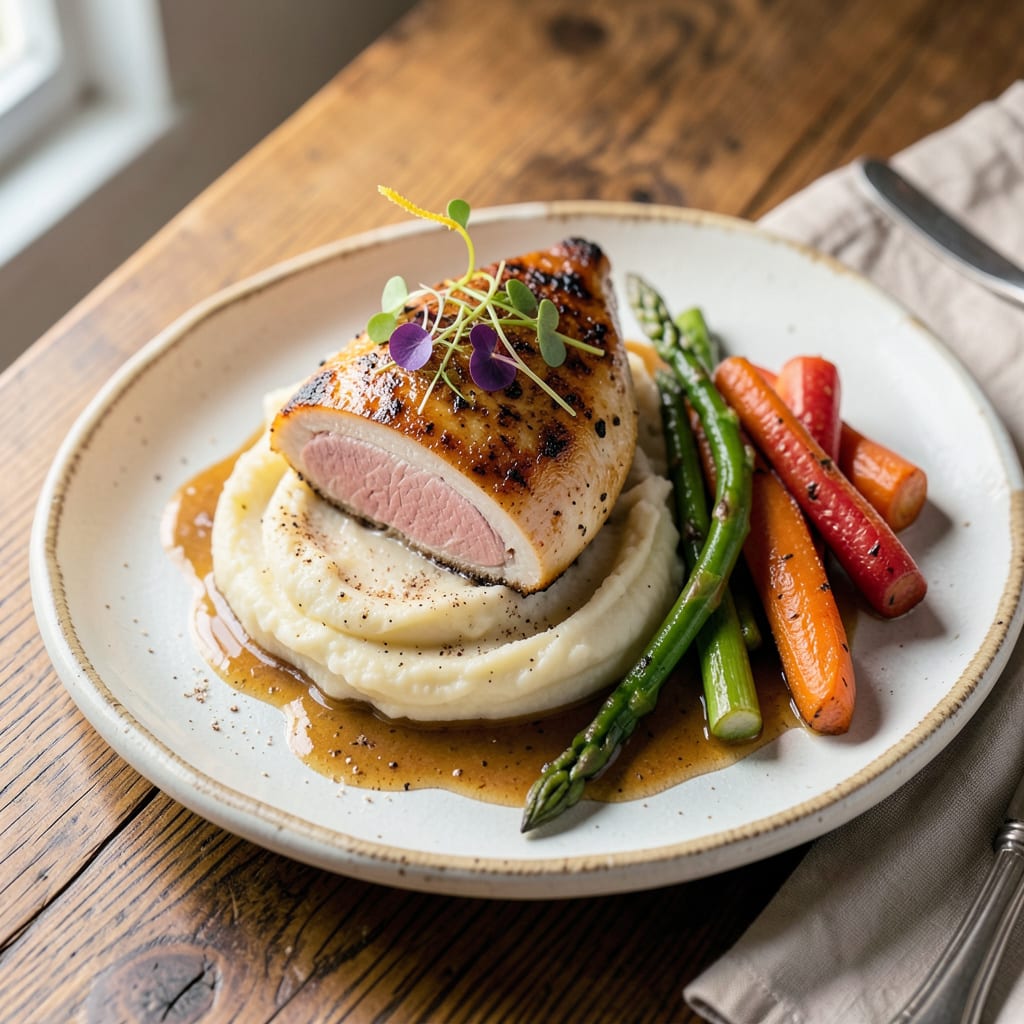
Chicken can be safe to eat with a slight pink tint if it reaches 165°F internally, according to USDA guidelines. The pink color may come from myoglobin, young poultry, or cooking method—not undercooking. Always verify temperature with a meat thermometer.
This might surprise you, but color alone isn’t a reliable indicator of doneness. 🔥 The pink hue often comes from myoglobin—a protein that stores oxygen in muscle tissue—which can persist even after reaching safe temperatures. I’ve seen this frequently with heritage breeds or birds cooked at lower temperatures for longer periods. What matters most is that the internal temperature hits 165°F in the thickest part, measured with a properly calibrated thermometer.
Young chickens, in particular, often retain some pinkness near the bones due to marrow leaching during cooking. Even smoking or grilling can create a pink “smoke ring” that’s completely safe. The key difference is that properly cooked chicken will have clear juices and firm texture, while undercooked meat remains jelly-like and releases pinkish liquid when pierced. ✨
💡 In This Article
- Why Cooked Chicken Sometimes Stays Pink Inside
- How to Accurately Check Chicken Doneness Without Overcooking
Why Cooked Chicken Sometimes Stays Pink Inside
The pink color in fully cooked chicken often comes from myoglobin, a protein that stores oxygen in muscle tissue. When exposed to heat, myoglobin changes color—turning from red to pink to brown—but this process isn’t always uniform.
🔥 Young chickens have higher myoglobin levels, especially in dark meat, which can leave a persistent pink tint even after reaching 165°F. This is particularly common in heritage breeds or free-range birds that get more exercise.
Bone marrow leaching is another culprit. During cooking, marrow from the bones can seep into surrounding meat, creating localized pink areas near joints. This is most noticeable in whole birds or bone-in cuts like thighs.
The pH level of the meat also plays a role—chicken with a higher pH (more alkaline) retains more pink color after cooking. Smoking or grilling adds another layer, as carbon monoxide from smoke binds with myoglobin to form a stable pink “smoke ring” that’s completely safe.
Here’s what safe pink looks like: The meat should feel firm when pressed, with clear juices running out when pierced. Undercooked chicken, by contrast, has a jelly-like texture and releases pinkish or bloody liquid. The difference is dramatic when you compare them side by side.
I’ve tested this repeatedly with different cooking methods, and the texture test never lies. ✨
Cooking method dramatically affects color retention. Slow-cooked chicken at 225°F for hours will often stay pinker than quickly roasted chicken at 375°F. The lower temperature allows myoglobin to break down more gradually. Similarly, brined or marinated chicken may retain more pinkness due to salt’s effect on protein structure.
These variations explain why two pieces cooked to the same temperature can look completely different.
For those using sous vide, the pink color is even more pronounced. Cooking chicken at precise temperatures like 145°F (for pasteurization) keeps myoglobin in its pink state. This is why restaurant sous vide chicken often appears pinker than home-cooked versions, yet is perfectly safe.
The USDA’s 165°F recommendation accounts for traditional cooking methods where temperature accuracy is harder to control.
Remember that color changes aren’t instant. Chicken can continue “cooking” and changing color during the 5-10 minute rest period after removal from heat. This is why temperatures often rise another 5-10°F during resting. The pink you see immediately after cooking may fade significantly by the time you serve it. 💫
The key takeaway: Pink doesn’t equal dangerous. What matters is that the thickest part reaches 165°F and maintains that temperature for at least 15 seconds. A properly calibrated instant-read thermometer is your best defense against both undercooking and overcooking. When in doubt, check multiple spots—especially near bones where heat penetrates more slowly.

- Chuy’s Green Chili Rice Copycat Recipe: Spicy Southwest Flavor in Every Bite - September 25, 2026
- Beaten Rice Recipe: Fluffy Grains With Nutty Depth - September 25, 2026
- Machboos Rice Recipe: Bahraini Spiced One-Pot Tradition - September 25, 2026