
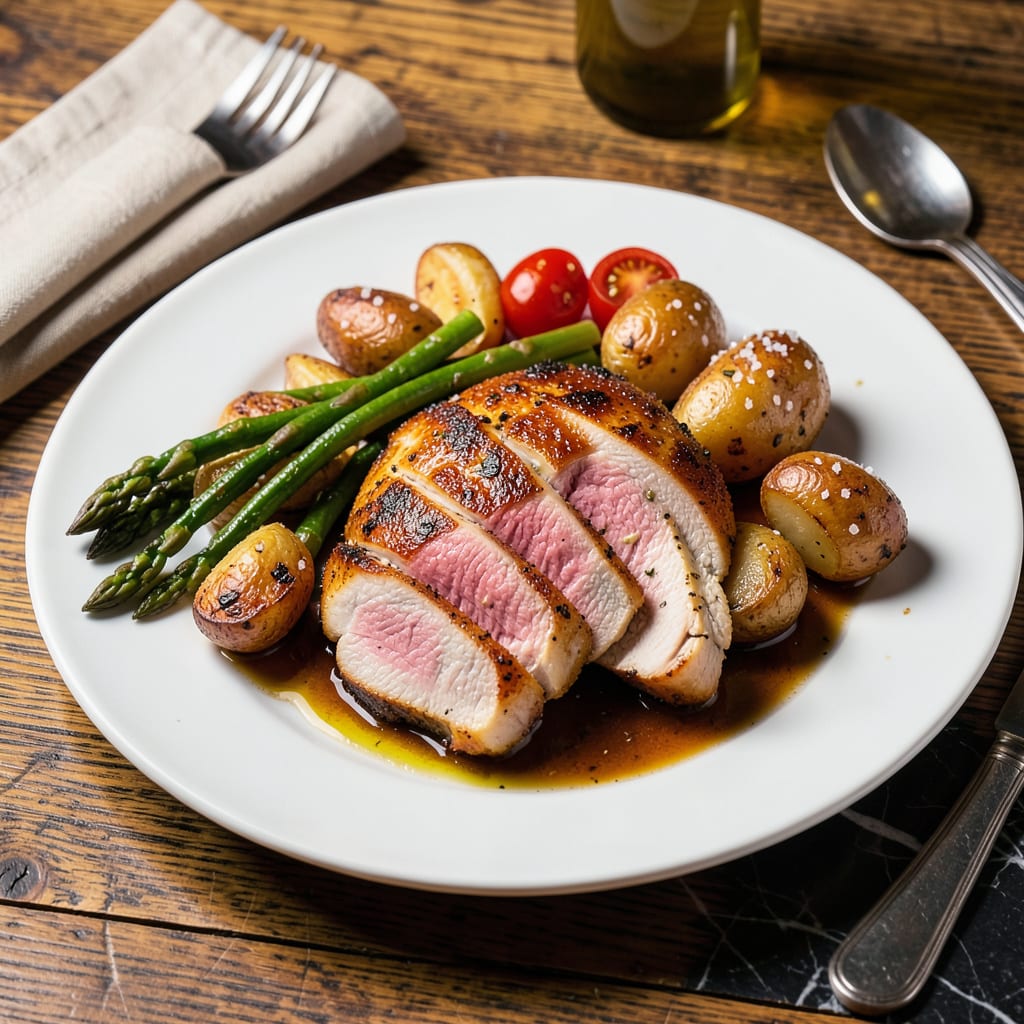
The USDA advises against medium rare chicken due to salmonella risk, recommending a minimum internal temperature of 165°F (74°C) for safe consumption. Rare or pink chicken is unsafe regardless of cooking method or quality.
This isn’t just about preference—it’s about food science and safety. Chicken’s muscle structure and natural bacteria load make it fundamentally different from beef or lamb, where medium rare is acceptable. 🔥 The 165°F threshold ensures harmful pathogens like salmonella are destroyed completely, which simply can’t be guaranteed at lower temperatures. I’ve seen even high-quality, organic chicken test positive for bacteria when undercooked.
What surprises many home cooks is how quickly chicken can become unsafe. Unlike steak where surface bacteria gets seared away, chicken’s bacteria resides throughout the meat. That means every bite of undercooked chicken carries risk—no matter how fresh or expensive the bird. ✨
💡 In This Article
- Why Medium Rare Chicken Poses Serious Health Risks
- Safe Chicken Cooking Temperatures and Doneness Tests
Why Medium Rare Chicken Poses Serious Health Risks
Chicken’s unique muscle structure creates the perfect environment for bacteria to thrive. Unlike beef, where pathogens are typically surface-level, salmonella in poultry penetrates deep into the muscle tissue. This happens because chicken’s porous flesh and higher moisture content (about 75% water) allows bacteria to spread internally during processing.
🔥 The USDA’s Food Safety Inspection Service found that 1 in 25 packages of chicken at retail contains salmonella—even premium organic brands.
The temperature danger zone for chicken is between 40°F and 140°F, where bacteria multiply most rapidly. At 145°F (medium rare), salmonella survives in alarming numbers—studies show it takes 165°F for at least 15 seconds to achieve a 7-log reduction (99.99999% destruction) of pathogens.
What makes this tricky is that chicken’s collagen begins breaking down around 140°F, creating tender texture before safety is achieved. This is why visual cues alone (like clear juices) can be dangerously misleading. ✨
Here’s what’s happening at the cellular level: Chicken muscle fibers contain more connective tissue than beef, which requires higher heat to denature properly. When undercooked, these fibers remain partially intact, trapping bacteria within their structure.
The USDA’s 2019 poultry safety study revealed that even high-quality, air-chilled chicken showed 38% salmonella survival at 150°F—well above what many consider “medium rare” territory. 💥
The processing chain compounds the risk. From farm to package, chicken passes through multiple contamination points: feather removal, evisceration, and water chilling (which can spread bacteria between birds). Unlike cattle that are skinned, chicken’s porous skin remains intact, acting like a sponge for pathogens.
This is why even thorough washing (which the USDA now advises against) can’t guarantee safety—only proper cooking to 165°F can. ⚡
What most people don’t realize is that chicken’s natural pH (around 5.7-6.5) creates an ideal environment for salmonella to survive longer than in more acidic meats. The bacteria can persist in this pH range for weeks in refrigeration. When you consider that home refrigerators often maintain temperatures above the ideal 40°F, the risk compounds exponentially.
This is why restaurant health codes are so strict about poultry handling—professional kitchens know the science behind these numbers. 💫
Consider these critical differences from red meat:
- Bacteria location: Surface-only in beef vs. deep tissue in chicken
- Collagen content: 2-3x more in chicken, requiring higher heat
- Moisture retention: Chicken’s 75% water content spreads bacteria during cooking
- pH level: Neutral range (5.7-6.5) vs. beef’s more acidic 5.4-5.8

- Jollof Rice Sauce Recipe: West African Tomato and Spice Infusion - September 25, 2026
- Japanese Rice Soup Recipe: Umami-Rich Comfort in a Bowl - September 25, 2026
- Homemade Cream Of Rice Recipe: Silk-Smooth Breakfast in Minutes - September 25, 2026