
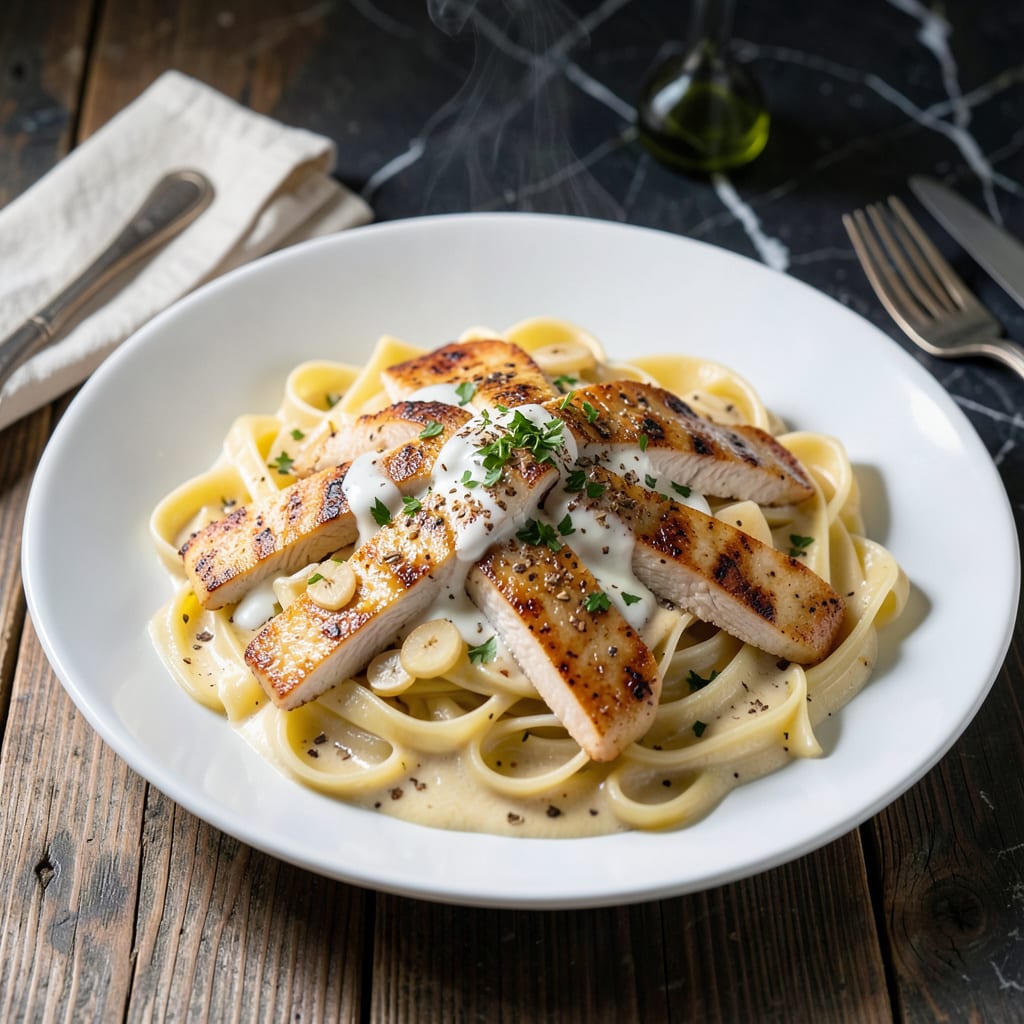
This streamlined approach delivers creamy chicken alfredo without sacrificing flavor or texture. I developed this method to cut down on prep time while maintaining the dish’s signature richness.
By using store-bought alfredo sauce as a base, you’ll achieve professional results with minimal effort. The chicken stays tender, the pasta perfectly coated, and the sauce velvety smooth.
Ingredients for Chicken Alfredo Recipe Using Alfredo Sauce
Pantry staples plus a rotisserie chicken shortcut. Nothing complicated here, just good stuff.
| Ingredient | Amount | Notes |
|---|---|---|
| Fettuccine Pasta 🍝 | 12 oz | Dry, uncooked weight |
| Store-Bought Alfredo Sauce 🥣 | 2 cups | Premium quality recommended |
| Boneless Skinless Chicken Breasts 🍗 | 1 ½ lb | Cut into thin strips |
| Heavy Cream 🥛 | ½ cup | For extra richness |
| Unsalted Butter 🧈 | 2 tbsp | For cooking chicken |
| Garlic Cloves 🧄 | 3 cloves | Minced finely |
| Parmesan Cheese 🧀 | ½ cup | Freshly grated from block |
| All-Purpose Flour 🌾 | 2 tbsp | For thickening if needed |
| Salt 🧂 | 1 tsp | Kosher or sea salt |
| Black Pepper 🌶️ | ½ tsp | Freshly ground preferred |
| Dried Italian Seasoning 🌿 | 1 tsp | Or substitute dried basil |
| Fresh Parsley 🍃 | ¼ cup | Chopped, for garnish |
[recipeingredientscaler]
The alfredo sauce is doing most of the heavy lifting here, so splurge on the good stuff—Bertolli or Rao’s are my go-tos. The chicken needs to be thin-cut for even cooking (pounding helps if your pieces are uneven). I grab mine from Whole Foods when I want quality, but any supermarket brand works. Fresh Parm makes a difference—skip the pre-grated (it’s got anti-caking agents that make the sauce grainy).
No heavy cream? Whole milk plus a pat of butter gets you close. Short on time? Rotisserie chicken shreds perfectly into this. The fettuccine can be swapped for any pasta—pappardelle or tagliatelle are my favorites. If the sauce thickens too much, reserved pasta water thins it right out. Fresh parsley is ideal, but dried at half the amount works too.
This reheats like a dream—actually gets creamier the next day. Keeps 3-4 days in the fridge, freezes for 2 months. I double the recipe and freeze half for those nights I can’t be bothered to cook (parenthetical asides are great).
Why You’ll Love This Recipe
- Minimal Chopping Required: I just slice the chicken breasts and that’s it—no veggie prep, no fuss.
- Creamy Dream: The store-bought alfredo plus heavy cream makes it so rich, I swear I could drink it with a straw.
- Feeds a Crowd: Between us, this stretches to four generous servings with zero extra effort.
- Next-Day Magic: Honestly, the leftovers taste even better after the flavors meld overnight.
Step-by-Step Instructions for Chicken Alfredo Using Alfredo Sauce
Here’s the method that delivers that rich, creamy pasta you’re after with minimal effort.
Step 1: Season and Cook the Chicken
Cut the 1.5 lb boneless skinless chicken breasts into thin strips and pat them dry with paper towels. Season evenly with the 1 tsp salt, 0.5 tsp black pepper, and 1 tsp dried Italian seasoning. This seasoning blend adds depth to the chicken that complements the sauce beautifully.
Heat the 2 tbsp unsalted butter in a large skillet over medium-high heat until it starts to foam. Add the chicken strips in a single layer and cook for 4-5 minutes per side until golden brown and cooked through. You’ll know it’s done when the internal temperature reaches 165°F and the juices run clear.
Step 2: Sauté the Aromatics
Remove the chicken from the skillet and set it aside. In the same pan, add the 3 cloves garlic cloves (minced finely) to the residual butter and chicken juices. Sauté for 30-45 seconds until fragrant—just until the raw garlic smell mellows.
Be careful not to let the garlic burn, as it can turn bitter quickly. If it starts to brown too fast, reduce the heat slightly. The residual fond from the chicken will blend with the garlic to create a flavor base for the sauce.
Step 3: Create the Creamy Sauce
Pour in the 2 cups store-bought alfredo sauce and 0.5 cup heavy cream, stirring to combine with the garlic and pan juices. Heat over medium heat for 2-3 minutes until the mixture is hot and slightly thickened.
If the sauce seems too thin, sprinkle in the 2 tbsp all-purpose flour and whisk vigorously for 1 minute until it thickens to your desired consistency. The flour acts as a stabilizer, ensuring the sauce clings perfectly to the pasta.
Step 4: Combine and Finish
While the sauce simmers, cook the 12 oz fettuccine pasta according to package instructions until al dente. Drain the pasta, reserving ½ cup of pasta water, and add the pasta directly to the skillet with the sauce. Toss to coat evenly.
Return the chicken to the skillet and stir to combine. If the sauce is too thick, add a splash of the reserved pasta water to loosen it. This step ensures every strand of pasta and piece of chicken is generously coated in that rich, creamy sauce.
Step 5: Garnish and Serve
Sprinkle the 0.5 cup parmesan cheese over the pasta and chicken, stirring gently to incorporate. The parmesan will melt into the sauce, adding a sharp, salty depth that balances the richness.
Garnish with the 0.25 cup fresh parsley for a pop of color and freshness. Serve immediately while hot—the sauce will thicken slightly as it cools, so dig in right away for the creamiest experience.
Pro Tips For Making Chicken Alfredo Recipe Using Alfredo Sauce
- Pound the Chicken: Slice those boneless breasts horizontally, then pound them to an even 1/2-inch thickness—I learned this the hard way after too many dry, chewy bites. Uniform pieces cook faster and stay juicy under the creamy sauce.
- Reserve Pasta Water: Before draining the fettuccine, scoop out 1/2 cup of the starchy cooking water. Sounds weird, but it works: a splash or two loosens the store-bought alfredo sauce and helps it cling to the noodles.
- Low and Slow Sauce: Keep the heat at medium-low when warming the alfredo sauce with heavy cream, and stir often. After burning three batches, I finally figured out that high heat makes it split or scorch.
- Butter the Pan: Use about 2 tablespoons of unsalted butter to cook the chicken—enough to coat the bottom. My grandmother swore by this, and she was right: it adds richness that blends perfectly with the alfredo.
Essential Equipment for This Recipe
Essential Skillet
I always reach for my 12-inch stainless steel skillet—I use All-Clad D3—for this recipe. The wide surface lets you cook chicken in a single layer for even browning. A heavy bottom prevents hot spots that can burn your sauce. 🔥
Pasta Pot
A 5-6 quart pot with a tight lid is perfect for boiling 12 oz fettuccine. I prefer Cuisinart Multi-Clad Pro for its even heat distribution. Make sure it’s tall enough to prevent water from boiling over when you add pasta.
Wooden Spoon
For stirring the sauce and tossing pasta, a wooden spoon won’t scratch your cookware. The flat edge helps scrape up browned bits from the chicken. I’ve had my OXO Good Grips spoon for years—it’s my go-to for creamy sauces.
Cheese Grater
Freshly grated Parmesan makes a difference. I use a Microplane for fine, fluffy shreds that melt beautifully. A box grater works too, but the texture won’t be as smooth. Avoid pre-grated cheese—it contains additives that prevent melting. 🧀
Measuring Tools
Accurate measurements matter for consistency. I keep a set of stainless steel measuring cups and spoons from Winco in my drawer. For the ½ cup heavy cream, a liquid measuring cup with a spout makes pouring easier.
Tongs
A good pair of kitchen tongs helps turn chicken strips and toss pasta. I prefer OXO’s 12-inch locking tongs for their reach and grip. They’re perfect for transferring hot chicken from skillet to plate without piercing the meat.
Nutrition Facts
Frequently Asked Questions
Can I use pre-cooked chicken?
Rotisserie chicken works great—just shred or chop it and add at the end to warm through. This cuts prep time to 10 minutes.
How do I prevent the sauce from breaking?
Keep the heat at medium or lower and stir often. If it separates, whisk in 1-2 tbsp reserved pasta water to bring it back.
What pasta shapes work best?
Fettuccine is classic, but pappardelle, linguine, or even penne hold the creamy sauce well. Avoid very small shapes like orzo.
Can I make this ahead?
Yes, but store sauce and pasta separately. Reheat sauce gently with a splash of milk, then toss with cooked pasta. Keeps 3-4 days refrigerated.

- Jollof Rice Sauce Recipe: West African Tomato and Spice Infusion - September 25, 2026
- Japanese Rice Soup Recipe: Umami-Rich Comfort in a Bowl - September 25, 2026
- Homemade Cream Of Rice Recipe: Silk-Smooth Breakfast in Minutes - September 25, 2026