
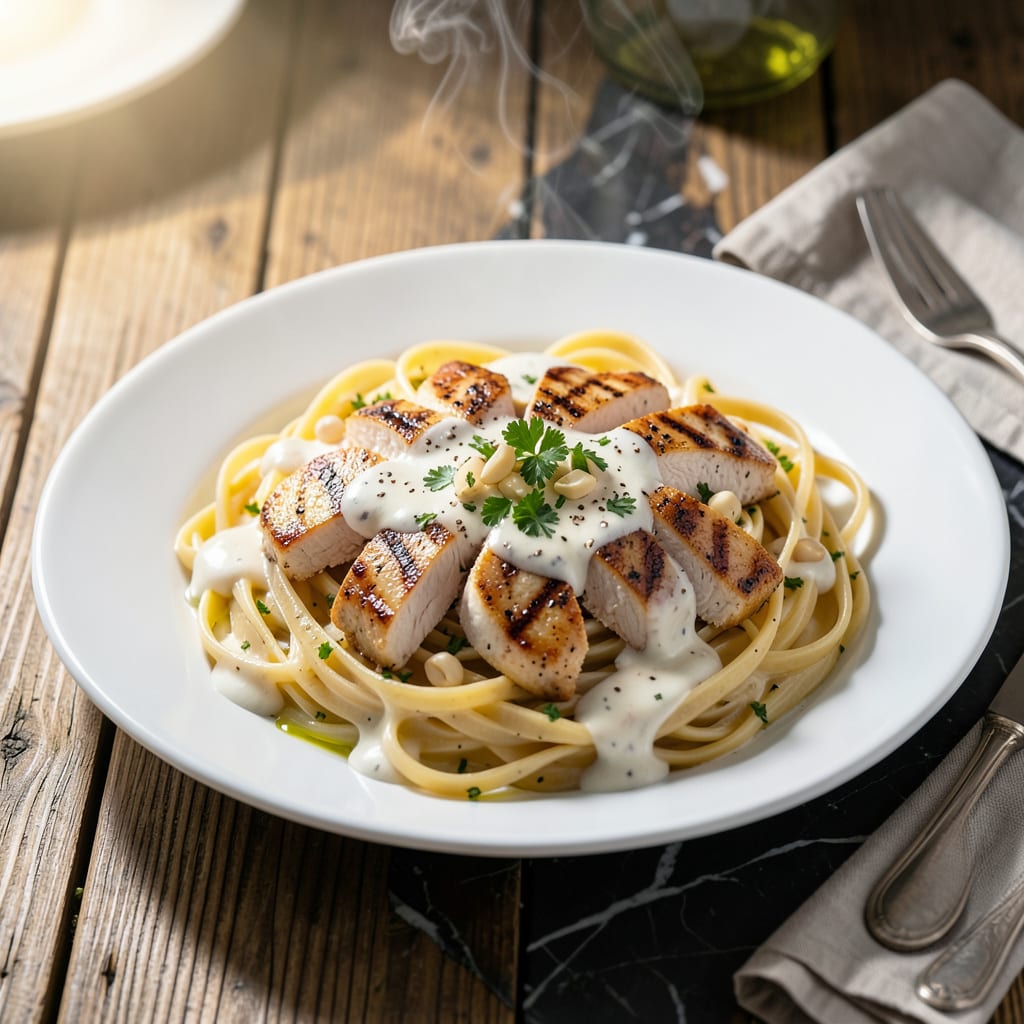
This shortcut to restaurant-style pasta proves that great flavor doesn’t require hours in the kitchen. Using jarred sauce as a base, we elevate it with simple techniques that deliver creamy, rich results every time.
The chicken stays tender while the sauce transforms into a velvety coating that clings perfectly to each noodle. It’s a meal that tastes indulgent but comes together with minimal effort and maximum satisfaction.
Ingredients for Chicken Alfredo Recipe with Jarred Sauce
Pantry staples plus a quick stop at the deli counter. Nothing fancy, just good stuff.
| Ingredient | Amount | Notes |
|---|---|---|
| Fettuccine Pasta 🍝 | 12 oz | Fresh or dried works |
| Boneless Skinless Chicken Breast 🍗 | 1 ½ lb | Cut into thin strips |
| Jarred Alfredo Sauce 🥛 | 2 cups | 15-16 oz jar typically |
| Heavy Cream 🥛 | ½ cup | Full-fat for creaminess |
| Butter 🧈 | 2 tbsp | Unsalted preferred |
| Garlic Cloves 🧄 | 3 cloves | Minced for best flavor |
| Parmesan Cheese 🧀 | ¾ cup | Freshly grated from block |
| Olive Oil 🫒 | 1 tbsp | For cooking chicken |
| All-Purpose Flour 🌾 | 2 tbsp | For thickening sauce |
| Salt 🧂 | 1 tsp | Kosher or sea salt |
| Black Pepper 🌶️ | ½ tsp | Freshly ground preferred |
| Dried Italian Seasoning 🌿 | 1 tsp | Or use fresh herbs |
| Chicken Broth 💧 | ¼ cup | Low-sodium preferred |
[recipeingredientscaler]
The sauce is the star here. Rao’s or Bertolli jars give you the best base to build on—avoid the super cheap brands that taste like salt. The chicken needs to be evenly sized so it cooks through without drying out. I grab my Parmesan from the Whole Foods cheese counter—they’ll grate it fresh while you wait. For pasta, De Cecco or Barilla hold sauce better than generic brands.
No heavy cream? Half-and-half works in a pinch (just reduce the broth a touch). Fresh garlic is ideal but jarred minced at half the amount saves time. Want more depth? Add a pinch of nutmeg to the sauce. If you’re using dried herbs instead of Italian seasoning, use half the quantity. The butter can be swapped for olive oil, but you’ll lose some richness.
Leftovers keep 3-4 days in the fridge—reheat gently with a splash of milk to loosen the sauce. Freezes for 1 month, but the pasta texture changes. I always make extra Parm to sprinkle on top right before serving (worth the extra minute).
Why You’ll Love This Recipe
- Dinner in 20: I can have this on the table faster than takeout arrives—just boil pasta, sear chicken, and stir in the jarred sauce with cream.
- Rich Without Fuss: The butter and heavy cream turn that jarred sauce into something so velvety, I swear no one misses the homemade version.
- Feeds the Crew: Between us, this is my go-to for Sunday suppers or when the kids bring friends over—everyone cleans their plate.
- Leftovers? Yes Please: Honestly, it reheats beautifully for lunch the next day, and the flavors taste even deeper.
Step-by-Step Instructions for Chicken Alfredo With Jarred Sauce
Here’s how to turn jarred sauce into a creamy, restaurant-worthy dish with minimal effort.
Step 1: Cook the Fettuccine Pasta
Bring a large pot of salted water to a rolling boil over high heat. Add the 12 oz fettuccine pasta and cook according to package instructions until al dente, usually 1-2 minutes less than the suggested time.
You want the pasta slightly undercooked because it will finish in the sauce. Reserve ½ cup of pasta water before draining—this starchy liquid helps create a silky sauce.
Step 2: Sear and Season the Chicken
While the pasta cooks, heat the 1 tbsp olive oil in a large skillet over medium-high heat. Add the 1.5 lb boneless skinless chicken breast, cut into thin strips, and sprinkle with 1 tsp salt, 0.5 tsp black pepper, and 1 tsp dried Italian seasoning.
Cook for 5-6 minutes, stirring occasionally, until the chicken is golden brown and cooked through. The strips should be no longer pink inside. Transfer the chicken to a plate and keep warm.
Step 3: Build the Creamy Sauce
In the same skillet, melt the 2 tbsp butter over medium heat. Add the 3 cloves garlic cloves, minced, and sauté for 30 seconds until fragrant. Stir in the 2 tbsp all-purpose flour and cook for 1 minute to remove the raw taste.
Slowly pour in the 2 cups jarred alfredo sauce, 0.5 cup heavy cream, and 0.25 cup chicken broth, whisking constantly. Bring to a gentle simmer and cook for 2-3 minutes until the sauce thickens slightly.
Step 4: Combine and Finish
Reduce the heat to low and return the chicken to the skillet. Add the drained fettuccine and toss everything together until the pasta is fully coated in the sauce.
Sprinkle in the 0.75 cup parmesan cheese and stir until melted and creamy. If the sauce is too thick, add a splash of the reserved pasta water to loosen it. Serve immediately while the sauce is silky and the pasta is perfectly tender.
Pro Tips For Making Chicken Alfredo Recipe With Jarred Sauce
- Pound the Chicken: Use a meat mallet to pound the chicken breasts to an even ½-inch thickness so they cook through at the same rate—no more dry edges and raw centers.
- Thin the Sauce: Stir in ¼ cup heavy cream or pasta water into the jarred alfredo sauce while warming it on low heat; it prevents the thick, gluey texture that happens when it’s heated straight from the jar.
- Salt the Pasta Water: Add at least 1 tablespoon of salt to the boiling water before cooking the fettuccine—it seasons the noodles so the final dish doesn’t taste flat, even with rich sauce.
- Rest the Chicken: Let the cooked chicken rest for 5 minutes on a plate before slicing; it keeps the juices inside the meat instead of all over your cutting board.
Best Sauces and Condiments for This Dish
Sauce Enhancers
I always add ½ cup heavy cream to the jarred sauce for extra richness. A splash of ¼ cup chicken broth thins it just enough while boosting depth. This combo transforms even basic brands into something special. 💡
Cheese Upgrades
Freshly grated Parmesan from a block melts beautifully and tastes far superior to pre-grated. I also love adding ¼ cup shredded Asiago for a sharper flavor. The cheese should be the last thing you stir in to maintain creaminess.
Herb Infusions
A pinch of fresh nutmeg (about ⅛ tsp) adds warmth to the sauce. I also like stirring in 1 tbsp chopped parsley at the end for freshness. Dried herbs work too, but use half the amount to avoid bitterness.
Spice Boosts
For heat, a dash of red pepper flakes (about ¼ tsp) works wonders. White pepper adds subtle warmth without changing the sauce’s color. I sometimes finish with freshly cracked black pepper for a bold contrast.
Acid Balance
A squeeze of lemon juice (about 1 tsp) brightens the richness. White wine vinegar works too, but start with ½ tsp and adjust. This trick prevents the dish from tasting too heavy. ✨
Texture Additions
For crunch, I sprinkle toasted breadcrumbs or crispy pancetta bits on top. Fresh basil ribbons add a pop of color and aroma. These toppings contrast beautifully with the creamy pasta.
Nutrition Facts
Frequently Asked Questions
Can I use chicken thighs instead of breasts?
Yes! Boneless thighs stay juicier and are more forgiving. Cook them for 6-7 minutes over medium-high heat until 165°F. They add richer flavor to the dish.
How do I prevent the sauce from breaking?
Avoid boiling the sauce—keep it at a gentle simmer. Stir constantly when adding liquids. If it separates, whisk in 1 tbsp cold butter to bring it back together.
What pasta shapes work best?
Fettuccine is classic, but pappardelle or tagliatelle hold sauce well. For a twist, try penne or rigatoni. Avoid thin pastas like angel hair—they overcook easily.

- Jollof Rice Sauce Recipe: West African Tomato and Spice Infusion - September 25, 2026
- Japanese Rice Soup Recipe: Umami-Rich Comfort in a Bowl - September 25, 2026
- Homemade Cream Of Rice Recipe: Silk-Smooth Breakfast in Minutes - September 25, 2026