
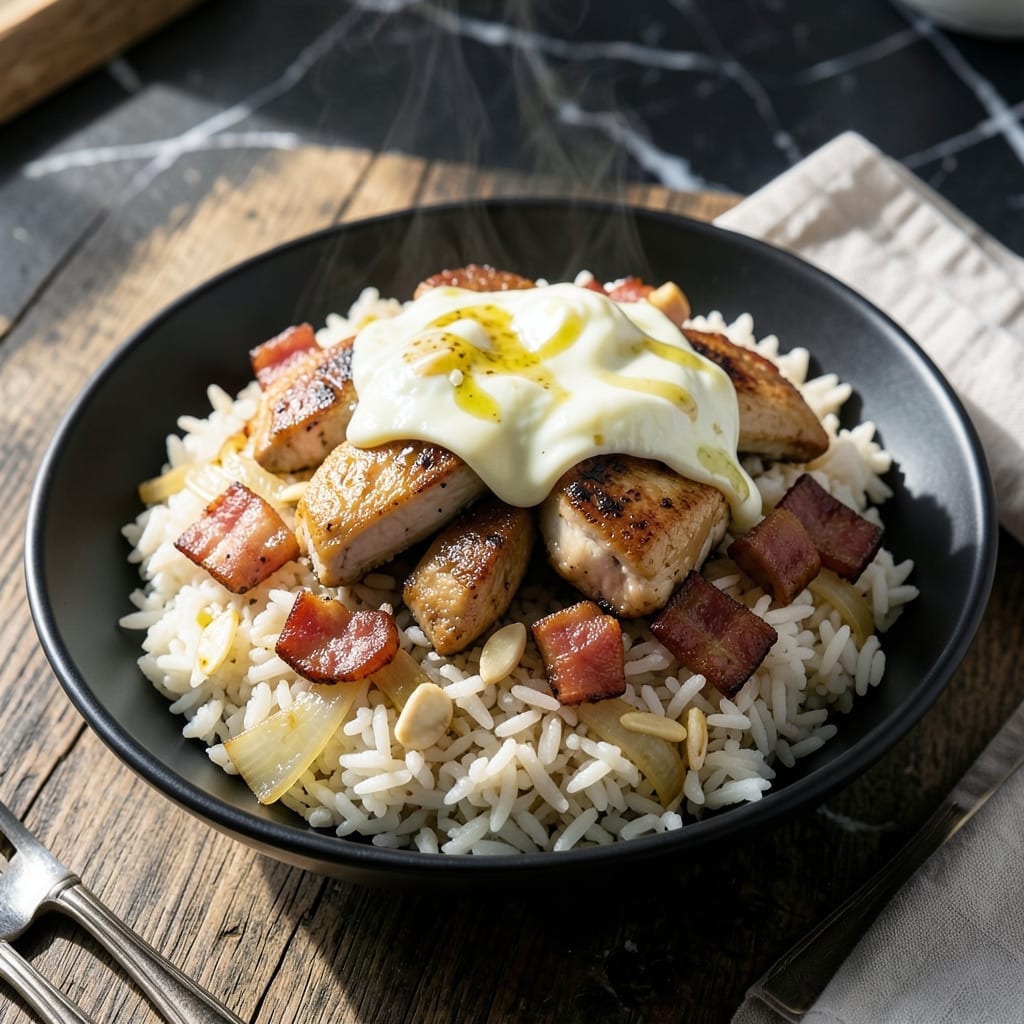
This recipe transforms leftover rice into a smoky, savory masterpiece with crispy chicken and bacon. The combination of textures and flavors creates a dish that’s both hearty and deeply satisfying.
Every bite delivers perfectly cooked rice, tender chicken, and crispy bacon, all tied together with a subtle umami richness. It’s a foolproof way to elevate a simple ingredient into something extraordinary.
Ingredients for Chicken and Bacon Fried Rice
Transform leftovers with these smoky, savory ingredients for a dish that satisfies deeply.
| Ingredient | Amount | Notes |
|---|---|---|
| Cooked White Rice 🍚 | 4 cups | Day-old, chilled (essential for texture) |
| Boneless, Skinless Chicken Thighs 🍗 | 1 lb | Cut into 1/2-inch dice |
| Thick-Cut Bacon 🥓 | 6 slices | Chopped into 1/4-inch pieces |
| Large Eggs 🥚 | 2 whole | Lightly beaten |
| Yellow Onion 🧅 | 1 whole | Medium, finely diced |
| Garlic Cloves 🧄 | 3 cloves | Minced finely |
| Frozen Green Peas 🌱 | ¾ cup | No need to thaw |
| Soy Sauce 🫒 | 3 tbsp | Low-sodium preferred |
| Oyster Sauce 🫒 | 1 tbsp | For umami depth |
| Sesame Oil 🫒 | 1 tsp | Toasted, for finishing |
| Green Onions 🌿 | 3 whole | Thinly sliced, green parts only |
| Vegetable Oil 🫒 | 2 tbsp | Neutral flavor, high smoke point |
| Kosher Salt 🧂 | ½ tsp | Diamond Crystal preferred |
| Ground Black Pepper 🌶️ | ¼ tsp | Freshly cracked |
The bacon must be thick-cut for proper texture—avoid thin-sliced varieties as they crisp too quickly and burn. Chicken thighs offer superior moisture retention compared to breasts; source them skin-on for extra flavor, then remove the skin yourself. Day-old rice from a Chinese restaurant works perfectly if you lack leftovers. Look for low-sodium soy sauce to control seasoning precisely.
No oyster sauce? Hoisin or fish sauce at half the amount provides similar depth (though fish sauce may require an extra pinch of sugar). For a milder flavor, substitute coconut aminos. The green peas can be swapped for diced carrots or bell peppers—cut small and uniform for even cooking. Vegetable oil can be replaced with peanut or avocado oil, but avoid olive oil due to its lower smoke point.
Cooked rice keeps in the fridge for 4-5 days or freezes for 1 month. Rendered bacon fat can be stored in the fridge for 1 week—use it to fry eggs or sauté vegetables. Always bring rice to room temperature before frying for optimal texture and even cooking.
Why You’ll Love This Recipe
- One Pan Wonder: I love that I can cook the bacon, chicken, and eggs all in the same pan before tossing in the rice.
- Smoky & Savory: The thick-cut bacon adds this deep, smoky flavor that pairs perfectly with the tender chicken thighs.
- Meal Prep Hero: I make a big batch on Sunday and it reheats beautifully for lunches all week.
- Budget Stretcher: Between us, using leftover rice and chicken thighs keeps this dish cheap but still crave-worthy.
Step-by-Step Instructions for Chicken and Bacon Fried Rice
Master the technique for perfectly textured fried rice with layers of smoky, savory flavor.
Step 1: Render the Bacon and Cook the Chicken
Heat a large wok or skillet over medium-high heat. Add the 6 slices Thick-Cut Bacon chopped into 1/4-inch pieces and cook for 4-5 minutes until crispy and the fat has rendered. This rendered fat will serve as the flavor foundation for your dish.
Using a slotted spoon, transfer the bacon to a paper towel-lined plate, leaving the fat in the pan. Add 1 tbsp Vegetable Oil of the 2 tbsp Vegetable Oil to the pan, then add the 1 lb Boneless, Skinless Chicken Thighs cut into 1/2-inch dice. Season with 0.5 tsp Kosher Salt and 0.25 tsp Ground Black Pepper.
Cook for 5-6 minutes until the chicken is golden brown and cooked through. Remove the chicken and set aside with the bacon. The chicken should reach an internal temperature of 165°F.
Step 2: Sauté the Aromatics and Scramble the Eggs
In the same pan, add the remaining 1 tbsp Vegetable Oil. Add the 1 whole Yellow Onion finely diced and cook for 2-3 minutes until translucent. Stir in the 3 cloves Garlic Cloves minced finely and cook for an additional 30 seconds until fragrant.
Push the aromatics to one side of the pan and pour in the 2 whole Large Eggs lightly beaten. Scramble the eggs until just set, breaking them into small pieces. This should take about 1-2 minutes. The eggs should be soft and slightly moist.
Step 3: Combine All Ingredients and Season
Add the 4 cups Cooked White Rice to the pan, breaking up any clumps with your spatula. Stir in the 0.75 cup Frozen Green Peas, 3 tbsp Soy Sauce, and 1 tbsp Oyster Sauce. Mix everything together gently to avoid breaking the rice grains.
Return the cooked bacon and chicken to the pan. Stir to combine all ingredients evenly. Cook for an additional 2-3 minutes until everything is heated through and the rice starts to develop a slight crispiness.
Step 4: Finish and Garnish
Remove the pan from heat and drizzle with 1 tsp Sesame Oil. Stir to incorporate the sesame oil evenly. Taste and adjust seasoning with additional soy sauce if needed.
Transfer the fried rice to a serving dish and garnish with the 3 whole Green Onions thinly sliced. The green onions should be added just before serving to preserve their fresh, crisp texture. Serve immediately while hot.
Pro Tips For Making Chicken And Bacon Fried Rice
- Chill the Rice: Use day-old, refrigerated rice—it’s drier and fries up fluffier instead of mushy. I learned this the hard way after making gluey fried rice with fresh rice more times than I’d like to admit.
- Render Bacon First: Cook the thick-cut bacon first until crispy, then use the leftover fat to sauté the chicken and onions. That rendered fat packs in a smoky depth you just can’t get with oil alone.
- Cut Chicken Small: Dice the boneless, skinless chicken thighs into ½-inch pieces so they cook through fast and stay tender. Bigger chunks steam instead of sear, and nobody wants chewy chicken in their fried rice.
- Scramble Eggs Separately: Beat the eggs with a pinch of salt, then scramble them in the pan before adding the rice. Sounds like an extra step, but it keeps them soft and distinct instead of disappearing into the mix.
Essential Equipment for This Dish
Wok or Skillet
A large wok is my top choice for its high sides and wide surface area, allowing you to toss ingredients without spills. A 14-inch skillet works well too, especially if it’s cast iron for even heat distribution. 🔥
High Heat Tool
You need a burner that can maintain medium-high to high heat consistently. Gas ranges are ideal, but if using electric, ensure your pan makes full contact. Avoid nonstick—it can’t handle the high heat needed for proper sear.
Wooden Spatula
A wooden spatula or rice paddle helps break up rice clumps without damaging your cookware. I prefer bamboo for its durability and heat resistance. The flat edge also helps press ingredients into the hot surface.
Slotted Spoon
For removing bacon and chicken while leaving the precious rendered fat behind, a stainless steel slotted spoon is essential. Look for one with a long handle to keep your hands safe from splatters. I use mine constantly in Asian cooking.
Mixing Bowls
Have 2-3 mixing bowls ready for prepping ingredients. I like stainless steel because they’re lightweight and nest for storage. Prep all ingredients before starting—fried rice cooks fast once the heat is on.
Paper Towels
Keep a roll handy for draining bacon and absorbing excess oil. The rendered bacon fat is liquid gold for flavor, but you want to control how much goes back into your dish. I always have a paper towel-lined plate ready for this step.
Nutrition Facts
Frequently Asked Questions
Can I use fresh rice instead of day-old?
Fresh rice contains too much moisture and will turn mushy. Day-old rice is drier, which helps achieve that perfect separate grain texture. Spread freshly cooked rice on a tray and refrigerate for 1-2 hours if you’re in a pinch.
Why do you use chicken thighs instead of breasts?
Thighs stay juicier during high-heat cooking and add more flavor. Breasts can dry out quickly in a wok or skillet at medium-high heat. If you prefer breasts, cut them slightly larger to prevent overcooking.
Can I make this without oyster sauce?
Yes! Substitute hoisin sauce or fish sauce at half the amount. For a milder option, use coconut aminos. Each alternative brings a slightly different flavor profile but works well.
How do I prevent the eggs from overcooking?
Push the aromatics to one side before adding eggs, and cook on medium-high heat for just 1-2 minutes. Remove the pan from heat if the eggs start setting too quickly.

- Jollof Rice Sauce Recipe: West African Tomato and Spice Infusion - September 25, 2026
- Japanese Rice Soup Recipe: Umami-Rich Comfort in a Bowl - September 25, 2026
- Homemade Cream Of Rice Recipe: Silk-Smooth Breakfast in Minutes - September 25, 2026