
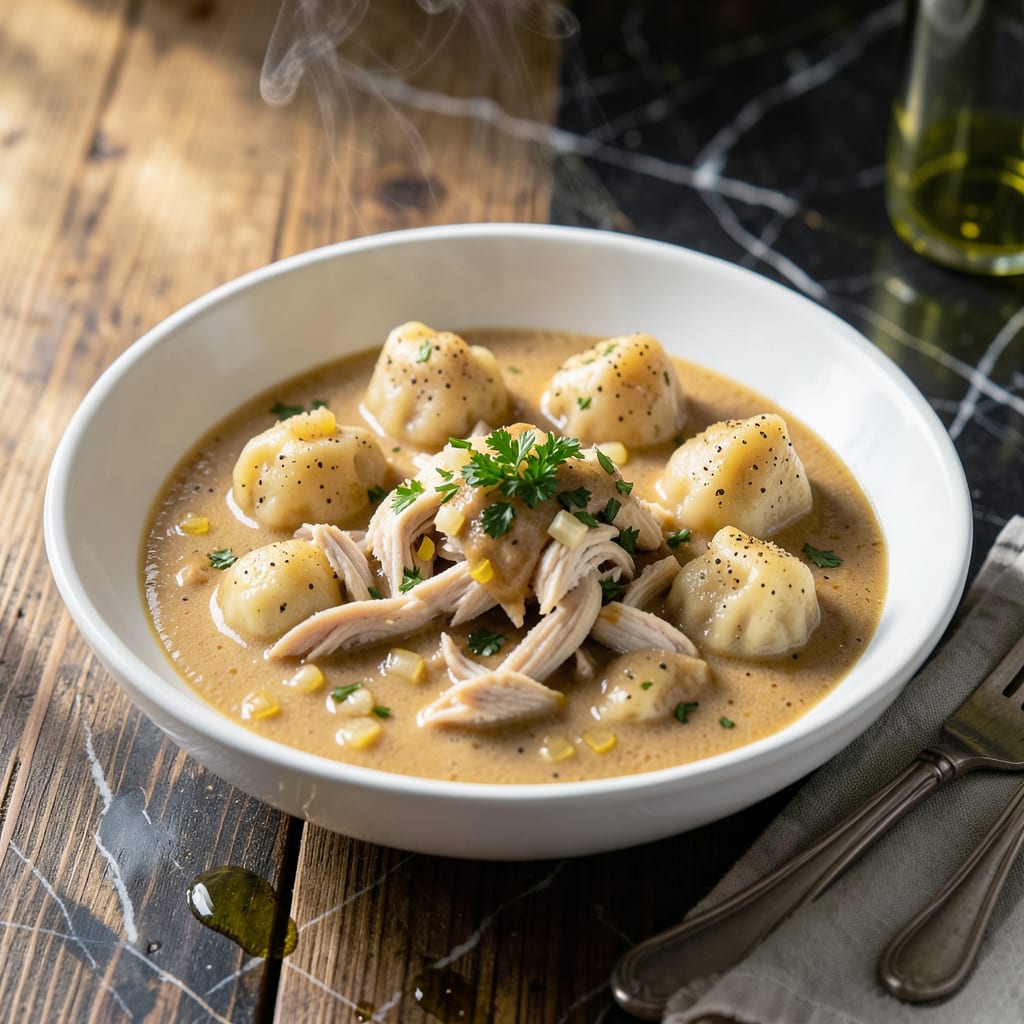
This rich, velvety sauce transforms simple chicken and dumplings into a comfort food masterpiece. The secret lies in a slow-simmered broth that builds deep, savory layers of flavor without overwhelming the delicate dumplings.
With just a few pantry staples and 30 minutes of simmering, you’ll create a restaurant-quality sauce that’s thick enough to cling to every bite yet light enough to let the dumplings shine.
Ingredients for Chicken and Dumplings Sauce
Ten ingredients build this silky, restaurant-quality sauce for perfect chicken and dumplings.
| Ingredient | Amount | Notes |
|---|---|---|
| Chicken Broth 🍲 | 4 cups | Low-sodium preferred for control |
| Heavy Cream 🥛 | 1 cup | Full-fat for velvety texture |
| Unsalted Butter 🧈 | ½ cup | Divided for roux and finishing |
| All-Purpose Flour 🌾 | ⅓ cup | For thickening roux |
| Yellow Onion 🧅 | 1 whole | Finely diced for base flavor |
| Garlic Cloves 🧄 | 3 cloves | Minced for aromatic depth |
| Fresh Thyme Sprigs 🌿 | 3 pieces | Leaves stripped, stems discarded |
| Bay Leaf 🍃 | 1 whole | Dried, removed before serving |
| Kosher Salt 🧂 | 1 ½ tsp | Adjust to taste at end |
| Freshly Ground Black Pepper 🌶️ | ½ tsp | For brightness and warmth |
[recipeingredientscaler]
The broth is your foundation—low-sodium chicken broth lets you control the salt. I grab Swanson or Better Than Bouillon at Costco for bulk savings. The heavy cream is non-negotiable for that velvety finish (skip the half-and-half, it’ll curdle). Organic Valley or Darigold are my go-tos. Fresh thyme makes a difference here—dried works in a pinch but use one-third the amount.
No fresh thyme? Dried thyme at one-third the amount gets you close. Out of heavy cream? Whole milk plus a pat of butter works, though it won’t be as rich. The butter should be unsalted so you can season properly. If you’re avoiding dairy, olive oil plus coconut cream is a solid swap. The flour is just for thickening—cornstarch slurry (1 tbsp cornstarch + 1 tbsp water) works too if you’re gluten-free.
This sauce thickens as it cools but looses up when reheated. Store in an airtight container for up to 4 days in the fridge or freeze for 3 months. Stir well before using—it’ll separate a bit. (worth the extra minute)
Why You’ll Love This Recipe
- One Pot Wonder: I love that this sauce comes together in a single pot—just sauté the onion, whisk in flour, then add broth and cream. No fancy techniques, just simple steps.
- Rich and Creamy: The butter and heavy cream create this velvety texture that clings to dumplings like a warm hug. Honestly, it’s the kind of sauce I could eat with a spoon.
- Feeds a Crowd: This recipe doubles easily, making it my go-to for family dinners or potlucks. I’ll be real: leftovers taste even better the next day.
Step-by-Step Instructions for Chicken and Dumplings Sauce
Here’s the method. Straightforward, tested, works every time.
Step 1: Sauté Aromatics in Butter
Melt ¼ cup of the unsalted butter in a large pot over medium heat. Add the finely diced yellow onion and cook for 5-6 minutes until it turns translucent and begins to soften. This builds your flavor foundation.
Stir in the minced garlic cloves and cook for 30 seconds just until fragrant. Be careful not to let it brown. Add the fresh thyme sprigs and bay leaf to infuse the butter with their aromatics as you work.
Step 2: Create a Roux and Toast the Flour
Sprinkle the 0.33 cup all-purpose flour over the onion mixture and stir constantly for 2-3 minutes. You want to cook out the raw flour taste until the mixture turns a pale golden color and smells nutty. This is your roux, the thickener for your sauce.
The roux should look like a thick paste coating the onions. If it seems dry, add another tablespoon of the unsalted butter. Keep the heat at medium to prevent browning too quickly—burnt roux tastes bitter.
Step 3: Gradually Whisk in Chicken Broth
Slowly pour in the 4 cups chicken broth, about ½ cup at a time, whisking constantly to prevent lumps from forming. This gradual addition ensures a smooth, velvety sauce. Bring the mixture to a gentle simmer over medium-high heat.
Once simmering, reduce heat to medium-low and let it cook for 8-10 minutes, stirring occasionally, until the sauce begins to thicken and coats the back of a spoon. You’ll notice it transforming from a thin liquid to a richer, more substantial consistency.
Step 4: Finish with Cream and Seasonings
Stir in the 1 cup heavy cream and remaining ¼ cup unsalted butter. Simmer for another 5 minutes until the sauce is smooth and creamy. The butter should melt completely, creating a glossy finish.
Remove the bay leaf and thyme sprigs. Season with 1.5 tsp kosher salt and 0.5 tsp freshly ground black pepper. Taste and adjust the seasoning if needed—the sauce should be rich and well-balanced, ready to envelop your dumplings beautifully.
Pro Tips For Making Chicken And Dumplings Sauce
- Brown the Onions: Cook the yellow onions in butter until deep golden brown—about 8-10 minutes over medium-low heat. I learned this the hard way: pale onions make the sauce taste flat and underdeveloped.
- Whisk Flour Vigorous: When adding flour to the butter, whisk constantly for 2 full minutes to cook out the raw taste. Sounds tedious, but it prevents that pasty, starchy flavor in your finished sauce.
- Warm the Broth: Always heat your chicken broth before adding it to the roux. Cold broth seizes up the mixture and creates lumps—my grandmother swore by this, and she was right.
- Finish with Cream: Stir in the heavy cream at the very end, off the heat. Adding it too early can cause curdling, and nobody wants a broken sauce after all that effort.
Make-Ahead Tips for This Recipe
Overnight Prep
This sauce actually improves overnight as flavors meld. I make it 1 day ahead so the thyme and bay leaf have time to infuse deeply. Store in an airtight container in the fridge for up to 4 days before using. 💡
Freezer Strategy
For long-term storage, cool completely then freeze in quart-sized freezer bags laid flat. This saves space and thaws faster. It keeps for 3 months without texture changes. Label with the date—I use freezer tape for easy identification.
Reheating Method
Gently reheat on the stovetop over low heat, stirring frequently. Add ¼ cup chicken broth if it thickens too much. Avoid boiling to prevent separation. I use a heavy-bottomed saucepan for even heating.
Thickening Adjustments
If your sauce thins after reheating, mix 1 tbsp cornstarch with 1 tbsp cold water and stir in. Simmer for 2 minutes until thickened. This works better than adding more flour, which can create lumps.
Flavor Revival
After storage, taste and adjust seasoning. You may need an extra pinch of kosher salt or black pepper. A splash of heavy cream restores richness if the sauce seems flat. I always keep a small container for this purpose.
Portion Control
Divide into 1-cup portions for easy use. This prevents thawing more than you need. I use silicone muffin molds for perfect single-serving sizes. They pop out easily once frozen. ❄️
Nutrition Facts
Frequently Asked Questions
Can I use milk instead of heavy cream?
Whole milk works in a pinch, but the sauce won’t be as rich. For best results, use heavy cream or add a tablespoon of butter to whole milk to boost the fat content.
How do I fix a lumpy sauce?
Whisk vigorously to break up lumps, or strain through a fine-mesh sieve. To prevent lumps, add broth slowly while whisking constantly during the roux stage.
Can I make this sauce gluten-free?
Yes! Replace the flour with a cornstarch slurry (1 tbsp cornstarch + 1 tbsp cold water) added after simmering the broth. Cook for 2 minutes to thicken.
Why does my sauce separate when reheated?
This happens if reheated too quickly or boiled. Warm over low heat and stir frequently. If it separates, whisk in 1 tbsp cold water to bring it back together.

- Jollof Rice Sauce Recipe: West African Tomato and Spice Infusion - September 25, 2026
- Japanese Rice Soup Recipe: Umami-Rich Comfort in a Bowl - September 25, 2026
- Homemade Cream Of Rice Recipe: Silk-Smooth Breakfast in Minutes - September 25, 2026