
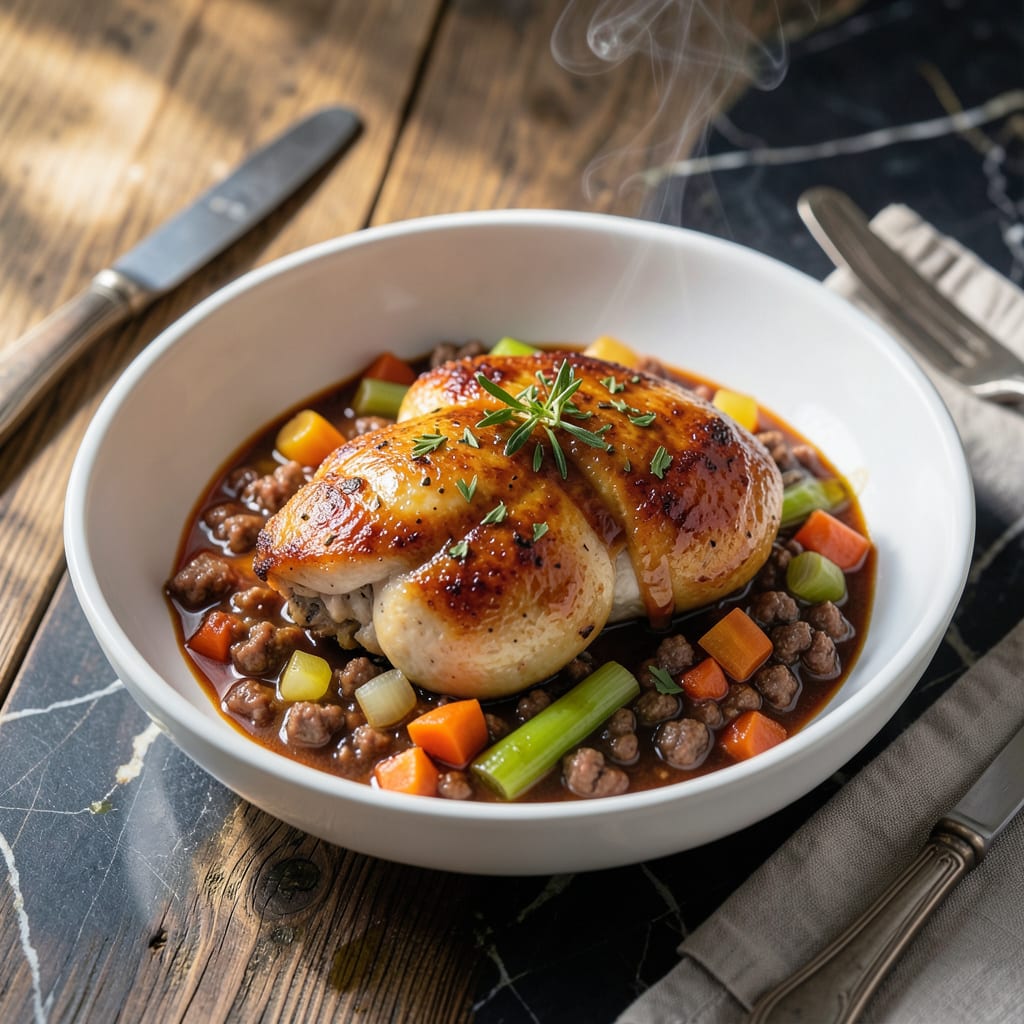
This slow-simmered dish brings Italian comfort to your table with tender chicken and rich, meaty ragu. The long cooking process develops deep flavors that feel like a warm embrace.
I’ve perfected this method to ensure the chicken stays juicy while the sauce thickens into a velvety, spoon-coating consistency. It’s hearty, satisfying, and worth every minute of the simmer.
Ingredients for Chicken and Ragu Sauce
Slow-simmered richness requires just these quality ingredients for Italian comfort at its finest.
| Ingredient | Amount | Notes |
|---|---|---|
| Chicken Thighs 🍗 | 2 lb | Boneless, skinless, trimmed of fat |
| Ground Beef 🥩 | 1 lb | 80/20 fat ratio for richness |
| Ground Pork 🥩 | ½ lb | For depth of flavor in ragu |
| Yellow Onion 🧅 | 1 whole | Finely diced for base |
| Carrots 🥕 | 2 whole | Peeled and finely diced |
| Celery Stalks 🥬 | 2 whole | Finely diced for sofrito |
| Garlic Cloves 🧄 | 4 cloves | Minced for aromatic base |
| San Marzano Tomatoes 🍅 | 2 cans | 28 oz each, whole peeled |
| Tomato Paste 🍅 | 2 tbsp | For concentrated tomato flavor |
| Dry Red Wine 🍷 | 1 cup | Bold variety like Chianti |
| Chicken Stock 🥣 | 2 cups | Low-sodium preferred for control |
| Whole Milk 🥛 | ½ cup | For velvety sauce finish |
| Parmigiano-Reggiano Cheese 🧀 | ½ cup | Freshly grated for depth |
| Olive Oil 🫒 | 3 tbsp | Extra-virgin for sautéing |
| Fresh Rosemary 🌿 | 1 tbsp | Chopped, for aromatic depth |
| Fresh Thyme 🌿 | 1 tbsp | Leaves stripped from stems |
| Bay Leaves 🍃 | 2 whole | For slow-simmered flavor |
[recipeingredientscaler]
The meats are non-negotiable for authentic ragu. Ground chuck (80/20) and pork shoulder provide the perfect fat-to-meat ratio. Source from Whole Foods or a trusted butcher for the best quality. Chicken thighs stay juicy during the long simmer—avoid breasts, which dry out. San Marzano tomatoes, with their sweet, low-acid profile, are ideal; Muir Glen is a reliable grocery store alternative.
No red wine? Substitute beef broth with a splash of balsamic vinegar for acidity. Fresh herbs are preferred, but dried at one-third the quantity works in a pinch. For a richer sauce, add a Parmigiano-Reggiano rind while simmering (remove before serving). The chicken stock can be homemade or high-quality store-bought—Better Than Bouillon is a solid option.
Ragu develops flavor over time. Refrigerate in an airtight container for up to 5 days, or freeze for 3 months. The sauce thickens as it cools—reheat gently with a splash of water or stock to restore consistency. Always remove bay leaves before storing.
Why You’ll Love This Recipe
- One Pot Wonder: I toss the chicken thighs, beef, pork, and veggies in a single pot and let them simmer—minimal cleanup, maximum flavor.
- Rich and Hearty: The combo of slow-cooked meats and carrots creates this deep, savory sauce that clings to every bite.
- Meal Prep Hero: This makes enough to freeze half for next week. Honestly, it tastes even better reheated.
- Budget Stretcher: Ground beef and pork keep costs low, but the chicken thighs make it feel like a special meal.
Step-by-Step Instructions for Chicken and Ragu Sauce
This slow-simmered Italian classic rewards patience with layers of rich, savory depth.
Step 1: Brown the Meats for Maximum Flavor
Heat 2 tbsp Olive Oil in a large, heavy pot over medium-high heat. Season the 2 lb Chicken Thighs with salt and pepper, then brown them in batches for 4-5 minutes per side until deep golden brown. Remove and set aside.
In the same pot, add the remaining 1 tbsp Olive Oil and cook the 1 lb Ground Beef and 0.5 lb Ground Pork for 6-8 minutes, breaking it up with a wooden spoon, until well-browned. This creates the flavor foundation for your ragu.
Step 2: Build the Aromatic Base
Reduce heat to medium and add the 1 whole Yellow Onion, 2 whole Carrots, and 2 whole Celery Stalks—all finely diced. Cook for 6-8 minutes until the vegetables soften and begin to caramelize around the edges.
Stir in the 4 cloves Garlic Cloves, 1 tbsp Fresh Rosemary, and 1 tbsp Fresh Thyme, cooking for 1 minute until fragrant. Add the 2 tbsp Tomato Paste and cook for 2 minutes, stirring constantly, until it deepens in color to a rusty red. This step intensifies the umami base.
Step 3: Deglaze and Simmer the Ragu
Pour in the 1 cup Dry Red Wine and scrape up all browned bits from the bottom of the pot. Let it simmer for 3-4 minutes until reduced by half. Add the 2 cans San Marzano Tomatoes, crushing them by hand as they go in, along with the 2 cups Chicken Stock and 2 whole Bay Leaves.
Return the chicken to the pot, ensuring it’s mostly submerged. Bring to a gentle simmer, then reduce heat to low. Partially cover and let it cook for 2 to 2.5 hours, stirring occasionally, until the chicken falls apart easily with a fork.
Step 4: Finish with Milk and Cheese
Remove the chicken from the pot and shred it using two forks, discarding any bones or skin. Return the shredded meat to the ragu. Stir in the 0.5 cup Whole Milk and simmer uncovered for an additional 20-30 minutes until the sauce thickens to your desired consistency.
Just before serving, stir in the 0.5 cup Parmigiano-Reggiano Cheese until fully melted. Adjust seasoning with salt and pepper. The milk mellows the acidity, while the cheese adds a rich, savory depth that defines this Italian comfort dish.
Pro Tips For Making Chicken And Ragu Sauce
- Brown the Meats Well: I learned this the hard way—don’t rush browning the ground beef and pork. Let them develop a deep, caramelized crust in the pan for at least 5-7 minutes; it builds the rich base your ragu needs.
- Dice Onions and Carrots Small: After ending up with chunky, undercooked veggies in my sauce, I now finely dice the yellow onion and carrots (about 1/4-inch pieces) so they melt into the ragu and sweeten evenly.
- Skip the Lean Ground Beef: Resist the urge to use 90/10 ground beef—it dries out. A 20% fat blend keeps the ragu moist and flavorful, especially when simmered for hours with the chicken thighs.
- Simmer Partially Covered: My grandmother swore by this, and she was right: leave the pot lid slightly ajar while simmering to let excess moisture escape, concentrating the sauce without drying it out.
Essential Equipment for This Dish
Heavy-Duty Pot
I always use my 7-quart Dutch oven for this recipe—the heavy cast iron distributes heat evenly and prevents scorching. A Le Creuset or Lodge enameled cast iron pot is ideal for the long simmer. The deep, wide base gives you plenty of room to brown meats without crowding. 🔥
Wooden Spoon
A sturdy wooden spoon is essential for breaking up ground meats and scraping up browned bits. I prefer the OXO Good Grips 12-inch spoon—it’s long enough to reach the bottom of your pot without burning your hands. Wood won’t scratch your enameled surface like metal might.
Sharp Chef’s Knife
You’ll be dicing a lot of vegetables, so a sharp 8-inch chef’s knife makes the job much easier. I’ve had my Wüsthof Classic for over a decade and it still glides through onions and carrots. Keep it honed for safety and precision.
Instant-Read Thermometer
While not strictly necessary, I love using my ThermoWorks Thermapen to check the chicken reaches 165°F internally before shredding. This ensures perfect doneness without overcooking. It’s especially helpful for larger batches.
Fine-Mesh Strainer
If you want an ultra-smooth sauce, a fine-mesh strainer helps remove any large herb stems or vegetable pieces. I use a Cuisinox strainer that fits perfectly over my pot. This step is optional but creates a restaurant-quality texture.
Long-Tongued Lighter
For browning the meats at the start, I find a long-tongued lighter helps if you’re using a gas stove. It gives you better control over the flame. This small tool makes a big difference in getting even browning on your chicken thighs.
Nutrition Facts
Frequently Asked Questions
Can I use chicken breasts instead of thighs?
Thighs stay juicy during the long simmer, while breasts tend to dry out. If you must, reduce cooking time to 1.5 hours max.
Why add milk to a meat sauce?
Milk mellows the acidity and adds a velvety texture. It’s a classic Italian technique for balancing rich flavors.
Can I make this in a slow cooker?
Yes! Brown meats first, then transfer to slow cooker with all ingredients. Cook on low for 6-8 hours.
How do I store leftovers?
Keep in an airtight container for up to 5 days in fridge or 3 months frozen. Reheat gently with a splash of stock.

- Jollof Rice Sauce Recipe: West African Tomato and Spice Infusion - September 25, 2026
- Japanese Rice Soup Recipe: Umami-Rich Comfort in a Bowl - September 25, 2026
- Homemade Cream Of Rice Recipe: Silk-Smooth Breakfast in Minutes - September 25, 2026