
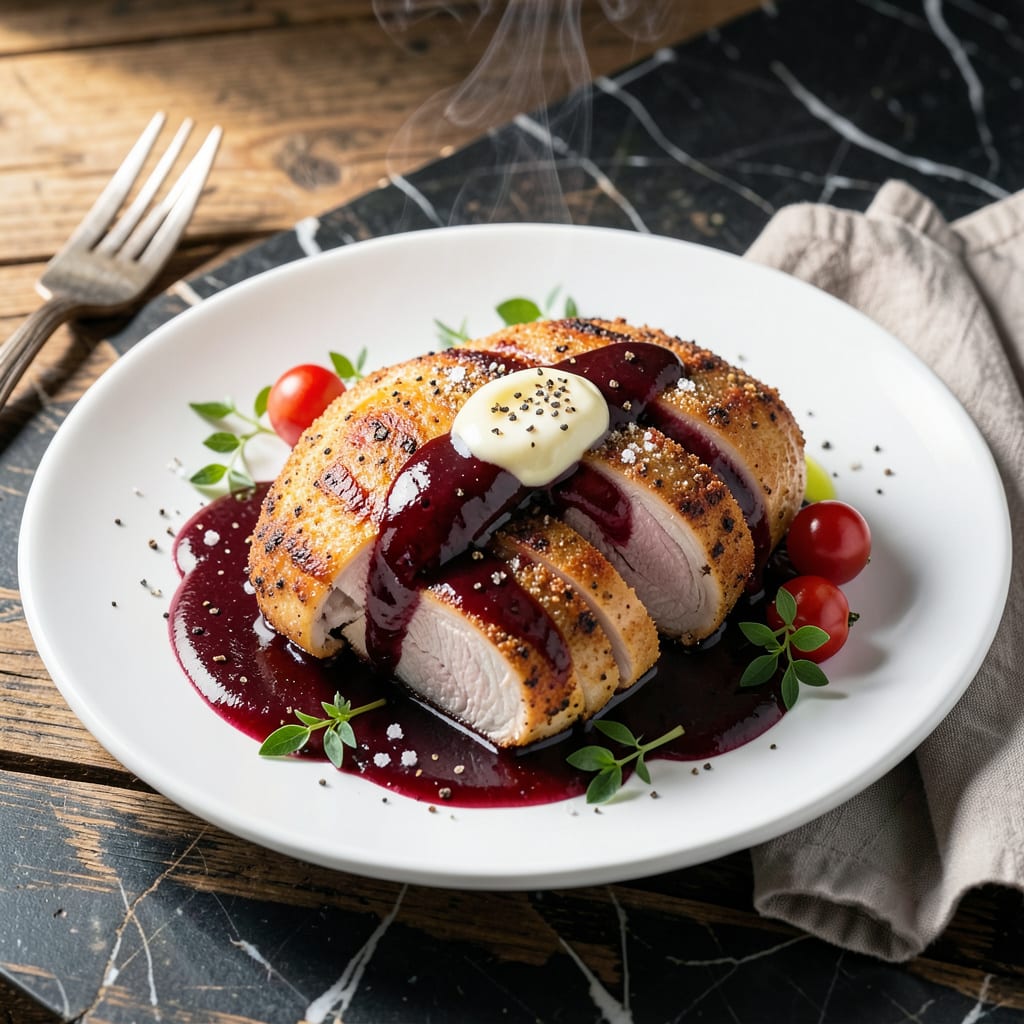
This French-inspired dish brings restaurant-quality flavor to your home kitchen with minimal effort.
Tender chicken seared to golden perfection, then finished in a rich red wine sauce that’s both elegant and deeply satisfying. The pan sauce comes together in minutes while the chicken rests, making it ideal for impressing guests or treating yourself to a special meal.
Ingredients for Chicken and Red Wine Sauce
Pantry staples meet French bistro elegance with these quality ingredients.
| Ingredient | Amount | Notes |
|---|---|---|
| Boneless Skinless Chicken Breasts 🍗 | 1 ½ lb | Pounded to even thickness |
| Kosher Salt 🧂 | 1 ½ tsp | Divided for seasoning |
| Freshly Ground Black Pepper 🌶️ | 1 tsp | Divided for seasoning |
| All-Purpose Flour 🌾 | ¼ cup | For dredging chicken |
| Olive Oil 🫒 | 2 tbsp | Divided for cooking |
| Unsalted Butter 🧈 | 2 tbsp | For sauce richness |
| Shallot 🧅 | 1 whole | Finely minced |
| Garlic Cloves 🧄 | 3 cloves | Minced for sauce |
| Dry Red Wine 🍷 | 1 ½ cups | Bold variety like Cabernet |
| Low-Sodium Chicken Broth 💧 | ¾ cup | For sauce depth |
| Fresh Thyme Sprigs 🌿 | 3 whole | Leaves stripped |
| Dijon Mustard 🟡 | 1 tbsp | For tangy finish |
| Heavy Cream 🥛 | ¼ cup | Optional for creaminess |
| Fresh Parsley 🌿 | 2 tbsp | Chopped for garnish |
[recipeingredientscaler]
The wine is non-negotiable here—a bold Cabernet or Merlot gives the sauce its depth. I grab mine from Total Wine or Trader Joe’s (their Charles Shaw is perfect). Chicken breasts should be uniform thickness—pound them yourself or ask the butcher to do it. Organic or free-range tastes better, but regular works fine. The thyme? Fresh only (the good stuff, not the pre-shredded kind).
No red wine? Beef broth with a splash of balsamic vinegar gets you 80% there. Shallot shortage? Red onion at half the quantity. Skip the cream if you want it lighter—the sauce will still shine. The mustard can be whole-grain for texture. And if you’re out of thyme, rosemary works (just use half as much).
Sauce keeps 3-4 days in the fridge—reheat gently to avoid curdling. Chicken? Eat within 3 days or freeze for 3 months. The sauce actually improves overnight (worth the extra minute).
Why You’ll Love This Recipe
- One Pan Magic: I love that I only need a skillet, some flour, and a splash of olive oil to start—minimal mess, maximum flavor.
- Rich & Velvety: The red wine reduces down into this deep, savory sauce that clings to the chicken like it was made for it.
- Dinner Party Ready: Honestly, it feels fancy enough for guests but takes less effort than ordering takeout.
- Leftovers? Yes Please: The sauce soaks into the chicken overnight, so next-day lunches taste even better.
Step-by-Step Instructions for Chicken and Red Wine Sauce
Here’s the method I use for restaurant-worthy results every time.
Step 1: Prep and Sear the Chicken
Pound the 1.5 lb boneless skinless chicken breasts to an even ½-inch thickness between plastic wrap. Season both sides with 1.5 tsp kosher salt and 1 tsp freshly ground black pepper. I divide the seasoning evenly for balanced flavor.
Dredge the cutlets in 0.25 cup all-purpose flour, shaking off excess. Heat 1 tbsp olive oil in a large skillet over medium-high heat until shimmering. Add the chicken and sear for 3-4 minutes per side until golden brown and cooked through. Transfer to a plate and tent with foil.
Step 2: Build the Aromatic Base
In the same skillet, add the remaining 1 tbsp olive oil and 2 tbsp unsalted butter. Once the butter stops foaming, add the finely minced shallot and cook for 2-3 minutes until softened and translucent.
Add the 3 minced garlic cloves and stripped thyme leaves from the 3 fresh thyme sprigs. Cook for 30 seconds until fragrant—don’t let the garlic brown or it’ll turn bitter. This aromatic base is the flavor foundation for your sauce.
Step 3: Deglaze and Reduce
Pour in the 1.5 cups dry red wine and scrape up all the browned bits from the bottom of the pan with a wooden spoon. This deglazing step captures concentrated chicken flavor. Let it simmer for 5-6 minutes until reduced by half.
Stir in the 0.75 cup low-sodium chicken broth and 1 tbsp Dijon mustard. Simmer for another 3-4 minutes until the liquid reduces slightly and the sauce begins to thicken. The mustard adds a subtle tang that balances the richness.
Step 4: Finish the Sauce and Serve
Reduce heat to low and stir in the 0.25 cup heavy cream. Simmer for 2 minutes until the sauce coats the back of a spoon. Taste and adjust seasoning if needed.
Return the chicken to the skillet along with any accumulated juices. Spoon the sauce over the chicken and let it warm through for 1-2 minutes. Garnish with 2 tbsp chopped fresh parsley and serve immediately over pasta or with crusty bread to soak up the sauce.
Pro Tips For Making Chicken And Red Wine Sauce
- Pound the Chicken: Use a rolling pin or meat mallet to even out the chicken breasts to about ½-inch thickness. I learned this the hard way—uneven pieces cook unevenly, and you end up with dry edges while waiting for the center to finish. —
- Season the Flour: Mix a teaspoon each of kosher salt and black pepper into the all-purpose flour before dredging. Sounds weird, but it works: the seasoning sticks better and gives every bite consistent flavor. —
- Skip the Crowding: Resist the urge to cook all the chicken at once—overcrowding the pan steams the meat instead of browning it. Cook in batches if needed, with about 2 tablespoons of olive oil per batch. —
- Rest Before Slicing: Give the cooked chicken a solid 5-10 minutes under foil before slicing. My grandmother swore by this, and she was right: it keeps the juices from running all over the cutting board and into the sauce.
Flavor Customization for This Dish
Herb Variations
Swap the fresh thyme for 2 sprigs rosemary for a piney, robust twist. I love this with boneless chicken thighs instead of breasts—they stay juicier. Use 1 tbsp fresh tarragon for an anise-like note that pairs beautifully with the wine. 🌿
Wine Adjustments
For a lighter sauce, use Pinot Noir instead of Cabernet—it’s fruitier and less tannic. A Zinfandel adds jammy depth, while Syrah brings smoky complexity. I always use what I’d drink, so grab a bottle from Total Wine.
Creamy Twists
Replace the heavy cream with ¼ cup crème fraîche for a tangier finish. For a dairy-free option, stir in 2 tbsp coconut cream at the end. I’ve also used mascarpone for a velvety texture that feels extra indulgent.
Mustard Swaps
Whole-grain mustard adds texture and visible seeds for rustic appeal. Honey mustard (about 1 tbsp) balances the wine’s acidity with sweetness. For heat, mix in ½ tsp prepared horseradish—it’s my secret for a bold kick.
Acid Balancers
Brighten the sauce with 1 tsp balsamic vinegar or ½ tsp lemon zest for a citrusy lift. I sometimes add 2 tbsp chopped sun-dried tomatoes for a sweet-tart depth. These small tweaks make a big difference. 💡
Mushroom Addition
Sauté 8 oz cremini mushrooms with the shallots for an earthy, meaty richness. For extra umami, use shiitake or porcini. I recommend slicing them thinly so they cook quickly and blend seamlessly into the sauce.
Nutrition Facts
Frequently Asked Questions
Can I use chicken thighs instead of breasts?
Boneless thighs stay juicier and hold up well to the bold sauce. Sear them for 4-5 minutes per side since they’re thicker. They’re my preferred cut for this dish.
What if I don’t have red wine?
Use 1.5 cups beef broth with 1 tbsp balsamic vinegar for similar depth. A splash of red wine vinegar works too. The flavor won’t be identical but still delicious.
How do I prevent the sauce from curdling?
Keep heat at low when adding cream and stir constantly. If it curdles, quickly whisk in 1 tsp cold butter to smooth it out. Temperature control is key.
Can I make this ahead of time?
The sauce actually improves overnight! Store chicken and sauce separately in the fridge for up to 3 days. Reheat sauce gently before serving.

- Jollof Rice Sauce Recipe: West African Tomato and Spice Infusion - September 25, 2026
- Japanese Rice Soup Recipe: Umami-Rich Comfort in a Bowl - September 25, 2026
- Homemade Cream Of Rice Recipe: Silk-Smooth Breakfast in Minutes - September 25, 2026