
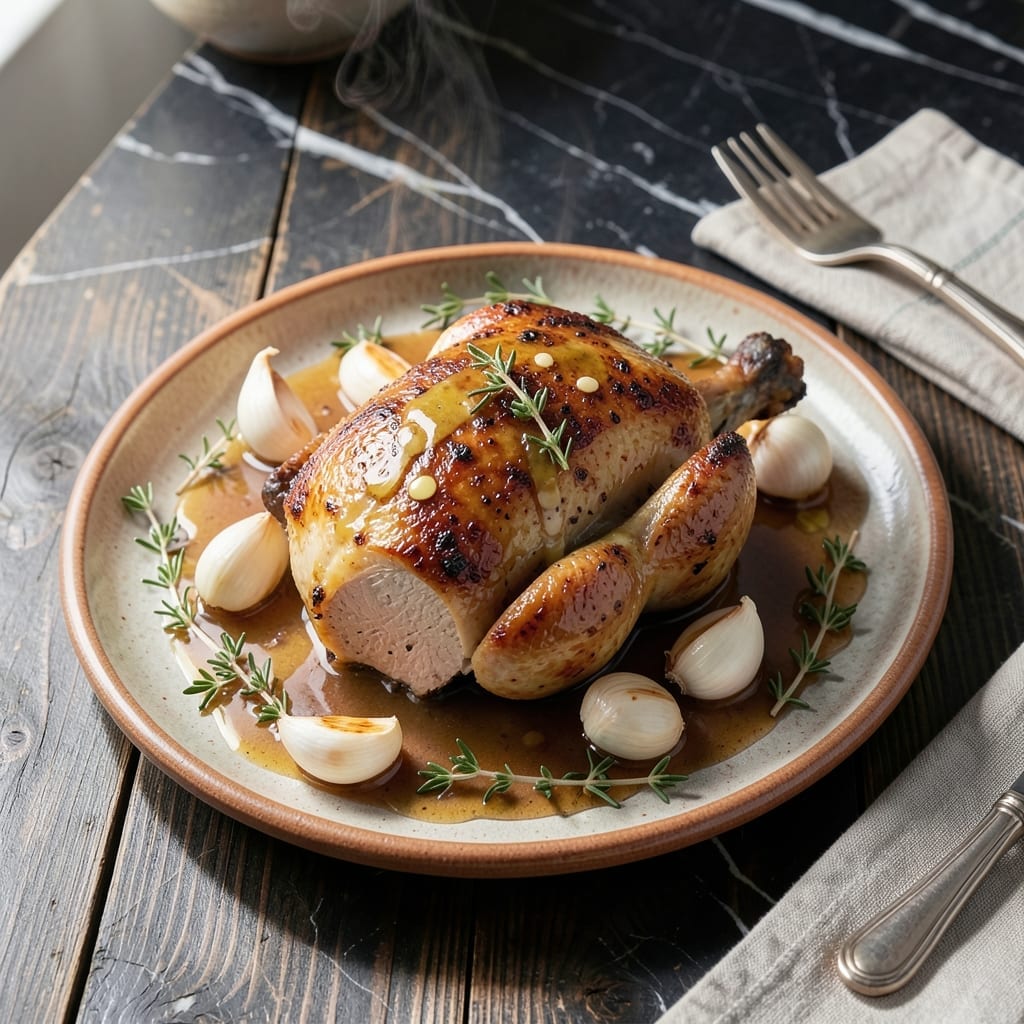
There’s a reason French bistros serve chicken au jus—it’s the simplest way to elevate roasted chicken into something extraordinary.
This method captures every bit of flavor from the pan, transforming drippings into a rich, savory sauce with minimal effort. No complicated reductions or specialty ingredients required.
You’ll end up with tender chicken bathed in a light, aromatic broth that soaks into every bite. The sauce is subtle enough to enhance, not overpower, the natural taste of the meat.
Perfect for Sunday supper or an impressive yet effortless dinner. Here’s how to make it right.
Ingredients for Chicken Au Jus
Simple French bistro magic with pantry staples and a few fresh herbs.
| Ingredient | Amount | Notes |
|---|---|---|
| Whole Chicken 🍗 | 4 lb | Cut into 8 pieces, skin-on, bone-in |
| Kosher Salt 🧂 | 2 tsp | Diamond Crystal preferred for even seasoning |
| Freshly Ground Black Pepper 🌶️ | 1 tsp | Coarse grind for texture |
| Garlic Cloves 🧄 | 4 cloves | Smashed, peels left on |
| Fresh Thyme Sprigs 🌿 | 4 sprigs | Plus extra for garnish |
| Unsalted Butter 🧈 | 4 tbsp | European-style for richer flavor |
| All-Purpose Flour 🌾 | 2 tbsp | For thickening the jus |
| Dry White Wine 🍷 | ½ cup | Sauvignon Blanc or Pinot Grigio |
| Low-Sodium Chicken Stock 🍲 | 1 ½ cups | Homemade or high-quality store-bought |
| Shallots 🧅 | 2 whole | Finely minced for sauce |
| Fresh Parsley 🌿 | ¼ cup | Chopped, for garnish |
| Dijon Mustard 🟡 | 1 tbsp | Smooth, not whole grain |
| Lemon Juice 🍋 | 1 tbsp | Freshly squeezed for brightness |
The chicken quality is non-negotiable for this dish. Opt for bone-in, skin-on pieces—thighs and drumsticks yield the most flavorful drippings. Source from a trusted butcher or Whole Foods for superior marbling. The butter should be European-style (higher fat content) for a silkier finish. Fresh thyme is essential—dried won’t deliver the aromatic depth required here.
No white wine? Dry vermouth works in a pinch, or substitute additional chicken stock with a splash of lemon juice. Out of thyme? Rosemary at half the quantity offers a complementary piney note. If avoiding alcohol entirely, apple cider vinegar adds necessary acidity. The flour can be swapped for cornstarch (1 tbsp cornstarch = 2 tbsp flour) for gluten-free needs.
The au jus is best served immediately but can be held warm for 30 minutes without compromising quality. Store leftovers in an airtight container for up to 3 days—reheat gently to avoid breaking the emulsion. Fresh parsley should be added just before serving to preserve its vibrant color and delicate flavor.
Why You’ll Love This Recipe
- One Pan Wonder: I toss everything in—whole chicken, garlic, thyme—and the oven does the rest.
- Juicy Perfection: The au jus soaks into every bite, and that garlic-thyme combo? Ridiculously good.
- Sunday or Wednesday: Honestly, it’s my go-to for lazy weekends and busy weeknights alike.
- Leftovers for Days: I stretch one chicken into sandwiches, salads, and soup—budget-friendly and delicious.
Step-by-Step Instructions for Chicken Au Jus
Master this French technique for a luxurious pan sauce that elevates simple roasted chicken to restaurant quality.
Step 1: Season and Roast the Chicken
Pat the 4 lb Whole Chicken pieces completely dry with paper towels. This ensures the skin will crisp properly. Season all over with the 2 tsp Kosher Salt and 1 tsp Freshly Ground Black Pepper, pressing the seasoning into the skin so it adheres well.
Arrange the chicken skin-side up on a wire rack set over a baking sheet. Roast in a preheated 425°F oven for 35-40 minutes, until the skin is deep golden brown and the internal temperature reaches 165°F. The juices should run clear when pierced.
Step 2: Prepare the Aromatics
While the chicken roasts, finely mince the 2 whole Shallots. Smash the 4 cloves Garlic Cloves, leaving the peels on for easy removal later. Strip the leaves from the 4 sprigs Fresh Thyme Sprigs, reserving the stems for the sauce if desired.
These aromatics will form the flavor base of your jus. Having them prepped and ready ensures a smooth workflow once the chicken comes out of the oven.
Step 3: Create the Pan Sauce Foundation
Transfer the roasted chicken to a serving platter and tent with foil to keep warm. Place the baking sheet with the rack on the stovetop over medium heat. Add the minced shallots and smashed garlic to the rendered chicken fat and cook for 2-3 minutes until softened and translucent.
Sprinkle the 2 tbsp All-Purpose Flour over the aromatics and stir to create a light roux. Cook for 1 minute to eliminate the raw flour taste, stirring constantly to prevent burning.
Step 4: Deglaze and Build the Jus
Pour in the 0.5 cup Dry White Wine, scraping up all the browned bits from the pan with a wooden spoon. Simmer for 2-3 minutes until the liquid reduces by half. This deglazing step captures all the concentrated chicken flavor.
Add the 1.5 cups Low-Sodium Chicken Stock, 1 tbsp Dijon Mustard, and 1 tbsp Lemon Juice. Return to a simmer and cook for 3-4 minutes until the sauce thickens slightly and coats the back of a spoon.
Step 5: Finish and Serve
Remove the pan from heat and discard the garlic cloves. Whisk in the 4 tbsp Unsalted Butter, one tablespoon at a time, until the sauce is glossy and emulsified. Stir in the chopped 0.25 cup Fresh Parsley and any reserved thyme leaves.
Pour the jus over the chicken or serve it on the side. The sauce should have a rich, velvety texture that perfectly complements the crispy-skinned chicken. Garnish with additional thyme sprigs if desired.
Pro Tips For Making Chicken Au Jus
- Salt Under the Skin: I learned this the hard way—loosen the skin over the breast and thighs, then rub kosher salt directly on the meat before adding herbs. The seasoning penetrates deeper and the skin crisps up beautifully.
- Start Hot, Finish Low: Sear the chicken at 425°F for 20 minutes to get that golden skin, then drop the temp to 350°F to cook through without drying it out. After burning a few batches, I finally figured out this balance.
- Skip the Watery Jus: Resist the urge to add water or broth to the pan—use only the natural juices from the chicken and a splash of white wine if needed. My grandmother swore by this, and she was right: it keeps the jus rich and concentrated.
- Rest Before Carving: Give the chicken a solid 15 minutes under foil before carving. Sounds weird, but it works: all those juices redistribute, and your bird stays moist from breast to thigh.
Serving Suggestions for This Dish
Plating Elegance
Arrange the chicken on a warm platter, skin-side up, to showcase that deep golden brown crispness. Spoon the jus generously over the pieces, letting it pool slightly at the base. This creates a stunning presentation that highlights the sauce’s glossy finish. 💛
Garnish with Freshness
Sprinkle the chopped 0.25 cup Fresh Parsley over the chicken just before serving. The vibrant green adds a pop of color and fresh flavor that cuts through the richness of the jus. Additional thyme sprigs can be tucked around the platter for a rustic touch.
Side Pairings
Serve with crusty baguette slices to soak up every last drop of sauce. Roasted potatoes or a simple green salad with a light vinaigrette balance the dish beautifully. I love adding steamed asparagus for a touch of spring freshness.
Family-Style Service
For a cozy meal, place the chicken and jus in a large serving dish at the center of the table. Provide extra sauce in a gravy boat so everyone can add more to their plate. This encourages sharing and makes the meal feel more communal.
Wine Accompaniment
A crisp Sauvignon Blanc or Pinot Grigio complements the dish perfectly, echoing the acidity in the sauce. For red wine lovers, a light Pinot Noir works beautifully without overpowering the chicken.
Bread Basket
Include a bread basket with warm sourdough or ciabatta to mop up the delicious jus. The tangy flavor of sourdough pairs especially well with the rich, savory notes of the sauce. 🔥
Nutrition Facts
Frequently Asked Questions
Can I use boneless chicken breasts?
Yes, but bone-in, skin-on pieces yield the best flavor for the jus. If using boneless, reduce roasting time to 20-25 minutes at 425°F to prevent drying out. The sauce will still be delicious!
What can I substitute for white wine?
Use dry vermouth or apple cider vinegar with extra stock. For alcohol-free, try 1/2 cup stock + 1 tbsp lemon juice. The acidity helps deglaze the pan effectively.
Why did my sauce break?
This happens if the butter is added too quickly or the sauce gets too hot. Remove from heat and whisk in 1 tsp cold water to help re-emulsify. Keep it warm, not boiling.
How do I make it gluten-free?
Swap the flour for 1 tbsp cornstarch mixed with 1 tbsp cold water. Add this slurry after deglazing. The sauce will thicken beautifully without gluten.

- Jollof Rice Sauce Recipe: West African Tomato and Spice Infusion - September 25, 2026
- Japanese Rice Soup Recipe: Umami-Rich Comfort in a Bowl - September 25, 2026
- Homemade Cream Of Rice Recipe: Silk-Smooth Breakfast in Minutes - September 25, 2026