
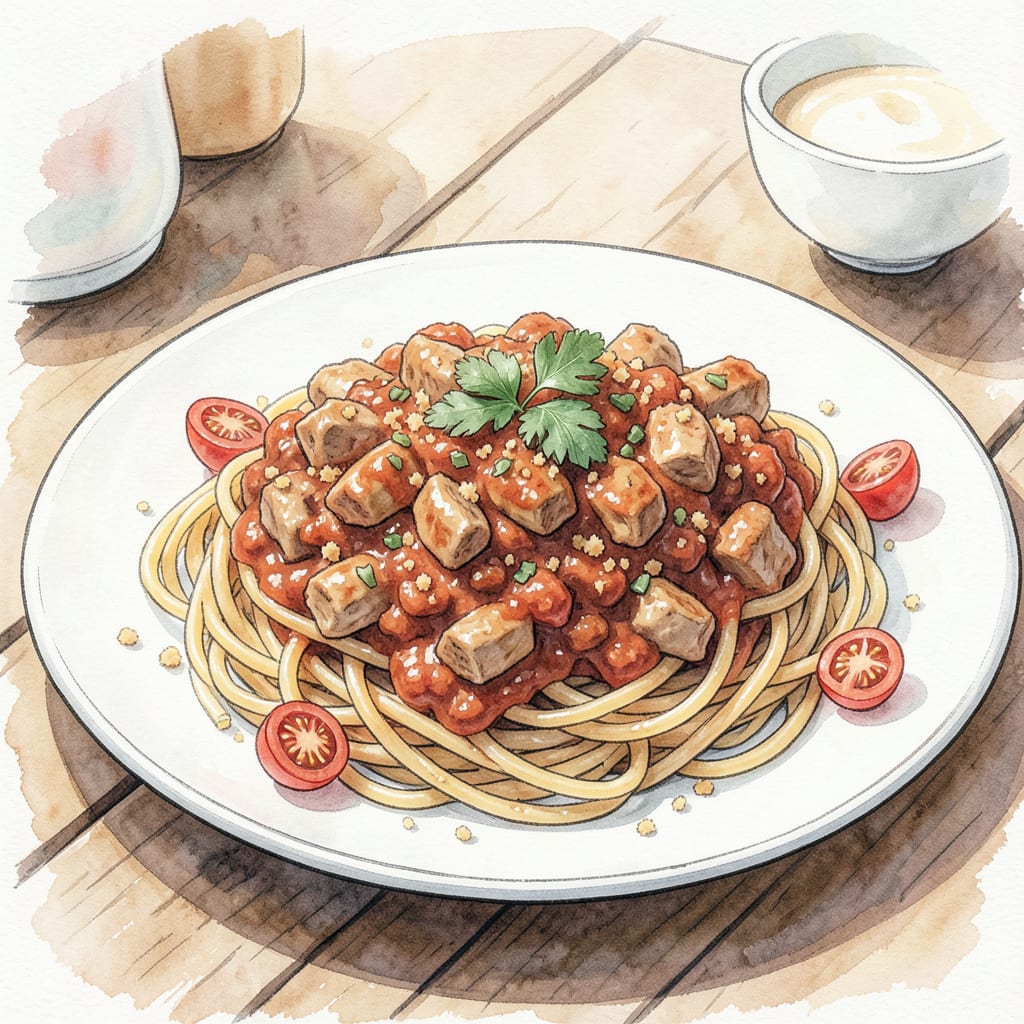
I’ve perfected my chicken bolognese recipe to deliver a rich and satisfying pasta dish that’s sure to become a family favorite. This Italian-inspired creation features ground chicken cooked in a deep, tangy tomato sauce that’s both comforting and sophisticated.
By using high-quality ingredients and a slow-cooking technique, you’ll achieve a perfectly balanced sauce that clings to your pasta. Serve with freshly grated parmesan and enjoy a perfect weeknight dinner that’s ready in under an hour.
Ingredients for Chicken Bolognese
Quality ingredients make this chicken bolognese rich and satisfying. Simple yet sophisticated.
| Ingredient | Amount | Notes |
|---|---|---|
| Ground Chicken 🍗 | 1 ½ lb | Lean or regular variety |
| Olive Oil 🫒 | ¼ cup | Extra-virgin for richness |
| Onion 🧅 | 1 whole | Finely chopped |
| Carrots 🥕 | 2 whole | Peeled, finely chopped |
| Celery Stalks 🥕 | 2 pieces | Finely chopped |
| Garlic Cloves 🧄 | 4 cloves | Minced |
| Canned Crushed Tomatoes 🍅 | 28 oz | San Marzano preferred |
| Tomato Paste 🍅 | 2 tbsp | Concentrated for depth |
| Red Wine 🍷 | 1 cup | Dry red wine |
| Chicken Broth 🥛 | 1 cup | Low-sodium preferred |
| Dried Oregano 🌿 | 1 tsp | Or 1 tbsp fresh |
| Dried Basil 🌿 | 1 tsp | Or 1 tbsp fresh |
| Salt 🧂 | 1 tsp | Kosher salt preferred |
| Black Pepper 🌶️ | ½ tsp | Freshly ground |
| Pasta 🍝 | 12 oz | Tagliatelle or pappardelle |
| Parmesan Cheese 🧀 | 1 cup | Freshly grated |
The ground chicken matters here. Costco and Whole Foods have great options. Look for fresh, not pink or slimy. San Marzano tomatoes are worth the splurge—Mutti or Contadina are solid choices. For red wine, any dry variety works (Cabernet, Merlot, etc.).
No red wine? Beef broth with a splash of balsamic gets you close. Fresh herbs are ideal, but dried works at one-third the amount. If using dried oregano or basil, toast them in a dry pan for 30 seconds to release flavor. The carrots and celery can be baby carrots/celery if that’s what’s in the fridge.
This sauce reheats beautifully—honestly tastes better the next day. Keeps 4-5 days in the fridge, freezes for 3 months. Portion into containers for easy weeknight dinners. Freshly grate the Parmesan just before serving for the best flavor.
Step-by-Step Instructions for Chicken Bolognese
Here’s the method that delivers rich, meaty perfection every time you make this dish.
Step 1: Sauté the Aromatics
Heat the 0.25 cup Olive Oil in a large Dutch oven over medium heat. Add the 1 whole Onion, 2 whole Carrots, and 2 pieces Celery Stalks. Cook, stirring occasionally, until the vegetables are softened and lightly browned, about 8-10 minutes. You’ll know they’re ready when they release their fragrance and start to caramelize.
This slow cooking of aromatics is crucial as it builds the depth of flavor in your sauce. Be patient and let them cook until they’re properly softened.
Step 2: Brown the Ground Chicken
Add the 1.5 lb Ground Chicken to the pot, breaking it up with a wooden spoon as it cooks. Continue cooking until the chicken is no longer pink and starts to brown, about 5-7 minutes. You’ll notice the texture changing from a cohesive mass to a more scattered, cooked consistency.
Make sure to break up the chicken into small pieces as it cooks to ensure even browning and texture in the final sauce.
Step 3: Add Tomato Paste and Wine
Add the 4 cloves Garlic Cloves and cook for 1 minute until fragrant. Then stir in the 2 tbsp Tomato Paste and cook for another 1-2 minutes, until it darkens in color. Pour in the 1 cup Red Wine, scraping up any browned bits from the bottom of the pan. Bring to a simmer and cook until the wine has almost completely reduced, about 5 minutes.
The reduction of wine is key to concentrating the flavors. You’ll notice the sauce thickening and the aroma becoming more intense.
Step 4: Simmer the Bolognese Sauce
Add the 28 oz Canned Crushed Tomatoes, 1 cup Chicken Broth, 1 tsp Dried Oregano, 1 tsp Dried Basil, 1 tsp Salt, and 0.5 tsp Black Pepper to the pot. Stir to combine, then bring the sauce to a simmer. Let it cook, uncovered, for 20-30 minutes, stirring occasionally, until the sauce has thickened and the flavors have melded together. The sauce is ready when it’s rich and coats the back of a spoon.
During this simmering process, the sauce will reduce and the flavors will concentrate, resulting in a rich and hearty bolognese.
Step 5: Cook Pasta and Finish the Dish
Bring a large pot of salted water to a boil and cook the 12 oz Pasta until al dente. Reserve 1 cup of pasta water before draining. Add the cooked pasta to the bolognese sauce and toss to combine, adding some reserved pasta water if the sauce seems too thick. Serve hot, topped with the 1 cup Parmesan Cheese. The cheese should melt slightly into the sauce, creating a creamy, savory finish.
The key to a great bolognese is in the finishing touches—combining the pasta with the sauce and adding that final layer of parmesan cheese.
Troubleshooting chicken bolognese
Common Sauce Problems
When your bolognese sauce turns out too thin, it’s usually because it hasn’t simmered long enough to reduce properly. Try cooking it for an additional 10-15 minutes, stirring occasionally, until it reaches your desired consistency. If you’re short on time, you can also thicken it by adding a little tomato paste or simmering it uncovered over low heat. 🔥
Fixing Bland Flavor
If your chicken bolognese tastes bland, it’s likely due to underseasoning or insufficient browning. I recommend adding a pinch of salt and a few grinds of fresh black pepper to taste. You can also enhance the flavor by adding a splash of red wine or a teaspoon of dried herbs during the last 10 minutes of simmering.
Preventing Chicken from Becoming Tough
Overcooking the ground chicken can make it tough and dry. To avoid this, cook the chicken just until it’s no longer pink, about 5-7 minutes, breaking it up into small pieces as it cooks. Avoid over-processing the chicken before cooking, as this can also make it dense and tough.
Resolving Pasta Issues
If your pasta is overcooked or undercooked, it can affect the overall dish. To achieve perfectly cooked pasta, follow the package instructions for cooking time and check for doneness by tasting. Reserve 1 cup of pasta water before draining to adjust the sauce consistency if needed.
Saving a Broken Sauce
If your bolognese sauce breaks or separates, don’t worry! This can happen when the fat separates from the sauce. To fix it, remove the sauce from the heat and let it cool slightly. Then, whisk in a tablespoon of hot water or pasta water to emulsify the sauce. Return it to the heat and simmer gently until it’s smooth and heated through.
Reheating Leftovers
When reheating leftover chicken bolognese, add a splash of chicken broth or water to loosen the sauce if it has thickened. Reheat it gently over low heat, stirring occasionally, until warmed through. You can also reheat individual portions in the microwave, covered with a damp paper towel, for 1-2 minutes.
Nutrition Facts
Frequently Asked Questions
Can I make chicken bolognese with other types of pasta?
Yes, you can use various pasta shapes with chicken bolognese. While traditional recipes call for tagliatelle or pappardelle, you can also use spaghetti, rigatoni, or even penne. The key is to choose a pasta shape that holds onto the chunky sauce well.
How long can I store leftover chicken bolognese?
Leftover chicken bolognese can be stored in an airtight container in the refrigerator for 4-5 days. You can also freeze it for up to 3 months. When reheating, add a splash of chicken broth or water to loosen the sauce if needed.
Can I make chicken bolognese without red wine?
While red wine adds depth to the sauce, you can omit it or substitute it with beef broth and a splash of balsamic vinegar to achieve a similar flavor profile. The sauce will still be rich and delicious.
How can I prevent the chicken from becoming tough?
To prevent the chicken from becoming tough, cook it just until it’s no longer pink, about 5-7 minutes, breaking it up into small pieces as it cooks. Avoid over-processing the chicken before cooking, as this can make it dense and tough.

- Jollof Rice Sauce Recipe: West African Tomato and Spice Infusion - September 25, 2026
- Japanese Rice Soup Recipe: Umami-Rich Comfort in a Bowl - September 25, 2026
- Homemade Cream Of Rice Recipe: Silk-Smooth Breakfast in Minutes - September 25, 2026