
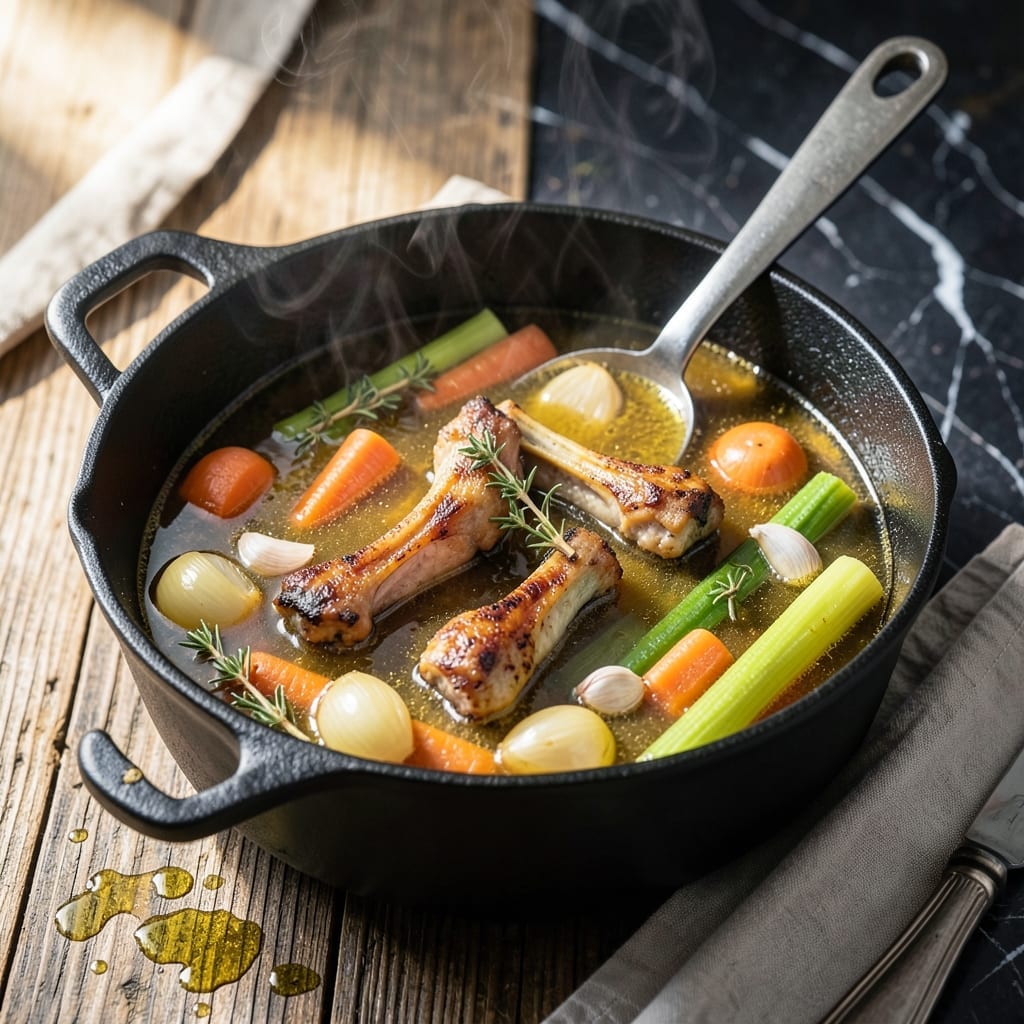
There’s a reason chicken bone stock is the foundation of countless recipes—it transforms simple ingredients into liquid gold. This proven technique extracts every bit of flavor from bones, vegetables, and aromatics through a slow, gentle simmer.
The key is patience. A 12-hour simmer coaxes out rich gelatin and deep, complex flavors that shorter methods miss. I use a mix of roasted bones and fresh herbs for maximum depth without bitterness.
What emerges is a golden, fragrant broth that’s as nourishing as it is flavorful. The stock sets when chilled, a sign of its high collagen content and quality.
Use it as a base for soups, sauces, or grains. Here’s how to make it right every time.
Ingredients for Chicken Bone Stock
Rich, nourishing chicken bone stock starts with simple, quality ingredients for maximum depth.
| Ingredient | Amount | Notes |
|---|---|---|
| Chicken Bones 🍗 | 3 lb | Roasted for depth of flavor |
| Yellow Onions 🧅 | 2 whole | Quartered with skin on |
| Carrots 🥕 | 3 whole | Cut into large chunks |
| Celery Stalks 🥬 | 3 whole | Cut into large chunks |
| Garlic Cloves 🧄 | 6 cloves | Smashed, unpeeled |
| Fresh Thyme Sprigs 🌿 | 5 whole | Tied with kitchen twine |
| Fresh Parsley Stems 🌿 | 1 bunch | Including stems for flavor |
| Bay Leaves 🍃 | 2 whole | Dried or fresh |
| Black Peppercorns 🌶️ | 2 tsp | Lightly crushed |
| Apple Cider Vinegar 🍏 | 2 tbsp | For acidity balance |
| Cold Water 💧 | 4 cups | Or enough to cover bones |
| Kosher Salt 🧂 | 1 tsp | Added to taste at finish |
The bones are everything here. Roasted chicken carcasses (from a whole bird or leftover pieces) deliver the richest gelatin and deepest flavor. Ask your butcher for necks, backs, and feet—they’re packed with collagen. Fresh herbs should be organic when possible, and don’t skip the onion skins—they add beautiful color and earthy notes to the finished stock.
No fresh thyme? Dried thyme at one-third the amount works, but fresh is ideal for subtle complexity. Short on carrots or celery? Substitute with parsnips or fennel for a slightly different but equally flavorful profile. The vinegar is non-negotiable—it helps extract minerals from the bones. If you’re out, white wine or lemon juice can stand in, but cider vinegar’s mild sweetness is perfect.
Stock keeps 5 days refrigerated or 6 months frozen. For best results, chill completely before storing—this lets you skim off fat easily. Divide into portions that suit your cooking needs for effortless future use.
Why You’ll Love This Recipe
- Set It & Forget: I toss everything in the pot and let the slow cooker do its magic. No babysitting required.
- Rich & Deep: The carrots and celery sweeten the stock while garlic adds that warm, savory depth I crave.
- Meal Prep Hero: Honestly, I batch-cook this every Sunday—perfect base for soups, risottos, or just sipping from a mug.
- Penny Wise: Between us, using leftover chicken bones turns scraps into liquid gold for almost no cost.
Step-by-Step Instructions for Chicken Bone Stock
Here’s the method. Straightforward, tested, works every time.
Step 1: Roast the Chicken Bones for Depth
Preheat your oven to 400°F. Arrange the 3 lb Chicken Bones in a single layer on a rimmed baking sheet. I roast them uncovered for 20-25 minutes, flipping halfway through, until they develop a deep golden-brown color.
This caramelization process intensifies the flavor of your stock significantly. You’ll notice the bones release their fat during roasting—this is exactly what you want. The rendered fat will contribute to the richness of the final product, so don’t discard it.
Step 2: Prepare and Combine the Aromatics
While the bones roast, quarter the 2 whole Yellow Onions with skin on, as the skins add beautiful color to the stock. Cut the 3 whole Carrots and 3 whole Celery Stalks into large chunks. The 6 cloves Garlic Cloves should be smashed but left unpeeled.
In a large stockpot, combine the roasted chicken bones with the prepared vegetables. Add the 5 whole Fresh Thyme Sprigs (tied with kitchen twine), 1 bunch Fresh Parsley Stems, 2 whole Bay Leaves, and 2 tsp Black Peppercorns (lightly crushed). Pour in the 2 tbsp Apple Cider Vinegar—this helps extract minerals from the bones.
Step 3: Add Water and Begin the Simmer
Pour in the 4 cups Cold Water (or enough to cover the bones by about 1 inch). I always use cold water to start—this allows for a gradual temperature increase which helps extract gelatin from the bones more effectively.
Bring the mixture to a boil over medium-high heat, then immediately reduce to a low simmer. You should see small bubbles occasionally breaking the surface, but not a rolling boil. Skim off any foam or impurities that rise to the top during the first 30 minutes of simmering.
Step 4: Maintain the Simmer and Extract Flavor
Partially cover the pot and maintain that gentle simmer for 4-6 hours. The longer simmer time allows for maximum extraction of collagen, gelatin, and flavor from the bones and vegetables. I’ve found that 5 hours strikes the perfect balance between depth of flavor and efficiency.
Check periodically to ensure the water level remains above the bones. If it drops too low, add a bit more water. The stock should develop a rich amber color and the house will smell incredibly fragrant—this is how you know it’s working.
Step 5: Strain and Finish the Stock
After simmering, carefully strain the stock through a fine-mesh sieve into a large bowl or another pot. Discard all the solids—only the liquid gold matters now. I like to press gently on the solids with a ladle to extract every last bit of flavor, but don’t squeeze or you’ll get cloudy stock.
Stir in the 1 tsp Kosher Salt and taste. Adjust seasoning if needed, though remember the stock will reduce further if used in other recipes. Let it cool to room temperature, then refrigerate. Once chilled, you can easily remove the solidified fat from the surface if desired. Your stock is now ready to use or store.
Pro Tips For Making Chicken Bone Stock
- Roast the Bones: Toss the chicken bones with a little oil and roast at 400°F for 20-25 minutes until deeply browned—I learned this the hard way after making pale, flavorless stock for years.
- Skip the Peeling: Leave the skins on the onions and garlic, just give them a good rinse; it saves time and adds a rich, caramelized depth to the stock.
- Simmer, Don’t Boil: Keep the heat low enough that you only see occasional bubbles breaking the surface—boiling makes the stock cloudy and can turn the fat greasy.
- Add Vinegar: Splash in a tablespoon of apple cider vinegar when covering the bones with water; it helps extract the collagen and minerals from the bones for a richer, more gelatinous stock.
Flavor Customization for These Flavors
Herb Infusions
Swap thyme for rosemary and add 3 sage leaves for a Mediterranean twist. I tie herbs with kitchen twine for easy removal. Fresh dill works beautifully too, but add it in the last 30 minutes to preserve its delicate flavor.
Asian-Inspired Twist
Replace traditional aromatics with 1-inch ginger slices, 3 star anise pods, and 1 cinnamon stick. Add 2 tbsp soy sauce at the end for umami depth. This creates a fragrant base perfect for pho or ramen. 💛
citrus brightness
Add peels from 1 orange or lemon (pith removed) during simmering for bright, citrusy notes. I avoid adding juice as it can make the stock too acidic. Remove peels before straining for clean flavor.
Mushroom Depth
Include 4 dried shiitake mushrooms or 1 oz porcini with the bones. They’ll rehydrate during simmering, adding earthy complexity. Strain carefully to remove mushroom grit. This works especially well for vegetable-heavy dishes.
Smoky Variation
For a campfire-inspired stock, add 1 tsp smoked paprika or ½ charred onion to the pot. I use hickory-smoked salt at the end for subtle wood-fired flavor. Great for chili or bean dishes.
Spiced Warmth
Toss in 1 tsp coriander seeds and ½ tsp fennel seeds with the peppercorns. Lightly toast them first in a dry pan to release their oils. This adds warm, aromatic notes perfect for winter soups. ✨
Nutrition Facts
Frequently Asked Questions
Why roast the bones first?
Roasting caramelizes the bones, creating deeper, richer flavors. It also helps render fat, which adds body to your finished stock. Skip this step and you’ll miss out on that golden color and complexity.
Can I use raw bones instead of roasted?
Yes, but the flavor will be milder. If using raw, simmer for up to 24 hours to extract maximum gelatin. Raw bones from a butcher (necks, backs) work particularly well for long simmers.
How do I fix cloudy stock?
Cloudiness often comes from boiling too hard. Next time, maintain a gentle simmer and avoid pressing solids when straining. For clear stock, chill it completely and skim off fat before using.
What’s the best way to store it?
Refrigerate in airtight containers for up to 5 days, or freeze for 6 months. For easy use, freeze in ice cube trays, then transfer to bags once solid.

- Jollof Rice Sauce Recipe: West African Tomato and Spice Infusion - September 25, 2026
- Japanese Rice Soup Recipe: Umami-Rich Comfort in a Bowl - September 25, 2026
- Homemade Cream Of Rice Recipe: Silk-Smooth Breakfast in Minutes - September 25, 2026