
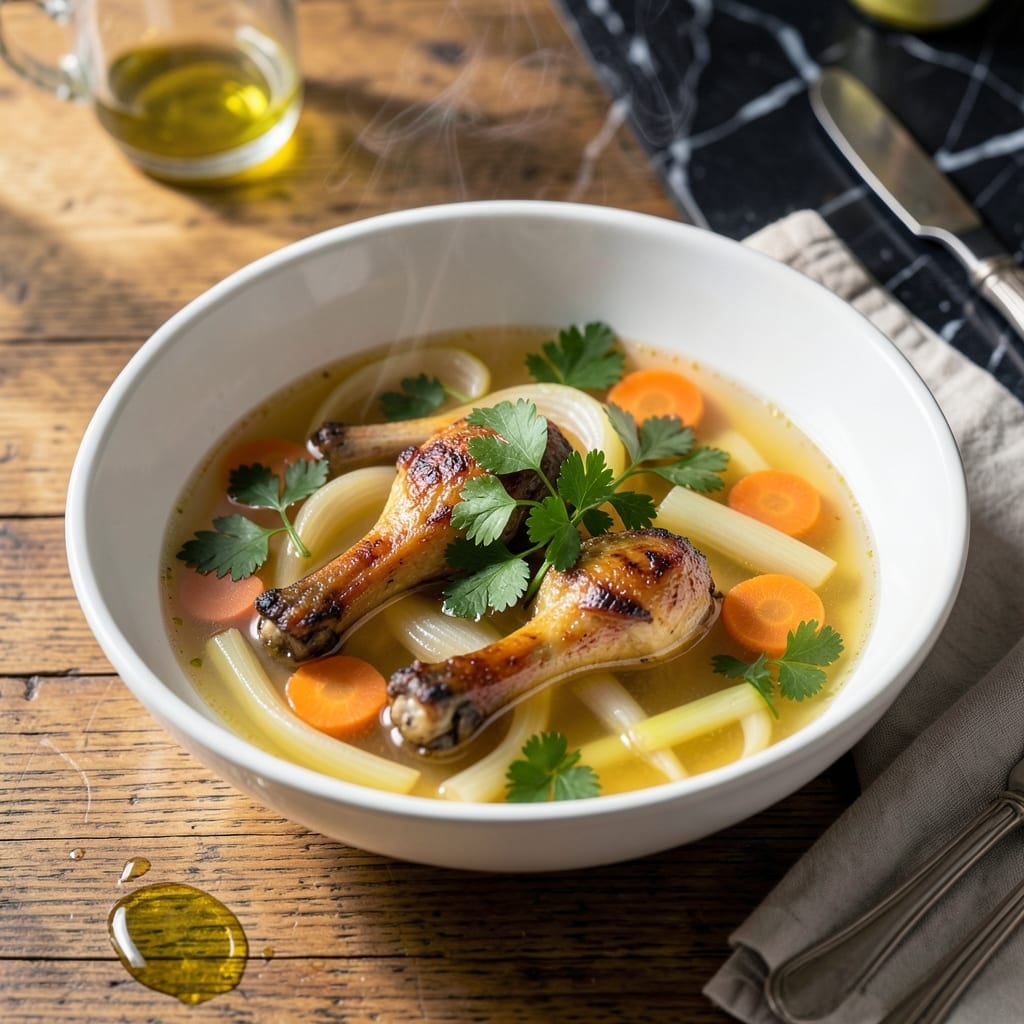
This classic chicken bouillon forms the foundation of countless dishes with its rich, aromatic depth. I’ve refined this method over years to extract maximum flavor from simple ingredients without shortcuts.
The process begins with gently simmering chicken, vegetables, and herbs to build a clean, balanced broth. Skimming impurities and maintaining a low heat ensures clarity and purity of taste.
What emerges is a golden liquid packed with savory complexity, ready to elevate soups, sauces, or grains. The slow extraction process guarantees a result far superior to store-bought versions.
Use it immediately or freeze for future cooking. This is the building block every kitchen needs.
Ingredients for Chicken Bouillon
A few humble ingredients transform into a golden, aromatic foundation for countless dishes.
| Ingredient | Amount | Notes |
|---|---|---|
| Chicken Bones 🍗 | 2 lb | Backs, necks, or carcasses preferred |
| Yellow Onion 🧅 | 1 whole | Quartered, skin on for color |
| Carrots 🥕 | 2 whole | Roughly chopped, unpeeled |
| Celery Stalks 🌿 | 2 whole | With leaves, roughly chopped |
| Garlic Cloves 🧄 | 4 cloves | Smashed, skin on |
| Fresh Parsley 🌿 | 1 bunch | Stems included, roughly chopped |
| Bay Leaves 🍃 | 2 whole | Dried or fresh |
| Black Peppercorns 🌶️ | 1 tsp | Whole, lightly crushed |
| Sea Salt 🧂 | 1 tsp | Added to taste |
| Cold Water 💧 | 12 cups | Enough to cover all ingredients |
| White Wine Vinegar 🍷 | 1 tbsp | For brightness, optional |
The chicken bones are non-negotiable here. Backs and necks yield the richest gelatin, while carcasses from roasted chickens add depth. Source from Whole Foods or a trusted butcher for organic, pastured birds—the flavor difference is undeniable. Avoid pre-cut pieces; the connective tissue in bones is what builds body. If you’re using a whole chicken, roast it first to deepen the color and flavor.
No chicken bones? Turkey bones work identically. For a vegetarian alternative, mushroom stems and kombu create a surprisingly rich broth. The vinegar isn’t traditional but a splash brightens the broth. If you skip it, add a squeeze of lemon at the end. Fresh herbs can be swapped for dried, but use one-third the amount—dried are more concentrated.
Bouillon freezes beautifully in ice cube trays for easy portioning. Strained broth keeps in the fridge for 4-5 days or in the freezer for 6 months. Skim off any fat before storing to prevent rancidity. Label containers with the date—it’s easy to forget what’s in the freezer.
Why You’ll Love This Recipe
- Set It and Forget It: I toss the bones and veggies in a pot, cover with water, and let it simmer while I do other things.
- Rich, Deep Flavor: The carrots and celery sweeten the broth naturally, and the garlic gives it this warm, savory depth I can’t get enough of.
- Meal Prep Gold: I make a big batch on Sunday and use it all week for soups, rice, or just sipping when I need a cozy pick-me-up.
- Penny-Wise Comfort: Honestly, using leftover chicken bones and basic pantry veggies means I get gallons of flavor for practically free.
Step-by-Step Instructions for Chicken Bouillon
This method extracts maximum flavor while maintaining clarity and depth in your broth base.
Step 1: Prepare and Roast the Chicken Bones
Begin by preheating your oven to 400°F. Spread the 2 lb Chicken Bones across a baking sheet in a single layer. Roasting intensifies the flavor and adds depth to the resulting bouillon. Roast for 20-25 minutes until the bones are deep golden brown and slightly caramelized.
This step is non-negotiable for a rich, well-rounded stock. The Maillard reaction from roasting creates complex flavors that raw bones simply can’t provide. Remove the bones from the oven and transfer them directly to your stockpot.
Step 2: Add Aromatics and Cold Water
Place the roasted bones in a large stockpot. Add the 1 whole Yellow Onion, 2 whole Carrots, 2 whole Celery Stalks, 4 cloves Garlic Cloves, 1 bunch Fresh Parsley, 2 whole Bay Leaves, 1 tsp Black Peppercorns, and 1 tsp Sea Salt. The skin-on onion and unpeeled vegetables contribute color and earthiness.
Pour in the 12 cups Cold Water—this ensures a slow, even extraction of flavors. Cold water is crucial here; starting with hot water can cause the proteins to seize up, resulting in a cloudy bouillon. Stir in the 1 tbsp White Wine Vinegar to help extract minerals from the bones.
Step 3: Simmer Gently for Maximum Extraction
Bring the mixture to a boil over medium-high heat. As soon as it reaches a rolling boil, reduce the heat to low to maintain a gentle simmer. You should see small bubbles occasionally breaking the surface, not a vigorous boil. Skim off any foam or impurities that rise to the top during the first 30 minutes of simmering.
Partially cover the pot and let it simmer for 3-4 hours. The longer simmer time extracts gelatin from the bones, giving your bouillon body and richness. You’ll notice the liquid gradually taking on a deep amber color and a rich aroma filling your kitchen.
Step 4: Strain and Finish the Bouillon
After simmering, carefully strain the bouillon through a fine-mesh sieve set over a large bowl or another pot. Press gently on the solids with a spoon to extract as much liquid as possible, but don’t squeeze—this can make the bouillon bitter. Discard all the solids; they’ve given up all their flavor.
Let the bouillon cool slightly. You’ll see a layer of fat rise to the surface. For a clear bouillon, skim off this fat with a spoon or use a fat separator. Taste and adjust the seasoning with additional sea salt if needed. Your bouillon should have a clean, rich chicken flavor with aromatic undertones.
Use immediately or store in airtight containers in the refrigerator for up to 5 days or freeze for up to 3 months.
Pro Tips For Making Chicken Bouillon
- Roast the Bones: Spread chicken bones on a baking sheet and roast at 400°F for 20-25 minutes until deeply browned—I learned this the hard way after making pale, flavorless broth for years.
- Skip the Peels: Leave the skins on your onion and garlic but give them a quick rinse first; it adds color and depth without bitterness, and saves peeling time.
- Simmer, Don’t Boil: Keep the heat low enough that you only see occasional bubbles breaking the surface—boiling makes the stock cloudy and can turn the fat emulsified rather than skimmable.
- Use Cold Water: Start with cold water and the bones, then gradually bring to a simmer; this slow start pulls out more gelatin and flavor than dumping bones into already-hot water.
Make-Ahead Tips for Leftovers
Batch Preparation
I always double this recipe, using 4 lb chicken bones and 24 cups cold water. A full stockpot yields about 8 cups concentrated bouillon that freezes beautifully. This way, I only need to make it every other month.
Freezing Portions
Pour cooled bouillon into 1-cup portions in silicone molds or ice cube trays. 2-tbsp cubes are perfect for deglazing pans. Once frozen, transfer to labeled freezer bags. Squeeze out all air to prevent freezer burn.
Fridge Storage
Store strained bouillon in airtight containers in the fridge for up to 5 days. I use Mason jars but leave 1-inch headspace as liquid expands slightly when chilled. Skim any solidified fat before using.
Quick Thawing
For immediate use, submerge a sealed bag in cold water for 30 minutes, changing water every 10 minutes. Never thaw at room temperature. Microwave thawing works too—use 30-second bursts on 50% power. 💡
Flavor Boost
Before using thawed bouillon, bring to a simmer and add 1 bay leaf or 3 parsley stems for 10 minutes. This revives the aroma. I also add a splash of white wine vinegar to brighten flavors.
Labeling System
Use masking tape and marker to note the date and type on containers. Bouillon keeps for 3 months in freezer. I rotate my stock—oldest gets used first. This simple system prevents mystery liquids in my freezer.
Nutrition Facts
Frequently Asked Questions
Can I use chicken meat instead of bones?
You can, but bones create a richer, more gelatinous result. Meat alone lacks collagen for body. If using meat, add 1-2 lb and simmer for 2 hours maximum to avoid toughening.
Why does my bouillon turn cloudy?
Cloudiness comes from impurities or boiling too hard. Always start with cold water, skim foam during the first 30 minutes, and maintain a gentle simmer. Straining through cheesecloth helps too.
How can I make it more flavorful?
Roast your bones and vegetables first for deeper flavor. Add a splash of white wine vinegar or a parmesan rind while simmering. Fresh herbs like thyme or tarragon also boost aroma.
Can I cook it in a slow cooker?
Use the low setting for 8-10 hours. Avoid the high setting as it can break down ingredients too quickly, resulting in a bitter taste.

- Jollof Rice Sauce Recipe: West African Tomato and Spice Infusion - September 25, 2026
- Japanese Rice Soup Recipe: Umami-Rich Comfort in a Bowl - September 25, 2026
- Homemade Cream Of Rice Recipe: Silk-Smooth Breakfast in Minutes - September 25, 2026