
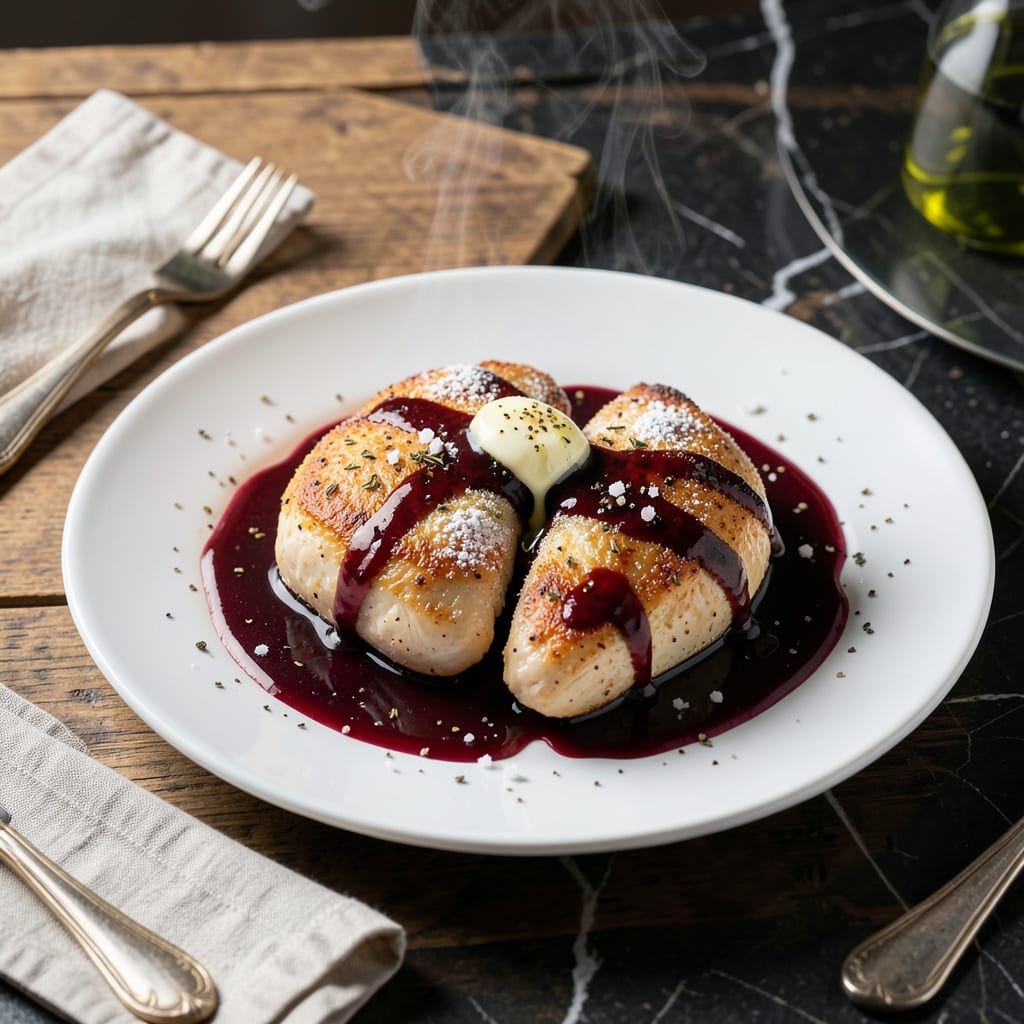
This dish transforms simple chicken breast into something extraordinary with a rich red wine sauce that’s both elegant and approachable. The key lies in searing the meat to lock in juices before simmering in the wine-infused sauce.
The result is tender chicken with a velvety, deeply flavored sauce that comes together in one pan. Perfect for a special dinner yet simple enough for any night of the week.
Ingredients for Chicken Breast in Red Wine Sauce
Transform simple chicken with rich wine sauce using these pantry staples and fresh herbs.
| Ingredient | Amount | Notes |
|---|---|---|
| Boneless Skinless Chicken Breast 🍗 | 1 ½ lb | Pounded to even thickness |
| Kosher Salt 🧂 | 1 ½ tsp | Divided for seasoning |
| Freshly Ground Black Pepper 🌶️ | 1 tsp | Divided for seasoning |
| All-Purpose Flour 🌾 | ¼ cup | For dredging chicken |
| Olive Oil 🫒 | 2 tbsp | Divided for cooking |
| Unsalted Butter 🧈 | 2 tbsp | For sauce richness |
| Shallots 🧅 | 2 whole | Finely minced |
| Garlic Cloves 🧄 | 4 cloves | Minced for sauce |
| Dry Red Wine 🍷 | 1 ½ cups | Bold and dry variety |
| Low-Sodium Chicken Broth 🥫 | 1 cup | For deglazing pan |
| Fresh Thyme Sprigs 🌿 | 4 sprigs | Leaves stripped from stems |
| Dijon Mustard 🟡 | 1 tbsp | For sauce depth |
| Heavy Cream 🥛 | ½ cup | For sauce creaminess |
| Fresh Parsley 🌿 | ¼ cup | Chopped for garnish |
[recipeingredientscaler]
The chicken quality matters here. Boneless, skinless breasts from Whole Foods or your trusted butcher ensure tenderness. Pound them to even thickness—this prevents dry spots. For the wine, a bold Cabernet Sauvignon or Merlot works best. Trader Joe’s has affordable options. The shallots and thyme add depth, so don’t skip them (fresh makes all the difference).
No red wine? Substitute with extra broth and 1 tbsp balsamic vinegar. Out of shallots? Yellow onion at half the quantity works fine. Fresh thyme can be swapped for dried at one-third the amount. For a lighter sauce, replace heavy cream with half-and-half. The Dijon mustard is key—don’t omit it (adds tang without overpowering).
The sauce reheats beautifully—actually improves overnight. Store leftovers in an airtight container for up to 4 days in the fridge. Freezes well for 3 months. Reheat gently to maintain the velvety texture (don’t boil).
Why You’ll Love This Recipe
- One Pan Wonder: I love that I can sear the chicken, deglaze with wine, and finish it all in the same skillet—minimal cleanup.
- Rich & Deep: The red wine reduces into this velvety sauce that soaks into the chicken, honestly better than any takeout I’ve tried.
- Weeknight Hero: Between us, this feels fancy enough for company but comes together faster than waiting for delivery.
- Leftovers? Yes Please: The flavors taste even better the next day, and the chicken stays juicy—my secret weapon for packed lunches.
Step-by-Step Instructions for Chicken Breast in Red Wine Sauce
Here is the method to achieve perfectly tender meat with a rich, velvety sauce.
Step 1: Pound and Season the Chicken Breast
Place the boneless skinless chicken breast between two sheets of plastic wrap. Using a meat mallet, pound the chicken to an even ½-inch thickness. This ensures even cooking and prevents dry, overdone edges.
Season both sides of the chicken with 1 tsp Kosher Salt and ½ tsp Freshly Ground Black Pepper. The uniform thickness and proper seasoning are key to maintaining moisture and flavor throughout the cooking process.
Step 2: Dredge and Sear the Chicken
Lightly coat the seasoned chicken with the 0.25 cup All-Purpose Flour, shaking off any excess. This creates a light crust that will help thicken the sauce later.
Heat 1 tbsp Olive Oil in a large skillet over medium-high heat. Once the oil shimmers, add the chicken and sear for 4-5 minutes per side until golden brown. The chicken should release easily from the pan when it’s ready to flip. Transfer the chicken to a plate and tent with foil to keep warm.
Step 3: Build the Red Wine Sauce Base
In the same skillet, reduce the heat to medium and add the remaining 1 tbsp Olive Oil. Add the finely minced 2 whole Shallots and cook for 3-4 minutes until softened and translucent.
Add the minced 4 cloves Garlic Cloves and the leaves from the 4 sprigs Fresh Thyme Sprigs. Cook for 30 seconds until fragrant, stirring constantly to prevent burning. Pour in the 1.5 cups Dry Red Wine and scrape up any browned bits from the bottom of the pan. Simmer for 5 minutes until the wine reduces by half.
Step 4: Finish the Sauce and Return Chicken
Stir in the 1 cup Low-Sodium Chicken Broth, 1 tbsp Dijon Mustard, and 2 tbsp Unsalted Butter. Bring to a simmer and cook for 5 minutes until the sauce begins to thicken slightly.
Reduce heat to low and stir in the 0.5 cup Heavy Cream. Return the chicken to the skillet, spooning the sauce over the top. Simmer for 3-4 minutes until the chicken is cooked through (internal temperature of 165°F) and the sauce coats the back of a spoon.
Step 5: Garnish and Serve
Remove the skillet from heat. Sprinkle the chopped 0.25 cup Fresh Parsley over the chicken and sauce, reserving some for garnish.
Serve the chicken with the red wine sauce spooned over the top. The sauce should be rich and velvety, complementing the tender, juicy chicken. Serve immediately with mashed potatoes, crusty bread, or your favorite side dish.
Pro Tips For Making Chicken Breast In Red Wine Sauce
- Pound the Chicken: I learned this the hard way—pound the breasts to an even ¾-inch thickness so they cook through without drying out. Uneven pieces mean some bits turn to leather while others stay raw.
- Salt the Flour: Mix a teaspoon of kosher salt right into the flour before dredging. It seasons the crust better than just salting the chicken, and you’ll taste the difference in every bite.
- Skip the Crowding: Resist the urge to cram all the chicken into the pan at once. Overcrowding steams instead of sears, and you’ll end up with pale, soggy pieces instead of that golden crust.
- Use a Splash of Oil: Add about a tablespoon of olive oil to the pan before the wine goes in—it keeps the sauce from breaking and gives it a silky finish. Sounds small, but it actually changes the outcome.
Pro Cooking Tips for chicken breast in red wine sauce
Perfect Searing Technique
Don’t rush the sear on your chicken. Heat 1 tbsp olive oil until it shimmers, then add the floured chicken. I wait until the edges look white before flipping—this means it’s properly seared. A cast iron skillet gives the best crust. 🌡️
Wine Reduction Timing
After deglazing with 1.5 cups dry red wine, let it reduce by half before adding broth. This takes about 5 minutes on medium heat. I use a wooden spoon to scrape up all those flavorful browned bits—they’re pure gold for your sauce.
Sauce Thickness Control
The sauce should coat the back of a spoon when done. If it’s too thin, simmer uncovered for 2-3 extra minutes. Too thick? Add a splash of chicken broth. I find the sweet spot happens right as the chicken finishes cooking.
Temperature Precision
Use an instant-read thermometer to check your chicken hits 165°F internally. Pull it at 160°F—it’ll rise the last 5°F while resting. This prevents overcooking. I swear by my ThermoWorks for accuracy. 🔥
Resting Matters
Let your chicken rest in the warm sauce for 5 minutes off heat before serving. This lets the juices redistribute. I tent with foil to keep it warm while I finish any sides.
Fat Emulsion Trick
For that velvety texture, whisk in the 2 tbsp cold butter at the end. The cold fat emulsifies with the warm sauce. I cut the butter into small cubes first for even melting.
Nutrition Facts
Frequently Asked Questions
Can I use chicken thighs instead of breasts?
Yes! Chicken thighs stay juicier and can handle the longer cooking time. Adjust the cooking to 175°F internal temperature. They’ll add more richness to the sauce too.
What if my sauce is too bitter?
Balance it with a pinch of sugar or extra heavy cream. This mellows the tannins from the wine. A splash of balsamic vinegar can also round out the flavor.
How do I prevent the sauce from breaking?
Keep the heat at low to medium when adding cream. Stir constantly and avoid boiling. If it separates, whisk in 1 tsp cold butter to bring it back together.
Is it safe to use cooking wine?
Avoid cooking wine—it has added salt and preservatives. Use a dry red wine you’d actually drink. A budget-friendly Cabernet works perfectly.

- Jollof Rice Sauce Recipe: West African Tomato and Spice Infusion - September 25, 2026
- Japanese Rice Soup Recipe: Umami-Rich Comfort in a Bowl - September 25, 2026
- Homemade Cream Of Rice Recipe: Silk-Smooth Breakfast in Minutes - September 25, 2026