
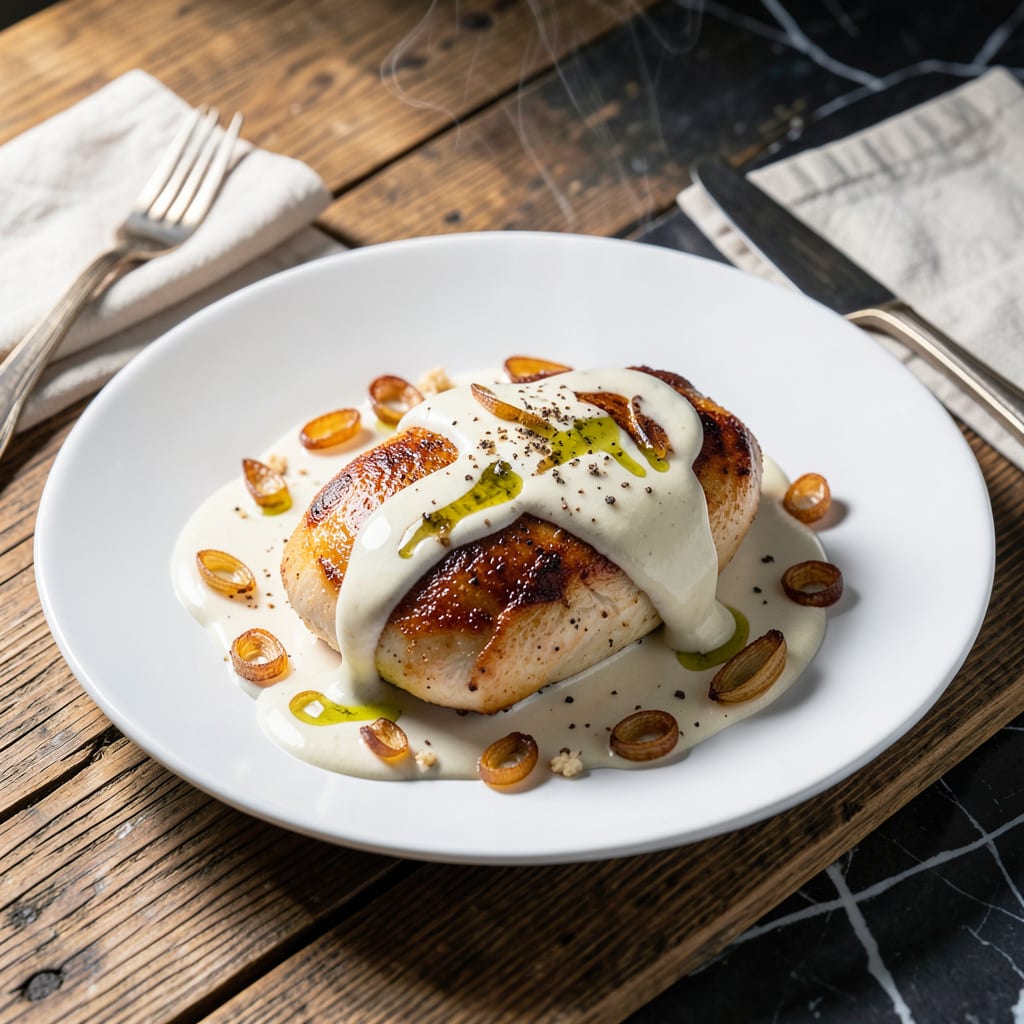
This recipe delivers tender chicken breast enveloped in a velvety white sauce that’s rich without being heavy. The secret lies in cooking the chicken just until done, then finishing it in the creamy sauce to lock in moisture.
You’ll achieve restaurant-quality results with simple techniques and pantry staples. The sauce comes together in minutes, coating each piece in a smooth, flavorful finish that pairs perfectly with pasta or rice.
Ingredients for Chicken Breast in White Sauce
Pantry staples and a few fresh additions create this velvety white sauce dish with tender chicken.
| Ingredient | Amount | Notes |
|---|---|---|
| Boneless Skinless Chicken Breast 🍗 | 1 ½ lb | Pounded to even thickness |
| All-Purpose Flour 🌾 | ½ cup | For dredging chicken |
| Unsalted Butter 🧈 | 3 tbsp | Divided for cooking and sauce |
| Olive Oil 🫒 | 1 tbsp | For searing chicken |
| Garlic Cloves 🧄 | 3 cloves | Minced for sauce |
| Shallot 🧅 | 1 whole | Finely diced for sauce |
| Dry White Wine 🍷 | ½ cup | Sauvignon Blanc or Pinot Grigio |
| Chicken Stock 🥣 | 1 cup | Low-sodium preferred |
| Heavy Cream 🥛 | 1 cup | Full-fat for velvety texture |
| Whole Milk 🥛 | ¼ cup | For balancing sauce richness |
| Dijon Mustard 🟡 | 1 tbsp | For depth of flavor |
| Fresh Lemon Juice 🍋 | 1 tbsp | Brightens the sauce |
| Fresh Thyme Leaves 🌿 | 1 tbsp | Or 1 tsp dried thyme |
| Kosher Salt 🧂 | 1 tsp | Diamond Crystal preferred |
| Freshly Ground Black Pepper 🌶️ | ½ tsp | For seasoning layers |
[recipeingredientscaler]
The chicken quality matters most here. Air-chilled breasts from Whole Foods or Costco stay juicier than water-plumped varieties. Pound them to an even ½-inch thickness—this ensures even cooking and prevents dryness. For the wine, any dry white works; avoid oaky Chardonnays. The cream should be full-fat—lower percentages can curdle when heated.
No white wine? Substitute with extra chicken stock plus 1 tsp lemon juice. Shallots can be replaced with half a small onion (finely diced). For a lighter sauce, use half-and-half instead of heavy cream, but expect a slightly thinner consistency. Fresh thyme is ideal, but dried works at one-third the amount. Always taste before final seasoning—salt content varies by stock brand.
The sauce keeps in the fridge for up to 3 days—reheat gently to avoid separation. Chicken is best served immediately but can be stored for 4 days. Freezing isn’t recommended as the sauce may separate. For meal prep, cook chicken and sauce separately, then combine when reheating.
Why You’ll Love This Recipe
- One Pan Wonder: I love how everything comes together in a single skillet—chicken, butter, garlic, done. Minimal cleanup, maximum flavor.
- Garlic Butter Bliss: The butter and garlic create a rich, creamy sauce that coats every bite. Honestly, I could drink it with a spoon.
- Weeknight Hero: It’s my go-to for busy evenings when I need something fast but still satisfying. (Yes, even on a Tuesday night)
- Budget Stretcher: Chicken breast and pantry staples make this dish kind, light on the wallet. Plus, leftovers taste even better the next day.
Step-by-Step Instructions for Chicken Breast in White Sauce
Master these techniques to achieve the velvety sauce and tender chicken promised in this dish.
Step 1: Prepare and Sear the Chicken Breast
Begin by pounding the 1.5 lb boneless skinless chicken breast to an even ½-inch thickness using a meat mallet. This ensures uniform cooking and prevents dryness. Season both sides with 1 tsp kosher salt and 0.5 tsp freshly ground black pepper.
Dredge each piece in the 0.5 cup all-purpose flour, shaking off excess. Heat 1 tbsp olive oil and 1 tbsp unsalted butter in a large skillet over medium-high heat until shimmering. Sear the chicken for 4-5 minutes per side until golden brown and cooked through. Transfer to a plate and tent with foil.
Step 2: Build the Aromatic Base
In the same skillet, reduce heat to medium and add the remaining 2 tbsp unsalted butter. Add the finely diced shallot and cook for 2-3 minutes until softened and translucent. Stir in the 3 cloves minced garlic cloves and cook for 30 seconds until fragrant.
Pour in the 0.5 cup dry white wine to deglaze the pan, scraping up all browned bits with a wooden spoon. Simmer for 2-3 minutes until the liquid reduces by half. This step extracts maximum flavor from the pan and balances the richness of the sauce.
Step 3: Create the Velvety White Sauce
Add the 1 cup chicken stock, 1 cup heavy cream, and 0.25 cup whole milk to the skillet. Stir in the 1 tbsp Dijon mustard and 1 tbsp fresh thyme leaves. Simmer over medium-low heat for 5-7 minutes until the sauce thickens enough to coat the back of a spoon.
The combination of cream and milk creates a luscious, velvety texture while the mustard adds subtle depth. Stir occasionally to prevent scorching, especially as the sauce begins to thicken. Taste and adjust seasoning if needed.
Step 4: Finish with Brightness and Serve
Stir in the 1 tbsp fresh lemon juice to brighten the sauce and cut through the richness. Return the seared chicken to the skillet, spooning the sauce over each piece. Simmer for 2-3 minutes to allow the flavors to meld and the chicken to absorb the sauce.
Serve immediately, ensuring each portion is coated with the velvety white sauce. The chicken should be tender and juicy, with each bite complemented by the creamy, aromatic sauce. Garnish with additional fresh thyme if desired.
Pro Tips For Making Chicken Breast In White Sauce
- Pound the Chicken: Use a meat mallet to pound the chicken breasts to an even ½-inch thickness. I learned this the hard way—uneven pieces mean some bits dry out while others stay raw.
- Toast the Flour: Cook the flour in butter for 1-2 minutes before adding liquid to remove the raw taste. Sounds weird, but it works—your sauce will taste richer, not pasty.
- Skip Overcrowding: Cook chicken in batches if needed—crowding the pan steams the meat instead of browning it. Your future self will thank you when the sauce clings to properly seared chicken.
- Use Warm Milk: Add warm milk to the roux instead of cold to prevent lumps. After burning three batches, I finally figured out this one simple step guarantees smooth sauce every time.
Perfect Pairings for chicken breast in white sauce
Side Dish Pairings
I love serving this with buttered egg noodles—the sauce clings beautifully to every strand. For a lighter option, try garlic mashed potatoes or steamed asparagus to balance the richness. Roasted broccoli with a squeeze of lemon adds a vibrant contrast. 🥗
Bread Options
A crusty baguette or ciabatta is perfect for soaking up every last drop of that velvety sauce. I toast slices with a little olive oil and garlic for extra flavor. Warm dinner rolls work well too for a softer texture.
Wine Pairings
The dry white wine used in the sauce pairs perfectly with the dish. I recommend a crisp Sauvignon Blanc or Pinot Grigio. For red lovers, a light Pinot Noir complements without overpowering the delicate sauce. 🍷
Salad Additions
A simple green salad with a tangy vinaigrette cuts through the creaminess. I toss mixed greens with cherry tomatoes, cucumber, and a lemon-Dijon dressing. The acidity refreshes your palate between bites.
Nutrition Facts
Frequently Asked Questions
How do I prevent the chicken from drying out?
Pound the breasts to ½-inch thickness for even cooking and sear for only 4-5 minutes per side. Don’t overcook—remove from pan when internal temperature reaches 165°F.
Can I use milk instead of heavy cream?
Yes, but the sauce will be thinner. For best results, use whole milk and simmer longer to reduce. For extra richness, add 1 tbsp cornstarch mixed with cold water.
Why did my sauce curdle?
This happens if the cream gets too hot too fast. Always cook the sauce on medium-low heat and stir frequently. If it curdles, whisk in 1 tsp cold water to smooth it out.

- Jollof Rice Sauce Recipe: West African Tomato and Spice Infusion - September 25, 2026
- Japanese Rice Soup Recipe: Umami-Rich Comfort in a Bowl - September 25, 2026
- Homemade Cream Of Rice Recipe: Silk-Smooth Breakfast in Minutes - September 25, 2026