
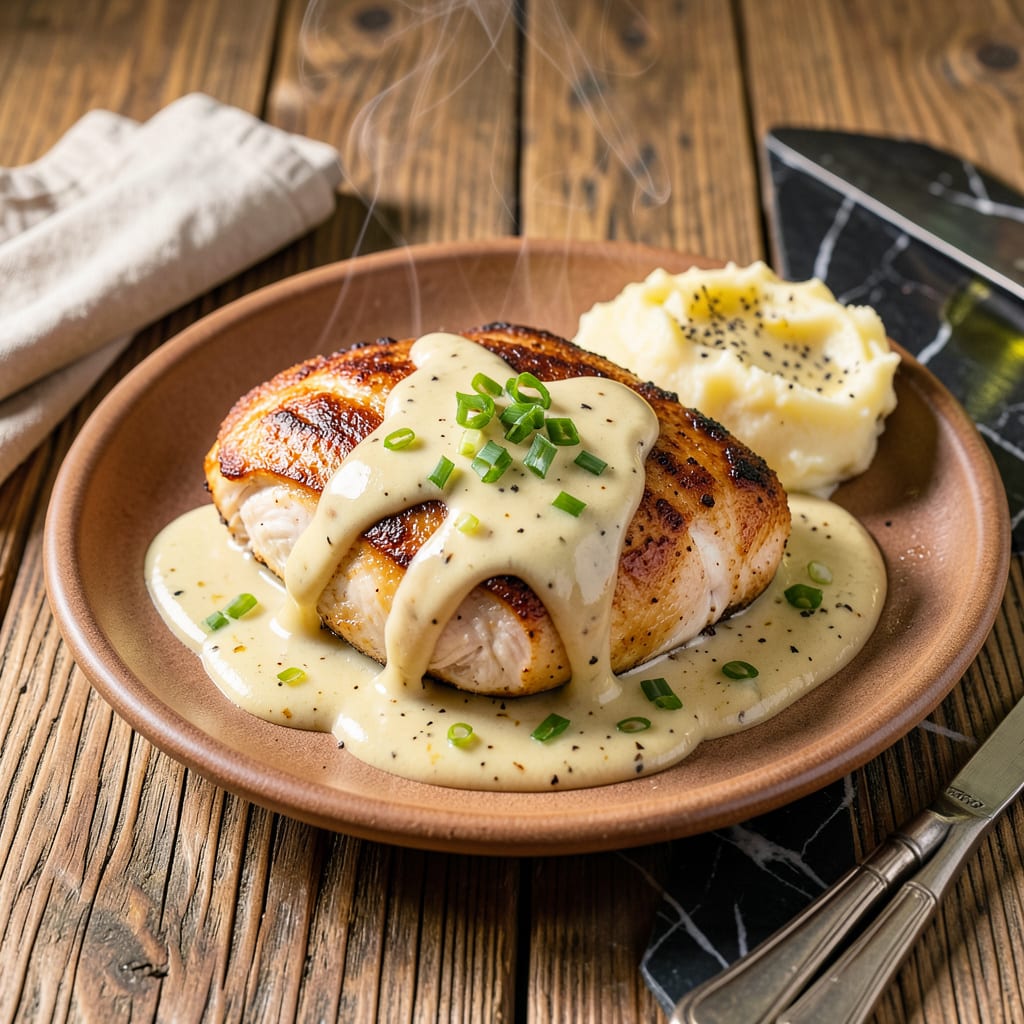
This pan-seared chicken breast delivers restaurant-quality results with a velvety mustard sauce that elevates every bite. The simple technique ensures juicy, tender meat every time.
The creamy mustard sauce balances tangy and rich flavors perfectly, creating an elegant dish that’s surprisingly easy to master. Ideal for weeknight dinners or special occasions.
Ingredients for Chicken Breast with Mustard Sauce
Restaurant-quality pan-seared chicken and velvety mustard sauce require these precise ingredients for perfect results every time.
| Ingredient | Amount | Notes |
|---|---|---|
| Boneless Skinless Chicken Breasts 🍗 | 1 ½ lb | Pounded to even thickness |
| Dijon Mustard 🟡 | 3 tbsp | Smooth, high-quality preferred |
| Heavy Cream 🥛 | 1 cup | Full-fat for creaminess |
| Dry White Wine 🍷 | ½ cup | Sauvignon Blanc or Chardonnay |
| Chicken Stock 🍲 | ½ cup | Low-sodium preferred |
| Shallots 🧅 | 2 whole | Finely minced |
| Garlic Cloves 🧄 | 3 cloves | Minced to paste consistency |
| Unsalted Butter 🧈 | 3 tbsp | Divided for cooking and sauce |
| All-Purpose Flour 🌾 | 2 tbsp | For thickening sauce |
| Fresh Thyme Leaves 🌿 | 2 tsp | Stems discarded |
| Kosher Salt 🧂 | 1 ½ tsp | Diamond Crystal preferred |
| Freshly Ground Black Pepper 🌶️ | ¾ tsp | Coarse grind ideal |
| Olive Oil 🫒 | 2 tbsp | Neutral flavor, high smoke point |
| Fresh Parsley 🌿 | 3 tbsp | Chopped, for garnish |
[recipeingredientscaler]
The chicken quality is paramount. Opt for air-chilled boneless, skinless breasts from a reputable butcher or Whole Foods—they retain moisture better than conventional. For the mustard, Maille or Grey Poupon Dijon delivers the proper sharpness. Heavy cream should be ultra-pasteurized for stability in sauces. Wine selection matters: a crisp Sauvignon Blanc adds the right acidity without overpowering.
No white wine? Substitute with additional chicken stock and 1 tbsp lemon juice. Shallots can be replaced with yellow onion at half the quantity. For a gluten-free version, use cornstarch instead of flour. The thyme is essential for depth, but rosemary works in a pinch. Low-fat cream won’t emulsify properly—stick with full-fat for that velvety texture the dish promises.
Chicken should be cooked immediately after pounding for best texture. The sauce keeps 3-4 days refrigerated but is best fresh. Leftovers reheat gently—high heat will cause the cream to separate. Always bring chicken to room temperature before cooking for even doneness.
Why You’ll Love This Recipe
- 20-Minute Meal: I can get this from fridge to table faster than ordering takeout. Honestly, the sauce comes together while the chicken sears.
- Rich Creamy Bite: That Dijon mustard with heavy cream creates a tangy, velvety sauce that clings to every bite of juicy chicken.
- Fancy Enough for Guests: I serve this at dinner parties—white wine and stock make it taste gourmet, but it’s secretly low-effort.
- Leftovers? Yes Please: The flavors deepen overnight, so tomorrow’s lunch tastes even better. Between us, I sometimes double the sauce just for that.
Step-by-Step Instructions for Chicken Breast With Mustard Sauce
Master this technique for perfectly seared chicken with a luscious, tangy cream sauce every time.
Step 1: Prepare and Season the Chicken
Begin by pounding the boneless skinless chicken breasts to an even ½-inch thickness using a meat mallet. This ensures uniform cooking and prevents dry, overdone edges. Pat them completely dry with paper towels—moisture inhibits proper browning.
Season both sides generously with the 1.5 tsp kosher salt and 0.75 tsp freshly ground black pepper. I press the seasoning into the meat lightly to help it adhere. Let the seasoned chicken sit at room temperature for 10-15 minutes while you prepare the remaining ingredients.
Step 2: Sear the Chicken to Golden Perfection
Heat the 2 tbsp olive oil in a large skillet over medium-high heat until it shimmers. Add 1 tbsp unsalted butter and swirl to coat the pan. When the butter stops foaming, add the chicken breasts in a single layer, working in batches if necessary to avoid crowding.
Cook for 5-6 minutes per side until the chicken is golden brown and releases easily from the pan. The internal temperature should reach 160°F in the thickest part. Transfer the cooked chicken to a plate and tent with foil to keep warm.
Step 3: Build the Mustard Cream Sauce Base
In the same skillet, reduce the heat to medium and add the remaining 2 tbsp unsalted butter. When melted, add the 2 whole shallots (finely minced) and cook for 2-3 minutes until softened and translucent. Stir in the 3 cloves garlic cloves (minced) and 2 tsp fresh thyme leaves, cooking for 30 seconds until fragrant.
Sprinkle the 2 tbsp all-purpose flour over the shallot mixture and cook for 1 minute, stirring constantly to create a light roux. This thickens the sauce and prevents lumps. Slowly pour in the 0.5 cup dry white wine and 0.5 cup chicken stock, whisking continuously until smooth.
Step 4: Finish with Cream and Mustard
Simmer the mixture for 3-4 minutes until it reduces slightly and thickens. Reduce the heat to low and stir in the 1 cup heavy cream and 3 tbsp Dijon mustard. Cook for another 2-3 minutes, stirring occasionally, until the sauce coats the back of a spoon.
Return the chicken to the skillet along with any accumulated juices. Spoon the sauce over the chicken and simmer for 1-2 minutes to heat through and allow the flavors to meld. Taste and adjust seasoning if needed.
Step 5: Garnish and Serve
Transfer the chicken to serving plates and spoon the remaining sauce over the top. Garnish with the 3 tbsp fresh parsley (chopped) for a pop of color and freshness. Serve immediately with crusty bread, mashed potatoes, or steamed vegetables to soak up the creamy sauce.
The sauce should be velvety and coats the chicken beautifully, with a perfect balance of tangy mustard and rich cream. Each bite delivers tender, juicy chicken complemented by the luxurious sauce.
Pro Tips For Making Chicken Breast With Mustard Sauce
- Pound the Breasts: Use a rolling pin to even out the thickness to ½ inch—this guarantees even cooking and prevents dry, chewy edges. I learned this the hard way after pulling one perfect piece and one hockey puck from the pan.
- Deglaze First: After searing the chicken, pour in the white wine while the pan’s still hot to lift all those browned bits—that’s where the sauce gets its depth. Skip this and your mustard cream will taste flat.
- Skip Cold Cream: Let the heavy cream sit on the counter for 10 minutes before adding it to the sauce, or it can curdle when it hits the hot wine and stock. Sounds fussy, but it works.
- Rest Before Slicing: Tent the chicken with foil for 5-10 minutes after cooking—it redistributes the juices so they don’t all spill onto the cutting board. I skip this when I’m lazy, but the dish is noticeably better when I don’t.
Regional Styles of These Flavors
French Bistro Style
In Paris, they use whole-grain mustard for a rustic texture, adding 1 tbsp to the Dijon in the sauce. I love how the seeds pop between your teeth. The sauce often includes 1 tsp tarragon for an anise note that’s distinctly French. 🗺️
German Senf Variation
For a Bavarian twist, swap Dijon for 2 tbsp sweet German mustard and add 1 tsp caraway seeds to the sauce. This pairs beautifully with sauerkraut on the side. I first tried this at Oktoberfest and was hooked.
Southern Comfort
In the American South, they might use yellow mustard and add 1 tbsp honey to balance the tang. I like to include ½ tsp smoked paprika in the seasoning for a subtle barbecue note. Serve with buttermilk biscuits.
British Pub Classic
British versions often feature English mustard (hotter than Dijon) and 1 tbsp wholegrain mustard for texture. They typically use double cream instead of heavy cream. I enjoy this with a side of mash and peas.
Mediterranean Twist
Greek cooks might add 1 tsp dried oregano and zest of 1 lemon to brighten the sauce. I’ve seen versions with crumbled feta sprinkled on top just before serving. The acidity cuts through the richness beautifully. 💛
Asian Fusion
For an Eastern spin, mix 1 tbsp Dijon with 1 tbsp soy sauce and 1 tsp grated ginger in the sauce. I like to garnish with sliced scallions and serve over jasmine rice. The umami depth is incredible.
Nutrition Facts
Frequently Asked Questions
Can I use chicken thighs instead of breasts?
Yes, boneless skinless thighs work beautifully. Reduce cooking time to 4-5 minutes per side since they cook faster. They’ll stay juicier and pair wonderfully with the creamy sauce.
What if my sauce is too thick?
Thin it with a splash of chicken stock or white wine. Add 1 tablespoon at a time until it reaches your desired consistency. Stir well between additions.
Can I make the sauce ahead of time?
Prepare the sauce up to 2 days in advance. Store in an airtight container in the fridge. Gently reheat on low, stirring constantly to prevent separation.
Why does my chicken turn out dry?
Overcooking is the main culprit. Use a meat thermometer and remove from heat at 160°F. Also, pounding to even thickness ensures uniform cooking.

- Jollof Rice Sauce Recipe: West African Tomato and Spice Infusion - September 25, 2026
- Japanese Rice Soup Recipe: Umami-Rich Comfort in a Bowl - September 25, 2026
- Homemade Cream Of Rice Recipe: Silk-Smooth Breakfast in Minutes - September 25, 2026