
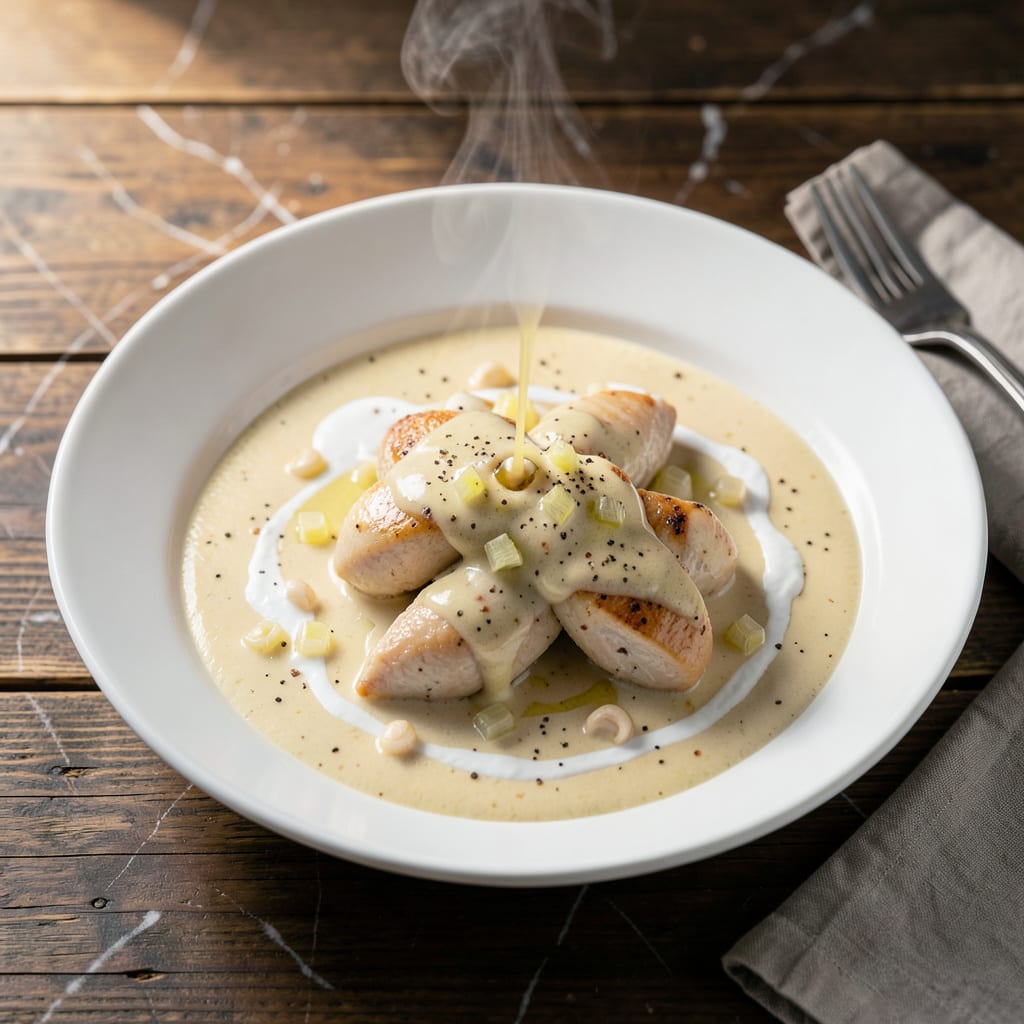
This silky chicken broth sauce creates a perfect foundation for coating everything from pasta to proteins. Developed through careful reduction and emulsification, it transforms basic broth into a rich, velvety finish.
With just a few pantry staples and 15 minutes of attention, you’ll have a professional-quality sauce that enhances without overpowering. The secret lies in the balance between concentration and consistency.
Ingredients for Chicken Broth Sauce
Transform basic broth into restaurant-quality sauce with these few pantry staples and fresh aromatics.
| Ingredient | Amount | Notes |
|---|---|---|
| Chicken Broth 🥣 | 3 cups | Low-sodium preferred for control |
| Unsalted Butter 🧈 | ½ cup | Divided for emulsification |
| All-Purpose Flour 🌾 | 2 tbsp | For thickening the sauce |
| Heavy Cream 🥛 | ¼ cup | Full-fat for richness |
| Garlic Cloves 🧄 | 3 cloves | Minced finely for even distribution |
| Shallot 🧅 | 1 whole | Finely diced for subtle sweetness |
| Dry White Wine 🍷 | ¼ cup | For acidity and depth |
| Fresh Thyme Sprigs 🌿 | 3 sprigs | Leaves stripped from stems |
| Dijon Mustard 🟡 | 1 tsp | For subtle tang and emulsifying power |
| Kosher Salt 🧂 | ½ tsp | Adjust to taste at the end |
[recipeingredientscaler]
The broth is the backbone—use a high-quality brand like Swanson or Better Than Bouillon. Unsalted butter gives you control over seasoning, and I always keep a brick from Land O’Lakes in the fridge. The heavy cream should be full-fat for that velvety texture (trust me, the light stuff splits). Fresh thyme and shallots might seem fancy, but most Whole Foods or Kroger stores carry them year-round.
No white wine? Substitute with extra broth plus a splash of lemon juice for acidity. Shallots can be swapped for half a small onion, though the flavor’s milder. Out of fresh thyme? Dried thyme at one-third the amount works—just add it earlier. The Dijon is key for emulsification, but in a pinch, a pinch of dry mustard powder gets you close. Heavy cream not an option? Try half-and-half but reduce the heat to avoid curdling.
Sauce keeps 3-4 days in the fridge—reheat gently to avoid breaking. For longer storage, freeze in ice cube trays for up to 3 months. Always taste and adjust salt after reheating, as flavors concentrate over time (worth the extra minute).
Why You’ll Love This Recipe
- One Pot Wonder: I just melt butter, whisk in flour, and let the chicken broth do the work—no fancy techniques.
- Garlic Cream Magic: That rich, velvety texture from the heavy cream paired with roasted garlic? Ridiculously good.
- Dinner to Lunch: I double the batch and use leftovers for pasta, mashed potatoes, or even as a soup base the next day.
- Pantry Hero: Between us, I always have these ingredients on hand, so it’s my go-to when I need a quick, budget-friendly sauce.
Step-by-Step Instructions for Chicken Broth Sauce
This method delivers a velvety sauce that coats the back of a spoon perfectly.
Step 1: Create the Roux Base for Thickening
Melt 0.5 cup unsalted butter in a heavy saucepan over medium heat. Let it foam but not brown—this takes about 2-3 minutes. The butter should be completely liquid with tiny bubbles across the surface.
Whisk in the 2 tbsp all-purpose flour all at once. Stir constantly for 2 minutes until the mixture turns a pale golden color and smells slightly nutty. This roux is your sauce’s backbone—it thickens without lumps when done right.
Step 2: Build Flavor with Aromatics
Add the finely diced shallot to the roux and cook for 2 minutes until translucent. Then stir in the 3 cloves minced garlic cloves and cook for 30 seconds just until fragrant—don’t let it brown.
Pour in the 0.25 cup dry white wine and scrape up any browned bits from the bottom. Add the 3 sprigs fresh thyme sprigs (leaves stripped) and the 1 tsp Dijon mustard. Simmer for 2 minutes until the wine reduces by half.
Step 3: Incorporate Liquids Gradually
Slowly pour in the 3 cups chicken broth, whisking constantly to prevent lumps. Start with a thin stream at first, then increase as the mixture thickens. This gradual addition ensures a smooth, silky texture.
Bring to a gentle simmer over medium-high heat, then reduce to medium-low. Cook for 8-10 minutes, stirring occasionally, until the sauce coats the back of a spoon. You’ll see it thicken as it approaches the perfect consistency.
Step 4: Finish with Cream and Seasoning
Stir in the 0.25 cup heavy cream and simmer for another 3-4 minutes. The sauce should now be rich and velvety, with a glossy sheen. Taste and adjust with the 0.5 tsp kosher salt—remember, low-sodium broth means you control the seasoning.
Strain the sauce through a fine-mesh sieve for ultra-smooth results. Press on the solids to extract all that flavor. Your sauce is now ready to elevate any dish with its perfect coating ability.
Pro Tips For Making Chicken Broth Sauce
- Toast the Flour: Cook the flour in butter for 1-2 minutes before adding liquid—this removes the raw taste and deepens the sauce’s flavor. I learned this the hard way when my early batches tasted like wet paste.
- Warm the Broth: Heat your chicken broth before adding it to the roux; cold broth seizes up the flour and creates lumps. Sounds fussy, but it’s the difference between smooth and clumpy.
- Mince Garlic Fine: Finely mince the garlic cloves so they melt into the sauce rather than float as noticeable chunks. After biting into a raw garlic piece one too many times, I finally started chopping it to near-paste.
- Simmer, Don’t Boil: Keep the sauce at a gentle simmer once the cream goes in—boiling can cause the dairy to separate. My grandmother swore by this, and she was right.
Perfect Pairings for These Flavors
Pasta Pairings
This sauce clings beautifully to fettuccine or pappardelle—the wide noodles really show it off. I toss 8 oz cooked pasta with 1 cup sauce and finish with ¼ cup grated Parmesan. The cheese melts into the sauce, creating an even richer coating. 🥗
Protein Partners
For chicken, I pan-sear 4 boneless thighs and spoon the sauce over them. It also transforms simple poached chicken breasts into restaurant-worthy fare. For seafood, try it with seared scallops or grilled shrimp—the lightness complements the richness perfectly.
Vegetable Sides
Steamed asparagus or green beans benefit from a light drizzle. Roasted mushrooms soak up the sauce like sponges—I use cremini or shiitake for depth. For a heartier option, spoon it over mashed potatoes or roasted cauliflower steaks.
Bread Companions
A crusty baguette or sourdough is perfect for mopping up every last drop. I toast slices and rub them with garlic cloves for extra flavor. For a cozy meal, serve the sauce in a bread bowl made from a round sourdough loaf.
Nutrition Facts
Frequently Asked Questions
Can I use store-bought broth for this?
Use low-sodium to control seasoning. Brands like Swanson or Better Than Bouillon work well. Avoid heavily seasoned varieties as they can overpower the sauce.
How do I fix a sauce that’s too thin?
Simmer for 3-5 minutes more to reduce. If that doesn’t work, mix 1 tbsp cornstarch with 1 tbsp cold water and whisk in. Cook for 1-2 minutes until thickened.
Can I make this ahead of time?
Yes! It keeps 3-4 days in the fridge. Reheat gently over low heat, stirring often. For longer storage, freeze in ice cube trays for up to 3 months.
What if my sauce separates?
Don’t panic! Whisk in 1 tbsp cold butter or 1 tsp heavy cream to re-emulsify. Keep heat on low and stir constantly until smooth.

- Jollof Rice Sauce Recipe: West African Tomato and Spice Infusion - September 25, 2026
- Japanese Rice Soup Recipe: Umami-Rich Comfort in a Bowl - September 25, 2026
- Homemade Cream Of Rice Recipe: Silk-Smooth Breakfast in Minutes - September 25, 2026