
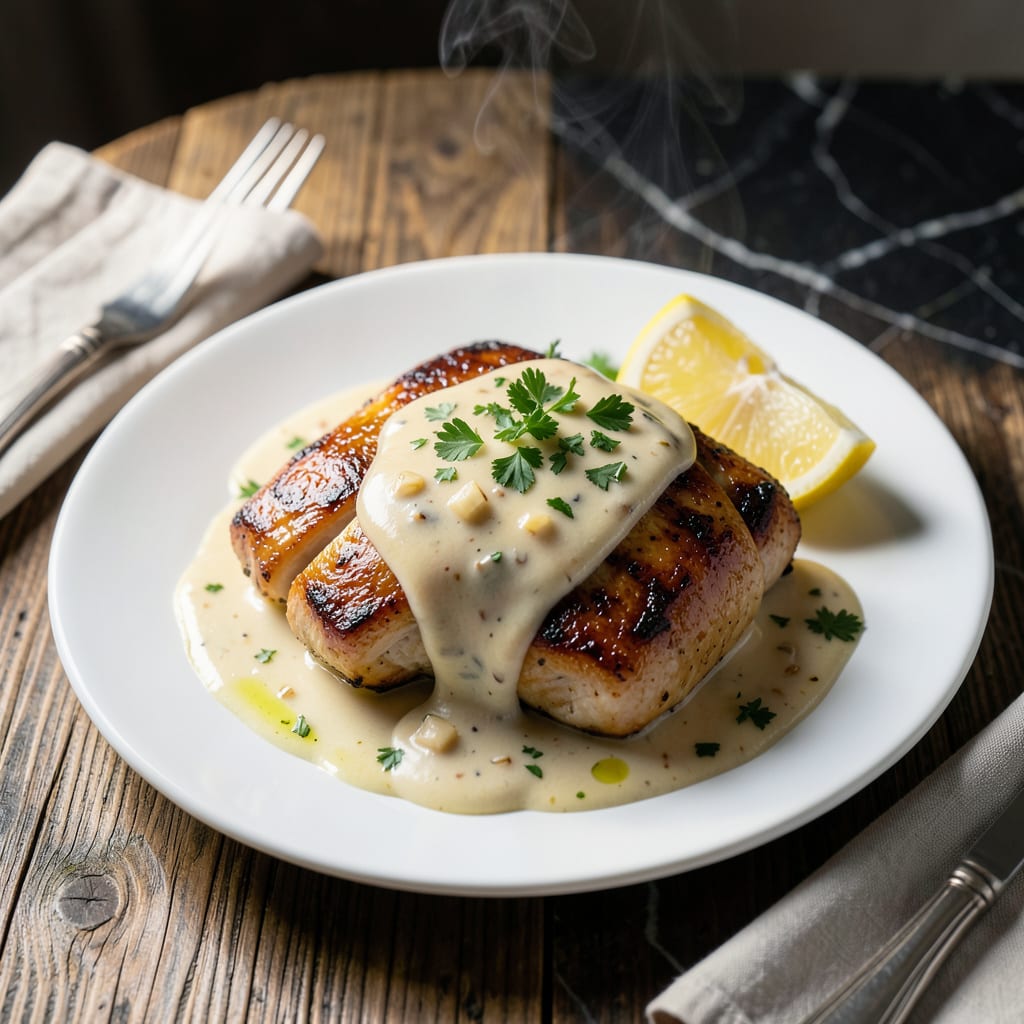
This buttery lemon garlic emulsion transforms simple chicken into a restaurant-quality dish. The sauce strikes a perfect balance between tangy citrus and rich, creamy depth.
With just a few pantry staples and 10 minutes of stovetop time, you’ll create a velvety sauce that elevates grilled or pan-seared proteins to new heights.
Ingredients for Chicken Bryan Sauce
Ten ingredients build this velvety, restaurant-worthy sauce with tangy citrus and rich depth.
| Ingredient | Amount | Notes |
|---|---|---|
| Unsalted Butter 🧈 | ½ cup | Room temperature for smooth emulsion |
| Fresh Lemon Juice 🍋 | ¼ cup | About 2-3 large lemons |
| Garlic Cloves 🧄 | 4 cloves | Minced for bold flavor |
| Heavy Cream 🥛 | ¼ cup | Full-fat for creaminess |
| Dry White Wine 🍷 | ¼ cup | Sauvignon Blanc or Pinot Grigio |
| Shallot 🧅 | 1 whole | Finely minced for subtle sweetness |
| Fresh Parsley 🌿 | 2 tbsp | Chopped, for brightness |
| Dijon Mustard 🟡 | 1 tsp | Smooth, not whole grain |
| Salt 🧂 | ½ tsp | Kosher or sea salt preferred |
| Black Pepper 🌶️ | ¼ tsp | Freshly ground for best flavor |
[recipeingredientscaler]
The butter is non-negotiable here—European-style or high-fat for that ultra-creamy texture. I grab mine from Trader Joe’s or Whole Foods when I want to splurge. The lemon juice should be fresh (bottled just doesn’t cut it), and the white wine? Any dry variety works, but avoid anything too oaky. Shallots add a subtle sweetness that onions can’t quite match—look for firm ones with dry, papery skins.
No white wine? Chicken broth with a splash of vinegar gets you close. Heavy cream can be swapped for half-and-half (texture won’t be as lush). Out of shallots? Sweet onion at half the amount works. Dried parsley isn’t ideal, but a pinch won’t ruin it. The Dijon mustard adds depth—don’t skip it. If you’ve only got yellow mustard, use half the amount to avoid overpowering.
This sauce is best fresh, but leftovers keep in the fridge for 2-3 days. Reheat gently on low—don’t boil or it’ll separate. Freezing isn’t ideal (texture changes), but if you must, use within 1 month and stir vigorously after thawing.
Why You’ll Love This Recipe
- One Pan Magic: I can make this while the chicken bakes—just melt butter, sauté garlic, and let the wine and cream do their thing.
- Bright & Creamy: The lemon juice cuts through the heavy cream so it’s rich but not heavy, with that buttery garlic kick.
- Weeknight Hero: Honestly, it’s fancy enough for guests but fast enough for a Tuesday. (Yes, even on a Tuesday night)
- Stretches Easily: Double the sauce and it reheats beautifully—I drizzle it over pasta or veggies the next day.
Step-by-Step Instructions for Chicken Bryan Sauce
Master this emulsion technique and you’ll have a rich, velvety sauce that clings beautifully to chicken.
Step 1: Sauté Aromatics for Depth of Flavor
Melt the 0.5 cup unsalted butter in a saucepan over medium heat. Once foaming subsides, add the 1 whole shallot (finely minced) and cook for 2-3 minutes until translucent and just beginning to soften. This gentle start builds a sweet, aromatic base without any bitterness.
Add the 4 cloves garlic cloves (minced) and cook for an additional 30-45 seconds until fragrant. Watch closely—garlic burns easily and bitterness ruins the sauce. The mixture should smell intoxicating, not sharp or acrid.
Step 2: Deglaze and Reduce the Wine
Pour in the 0.25 cup dry white wine and increase heat to medium-high. Simmer for 3-4 minutes until the liquid reduces by half and the sharp alcohol smell dissipates. You’ll notice the shallots and garlic becoming more pronounced as the wine concentrates.
This step is crucial for balancing the sauce’s acidity. The wine’s brightness will complement the lemon later, but it needs to cook down first to avoid an overpowering raw wine taste. Scrape the bottom of the pan with a wooden spoon to incorporate any browned bits.
Step 3: Create the Emulsion with Cream and Lemon
Reduce heat to low and stir in the 0.25 cup heavy cream. Let it warm through for 1-2 minutes without boiling—you want gentle heat to prevent curdling. The mixture should look slightly thickened but still pourable.
Now add the 0.25 cup fresh lemon juice, 1 tsp Dijon mustard, 0.5 tsp salt, and 0.25 tsp black pepper. Whisk constantly for 2-3 minutes as the sauce begins to thicken. The emulsion forms when the butter, cream, and lemon come together into a smooth, glossy consistency.
Step 4: Finish and Adjust the Sauce
Remove from heat and stir in the 2 tbsp fresh parsley (chopped). Taste and adjust seasoning if needed—though the combination of salt, acid, and cream should be perfectly balanced. The sauce should coat the back of a spoon with a velvety texture, not watery or separated.
If the sauce looks too thick, whisk in a teaspoon of warm water to reach your desired consistency. Serve immediately over grilled chicken, as the sauce will thicken slightly as it cools. The flavors meld beautifully after sitting for 5 minutes, but don’t let it sit too long or the emulsion may break.
Pro Tips For Making Chicken Bryan Sauce
- Reduce Wine First: Simmer the white wine for 2-3 minutes before adding cream—this burns off the harsh alcohol and concentrates the flavor so your sauce doesn’t taste raw.
- Zest Your Lemons: Use a microplane to add lemon zest along with the juice; it packs way more bright, citrusy punch than juice alone.
- Low and Slow Finish: After adding the cream, keep the heat at a gentle simmer—boiling it hard will make the sauce split, and nobody wants curdled cream in their bryan sauce.
- Mince Garlic Fine: Press or finely mince the garlic so it melts into the butter and wine; big chunks will burn or leave an unpleasant sharp bite in the finished sauce.
Pro Cooking Tips for Great chicken bryan sauce
Perfect Emulsion Technique
Keep your heat on low to medium-low when adding the cream and lemon juice. Too much heat will cause the sauce to separate. I use a heavy-bottomed saucepan to prevent hot spots.
Whisking is Key
Use a wire whisk and stir constantly during the final 2-3 minutes of cooking. This creates the smooth, velvety texture that defines this sauce. A wooden spoon won’t give you the same results.
Butter Temperature Matters
Start with room temperature butter—it emulsifies more easily into the sauce. Cold butter straight from the fridge can cause clumping. I take mine out 30 minutes before cooking. 🧈
Wine Selection Tip
Avoid cooking wines with added salt. I prefer a crisp Sauvignon Blanc or Pinot Grigio—anything you’d drink is perfect. The better the wine, the better your sauce will taste.
Consistency Check
Your sauce should coat the back of a spoon but still be pourable. If it’s too thick, whisk in warm water 1 tsp at a time. Too thin? Simmer a bit longer on low heat. 💡
Timing Your Steps
Have all ingredients prepped and measured before you start. Once the shallots are in the pan, everything moves quickly—especially the garlic, which can burn in 30 seconds. Mise en place is your friend here.
Nutrition Facts
Frequently Asked Questions
Can I use bottled lemon juice instead of fresh?
Fresh is best for bright, vibrant flavor, but bottled works in a pinch. Use 1-2 tbsp less as it’s often more concentrated.
Why does my sauce keep separating?
This usually happens with too-high heat. Keep it on low and whisk constantly. If it breaks, try whisking in 1 tsp ice water to bring it back.
What can I substitute for white wine?
Use chicken broth + 1 tbsp vinegar or apple cider vinegar + water. The acidity balances the richness.
How long will the sauce stay fresh?
Store in an airtight container in the fridge for 2-3 days. Reheat gently on low to prevent separation.

- Jollof Rice Sauce Recipe: West African Tomato and Spice Infusion - September 25, 2026
- Japanese Rice Soup Recipe: Umami-Rich Comfort in a Bowl - September 25, 2026
- Homemade Cream Of Rice Recipe: Silk-Smooth Breakfast in Minutes - September 25, 2026