
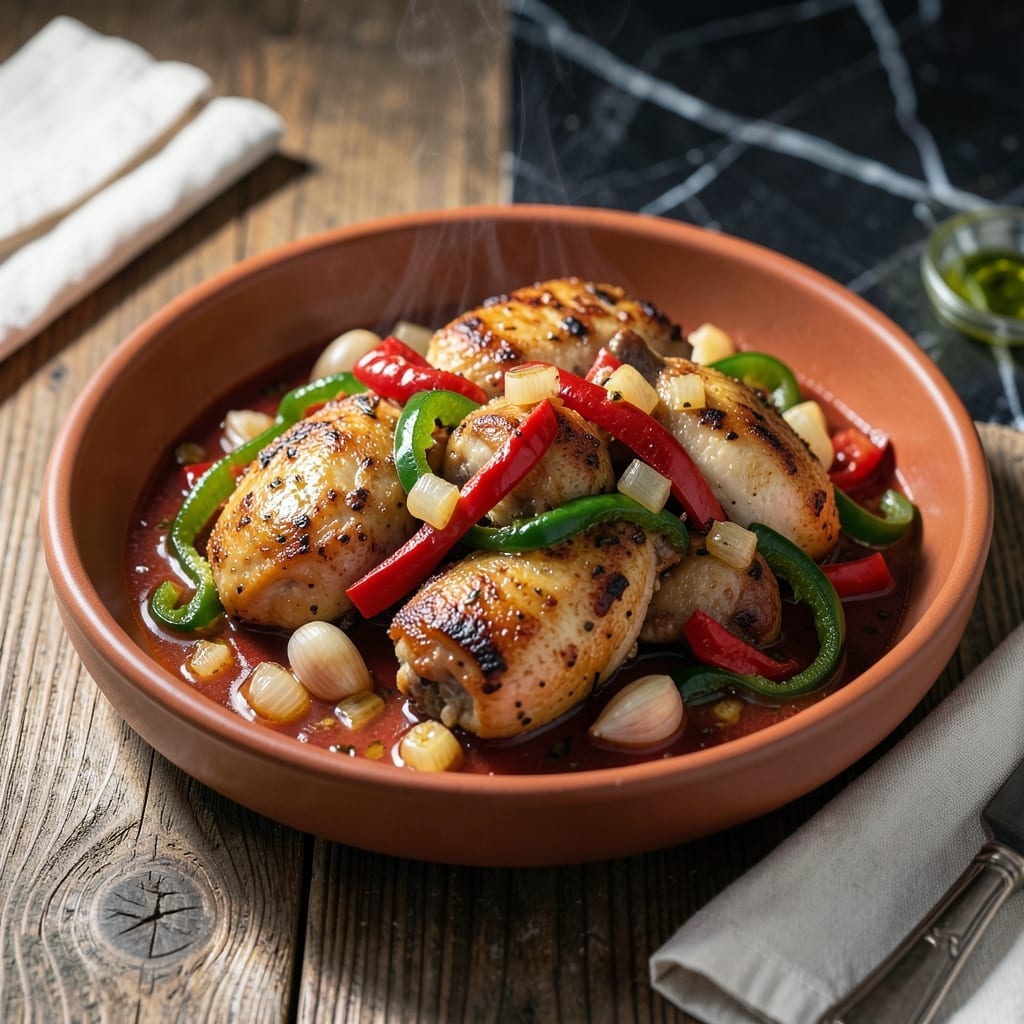
This Italian classic brings the rustic flavors of the countryside to your kitchen table with minimal effort. The dish combines tender chicken with a rich tomato sauce, bell peppers, and herbs for a hearty meal that feels like a warm embrace.
I’ve refined this version to highlight traditional techniques while keeping it accessible for home cooks. The key is slow simmering, which allows the flavors to meld beautifully and the chicken to become fall-off-the-bone tender.
You’ll love how the aromatic blend of garlic, onions, and tomatoes creates a savory sauce that’s both comforting and deeply flavorful. It’s a dish that tastes even better the next day.
Serve it with crusty bread or over pasta to soak up every last bit of the sauce. This is Italian home cooking at its finest.
Ingredients for Chicken Cacciatore
Pantry staples meet fresh veggies for this hearty Italian stew. Nothing complicated here.
| Ingredient | Amount | Notes |
|---|---|---|
| Chicken Thighs 🍗 | 2 lb | Boneless, skin-on preferred |
| Olive Oil 🫒 | 3 tbsp | Extra-virgin for depth |
| Yellow Onion 🧅 | 1 whole | Medium-sized, diced |
| Garlic Cloves 🧄 | 4 cloves | Minced for sauce |
| Red Bell Pepper 🌶️ | 1 whole | Sliced into strips |
| Green Bell Pepper 🌶️ | 1 whole | Sliced into strips |
| Canned Diced Tomatoes 🍅 | 2 cans | 28 oz each, undrained |
| Tomato Paste 🍅 | 2 tbsp | For depth of flavor |
| Dry White Wine 🍷 | ½ cup | Sauvignon Blanc or Pinot Grigio |
| Chicken Broth 🥣 | 1 cup | Low-sodium preferred |
| Dried Oregano 🌿 | 1 tsp | Mediterranean variety |
| Dried Basil 🍃 | 1 tsp | Crushed between fingers |
| Red Pepper Flakes 🌶️ | ½ tsp | Adjust for heat preference |
| Kalamata Olives 🫒 | ½ cup | Pitted and halved |
| Fresh Parsley 🌿 | ¼ cup | Chopped for garnish |
The chicken is everything here. Thighs stay juicy where breasts dry out—grab skin-on, bone-in if you want extra richness. Most grocery stores stock them, but butcher shops often have better quality. I get mine from Whole Foods when they’re on sale, but regular supermarket works. Look for thighs with good skin color and no gray spots—freshness matters for that fall-off-the-bone tenderness.
No white wine? Extra chicken broth with a splash of lemon juice gets you 80% there. Fresh herbs at the end? Skip the dried—they’re for cooking, not finishing. Bell peppers can be any color (yellow adds sweetness), but don’t skip them. The olives? Green Cerignola work too if you’re not a Kalamata fan. Tomato paste in a tube (from Trader Joe’s) means no waste.
This tastes better the next day once flavors meld. Keeps 4-5 days in the fridge, freezes for 3 months. Portion leftovers into containers so you’ve got easy lunches—reheats like a dream.
Why You’ll Love This Recipe
- I’ll be real: the leftovers taste even richer, so I always make extra for lunch the next day.
- One Pan Wonder: I love how everything—chicken thighs, bell peppers, onions—simmers together in one skillet, so cleanup is a breeze.
- Rich and Rustic: The garlic and olive oil create this deep, savory flavor that makes the chicken taste like it’s been cooking all day.
- Feeds the Crew: Honestly, it’s my go-to for family dinners because it stretches easily and everyone always goes back for seconds.
Step-by-Step Instructions for Chicken Cacciatore
This rustic stew comes together beautifully with simple techniques and patience.
Step 1: Sear the Chicken Thighs for Rich Flavor
Heat 3 tbsp Olive Oil in a large, heavy pot or Dutch oven over medium-high heat. Pat the 2 lb Chicken Thighs dry with paper towels to ensure a good sear. Season them generously with salt and pepper.
Working in batches if needed, add the chicken thighs skin-side down and cook undisturbed for 5-6 minutes until the skin is deep golden brown and crisp. Flip and cook for an additional 3-4 minutes. Transfer to a plate and set aside.
This searing step builds the foundation of flavor for your stew. Don’t rush it—the crispy skin will soften during the braising process but imparts incredible depth to the final dish.
Step 2: Sauté the Vegetables Until Softened
In the same pot, add the diced Yellow Onion and cook for 3-4 minutes until it begins to soften and turn translucent. Add the sliced Red Bell Pepper and Green Bell Pepper, cooking for another 4-5 minutes until they start to soften.
Stir in the minced 4 cloves Garlic Cloves, 1 tsp Dried Oregano, 1 tsp Dried Basil, and 0.5 tsp Red Pepper Flakes, cooking for 30 seconds until fragrant. Be careful not to let the garlic burn—it should be golden, not brown.
This aromatic base is the heart of the cacciatore. The peppers and onion should be tender but still hold their shape, adding texture to the finished stew.
Step 3: Deglaze and Build the Sauce
Add the 2 tbsp Tomato Paste and cook for 1-2 minutes, stirring constantly to coat the vegetables and deepen its flavor. Pour in the 0.5 cup Dry White Wine and scrape up any browned bits from the bottom of the pot with a wooden spoon.
Let the wine simmer for 2-3 minutes until it reduces by half. Then add the 2 cans Canned Diced Tomatoes (with their juices) and 1 cup Chicken Broth. Stir well to combine all the flavors.
Step 4: Braise the Chicken to Tender Perfection
Return the chicken thighs to the pot, along with any accumulated juices. Add the 0.5 cup Kalamata Olives. The liquid should just cover the chicken—add a splash of broth or water if needed.
Bring to a gentle simmer, then reduce the heat to low. Cover and let it cook for 30-35 minutes, flipping the chicken halfway through, until the chicken is tender and the sauce has thickened slightly.
Step 5: Finish and Garnish
Uncover and simmer for an additional 5-10 minutes if the sauce needs to reduce further. Taste and adjust the seasoning with salt and pepper if needed. The sauce should be rich and flavorful, coating the back of a spoon.
Stir in the 0.25 cup Fresh Parsley just before serving. This dish tastes even better the next day, as the flavors continue to meld together. Serve hot with crusty bread or over polenta.
Pro Tips For Making Chicken Cacciatore
- Brown the Thighs Well: Use medium-high heat and don’t move the chicken for at least 4-5 minutes per side—this builds a deep fond that flavors the sauce. I used to peek too soon and ended up steaming them instead.
- Slice Peppers Thin: Cut the red bell pepper into ¼-inch strips so they soften quickly and blend into the sauce. Thick pieces stay crunchy and throw off the texture.
- Skip the Overcrowding: If your pan is too full, the chicken will steam instead of sear. Cook in batches if needed—it’s messy but worth it.
- Bloom the Garlic: Add the minced garlic to the oil for just 30 seconds until fragrant, then get the onions in fast. Burnt garlic turns bitter, and I learned this the hard way.
Common Mistakes When Making Great chicken cacciatore
Overcrowding the Pan
Searing 2 lb Chicken Thighs in batches prevents steaming. If you crowd the pan, the chicken releases moisture instead of browning. I learned this the hard way with pale, soggy skin.
Skipping the Deglaze
Those browned bits stuck to the pot after searing are pure flavor. Always deglaze with 0.5 cup Dry White Wine, scraping the bottom to incorporate them into your sauce.
Rushing the Simmer
Let your cacciatore cook at a gentle simmer—not a boil—for 30-35 minutes. Boiling toughens the chicken and breaks down the vegetables too much. 🌡️
Underseasoning the Sauce
Taste as you go, especially after adding 2 cans Canned Diced Tomatoes. I often need to add more salt and a pinch of sugar to balance the acidity.
Forgetting the Olives
The 0.5 cup Kalamata Olives add essential briny depth. Skip them and you’ll miss that authentic hunter-style tang. Stir them in when you return the chicken to the pot.
Overcooking the Vegetables
Your Red Bell Pepper and Green Bell Pepper should still have a slight bite. Add them early enough to soften but not so early they turn to mush.
Nutrition Facts
Frequently Asked Questions
Can I use chicken breasts instead of thighs?
Thighs are ideal for their rich flavor and tenderness, but breasts work if that’s what you have. Reduce cooking time to 20-25 minutes to prevent dryness.
What can I substitute for white wine?
Use 1/2 cup chicken broth mixed with 1 tbsp lemon juice or vinegar. The acidity mimics wine’s brightness without overpowering the dish.
How long does it keep in the fridge?
Store in an airtight container for up to 4-5 days. The flavors deepen over time, making leftovers even more delicious.
Can I freeze cacciatore?
Yes! Freeze in portions for up to 3 months. Thaw overnight in the fridge and reheat gently on the stove.

- Jollof Rice Sauce Recipe: West African Tomato and Spice Infusion - September 25, 2026
- Japanese Rice Soup Recipe: Umami-Rich Comfort in a Bowl - September 25, 2026
- Homemade Cream Of Rice Recipe: Silk-Smooth Breakfast in Minutes - September 25, 2026