
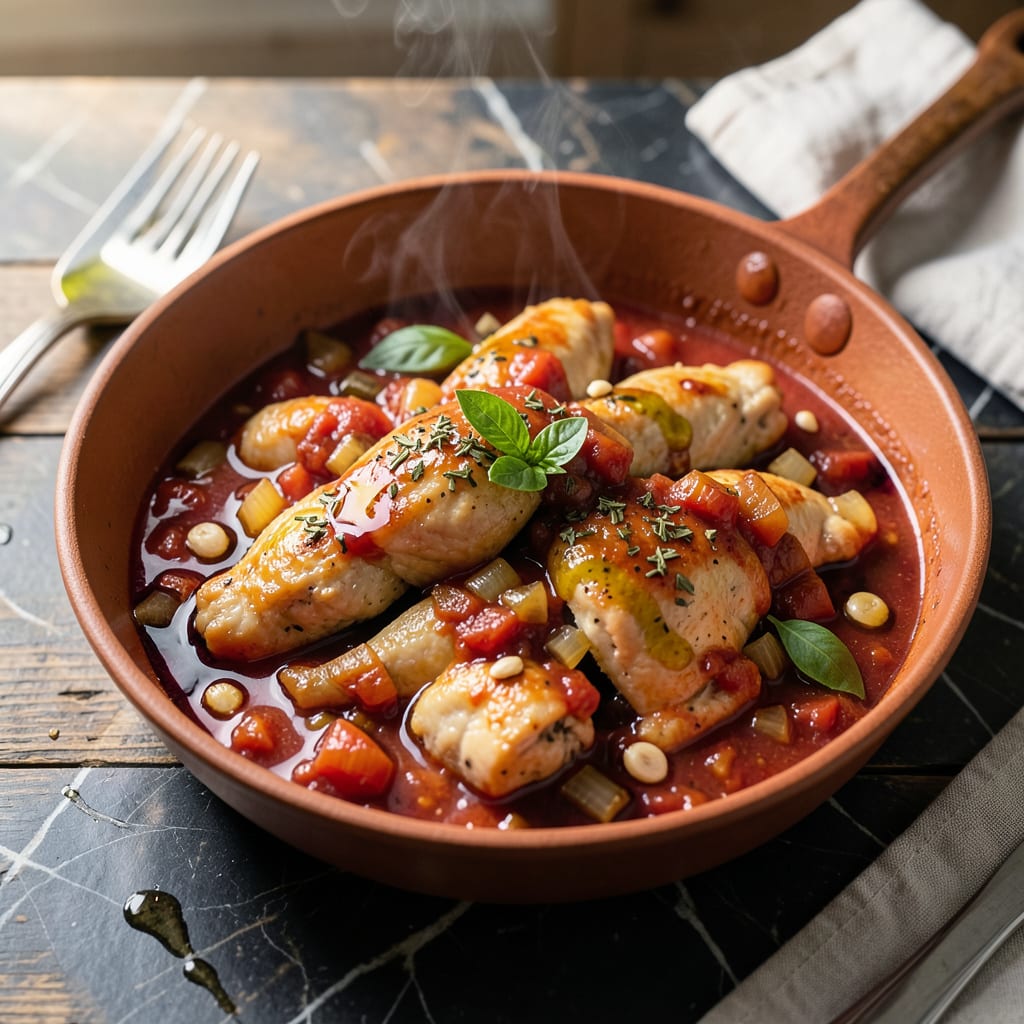
This rustic sauce transforms simple ingredients into a rich, herb-infused tomato base with deep Italian character. The slow simmer allows flavors to meld, creating a bold and aromatic sauce perfect for chicken or pasta.
With pantry staples and fresh herbs, you’ll achieve a restaurant-quality result that elevates any dish. The balance of tomatoes, garlic, and herbs ensures every bite is packed with authentic flavor.
Ingredients for Chicken Cacciatore Sauce
Pantry staples and fresh herbs create this bold, aromatic tomato and herb sauce with restaurant-quality depth.
| Ingredient | Amount | Notes |
|---|---|---|
| Canned Crushed Tomatoes 🍅 | 28 oz | San Marzano preferred for sweetness |
| Tomato Paste 🍅 | 2 tbsp | Double-concentrated for depth |
| Extra-Virgin Olive Oil 🫒 | 3 tbsp | First cold press for richness |
| Yellow Onion 🧅 | 1 whole | Medium, finely diced |
| Garlic Cloves 🧄 | 4 cloves | Minced for even distribution |
| Dry Red Wine 🍷 | ½ cup | Chianti or Sangiovese recommended |
| Fresh Rosemary 🌿 | 1 tbsp | Finely chopped, stems removed |
| Fresh Thyme 🍃 | 1 tbsp | Leaves stripped from stems |
| Dried Oregano 🌿 | 1 tsp | Mediterranean variety preferred |
| Red Pepper Flakes 🌶️ | ½ tsp | Adjust for heat preference |
| Kosher Salt 🧂 | 1 tsp | Diamond Crystal brand preferred |
| Freshly Ground Black Pepper 🌶️ | ½ tsp | Coarse grind for texture |
[recipeingredientscaler]
The tomatoes are the foundation—San Marzano canned tomatoes from Eataly or Whole Foods deliver the sweetest, most authentic base. Tomato paste adds depth, so double-concentrated is ideal. For the wine, any dry red works, but Chianti or Sangiovese brings true Italian character. Fresh rosemary and thyme from a local farmers market or well-stocked grocery store elevate the aroma significantly.
No red wine? Substitute with beef or vegetable broth plus 1 tbsp balsamic vinegar. Fresh herbs not available? Dried rosemary and thyme at one-third the amount works in a pinch. For heat control, adjust red pepper flakes to taste—omit entirely for a milder sauce. The olive oil should be high-quality extra-virgin; avoid anything labeled ‘light’ or ‘pure’ for optimal flavor.
This sauce develops more complexity overnight. Store in an airtight container in the refrigerator for up to 5 days or freeze for 3 months. Portion into freezer bags for easy use in future dishes. Always bring to a simmer when reheating to revive the flavors.
Why You’ll Love This Recipe
- One Pot Wonder: I love that this comes together in a single pan—just sauté the onion and garlic in olive oil, then dump in the tomatoes and paste.
- Rich and Rustic: The slow-simmered crushed tomatoes and tomato paste create a deep, savory sauce that clings to every bite.
- Freezer Friendly: I always make a double batch because this sauce freezes perfectly for lazy nights.
- Budget Stretcher: Honestly, canned tomatoes and pantry staples keep this dish cheap but tasting like a million bucks.
Step-by-Step Instructions for Chicken Cacciatore Sauce
This method delivers a rich, complex tomato-based sauce with layered flavors and perfect texture.
Step 1: Build the Aromatic Base
Heat 3 tbsp extra-virgin olive oil in a heavy pot over medium heat until it shimmers. Add the finely diced yellow onion and cook for 5-6 minutes, stirring occasionally, until it turns translucent and begins to soften at the edges.
Add the 4 cloves garlic and cook for 30 seconds until fragrant but not browned. I always keep the heat moderate here—burnt garlic turns bitter and ruins the sauce. Stir in the 2 tbsp tomato paste and cook for 1-2 minutes, which deepens its flavor and removes the raw taste.
Step 2: Deglaze and Add Herbs
Pour in the 0.5 cup dry red wine and scrape up any browned bits from the bottom of the pot with a wooden spoon. This deglazing step captures all the concentrated flavor from the onion and garlic.
Let the wine simmer for 2-3 minutes until reduced by half. Add the 1 tbsp fresh rosemary, 1 tbsp fresh thyme, 1 tsp dried oregano, 0.5 tsp red pepper flakes, 1 tsp kosher salt, and 0.5 tsp freshly ground black pepper. Stir to bloom the spices in the warm oil for 30 seconds.
Step 3: Simmer the Sauce to Perfection
Add the 28 oz canned crushed tomatoes and stir to combine. Bring the mixture to a gentle simmer, then reduce the heat to medium-low and let it cook for 20-25 minutes, stirring occasionally.
The sauce should reduce slightly and thicken, with the oil starting to separate at the edges. You’ll notice the raw tomato smell disappears and the flavors deepen significantly. If it thickens too much, add a splash of water to maintain the desired consistency.
Taste and adjust seasoning if needed, though the salt from the tomatoes and the wine reduction usually provides enough balance. The final sauce should be rich, slightly chunky, and intensely aromatic.
Pro Tips For Making Chicken Cacciatore Sauce
- Sauté Onions Slow: Cook your yellow onion over medium-low heat for at least 8-10 minutes until soft and translucent—I learned this the hard way after rushing it and ending up with harsh onion bits in my sauce.
- Bloom the Paste: After adding tomato paste, let it cook in the olive oil for 2-3 minutes until it darkens slightly; this deepens the flavor more than you’d expect.
- Skip the Watery Tomatoes: Use high-quality canned crushed tomatoes and drain off excess liquid before adding them to prevent a thin, watery sauce.
- Crush the Garlic: Smash your garlic cloves with the side of your knife before mincing—it releases more flavor and saves time compared to fussing with a garlic press.
Flavor Customization for This Dish
Spice It Up
Add 1 tsp smoked paprika along with the oregano for a subtle smoky depth that pairs wonderfully with grilled meats. For a spicier kick, increase the red pepper flakes to 1 tsp or add ½ tsp cayenne pepper during the last 5 minutes of simmering. 🌶️
Herb Variations
Swap the rosemary and thyme for 1 tbsp fresh basil and 1 tbsp fresh oregano for a brighter, more summery profile. Alternatively, add 1 bay leaf while simmering and remove it before serving for an earthy, aromatic layer.
Umami Boost
Stir in 1 tbsp balsamic vinegar at the end for a tangy depth. For extra richness, add 2 tbsp grated Parmesan cheese or 1 anchovy fillet while cooking—it melts into the sauce and enhances all the flavors without a fishy taste.
Creamy Twist
For a velvety finish, stir in ¼ cup heavy cream or 2 tbsp cream cheese during the last 5 minutes of simmering. This mellows the acidity and adds a luxurious texture that’s perfect for pairing with pasta.
Sweet and Tangy
Balance the acidity with 1 tbsp brown sugar or 1 tbsp honey if your tomatoes taste too sharp. A splash of 2 tbsp red wine vinegar adds brightness, especially if you’re using sweeter tomatoes like San Marzano. 💡
Mushroom Addition
Sauté 8 oz sliced cremini mushrooms with the onions for an earthy, meaty depth. This variation works particularly well if you’re serving the sauce with chicken or as a vegetarian pasta topping.
Nutrition Facts
Frequently Asked Questions
Can I make this without wine?
Use ½ cup beef or vegetable broth plus 1 tbsp balsamic vinegar for similar depth. The vinegar adds the needed acidity that wine typically provides.
How long can I store the sauce?
It keeps in an airtight container in the fridge for up to 5 days. For longer storage, freeze for 3 months in portioned bags. Always reheat to a simmer before serving.
What can I use instead of fresh herbs?
Dried herbs work in a pinch. Use 1 tsp dried rosemary and 1 tsp dried thyme (one-third the fresh amount). Add them earlier to rehydrate during cooking.
Why does my sauce taste bitter?
This usually happens if the tomato paste or garlic burns. Cook over medium heat and stir constantly. A pinch of sugar can help balance any lingering bitterness.

- Jollof Rice Sauce Recipe: West African Tomato and Spice Infusion - September 25, 2026
- Japanese Rice Soup Recipe: Umami-Rich Comfort in a Bowl - September 25, 2026
- Homemade Cream Of Rice Recipe: Silk-Smooth Breakfast in Minutes - September 25, 2026