
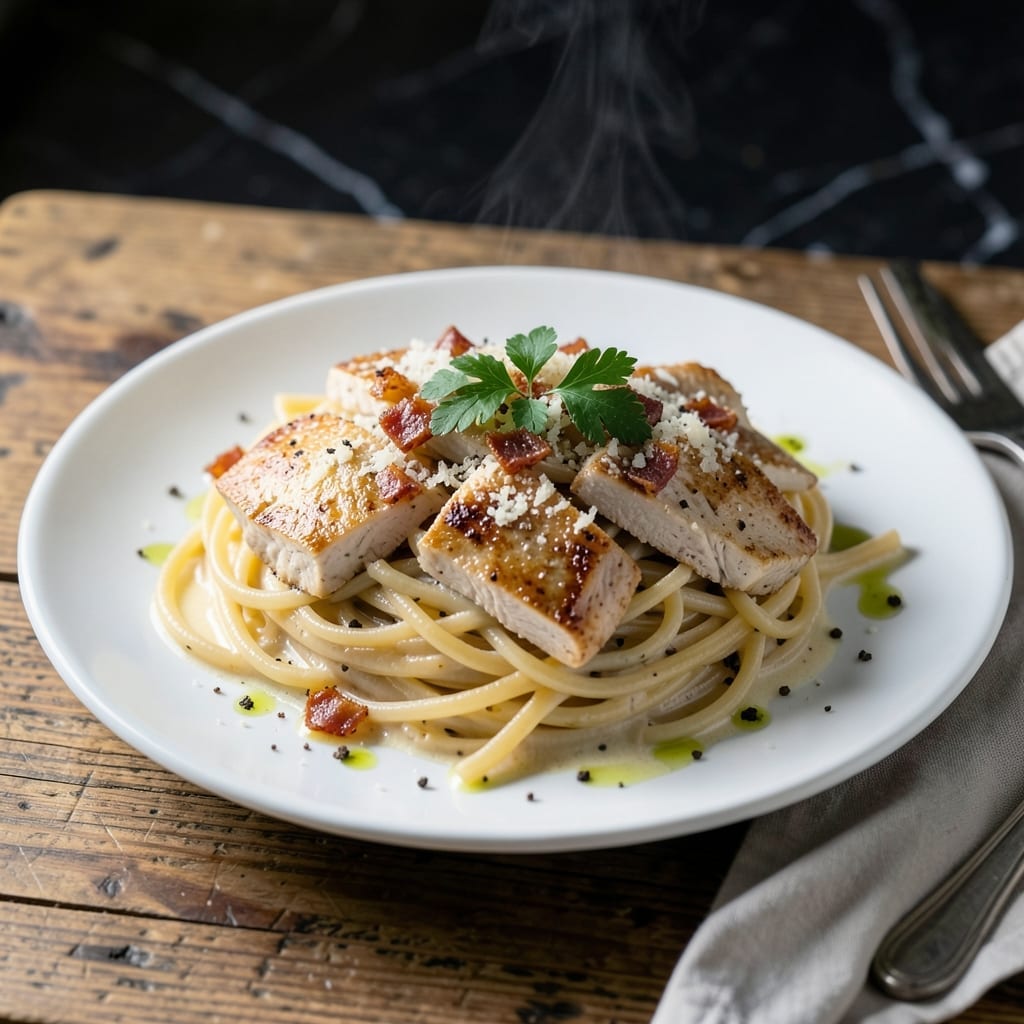
This chicken carbonara transforms a classic Roman dish into a hearty main course with tender chicken and a silky egg sauce.
Pancetta is crisped to golden perfection, then tossed with al dente pasta and the chicken. The egg and cheese mixture creates a creamy sauce that coats every strand without curdling.
What emerges is a rich, satisfying plate where the salty pancetta, juicy chicken, and velvety sauce come together in perfect balance.
Ready in under 30 minutes, this delivers restaurant-quality results with simple ingredients and precise technique.
Ingredients for Chicken Carbonara Pasta
Quality ingredients transform into a rich, authentic Roman-inspired dish with minimal effort.
| Ingredient | Amount | Notes |
|---|---|---|
| Spaghetti 🍝 | 12 oz | Dried, or linguine if preferred |
| Boneless Skinless Chicken Breast 🍗 | 1 lb | Cut into bite-sized pieces |
| Pancetta 🥓 | 4 oz | Diced, or substitute bacon |
| Large Eggs 🥚 | 3 whole | Room temperature for smooth sauce |
| Pecorino Romano Cheese 🧀 | 1 cup | Freshly grated, or Parmigiano-Reggiano |
| Parmesan Cheese 🧀 | ½ cup | Freshly grated, for topping |
| Black Pepper 🌶️ | 1 ½ tsp | Freshly cracked, essential for flavor |
| Kosher Salt 🧂 | 1 tsp | Adjust to taste |
| Garlic Cloves 🧄 | 3 cloves | Minced finely |
| Extra-Virgin Olive Oil 🫒 | 2 tbsp | For cooking pancetta and chicken |
| Heavy Cream 🥛 | ¼ cup | Optional for extra creaminess |
| Fresh Parsley 🌿 | 2 tbsp | Chopped, for garnish |
The pancetta is non-negotiable for authentic flavor—Eataly or Whole Foods carry excellent options. For the cheeses, Pecorino Romano delivers that sharp, salty bite traditional to carbonara, while Parmigiano-Reggiano adds depth. Always grate fresh; pre-shredded contains anti-caking agents that disrupt the sauce’s silkiness. Look for bronze-cut pasta (check De Cecco or Barilla labels) for optimal sauce adhesion.
No pancetta? High-quality thick-cut bacon works in a pinch. Substitute Gran Padano for either cheese if needed. For a lighter version, half the heavy cream can be omitted, though the sauce will be less luscious. The eggs must be room temperature to prevent curdling—don’t skip this step. No fresh parsley? Dried won’t deliver the same brightness, but fresh chives make an acceptable stand-in.
Store pancetta unopened in the fridge for up to 3 weeks; once opened, use within 1 week. Freshly grated cheeses keep well-wrapped for 1 month. Leftovers (if any) reheat best with a splash of water or cream to revive the sauce—good for 3-4 days refrigerated.
Why You’ll Love This Recipe
- One Pot Wonder: I love that everything cooks in the same pan—spaghetti, chicken, pancetta—minimal cleanup, maximum flavor.
- Rich & Creamy: The eggs and Pecorino create this velvety sauce that clings to every strand of pasta. Honestly, it’s restaurant-quality at home.
- Weeknight Hero: Between us, this is my go-to for busy evenings—quick enough for a Tuesday, fancy enough for guests.
- Stretches Further: Leftovers taste even better the next day, and the pancetta makes it feel indulgent without breaking the bank.
Step-by-Step Instructions for Chicken Carbonara Pasta
Master this technique for a restaurant-quality dish with a velvety sauce and tender chicken.
Step 1: Cook the Pancetta and Chicken
Heat the 2 tbsp extra-virgin olive oil in a large skillet over medium heat. Add the 4 oz pancetta and cook for 5-6 minutes, stirring occasionally, until the fat renders and the pancetta turns golden brown.
Remove the pancetta with a slotted spoon and set aside, leaving the rendered fat in the pan. Increase heat to medium-high and add the 1 lb boneless skinless chicken breast pieces. Season with 1 tsp kosher salt and cook for 6-8 minutes until golden brown and cooked through. Transfer to a plate and tent with foil.
Step 2: Sauté the Garlic and Prepare Pasta
In the same skillet, reduce heat to medium and add the 3 cloves garlic cloves. Sauté for 30 seconds until fragrant, being careful not to burn. Remove from heat and set aside.
Meanwhile, bring a large pot of salted water to a boil. Add the 12 oz spaghetti and cook until 1 minute shy of al dente according to package instructions. Reserve 1 cup of pasta water before draining.
Step 3: Create the Egg and Cheese Mixture
In a bowl, whisk together the 3 whole large eggs, 1 cup Pecorino Romano cheese, 0.5 cup Parmesan cheese, 1.5 tsp black pepper, and 0.25 cup heavy cream until smooth. The mixture should be thick and pale yellow, resembling a custard.
Finely chop the 2 tbsp fresh parsley and set aside for garnishing later. Ensure all ingredients are at room temperature for the smoothest sauce consistency.
Step 4: Combine Everything Off Heat
Add the drained spaghetti to the skillet with the garlic and pancetta fat. Toss to coat, then add ½ cup of the reserved pasta water and toss vigorously for 30 seconds.
Remove the skillet from heat completely. Pour the egg and cheese mixture over the pasta while stirring constantly. The residual heat will gently cook the eggs into a creamy sauce. If needed, add more pasta water 1 tablespoon at a time until the sauce reaches your desired consistency.
Step 5: Finish and Serve Immediately
Return the cooked chicken and pancetta to the skillet and toss to combine. The sauce should cling to every strand of pasta with a glossy, creamy coating.
Divide among serving plates and garnish with the chopped fresh parsley. Serve immediately while hot—the carbonara sauce thickens as it cools, so prompt serving ensures the perfect silky texture.
Pro Tips For Making Chicken Carbonara Pasta
- Use pasta water: Save about 1 cup of the starchy pasta water before draining—it helps bind the eggs and cheese into a creamy sauce instead of a scrambled mess. I learned this the hard way after my first three attempts turned into sad, dry noodles.
- Slice chicken thin: Cut the boneless skinless chicken breast into ¼-inch thick strips so it cooks evenly in the time it takes the pancetta to crisp. Anything thicker and you’ll be chewing on rubbery bits while the pancetta burns.
- Temper those eggs: Whisk the eggs with a splash of hot pasta water before mixing them into the pan—this prevents them from turning into sweet, sad scrambled eggs when they hit the hot pancetta. My grandmother swore by this, and she was right.
- Grate cheese fresh: Skip the pre-grated Pecorino Romano and shred a block yourself—it melts better and doesn’t have that weird anti-caking powder that can make your sauce grainy. Sounds tedious, but it actually changes the outcome.
Health Benefits of This Recipe
Protein Powerhouse
This dish packs a serious protein punch with 1 lb chicken breast providing about 50g of protein per serving. Combined with eggs and cheese, you’re looking at a meal that keeps you full and supports muscle repair and growth. 💪
Essential Amino Acids
The chicken and eggs deliver all nine essential amino acids your body can’t produce on its own. Each serving offers a complete protein profile that’s especially valuable for active lifestyles or anyone focused on fitness.
Calcium and Bone Health
With 1.5 cups of hard cheeses, you’re getting a significant calcium boost—about 600mg per serving. This supports strong bones and teeth while contributing to nerve function and muscle contraction.
B Vitamin Boost
Chicken and eggs are rich in B vitamins, particularly B6 and B12. These nutrients help convert food into energy and support brain function. The 3 cloves garlic adds a small but meaningful amount of vitamin B6 as well.
Healthy Fats Balance
While carbonara is known for its richness, the fats come from quality sources like olive oil and pancetta. These provide energy and help your body absorb fat-soluble vitamins from the meal. 💛
Iron Richness
The chicken contributes heme iron, which is more easily absorbed by your body than plant-based iron. A single serving provides about 15% of your daily iron needs, supporting oxygen transport in your blood.
Nutrition Facts
Frequently Asked Questions
Can I use bacon instead of pancetta?
Yes, thick-cut bacon works as a substitute. Cook it until crispy and use the rendered fat the same way. The flavor will be slightly smokier but still delicious.
Why does my sauce look scrambled?
This happens when eggs hit direct heat. Always remove the skillet from heat before adding the egg mixture, and stir constantly. The residual heat will gently cook the sauce to creamy perfection.
How do I store leftovers?
Store in an airtight container in the fridge for up to 3-4 days. Reheat gently with a splash of water or cream to restore the silky texture.

- Jollof Rice Sauce Recipe: West African Tomato and Spice Infusion - September 25, 2026
- Japanese Rice Soup Recipe: Umami-Rich Comfort in a Bowl - September 25, 2026
- Homemade Cream Of Rice Recipe: Silk-Smooth Breakfast in Minutes - September 25, 2026