
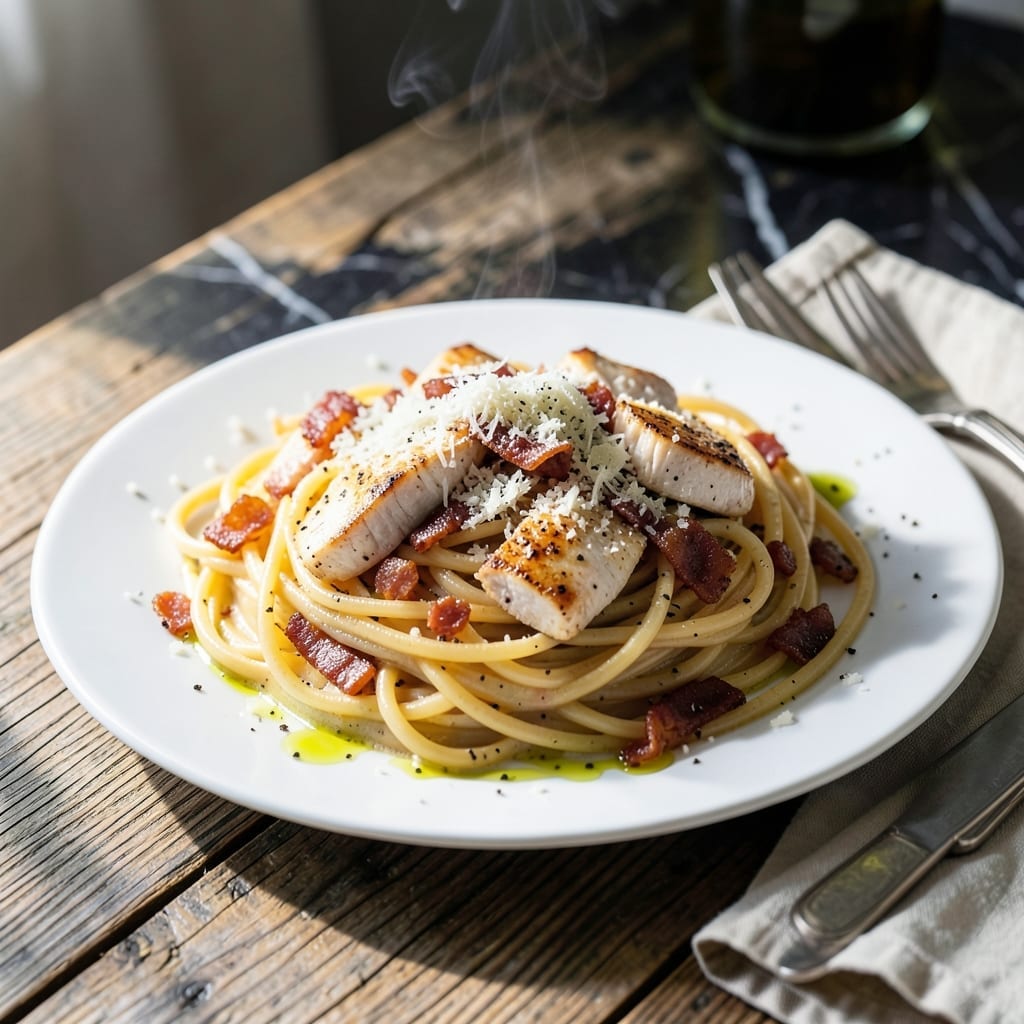
This chicken carbonara delivers a crispy pancetta foundation with a silky egg sauce that clings perfectly to every noodle. I developed this method to capture the classic Roman dish while adding juicy chicken for extra heartiness.
The secret lies in rendering pancetta until crispy and using the rendered fat to create a rich base for the sauce. The egg mixture, tempered with hot pasta water, transforms into a creamy coating without scrambling.
You’ll end up with tender chicken, crispy pancetta, and al dente pasta all coated in a luscious, parmesan-infused sauce. The dish comes together in under 30 minutes with minimal effort.
Serve immediately for the best texture, garnished with fresh parsley and extra parmesan. Here’s how to make it perfectly every time.
Ingredients for Chicken Carbonara
Eleven quality ingredients build that crispy pancetta base and silky sauce you crave.
| Ingredient | Amount | Notes |
|---|---|---|
| Spaghetti 🍝 | 12 oz | Dried, al dente preferred |
| Pancetta 🥓 | 6 oz | Diced, rendered until crispy |
| Chicken Breast 🍗 | 1 lb | Boneless, skinless, cut into bite-sized pieces |
| Large Eggs 🥚 | 3 whole | Room temperature, for sauce |
| Parmesan Cheese 🧀 | 1 cup | Freshly grated from block |
| Pecorino Romano Cheese 🧀 | ½ cup | Freshly grated, for depth |
| Garlic Cloves 🧄 | 3 cloves | Minced, for sauce infusion |
| Heavy Cream 🥛 | ½ cup | For sauce stability |
| Black Pepper 🌶️ | 1 ½ tsp | Freshly cracked, essential for carbonara |
| Kosher Salt 🧂 | 1 tsp | Diamond Crystal preferred |
| Olive Oil 🫒 | 2 tbsp | For cooking chicken |
| Fresh Flat-Leaf Parsley 🌿 | ¼ cup | Chopped, for garnish |
The pancetta and Parmesan are non-negotiable here. Look for pancetta diced in the deli section—it renders better than pre-packaged. For the cheeses, Whole Foods or a good Italian market will have blocks you can grate fresh. The Parmigiano-Reggiano label ensures quality (worth the splurge). Pre-grated stuff has anti-caking agents that make the sauce grainy. Chicken should be similar-sized pieces so everything cooks evenly.
No pancetta? Thick-cut bacon works in a pinch, but it’s smokier. Skip the cream if you want classic Roman style (just eggs and cheese), but it helps stabilize the sauce. Pecorino Romano at half the amount can replace Parmesan entirely for a tangier kick. Fresh parsley? Dried oregano in a pinch, but the fresh brightens things up. For the pasta, spaghetti is traditional, but bucatini holds sauce even better.
Cook the pasta al dente—it’ll finish in the sauce. Leftovers keep 3-4 days in the fridge, but the sauce thickens (loosen with pasta water when reheating). Freezes for 1 month if you must, though texture changes. Serve immediately for that perfect crispy pancetta contrast.
Why You’ll Love This Recipe
- One Pot Wonder: I love that everything—spaghetti, pancetta, chicken—cooks together in a single skillet, leaving me with barely any cleanup.
- Craving the Creamy: The mix of eggs and Parmesan creates this silky, rich sauce that clings perfectly to the pasta, and the pancetta adds that salty crunch.
- Weeknight Hero: Honestly, it’s my go-to for busy evenings when I need something hearty and fast—ready before the kids finish bickering over homework.
- Stretches Further: Leftovers taste even better the next day, and the chicken makes it filling enough to feed my whole family without breaking the bank.
Step-by-Step Instructions for Chicken Carbonara
Here’s the method for perfect carbonara with crispy pancetta and juicy chicken every time.
Step 1: Cook Spaghetti and Crisp Pancetta
Bring a large pot of salted water to a rolling boil. Add the 12 oz Spaghetti and cook until 1 minute shy of al dente according to package instructions. Reserve 1 cup of pasta water before draining—this starchy liquid is essential for the sauce.
While the spaghetti cooks, heat a large skillet over medium heat. Add the 6 oz Pancetta and cook for 6-8 minutes, stirring occasionally, until the fat renders out and the pancetta becomes golden and crispy. Remove with a slotted spoon and set aside, leaving the rendered fat in the pan.
Step 2: Sear Chicken and Infuse Garlic
Pat the 1 lb Chicken Breast dry and cut into bite-sized pieces. Season lightly with 1 tsp Kosher Salt and ½ tsp Black Pepper. In the same skillet with pancetta fat, add 2 tbsp Olive Oil and increase heat to medium-high.
Add the chicken and sear for 4-5 minutes until golden brown and cooked through. Remove chicken and set aside. In the same pan, add the 3 cloves Garlic Cloves (minced) and cook for 30 seconds until fragrant—don’t let it brown or it’ll turn bitter.
Step 3: Prepare Egg and Cheese Mixture
In a bowl, whisk together the 3 whole Large Eggs, 1 cup Parmesan Cheese, 0.5 cup Pecorino Romano Cheese, 0.5 cup Heavy Cream, and remaining 1 tsp Black Pepper. The mixture should be thick, pale, and well combined.
I use room temperature eggs to prevent the sauce from seizing when it hits the hot pasta. Freshly grated cheese melts more smoothly than pre-grated, which often contains anti-caking agents that can make the sauce grainy.
Step 4: Combine Everything Off Heat
Remove the skillet from heat and let it cool for 1 minute. Add the drained spaghetti to the skillet and toss to coat in the rendered fat and garlic. Reduce heat to low and pour in the egg mixture, stirring constantly for 1-2 minutes until it thickens into a creamy sauce.
Add the crispy pancetta and seared chicken back to the pan. If the sauce is too thick, add reserved pasta water 1 tablespoon at a time until it reaches your desired consistency. The residual heat will gently cook the eggs without scrambling them.
Step 5: Garnish and Serve Immediately
Taste and adjust seasoning if needed. Transfer to warmed serving plates and garnish with 0.25 cup Fresh Flat-Leaf Parsley (chopped). The pancetta should remain crispy, the chicken juicy, and the sauce silky—clinging to every strand of spaghetti.
Serve immediately while hot. Carbonara waits for no one, and the sauce will continue to thicken as it cools. For best results, have all your ingredients prepped and ready before you start cooking.
Pro Tips For Making Chicken Carbonara
- Temper the Eggs: Whisk your eggs with a splash of the hot pasta water before adding to the pan—I learned this the hard way after scrambling eggs in my first carbonara.
- Salt the Pasta Water: Use about 1 tablespoon of salt per gallon of water, more than you think, especially since pancetta and parmesan won’t season the pasta itself.
- Slice Chicken Thin: Cut the chicken breast into ¼-inch thick strips so it cooks through in 2-3 minutes in the same pan as the pancetta—no dry, overcooked meat.
- Use Starchy Water: Scoop out at least ½ cup of pasta water before draining; that starchy liquid is what makes the sauce cling to the spaghetti like it should.
Health Benefits of chicken carbonara
Protein Powerhouse
This dish packs a serious protein punch with 1 lb chicken breast and 6 oz pancetta providing about 60 grams of protein per serving. Chicken breast is lean, while pancetta adds rich, savory depth. Together, they create a balanced amino acid profile for muscle repair and satiety. 💪
Healthy Fats Source
The 3 whole eggs and 0.5 cup heavy cream deliver healthy fats that support brain function and nutrient absorption. Eggs also provide choline, essential for metabolism and liver health. The rendered pancetta fat adds flavor without overpowering the dish.
Calcium and Bone Health
With 1 cup Parmesan and 0.5 cup Pecorino Romano, you’re getting a significant dose of calcium—about 60% of your daily needs per serving. These aged cheeses also provide phosphorus and vitamin D, working together to strengthen bones and teeth.
B Vitamin Boost
Chicken breast is rich in B vitamins, particularly B6 and B12, which support energy metabolism and red blood cell production. The eggs add more B12, while pancetta contributes B1 and zinc. This combination keeps your nervous system functioning optimally.
Iron and Zinc Rich
Pancetta and chicken provide heme iron, the most easily absorbed form, which helps prevent fatigue and supports immune function. Zinc from these meats aids in wound healing and immune response. Together, they make this dish more than just comforting—it’s nourishing. 💛
Moderate Carb Option
The 12 oz spaghetti provides sustained energy, while the protein and fat slow digestion, preventing blood sugar spikes. For a lower-carb version, I sometimes swap in zucchini noodles or reduce the pasta by half.
Nutrition Facts
Frequently Asked Questions
Can I use bacon instead of pancetta?
Yes, thick-cut bacon works as a substitute. Cook it until crispy and drain excess fat, as bacon is smokier and saltier than pancetta. The flavor will differ slightly but still taste delicious.
Why does the sauce need to be added off heat?
Adding the egg mixture to hot pasta off heat prevents scrambling. The residual heat gently thickens the sauce into a creamy consistency without turning it into scrambled eggs.
How do I prevent a grainy sauce?
Use freshly grated Parmesan and Pecorino Romano. Pre-grated cheeses contain anti-caking agents that can make the sauce grainy. Also, temper the eggs with pasta water before mixing.
Can I make this ahead of time?
Carbonara is best served immediately, but leftovers keep for 3-4 days in the fridge. Reheat gently with a splash of pasta water to restore creaminess.

- Jollof Rice Sauce Recipe: West African Tomato and Spice Infusion - September 25, 2026
- Japanese Rice Soup Recipe: Umami-Rich Comfort in a Bowl - September 25, 2026
- Homemade Cream Of Rice Recipe: Silk-Smooth Breakfast in Minutes - September 25, 2026