
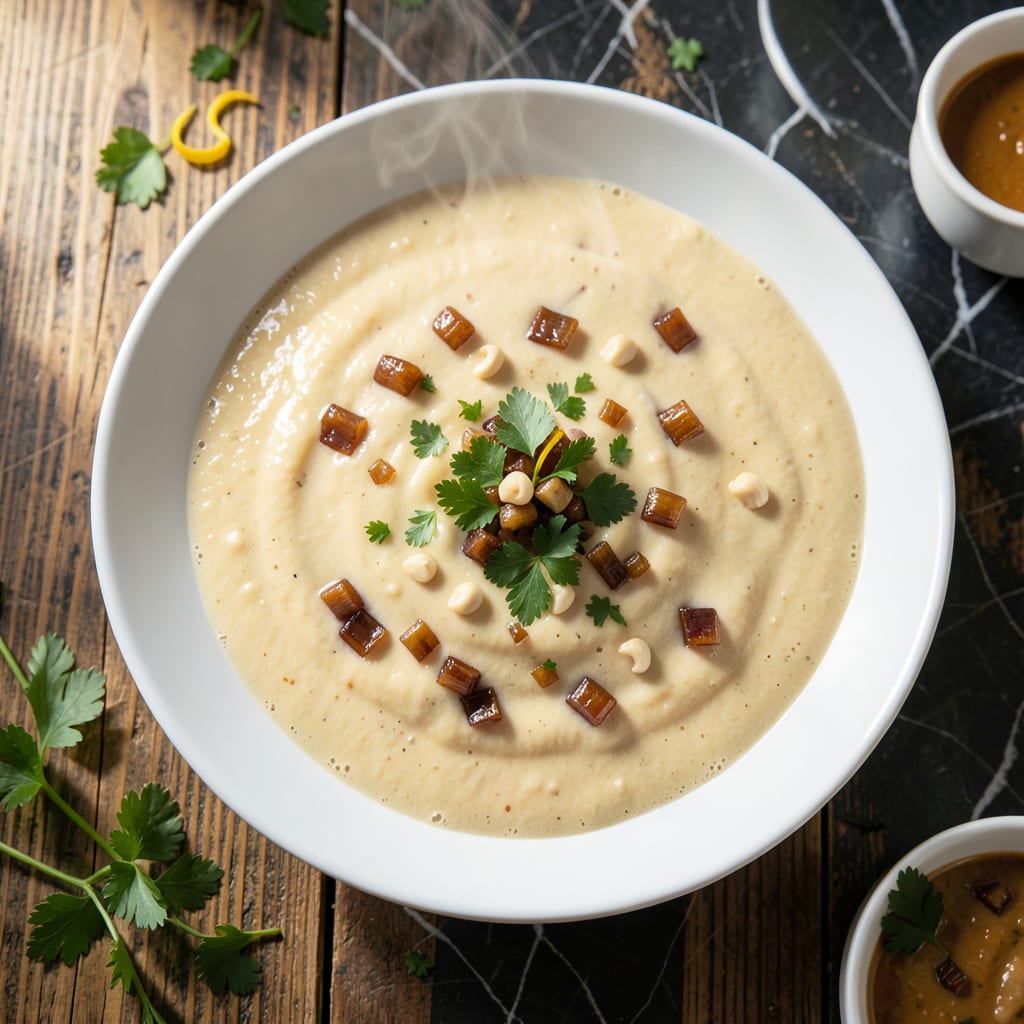
This velvety chicken casserole sauce transforms any layered dish into a restaurant-quality creation. I developed this recipe to add depth and richness without overpowering the main ingredients.
The secret lies in a simple roux base, slowly whisked with warm milk and broth. This creates a smooth, creamy sauce that clings perfectly to chicken, noodles, or vegetables in your casserole.
Ingredients for Chicken Casserole Sauce
Ten ingredients create this velvety, restaurant-quality sauce base for layered dishes.
| Ingredient | Amount | Notes |
|---|---|---|
| Unsalted Butter 🧈 | ½ cup | For roux base, cubic inch pieces |
| All-Purpose Flour 🌾 | ½ cup | Sifted for smooth consistency |
| Whole Milk 🥛 | 2 cups | Warm, not boiling |
| Chicken Broth 🍲 | 1 ½ cups | Low-sodium preferred for control |
| Heavy Cream 🥛 | ½ cup | Full-fat for richness |
| Garlic Cloves 🧄 | 3 cloves | Minced for aromatic depth |
| Yellow Onion 🧅 | ½ whole | Finely diced, about 3/4 cup |
| Dijon Mustard 🟡 | 1 tbsp | For subtle tang and complexity |
| Worcestershire Sauce 💧 | 1 tsp | Optional for umami depth |
| Kosher Salt 🧂 | 1 tsp | Diamond Crystal preferred for balance |
| Ground Black Pepper 🌶️ | ½ tsp | Freshly ground for best flavor |
[recipeingredientscaler]
The roux foundation demands precision. Use high-quality unsalted butter (I prefer Plugrá or European-style for higher fat content) to prevent burning. The flour must be all-purpose—cake flour lacks gluten structure. For the chicken broth, Better Than Bouillon paste mixed with water offers superior depth compared to canned versions. Whole milk is non-negotiable; skim will yield a thin, unsatisfying sauce.
Substitutions require careful consideration. Replace whole milk with half-and-half at one-to-one ratio for extra richness, or 2% milk in a pinch (texture will suffer). No chicken broth? Vegetable broth works but lacks depth—add a splash of soy sauce. For a gluten-free version, rice flour or cornstarch can replace all-purpose flour, though the sauce may thicken differently.
This sauce keeps beautifully. Store in an airtight container for up to 5 days refrigerated, or freeze for 3 months. Reheat gently with constant stirring to prevent separation. For optimal results, make fresh when possible—the velvety texture is best immediately after preparation.
Why You’ll Love This Recipe
- One Pot Wonder: I melt the butter, whisk in flour, and let the milk and broth do the rest—no fancy steps, just a smooth, creamy base every time.
- Rich & Velvety: The heavy cream gives it that luxurious texture, and the chicken broth adds depth without overpowering.
- Meal Prep Hero: I make a big batch on Sunday, then use it for casseroles, pot pies, or even over pasta all week long.
- Stretches Far: A little goes a long way, and the ingredients are pantry staples. Honestly, it’s my budget-friendly secret to feeding a crowd without breaking the bank.
Step-by-Step Instructions for Chicken Casserole Sauce
Master this velvety base with precise technique for rich, layered flavor in every bite.
Step 1: Create a Classic Roux Foundation
Melt the 0.5 cup unsalted butter in a heavy saucepan over medium heat. Once foaming subsides, add the 0.5 cup all-purpose flour all at once. Whisk constantly for 2-3 minutes until the mixture turns a pale golden shade and emits a nutty aroma.
This roux serves as the thickening base. Keep the heat moderate to prevent browning—you want a blond roux for this application. The mixture should bubble gently but not darken during this cooking period.
Step 2: Build Flavor with Aromatics
Add the 0.5 whole yellow onion (finely diced) to the roux and cook for 3-4 minutes until translucent. Stir in the 3 cloves garlic cloves (minced) and cook for an additional 30 seconds until fragrant but not browned.
This step develops the aromatic foundation. The onion should soften without coloring, while the garlic releases its essence without bitterness. The roux will thicken slightly as it absorbs moisture from the vegetables.
Step 3: Gradually Incorporate Liquids
Slowly whisk in the 2 cups whole milk and 1.5 cups chicken broth, about ½ cup at a time, allowing the mixture to smooth out between additions. Once fully incorporated, bring to a gentle simmer.
Cook for 5-7 minutes, stirring frequently, until the sauce thickens enough to coat the back of a spoon. The mixture should be smooth and velvety, with no lumps remaining from the roux.
Step 4: Finish with Richness and Seasoning
Reduce heat to low and stir in the 0.5 cup heavy cream, 1 tbsp Dijon mustard, 1 tsp Worcestershire sauce, 1 tsp kosher salt, and 0.5 tsp ground black pepper. Simmer for 2-3 minutes to meld the flavors.
Taste and adjust seasoning if needed. The sauce should have a subtle tang from the mustard and depth from the Worcestershire, with a rich, creamy texture that beautifully coats casserole ingredients. Use immediately or store for later assembly.
Pro Tips For Making Chicken Casserole Sauce
- Warm Your Dairy: Take the whole milk and heavy cream out of the fridge 15 minutes before using—cold dairy can cause the sauce to seize up when it hits the hot roux.
- Cook the Roux: Let the butter and flour mixture bubble for at least 2-3 minutes, stirring constantly, to lose that raw flour taste. I learned this the hard way after my first casserole tasted like paste.
- Add Liquids Slowly: Pour in the chicken broth and milk gradually, whisking between each addition, or you’ll end up with a lumpy, broken sauce.
- Finish with Cream: Stir in the heavy cream at the very end, off the heat, to prevent curdling—this keeps the sauce rich and velvety without splitting.
Make-Ahead Tips for This chicken casserole sauce
Prep Ahead Strategy
This sauce actually improves with time as flavors meld. I recommend making it 1-2 days before assembling your casserole. Store it in an airtight container in the fridge to let the aromatics develop more complexity.
Freezing for Later
You can freeze this sauce for up to 3 months with excellent results. Portion it into 1-cup containers for easy casserole assembly later. Thaw overnight in the fridge before using.
Reheating Tips
Gently reheat on the stove over low heat, stirring constantly. If it separates, whisk in 1-2 tbsp cold milk to bring it back to smooth consistency. Avoid microwaving as it can cause hot spots. 🔥
Casserole Assembly
When ready to assemble, warm the sauce slightly before mixing with other ingredients. This helps it distribute evenly through the casserole layers. I always taste and adjust seasoning after reheating.
Time-Saving Hack
Double the batch and freeze half—you’ll thank yourself later when you’re short on time. Just
Nutrition Facts
Frequently Asked Questions
Can I use half-and-half instead of heavy cream?
Yes, substitute half-and-half 1:1 for heavy cream. The sauce will be slightly less rich but still creamy. For best results, use full-fat dairy.
Why does my sauce turn out lumpy?
Lumps occur when adding cold liquid to hot roux. Always warm your milk and broth first, then whisk slowly in small amounts. A whisk helps break up any clumps.
How can I make this gluten-free?
Replace all-purpose flour with rice flour or cornstarch at a 1:1 ratio. Cook the roux for 1 extra minute to remove the raw taste.
Can I make this ahead of time?
Prepare up to 2 days ahead. Store in an airtight container in the fridge. Flavors deepen as it rests.

- Jollof Rice Sauce Recipe: West African Tomato and Spice Infusion - September 25, 2026
- Japanese Rice Soup Recipe: Umami-Rich Comfort in a Bowl - September 25, 2026
- Homemade Cream Of Rice Recipe: Silk-Smooth Breakfast in Minutes - September 25, 2026