
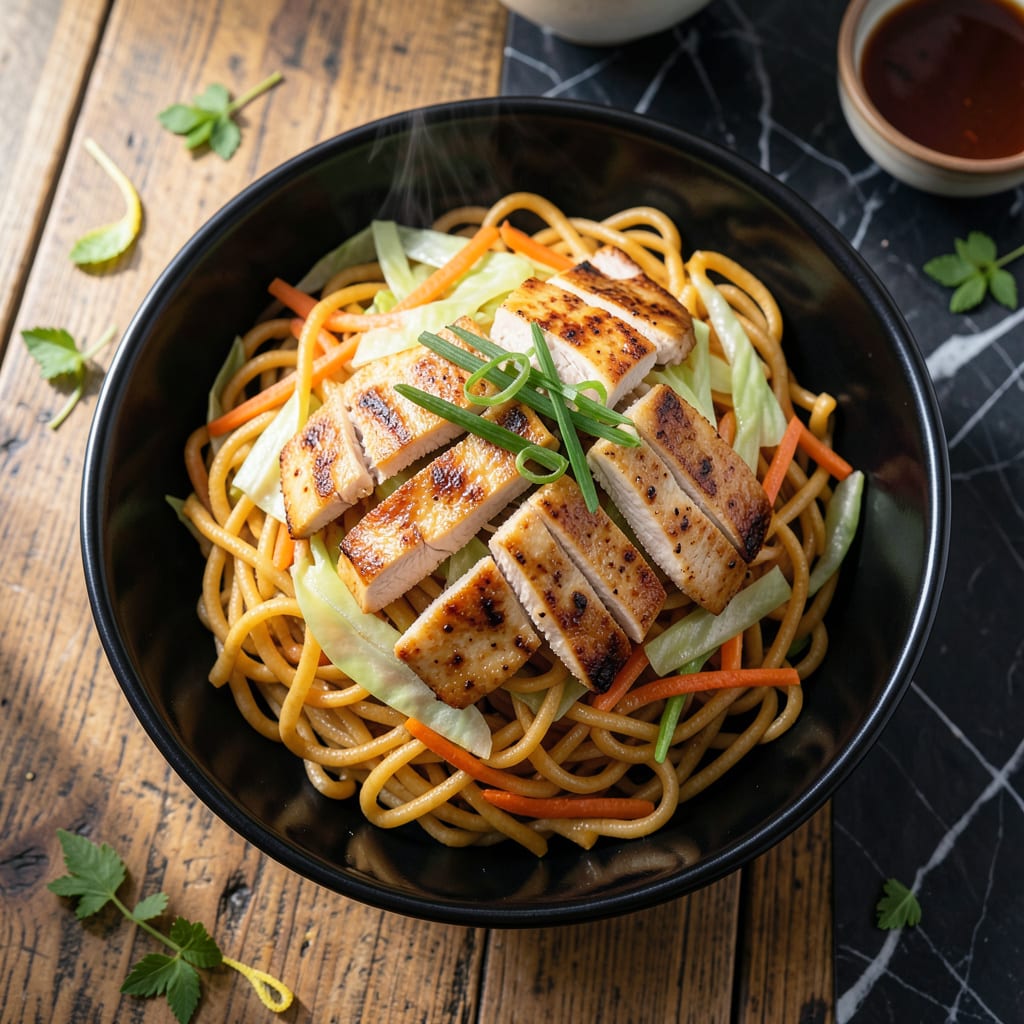
This chicken chow mein delivers savory wok-tossed goodness without oyster sauce. A simple soy-based substitution creates authentic flavor while keeping the dish accessible.
The secret is balancing light and dark soy sauces with a touch of sugar for depth. Quick cooking over high heat preserves the tender texture of chicken and crisp vegetables.
Ingredients for Chicken Chow Mein Recipe No Oyster Sauce
Savory wok-tossed noodles with chicken and crisp vegetables require these carefully chosen ingredients.
| Ingredient | Amount | Notes |
|---|---|---|
| Boneless Chicken Breast 🍗 | 1 ½ lb | Thinly sliced against grain |
| Chow Mein Noodles 🍜 | 8 oz | Dried or fresh egg noodles |
| Light Soy Sauce 🫒 | 3 tbsp | Low-sodium if preferred |
| Dark Soy Sauce 🫒 | 1 tbsp | For depth and color |
| Granulated Sugar 🍚 | 1 tsp | Balances soy sauce saltiness |
| Sesame Oil 🫒 | 1 tsp | Toasted variety preferred |
| Vegetable Oil 🫒 | 2 tbsp | High smoke point for wok |
| Garlic Cloves 🧄 | 4 cloves | Minced for aromatic base |
| Fresh Ginger 🌿 | 1 tbsp | Peeled and grated |
| Green Cabbage 🥬 | 2 cups | Thinly shredded for texture |
| Carrots 🥕 | 2 whole | Julienned or thinly sliced |
| Green Onions 🧅 | 3 whole | Sliced, white and green parts |
| Bean Sprouts 🌱 | 1 cup | Rinsed and drained well |
| Cornstarch 🌾 | 1 tbsp | For velveting chicken |
| Water 💧 | 2 tbsp | For cornstarch slurry |
[recipeingredientscaler]
The noodles are critical here. Look for dedicated chow mein noodles at Asian markets—they have the right chew and texture. Fresh egg noodles work too, but dried are more shelf-stable. For the chicken, thighs can substitute for breasts if you prefer richer flavor. The soy sauce balance matters: light for salt, dark for color and depth. Kikkoman and Pearl River Bridge are reliable brands for both.
No dark soy sauce? Add 1 tsp molasses or brown sugar to regular soy for similar depth. Fresh ginger is ideal, but ground ginger at half the amount works in a pinch. The vegetables are flexible—bell peppers or snap peas can join the mix. For gluten-free, tamari replaces soy sauce 1:1. Skip the bean sprouts if you prefer, but they add that classic crunch.
Store fresh ginger and garlic in the freezer—they grate easily frozen. Noodles cook best from room temp, so take them out 30 minutes early. Leftovers keep 3-4 days refrigerated, though they’re best fresh. Reheat in a dry pan to avoid sogginess.
Why You’ll Love This Recipe
- I’ll be real: I always have these ingredients on hand. Boneless chicken, noodles, sauces—no last-minute grocery runs.
- 20-Minute Meal: I can get this from prep to plate faster than takeout arrives. The chicken cooks quick, the noodles just need a soak.
- Umami Bomb: Light and dark soy sauce work together for that deep, savory hit—no oyster sauce needed. The sugar balances it perfectly.
- Feeds a Crowd: Between us, this stretches easily for leftovers or a family dinner. The noodles soak up all the flavor overnight.
Step-by-Step Instructions for Chicken Chow Mein
Master the wok technique and achieve perfectly tender noodles with crisp vegetables every time.
Step 1: Velvet the Chicken for Tender Results
Slice the 1.5 lb boneless chicken breast thinly against the grain into ¼-inch strips. In a bowl, combine the chicken with 1 tbsp cornstarch. Add 1 tbsp light soy sauce and 1 tsp sesame oil, then mix thoroughly to coat every piece evenly.
This velveting process ensures the chicken stays moist and tender during high-heat cooking. Let it marinate for 15 minutes while you prepare the remaining ingredients. The cornstarch creates a protective coating that locks in juices when exposed to the wok’s intense heat.
Step 2: Stir-Fry Aromatics and Chicken
Heat 1 tbsp vegetable oil in a wok or large skillet over high heat until shimmering. Add the 4 cloves minced garlic cloves and 1 tbsp grated fresh ginger, stir-frying for 30 seconds until fragrant but not browned.
Immediately add the marinated chicken in a single layer. Cook undisturbed for 1-2 minutes until the bottoms turn opaque white, then stir-fry for another 2-3 minutes until the chicken is 80% cooked through. Remove the chicken to a plate and set aside.
Step 3: Cook Vegetables Until Crisp-Tender
Add the remaining 1 tbsp vegetable oil to the wok. Toss in the 2 cups shredded green cabbage, 2 julienned carrots, and 3 sliced green onions. Stir-fry over high heat for 3-4 minutes until the vegetables soften slightly but retain their vibrant color and crispness.
Add the 1 cup bean sprouts and cook for an additional 1 minute. The sprouts should remain firm and bright—overcooking will make them mushy. Push all vegetables to one side of the wok to make space for the noodles.
Step 4: Combine Noodles and Sauce
If using dried 8 oz chow mein noodles, cook according to package directions until al dente, then drain. Add the noodles to the wok along with the reserved chicken. Pour in the remaining 2 tbsp light soy sauce, 1 tbsp dark soy sauce, and 1 tsp granulated sugar.
Toss everything together vigorously with tongs for 2-3 minutes until the 8 oz chow mein noodles are fully coated and slightly charred in spots. The dark soy sauce adds depth and color, while the sugar balances the saltiness. Add the 2 tbsp water if needed to loosen the mixture and create a light sauce that clings to the noodles.
Step 5: Finish and Serve Immediately
Give the mixture one final toss to distribute all ingredients evenly. The noodles should be glossy and lightly browned, with the chicken fully cooked through and the vegetables still crisp. Taste and adjust seasoning if needed—though the soy sauces provide ample saltiness.
Transfer to a serving platter and garnish with additional sliced green onions if desired. Serve immediately while hot—the texture of the noodles and vegetables is best fresh from the wok. The dish should have a harmonious balance of savory, slightly sweet, and umami flavors without any oyster sauce.
Pro Tips For Making Chicken Chow Mein Recipe No Oyster Sauce
- Pre-cook the noodles: Parboil the chow mein noodles for 2 minutes less than package instructions, then drain and rinse with cold water. This keeps them from turning mushy when stir-fried later.
- Velvet the chicken: Toss the boneless chicken breast with 1 tsp cornstarch and 1 tbsp water before cooking—it stays juicy and tender, even without oyster sauce’s richness.
- Balance the sauces: Use a 2:1 ratio of light to dark soy sauce, then add a pinch of sugar to mimic oyster sauce’s sweet-salty depth. I learned this the hard way after my first bland batch.
- High heat only: Crank the heat to maximum and work in small batches to avoid steaming the chicken and noodles. After burning three batches, I finally figured out that patience here is non-negotiable.
Pro Cooking Tips for This Dish
Wok Heat Control
Your wok must be screaming hot before adding oil—test with a drop of water that should sizzle and evaporate instantly. I use a carbon steel wok on my gas stove’s highest setting. Maintain this heat throughout cooking to achieve that signature wok hei (breath of the wok) flavor. 🔥
Velocity Cooking
Chow mein cooks fast, so have all ingredients prepped and within reach. I arrange everything in small bowls in order of use—aromatics first, then chicken, vegetables, and noodles. This mise en place approach prevents burning while you scramble to chop.
Noodle Prep
For dried noodles, undercook by 1 minute from package instructions since they’ll finish in the wok. Rinse with cold water to stop cooking and prevent sticking. Fresh noodles need just 30 seconds in boiling water to loosen before stir-frying.
Sauce Distribution
Mix your soy sauces and sugar in a small bowl before adding to the wok. Pour the mixture around the edges rather than directly on the noodles to prevent steaming. Use tongs to toss continuously for 2-3 minutes until everything is evenly coated.
The Char Factor
Don’t fear the brown bits! Those caramelized spots on the wok add incredible flavor. Let the chicken and noodles sit undisturbed for 30-60 seconds between tosses to develop this char. Just be ready to move quickly when they start to stick.
Final Texture Check
The perfect chow mein has noodles that are tender with slight bite, chicken that’s juicy, and vegetables that still have crunch. If your dish looks dry, add that 2 tbsp water slurry to create a light, glossy sauce that ties it all together. 💡
Nutrition Facts
Frequently Asked Questions
What can I use instead of oyster sauce?
A blend of 3 tbsp light soy sauce and 1 tbsp dark soy sauce with 1 tsp sugar works perfectly. For extra depth, add a dash of hoisin sauce or Worcestershire sauce.
How do I keep the noodles from sticking?
Undercook dried noodles by 1 minute, then rinse with cold water. Use high heat and toss continuously with tongs. A splash of 2 tbsp water can loosen the mixture if needed.
Can I use chicken thighs instead of breasts?
Yes! Thighs stay juicier and add richer flavor. Slice them thinly against the grain and velvet with 1 tbsp cornstarch as directed. The cooking time remains the same.
How do I know when the chicken is fully cooked?
Look for opaque white color with no pink. The internal temperature should reach 165°F. Since it’s sliced thin, it cooks through in just 3-4 minutes total.

- Jollof Rice Sauce Recipe: West African Tomato and Spice Infusion - September 25, 2026
- Japanese Rice Soup Recipe: Umami-Rich Comfort in a Bowl - September 25, 2026
- Homemade Cream Of Rice Recipe: Silk-Smooth Breakfast in Minutes - September 25, 2026