
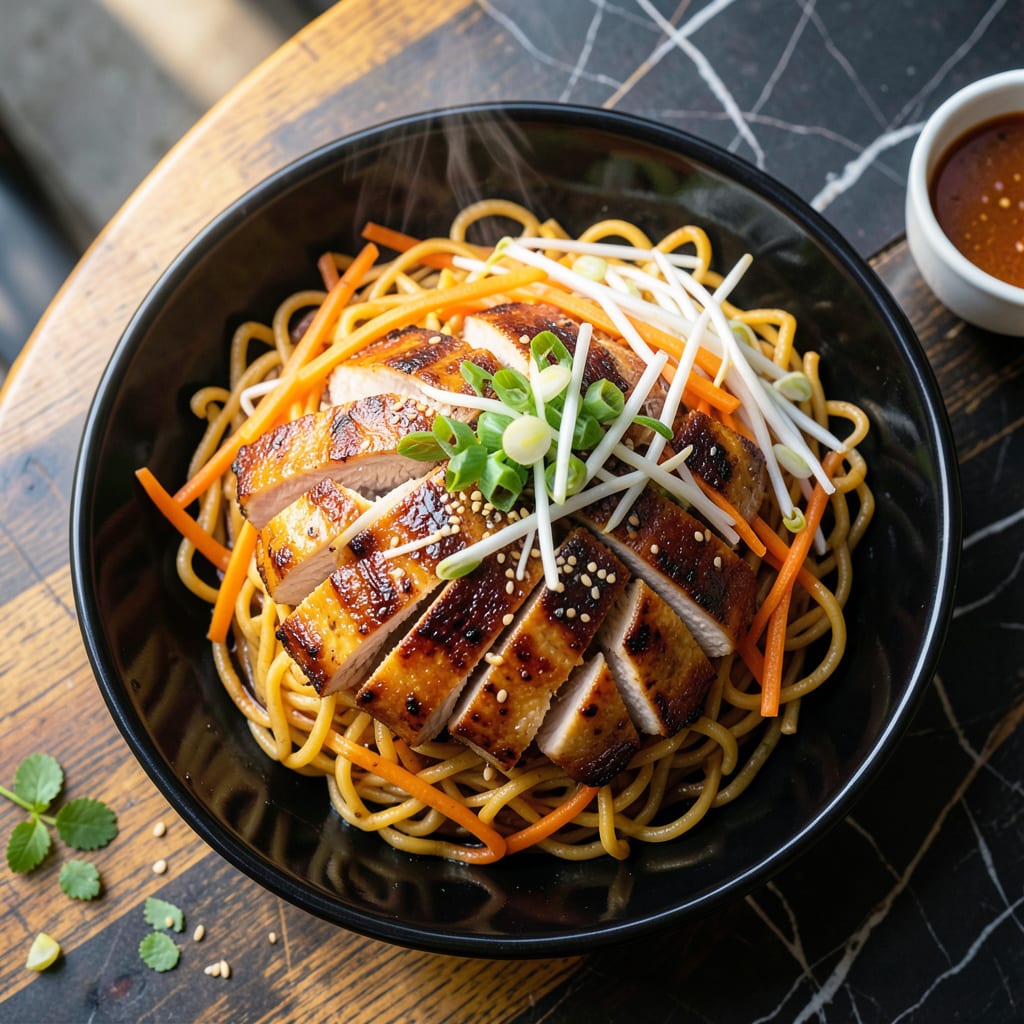
This chicken chow mein proves you don’t need oyster sauce for restaurant-quality flavor at home.
The secret is a savory blend of soy sauce, sesame oil, and a touch of sugar to mimic that classic depth. Stir-fried with tender chicken, crisp vegetables, and perfectly chewy noodles, it delivers everything you love about the dish.
Ingredients for Chicken Chow Mein Recipe Without Oyster Sauce
Pantry staples and fresh veggies bring this savory dish to life with ease.
| Ingredient | Amount | Notes |
|---|---|---|
| Chicken Breast 🍗 | 1 ½ lb | Boneless, skinless, thinly sliced |
| Chow Mein Noodles 🍜 | 8 oz | Dried or fresh egg noodles |
| Soy Sauce 🫒 | ⅓ cup | Low-sodium preferred for balance |
| Dark Soy Sauce 🫒 | 1 tbsp | For deeper color and flavor |
| Sesame Oil 🫒 | 2 tbsp | Toasted variety for best aroma |
| Granulated Sugar 🍚 | 1 tbsp | Balances savory flavors perfectly |
| Garlic Cloves 🧄 | 4 cloves | Minced for maximum flavor |
| Fresh Ginger 🧅 | 1 tbsp | Peeled and grated fine |
| Carrots 🥕 | 2 whole | Julienned for crisp texture |
| Bell Peppers 🌶️ | 2 whole | Thinly sliced, any color |
| Green Onions 🧅 | 4 whole | Sliced, white and green parts |
| Bean Sprouts 🌱 | 1 cup | Rinsed and drained well |
| Neutral Oil 🫒 | 3 tbsp | For stir-frying, high smoke point |
| Cornstarch 🌾 | 1 tbsp | Mixed with water for slurry |
| Water 💧 | ¼ cup | For cornstarch slurry |
[recipeingredientscaler]
The noodles are everything here. Fresh chow mein noodles from an Asian market give that authentic texture, but dried egg noodles work too (just cook them al dente). For the chicken, thighs stay juicier than breasts if you’re worried about overcooking. I grab mine from Whole Foods when I want organic, but any supermarket breast will do. Look for soy sauce without MSG if that’s your preference.
No dark soy sauce? Double the regular soy sauce with a pinch of brown sugar for color. Fresh ginger is ideal, but ground ginger at half the amount saves time. Bell peppers can be swapped for cabbage or snap peas. The sesame oil is non-negotiable though—it adds that nutty depth. If you’re gluten-free, tamari instead of soy sauce keeps everything safe.
Leftovers reheat like a dream—actually taste better after a night in the fridge. Stores for 3-4 days sealed tight. The noodles will soften, but a quick stir-fry revives them. Freezing? Not ideal for the veggies, but 6 weeks max if you must.
Why You’ll Love This Recipe
- One Pan Wonder: I toss everything in a single wok—chicken, noodles, and that soy-sesame combo—and dinner’s done in 15 minutes flat.
- Umami Bomb: The dark soy sauce adds this deep, caramelized richness that makes every bite taste like takeout, but better.
- Leftovers Champion: Honestly, this tastes even better the next day when the noodles soak up all that savory sauce.
- Budget Hero: A pound of chicken breast and a few pantry staples feed my whole family without breaking the bank.
Step-by-Step Instructions for Chicken Chow Mein Without Oyster Sauce
Here’s my foolproof method for achieving perfectly saucy, restaurant-style noodles at home.
Step 1: Marinate and Prep the Chicken
Slice the 1.5 lb Chicken Breast into thin strips against the grain for tenderness. In a bowl, combine the chicken with 1 tbsp Soy Sauce, 1 tbsp Sesame Oil, and 1 tbsp Cornstarch. Mix well to coat evenly.
This marinade tenderizes the meat and ensures it stays juicy during stir-frying. Let it sit while you prep the vegetables—this gives the cornstarch time to work its magic. The chicken should look slightly opaque when it’s ready to cook.
Step 2: Stir-Fry the Vegetables
Heat 2 tbsp Neutral Oil in a wok or large skillet over high heat until shimmering. Add the 2 whole Carrots, 2 whole Bell Peppers, and 4 cloves Garlic Cloves, stir-frying for 2-3 minutes until the vegetables start to soften but retain their crispness.
Push the vegetables to one side and add the marinated chicken. Cook for 3-4 minutes until the chicken is no longer pink and the edges are just beginning to brown. The wok should be hot enough that you hear a steady sizzle.
Step 3: Combine and Sauce the Noodles
Add the 8 oz Chow Mein Noodles to the wok, breaking them up if they’re clumped together. Pour in the remaining 0.33 cup Soy Sauce, 1 tbsp Dark Soy Sauce, 1 tbsp Granulated Sugar, 1 tbsp Fresh Ginger, and 1 tbsp Sesame Oil.
Toss everything together vigorously for 1-2 minutes until the noodles are evenly coated and heated through. The noodles should be tender but still chewy, soaking up the rich, savory sauce.
Step 4: Finish with Bean Sprouts and Green Onions
Stir in the 1 cup Bean Sprouts and 4 whole Green Onions, cooking for an additional 1 minute just until the sprouts wilt slightly. The bean sprouts should still have a bit of crunch.
Create a slurry by mixing 1 tbsp Cornstarch with 0.25 cup Water, then pour it into the wok. Stir well for 30-60 seconds until the sauce thickens and clings beautifully to the noodles. The sauce should be glossy and coat the back of a spoon.
Remove from heat and serve immediately while hot. The dish should have a perfect balance of savory, slightly sweet, and umami flavors with a satisfying texture from the crisp-tender vegetables and chewy noodles.
Pro Tips For Making Chicken Chow Mein Recipe Without Oyster Sauce
- Pre-cook the noodles: Boil the chow mein noodles for 2 minutes less than the package says, then shock in cold water—I learned this the hard way after ending up with mushy noodles too many times.
- Slice chicken thin: Cut the chicken breast into ¼-inch strips so it cooks through in 2-3 minutes over high heat, otherwise you’ll be chewing on rubbery bits while your noodles overcook.
- Use dark soy wisely: Swap 1 tablespoon of regular soy sauce for dark soy sauce to get that deep color and caramelized flavor it’s missing without oyster sauce—any more and it’ll taste bitter.
- Finish with sesame oil: Drizzle the sesame oil at the very end, off the heat, so it keeps its nutty aroma instead of turning bitter from the wok’s high temperature.
Wine and Beer Pairings for This Dish
Light Beer Pairings
Crisp Asian lagers like Sapporo or Asahi complement the savory flavors beautifully—their light body cuts through the richness without overpowering the dish. I always keep a few in my fridge for stir-fry nights. 🍺
White Wine Options
Off-dry whites are perfect here. A chilled Riesling from Washington state adds a touch of sweetness that balances the soy sauce. Gewürztraminer with its lychee notes also works wonderfully with the ginger and garlic.
Rosé Choices
Dry rosé with citrus notes offers a refreshing contrast. I love a Provence rosé for its crisp acidity. The subtle berry flavors won’t compete with the dish’s umami depth.
Non-Alcoholic Pairs
For alcohol-free options, try jasmine tea—its floral aroma enhances the dish’s Asian roots. A ginger beer from Fever-Tree adds spicy contrast that I find surprisingly satisfying. 💡
Bold Red Alternative
If you prefer red, choose a light-bodied Pinot Noir with bright acidity. The earthy notes complement the dish without overwhelming the delicate flavors. Serve slightly chilled for best results.
Nutrition Facts
Frequently Asked Questions
What can replace oyster sauce in this dish?
Use a mix of 1 tbsp soy sauce + 1 tsp hoisin + 1/2 tsp sugar. This combo gives the same sweet-savory depth without seafood.
Can I make this gluten-free?
Yes! Swap regular soy sauce for tamari and use rice noodles instead of egg noodles. Double-check all labels for hidden gluten.
How do I prevent soggy noodles?
Stir-fry noodles separately first for 1-2 minutes to crisp them. Add sauce at the very end and toss quickly over high heat.
Can I use frozen vegetables?
Fresh is best, but frozen works in a pinch. Thaw and drain well first to avoid excess moisture. Cook 1 minute longer than fresh.

- Jollof Rice Sauce Recipe: West African Tomato and Spice Infusion - September 25, 2026
- Japanese Rice Soup Recipe: Umami-Rich Comfort in a Bowl - September 25, 2026
- Homemade Cream Of Rice Recipe: Silk-Smooth Breakfast in Minutes - September 25, 2026