
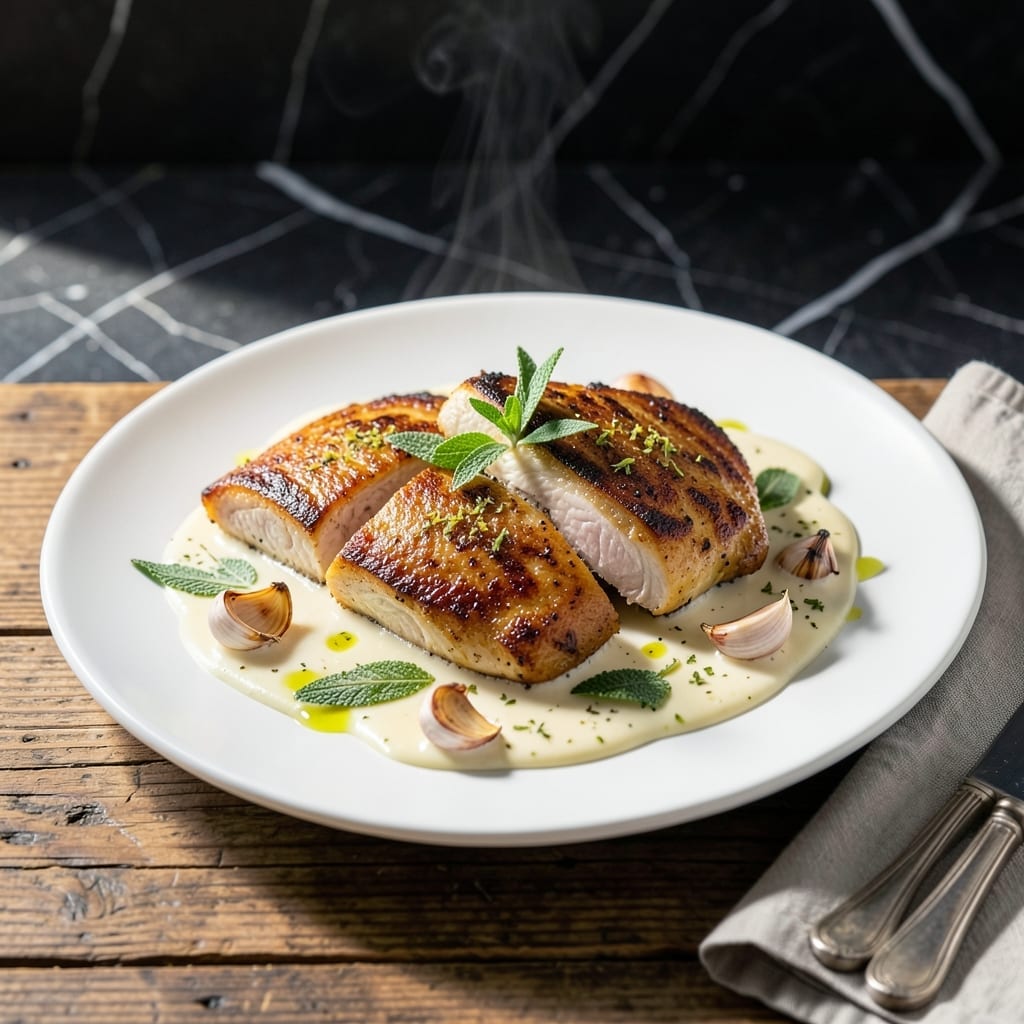
This Italian-style chicken transforms simple ingredients into tender, flavorful cutlets through a unique cooking method.
By gently simmering the chicken in milk, the acidity breaks down proteins, creating remarkably soft meat. A touch of lemon zest and fresh herbs adds brightness without overpowering the dish.
The milk reduces into a light, creamy sauce that coats each piece perfectly. The result is juicy chicken with a delicate texture that melts in your mouth.
Serve with crusty bread or over polenta to soak up every drop of the silky sauce.
Ingredients for Chicken Cooked in Milk
Simple, high-quality ingredients create this Italian-style dish with remarkable tenderness and depth.
| Ingredient | Amount | Notes |
|---|---|---|
| Chicken Breast Cutlets 🍗 | 1 ½ lb | Boneless, skinless, pounded to even thickness |
| Whole Milk 🥛 | 2 cups | Full-fat for creaminess |
| Unsalted Butter 🧈 | 2 tbsp | For richness and sauce |
| Garlic Cloves 🧄 | 4 cloves | Thinly sliced for even flavor |
| Fresh Sage Leaves 🌿 | ¼ cup | Whole leaves, roughly chopped |
| Lemon Zest 🍋 | 1 tbsp | Finely grated for brightness |
| All-Purpose Flour 🌾 | ¼ cup | For light dusting |
| Kosher Salt 🧂 | 1 tsp | Diamond Crystal preferred |
| Freshly Ground Black Pepper 🌶️ | ½ tsp | Coarsely ground for texture |
| Dry White Wine 🍷 | ¼ cup | Optional for depth of flavor |
| Fresh Rosemary Sprigs 🌿 | 2 sprigs | Optional, for aromatic garnish |
| Extra-Virgin Olive Oil 🫒 | 1 tbsp | For initial searing |
The chicken cutlets require boneless, skinless breasts pounded to an even thickness—this ensures even cooking and maximum tenderness. Whole milk is essential for the sauce, as lower-fat versions won’t achieve the same velvety texture. Fresh sage (available at Whole Foods or specialty markets) is non-negotiable for authentic flavor. For the butter, Plugrá or Kerrygold offer superior richness and creaminess.
No whole milk? Half-and-half with a splash of cream works in a pinch, though the sauce will be lighter. Out of fresh sage? Dried sage at one-third the amount is acceptable, but fresh truly elevates the dish. The dry white wine can be omitted, but it adds a subtle acidity—substitute chicken broth with a squeeze of lemon if needed. For a dairy-free version, coconut milk and olive oil can replace milk and butter.
Store fresh sage wrapped in damp paper towels for up to 5 days. The dish reheats well, though the sauce may thicken—stir in a splash of milk to restore its silky consistency. Best enjoyed within 3 days of preparation.
Why You’ll Love This Recipe
- One Pan Magic: I love how this comes together in a single skillet—just brown the chicken, add milk, butter, and sage, then let it simmer.
- Rich Comfort: The milk and butter create this velvety sauce that soaks into the chicken, and the sage gives it this warm, earthy depth.
- Weeknight Hero: Honestly, it’s my go-to for busy evenings when I need something special but can’t spend hours in the kitchen.
- Feeds the Fam: Leftovers taste even better the next day, and it’s budget-friendly since milk and chicken breast stretch far.
Step-by-Step Instructions for Chicken Cooked in Milk
This Italian technique transforms simple ingredients into exceptionally tender, flavorful cutlets.
Step 1: Prepare and Season the Chicken
Pat the 1.5 lb chicken breast cutlets dry with paper towels to ensure proper browning. Season both sides evenly with the 1 tsp kosher salt and 0.5 tsp freshly ground black pepper, pressing the seasoning into the meat for maximum adhesion.
Lightly dredge each cutlet in the 0.25 cup all-purpose flour, shaking off any excess. This thin coating creates a delicate crust and helps thicken the sauce later. Set the floured cutlets aside on a clean plate while you heat the pan.
Step 2: Sear the Cutlets to Golden Perfection
Heat the 1 tbsp extra-virgin olive oil in a large, heavy skillet over medium-high heat until it shimmers. Add the 2 tbsp unsalted butter and let it melt completely, swirling the pan to combine the fats.
Carefully place the cutlets in the pan, being mindful not to crowd them. Sear for 3-4 minutes per side until they develop a golden-brown crust and release easily from the pan. Transfer the seared cutlets to a plate and set aside.
Step 3: Build the Aromatic Milk Sauce
In the same skillet, reduce the heat to medium and add the 4 cloves garlic cloves and 0.25 cup fresh sage leaves. Sauté for 1-2 minutes until the garlic is fragrant and the sage leaves begin to crisp.
Pour in the 0.25 cup dry white wine and deglaze the pan, scraping up any browned bits with a wooden spoon. Let the wine reduce by half, then add the 2 cups whole milk and 1 tbsp lemon zest. Stir to combine and bring the mixture to a gentle simmer.
Step 4: Finish Cooking in the Milk Sauce
Return the seared cutlets to the skillet, nesting them into the milk mixture. The liquid should come about halfway up the sides of the chicken. Reduce the heat to medium-low and let the cutlets poach gently for 10-12 minutes.
You’ll notice the milk begin to curdle slightly and thicken—that’s exactly what you want. The curds will cling to the chicken, creating a creamy, flavorful coating. Turn the cutlets occasionally to ensure even cooking and coating.
Once the internal temperature reaches 165°F and the sauce has reduced to a creamy consistency, remove from heat. Garnish with the 2 sprigs fresh rosemary sprigs if desired, and serve immediately while hot.
Pro Tips For Making Chicken Cooked In Milk
- Brown the Chicken First: Sear the cutlets in butter until golden before adding milk—this builds flavor and keeps the chicken from turning pale. I learned this the hard way after ending up with sad, gray meat.
- Use Whole Milk Only: Skip the skim or 2%—whole milk’s fat prevents curdling and gives the sauce that rich, velvety texture. Sounds fussy, but it actually changes the outcome.
- Simmer, Don’t Boil: Once the milk goes in, keep the heat low to avoid splitting the sauce. After ruining a batch with aggressive boiling, I now hover at a gentle bubble.
- Crush the Garlic: Lightly crush the cloves instead of mincing—they infuse the milk with sweetness without turning bitter. My grandmother swore by this, and she was right.
Flavor Customization for This chicken cooked in milk
Herb Variations
Swap the fresh sage for 1/4 cup fresh thyme leaves for a more floral, earthy note. I love this with a pinch of ground nutmeg added to the milk. The thyme pairs beautifully with the creamy sauce, giving it a sophisticated twist. 🌿
Citrus Twist
For a brighter dish, add 2 tbsp orange zest alongside the lemon zest. The orange adds a sweet, citrusy depth that balances the richness of the milk. I also like to finish with a squeeze of fresh orange juice just before serving.
Spicy Kick
Add 1/2 tsp red pepper flakes when sautéing the garlic for a subtle heat. For more intensity, include 1 finely chopped fresh jalapeño. The spice cuts through the creaminess and adds a nice contrast to the tender chicken.
Creamy Upgrade
Stir in 1/4 cup heavy cream at the end for an ultra-luxurious sauce. This works especially well if you’re serving the dish over pasta or polenta. The cream makes the sauce even richer and more velvety.
Umami Boost
Add 2 tbsp grated Parmesan cheese to the sauce during the last 2 minutes of cooking. The cheese melts into the milk, creating a deeper, savory flavor. I also like to sprinkle extra Parmesan on top when serving. 💛
Fresh Herb Garnish
Finish with a handful of chopped fresh parsley or basil leaves for a pop of color and freshness. The herbs add a vibrant contrast to the creamy sauce and tender chicken, making the dish look as good as it tastes.
Nutrition Facts
Frequently Asked Questions
Why does the milk curdle in the recipe?
The acidity from lemon and wine causes the milk proteins to separate naturally. This creates the signature creamy sauce that clings to the chicken. It’s expected and part of the dish’s charm!
Can I use chicken thighs instead of breasts?
Thighs stay juicier and handle the 10-12 minutes poaching time well. Adjust cooking to 175°F internal temp for dark meat. The sauce works equally well.
What if my sauce is too thin?
Simmer uncovered for 2-3 minutes longer to reduce. Alternatively, mix 1 tsp cornstarch with cold water and stir in. The sauce should coat the back of a spoon.
How do I prevent the chicken from drying out?
Don’t overcook—remove at 165°F. Pounding cutlets to even thickness ensures consistent cooking. The milk’s acidity also helps keep the meat tender.

- Jollof Rice Sauce Recipe: West African Tomato and Spice Infusion - September 25, 2026
- Japanese Rice Soup Recipe: Umami-Rich Comfort in a Bowl - September 25, 2026
- Homemade Cream Of Rice Recipe: Silk-Smooth Breakfast in Minutes - September 25, 2026