
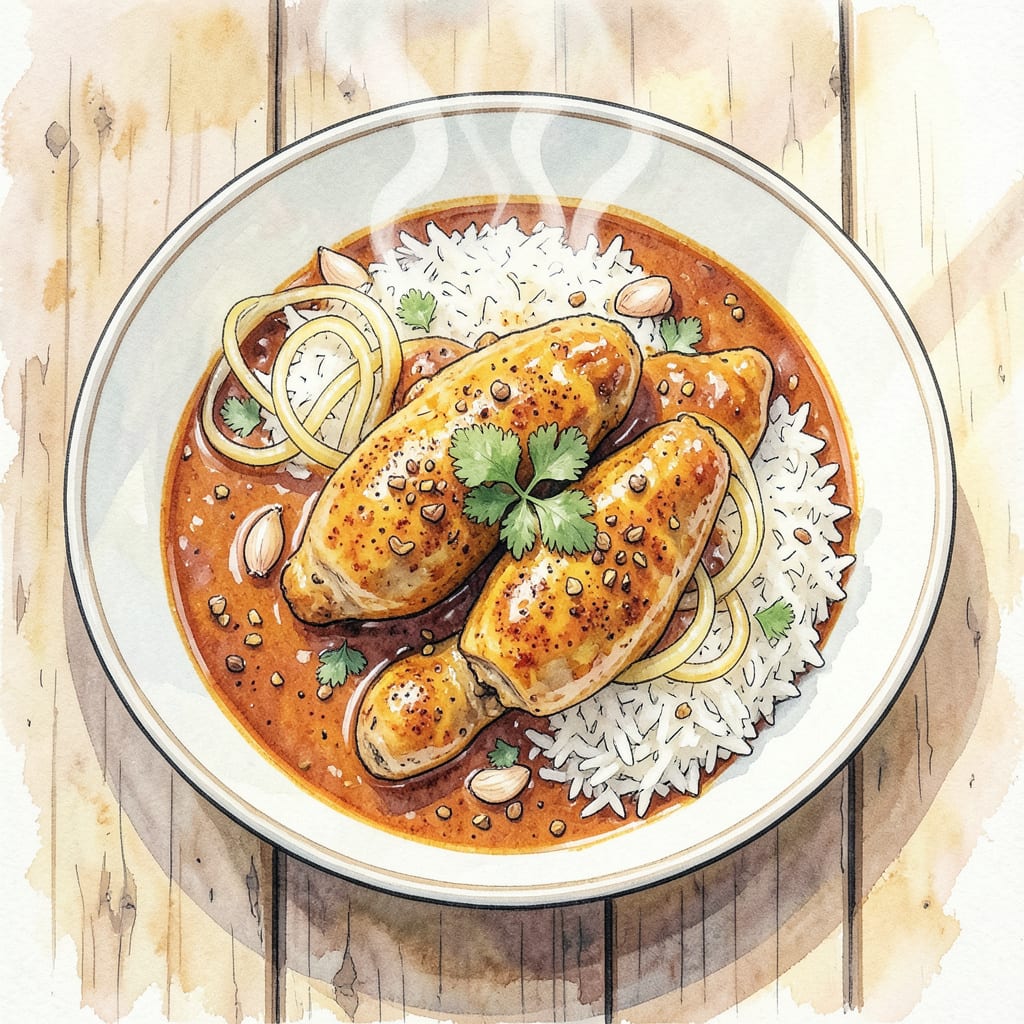
Filipino-style chicken curry is a rich and flavorful dish that combines tender chicken with aromatic spices and creamy coconut milk. 🔥 This comforting recipe is perfect for a weeknight dinner or special occasion, serving 4-6 people.
The blend of curry powder, turmeric, and coconut milk creates a velvety sauce that’s both soothing and satisfying. With simple ingredients and straightforward instructions, you’ll be enjoying this delicious curry in no time.
Ingredients for Chicken Curry Filipino Style
Simple ingredients come together to create this rich Filipino-style chicken curry dish.
| Ingredient | Amount | Notes |
|---|---|---|
| Chicken Thighs 🍗 | 1 ½ lb | Boneless, skinless preferred |
| Coconut Milk 🥛 | 1 can | Full-fat for creaminess |
| Curry Powder 🌶️ | 2 tbsp | Filipino-style or Madras |
| Turmeric Powder 🌿 | 1 tsp | Freshly ground preferred |
| Garlic Cloves 🧄 | 4 cloves | Minced, not pressed |
| Onion 🧅 | 1 whole | Yellow or red, diced |
| Red Bell Pepper 🌶️ | 1 whole | Deseeded, sliced |
| Potatoes 🥔 | 2 whole | Peeled, cubed |
| Carrots 🥕 | 2 whole | Peeled, sliced |
| Fish Sauce 🐟 | 2 tbsp | Optional, for umami |
| Coconut Oil 🫒 | 2 tbsp | For sautéing |
| Salt 🧂 | 1 tsp | Kosher or sea salt |
| Black Pepper 🌶️ | ½ tsp | Freshly ground |
For authentic flavor, look for Filipino curry powder or Madras curry at Asian markets. Coconut milk is essential—full-fat canned is best. If using Thai Kitchen brand, check the fat content. Fresh turmeric can be used at double the amount if available.
No fish sauce? Use soy sauce or salt as a substitute. For a spicier curry, add 1-2 Thai chilies or a pinch of cayenne. Potatoes and carrots can be swapped with other root vegetables like sweet potatoes or parsnips. If using fresh chilies, be sure to deseed them for less heat.
This curry improves with time—make it ahead and refrigerate for up to 3 days. Reheat gently on low heat, adding a splash of coconut milk if needed. Freezes well for 3 months—thaw overnight in the fridge before reheating.
Step-by-Step Instructions for Chicken Curry Filipino Style
Follow these detailed steps to create a rich and creamy Filipino-style chicken curry.
🍳 Step 1: Sauté Aromatics and Chicken
Heat the 2 tablespoons coconut oil in a large pot over medium-high heat. Add the 1 whole diced onion and cook for 5 minutes until it becomes translucent and starts to brown. Then add the 4 cloves minced garlic cloves and cook for another 1 minute until fragrant.
Now add the 1.5 lb chicken thighs, cut into bite-sized pieces if needed. Cook for 5-7 minutes until the chicken is browned on all sides and cooked through. Remove the chicken from the pot and set it aside.
👨🍳 Step 2: Prepare Vegetables and Spice Mix
In the same pot, add the 1 whole sliced red bell pepper, 2 whole cubed potatoes, and 2 whole sliced carrots. Cook for 5 minutes, stirring occasionally, until they start to soften. Stir in the 2 tablespoons curry powder and 1 teaspoon turmeric powder, cooking for 1-2 minutes until the spices are fragrant.
The mixture should be aromatic and slightly toasted. If it starts to stick, add a splash of coconut milk to deglaze the pot.
🥘 Step 3: Combine Ingredients and Simmer
Pour in the 1 can coconut milk and 2 tablespoons fish sauce (if using). Stir well to combine, scraping up any browned bits from the bottom of the pot. Return the chicken to the pot and bring the mixture to a simmer.
Reduce the heat to low and let it cook for 20-25 minutes until the vegetables are tender and the sauce has thickened. Season with 1 teaspoon salt and 0.5 teaspoon black pepper to taste.
⏰ Step 4: Final Check and Serve
Check the curry for seasoning and adjust if necessary. The sauce should be creamy and rich, coating the chicken and vegetables evenly. Serve hot over steamed rice.
This dish is best enjoyed fresh, but it can be refrigerated for up to 3 days and reheated gently before serving.
Troubleshooting chicken curry filipino style
Common Curry Issues
When making Filipino-style chicken curry, several issues can arise that affect the final dish. One common problem is curdling coconut milk—this happens when the milk is heated too quickly or at too high a temperature. To prevent this, always simmer your curry gently over low heat and stir frequently. Another issue is undercooked chicken, which can be avoided by browning the chicken thoroughly before simmering and checking its internal temperature reaches 165°F. 🔥
Spice Balance Problems
Curry powder can quickly become overpowering if not managed properly. If your curry tastes too bland, start by adding ½ teaspoon more curry powder at a time until you achieve the desired flavor. Conversely, if it’s too spicy, add a splash of coconut milk to temper the heat. Remember that Filipino curry tends to be milder than Thai versions, so adjust spices accordingly. Taste frequently during cooking to maintain balance.
Vegetable Texture Issues
The key to perfect vegetables in curry is timing. Add harder vegetables like potatoes earlier in the cooking process so they have time to soften. For softer vegetables like bell peppers, add them later to preserve their texture. If vegetables remain hard after 20 minutes of simmering, check your heat level—they should be cooking at a gentle bubble. 🌿
Saving a Broken Curry
If your coconut milk curdles or separates, don’t panic. Remove the pot from heat and let it cool slightly. Then, vigorously whisk the mixture or blend it briefly with an immersion blender to re-emulsify. For particularly stubborn cases, start over with a fresh can of coconut milk and slowly whisk it into the broken curry. This usually rescues the dish.
Adjusting Consistency
The ideal curry consistency is thick enough to coat the back of a spoon but still pourable. If your curry is too thin, simmer it uncovered for 5-10 minutes to reduce the liquid. For thicker curry, mix 1 tablespoon cornstarch with a little water and stir it in, then cook for another 2 minutes. The sauce will continue to thicken as it cools.
Storage and Reheating Tips
Curry often tastes better the next day as flavors meld. Store leftovers in an airtight container in the refrigerator for up to 3 days. When reheating, do so gently over low heat, adding a splash of coconut milk if needed to restore creaminess. This dish also freezes well for up to 3 months—thaw overnight in the fridge before reheating. ❄️
Nutrition Facts

- Jollof Rice Sauce Recipe: West African Tomato and Spice Infusion - September 25, 2026
- Japanese Rice Soup Recipe: Umami-Rich Comfort in a Bowl - September 25, 2026
- Homemade Cream Of Rice Recipe: Silk-Smooth Breakfast in Minutes - September 25, 2026