
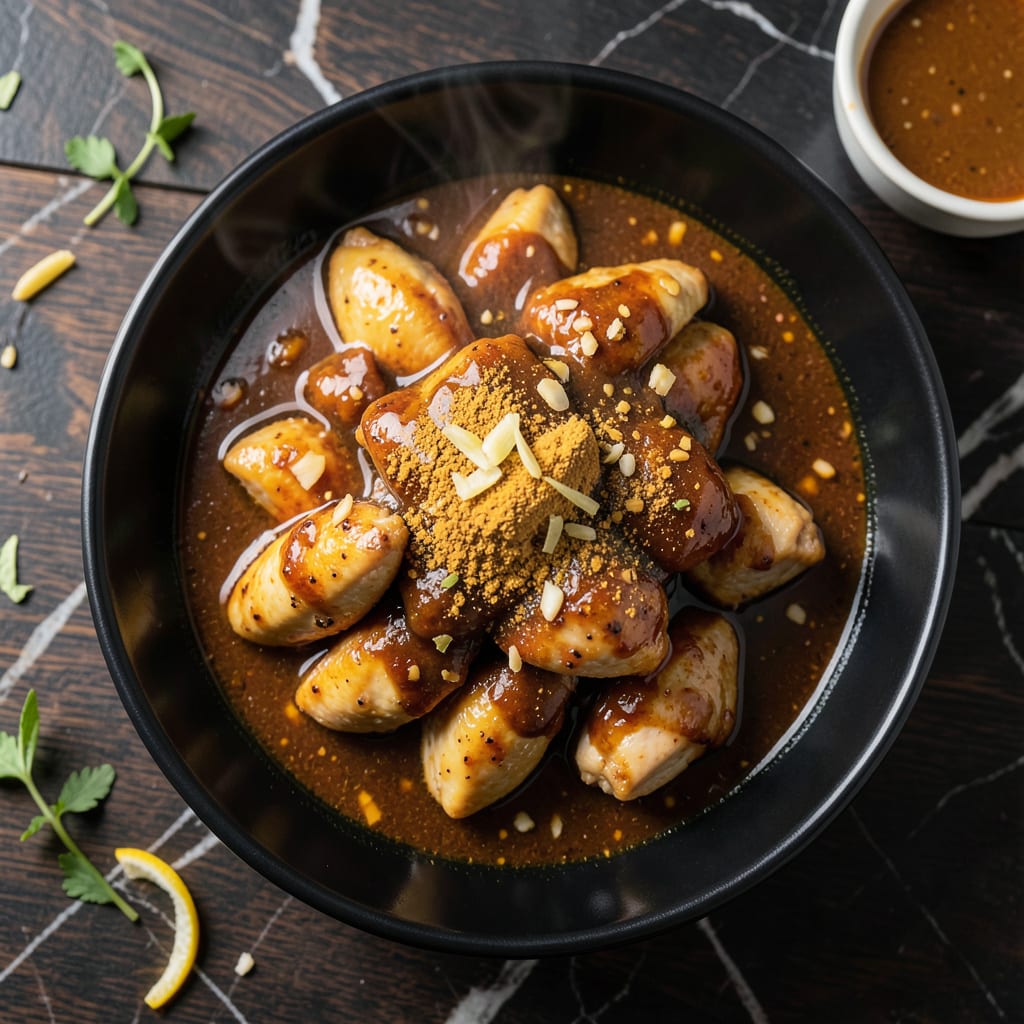
This Cantonese-style curry sauce delivers authentic wok-fried depth with simple pantry staples. The method relies on precise timing and heat control to build complex layers of flavor.
Expect a velvety, aromatic sauce that clings to chicken or vegetables. Store leftovers in an airtight container—they keep well for 5 days in the fridge.
Ingredients for Chicken Curry Sauce Recipe Chinese
Ten ingredients build this rich, aromatic Cantonese-style wok sauce with authentic depth.
| Ingredient | Amount | Notes |
|---|---|---|
| Curry Powder 🌶️ | 3 tbsp | Mild Cantonese-style preferred |
| Soy Sauce 🫒 | 2 tbsp | Light soy sauce for depth |
| Oyster Sauce 🫒 | 1 tbsp | Authentic wok sauce essential |
| Chicken Stock 🍲 | 1 ½ cups | Low-sodium preferred for control |
| Garlic Cloves 🧄 | 4 cloves | Minced finely for even distribution |
| Fresh Ginger 🌿 | 1 tbsp | Peeled and grated |
| Brown Sugar 🍚 | 1 tbsp | Balances savory and spice |
| Cornstarch 🌾 | 1 tbsp | Slurry with water for thickening |
| Vegetable Oil 🫒 | 2 tbsp | Neutral flavor for wok cooking |
| Sesame Oil 🫒 | 1 tsp | Toasted, for finishing aroma |
[recipeingredientscaler]
The curry powder is non-negotiable here. Look for Cantonese-style blends at Asian markets—they’re milder and more fragrant than Indian varieties. Koon Chun or Ma Ma brands are reliable. Oyster sauce adds that essential umami backbone; Lee Kum Kee is the standard. Chicken stock should be low-sodium so you can control the salt content precisely, a professional technique for balanced flavors.
No oyster sauce? Vegetarian oyster sauce or hoisin can sub in a pinch, though the flavor profile shifts slightly. Out of curry powder? A mix of turmeric, cumin, and coriander at half the amount gets you close. The cornstarch slurry is critical—mix with cold water first to prevent clumping. Fresh ginger is ideal, but ground ginger at one-third the amount works if you’re desperate.
Sauce keeps beautifully in an airtight container. 5 days in the fridge is optimal, though it’s safe for a week. Freezing is possible but may separate slightly—re-whisk before using. The flavors actually deepen overnight, making leftovers taste even better.
Why You’ll Love This Recipe
- One Pot Magic: I toss everything in a single pan—garlic sizzling, curry powder blooming in the stock—minimal cleanup, maximum flavor.
- Umami Bomb: The oyster sauce and soy sauce combo hits that deep, savory note that keeps me sneaking spoonfuls straight from the pot.
- Weeknight Hero: Honestly, it’s my Tuesday lifesaver—pairs with rice, noodles, or even leftover veggies from the fridge.
- Stretches Far: One batch makes enough to drizzle over three meals, and it tastes even better the next day when the flavors meld.
Step-by-Step Instructions for Chicken Curry Sauce
Master the Cantonese technique with precise ingredient timing and wok control for authentic results.
Step 1: Bloom Aromatics in Hot Oil
Heat 2 tbsp Vegetable Oil in a wok over high heat until shimmering. Add the 4 cloves Garlic Cloves and 1 tbsp Fresh Ginger, stirring constantly for 20-30 seconds until fragrant but not browned.
This critical step releases the essential oils from the aromatics, building the foundation of flavor. Burnt garlic will impart bitterness, so maintain constant motion and remove from heat immediately if it begins to darken.
Step 2: Toast Curry Powder and Build Flavor Base
Reduce heat to medium and add the 3 tbsp Curry Powder. Stir continuously for 1-2 minutes until the mixture darkens slightly and becomes intensely aromatic. The raw spice smell should transform into a rich, warm fragrance.
Immediately add the 2 tbsp Soy Sauce, 1 tbsp Oyster Sauce, and 1 tbsp Brown Sugar. Stir to combine, allowing the sugar to dissolve completely. This creates a deep, savory-sweet base that defines authentic Cantonese curry sauce.
Step 3: Develop Sauce with Stock and Thicken
Pour in the 1.5 cups Chicken Stock and bring to a gentle simmer. Reduce heat to medium-low and let the sauce cook for 5-7 minutes, allowing flavors to meld and the liquid to reduce slightly.
In a small bowl, mix the 1 tbsp Cornstarch with 2 tbsp of cold water to create a slurry. Gradually stir the slurry into the simmering sauce. Cook for an additional 2-3 minutes until the mixture thickens to a velvety consistency that coats the back of a spoon.
Step 4: Finish and Perfect the Sauce
Remove the sauce from heat and stir in the 1 tsp Sesame Oil. This final addition imparts a subtle nutty aroma that complements the rich, complex flavors of the curry. Taste and adjust seasoning if necessary, though the balance of soy, oyster sauce, and sugar should provide perfect harmony.
The finished sauce should have a glossy sheen and a thick enough consistency to cling to chicken or vegetables without being gluey. Use immediately for stir-frying or allow to cool and store for later use.
Pro Tips For Making Chicken Curry Sauce Recipe Chinese
- Bloom the Curry: Toast the curry powder in oil for 30-45 seconds until fragrant before adding liquids—I learned this the hard way after making bland sauces that tasted like raw spice blend.
- Mince Garlic Fine: Crush the garlic to a paste or mince it extremely fine so it melts into the sauce rather than leaving harsh, uneven bites.
- Simmer Gently: Once all ingredients are combined, keep the heat low enough that the sauce barely bubbles—high heat makes oyster sauce split and curry powder turn bitter.
- Thin with Stock: If the sauce thickens too much, whisk in chicken stock a tablespoon at a time instead of water to build flavor without diluting it.
Make-Ahead Tips for This Recipe
Prep Ahead Strategy
I always mix the 3 tbsp Curry Powder, 2 tbsp Soy Sauce, and 1 tbsp Oyster Sauce the night before. This dry-wet blend sits in my fridge, ready to go straight into the wok. The spices hydrate slightly, deepening their flavor. 💡
Cornstarch Slurry
Pre-mix your 1 tbsp Cornstarch with cold water in a small jar. I keep mine in the fridge for up to 24 hours—just give it a good shake before adding to the simmering sauce. This prevents last-minute clumping.
Fridge Storage
Cool the finished sauce completely before transferring to an airtight container. It’ll keep for 5 days in the fridge, and honestly, the flavors get even better after a day or two. I use glass jars to avoid any plastic odors.
Freezing Option
For longer storage, freeze in ice cube trays first, then transfer the cubes to a freezer bag. Each cube is about 2 tbsp—perfect for quick meals. Thaw in the fridge overnight, then reheat gently with a splash of water.
Reheating Tips
Reheat on the stovetop over low heat, stirring often. If it thickens too much, add 1-2 tbsp Chicken Stock to loosen. Avoid the microwave—it can separate the sauce. 🔥
Flavor Boost
If making ahead, under-season slightly. I add an extra pinch of Brown Sugar or splash of Sesame Oil when reheating to brighten the flavors. This small adjustment makes it taste freshly made.
Nutrition Facts
Frequently Asked Questions
Can I use Madras curry powder instead?
Madras curry powder is spicier and more intense than Cantonese-style. Use 2 tbsp instead of 3 tbsp and taste before adding more. The flavor profile will differ but still work.
Why does my sauce turn out grainy?
Graininess usually means the cornstarch slurry wasn’t mixed with cold water first. Always combine 1 tbsp Cornstarch with 2 tbsp cold water before adding to the sauce to prevent clumping.
How can I make it gluten-free?
Swap regular soy sauce for tamari or coconut aminos. Ensure your oyster sauce is gluten-free or use a vegetarian oyster sauce alternative. The cornstarch remains safe for thickening.
Can I make this sauce spicier?
Add 1/2 tsp of chili flakes with the curry powder or a dash of sriracha at the end. For heat without changing flavor, a pinch of cayenne works well.

- Jollof Rice Sauce Recipe: West African Tomato and Spice Infusion - September 25, 2026
- Japanese Rice Soup Recipe: Umami-Rich Comfort in a Bowl - September 25, 2026
- Homemade Cream Of Rice Recipe: Silk-Smooth Breakfast in Minutes - September 25, 2026