
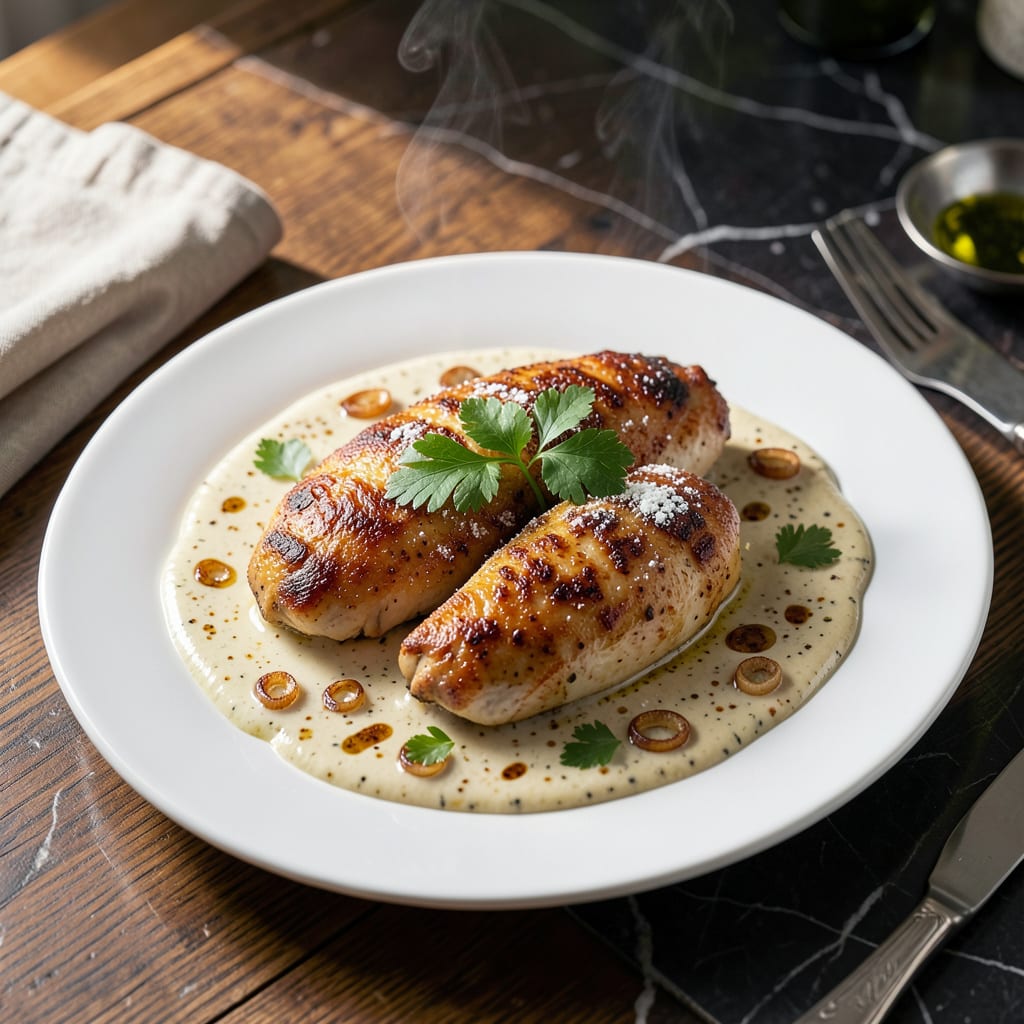
This restaurant-quality chicken dish features a creamy Dijon garlic sauce that elevates pan-seared chicken to gourmet status. The sauce comes together quickly in the same pan, capturing all the flavorful browned bits.
Simple ingredients and precise timing create tender chicken with a velvety, herb-infused sauce that clings perfectly to each piece. Serve with mashed potatoes or crusty bread to soak up every last drop.
Ingredients for Chicken Dijon Restaurant Garlic Sauce
Elevate pan-seared chicken with these restaurant-quality ingredients for a velvety herb-infused sauce.
| Ingredient | Amount | Notes |
|---|---|---|
| Boneless Skinless Chicken Breasts 🍗 | 1 ½ lb | Pounded to even thickness |
| Kosher Salt 🧂 | 1 ½ tsp | Diamond Crystal preferred |
| Freshly Ground Black Pepper 🌶️ | 1 tsp | Coarse grind ideal |
| All-Purpose Flour 🌾 | ¼ cup | For dredging chicken |
| Unsalted Butter 🧈 | 3 tbsp | Divided for cooking and sauce |
| Olive Oil 🫒 | 1 tbsp | Extra-virgin for richness |
| Garlic Cloves 🧄 | 6 cloves | Minced for sauce |
| Dijon Mustard 🟡 | 2 tbsp | Whole grain acceptable |
| Heavy Cream 🥛 | ¾ cup | Full-fat for creaminess |
| Chicken Broth 🍲 | ½ cup | Low-sodium preferred |
| Fresh Thyme Leaves 🌿 | 1 tbsp | Stems removed before use |
| Fresh Rosemary 🌿 | 1 tsp | Finely chopped |
| Dry White Wine 🍷 | ¼ cup | Sauvignon Blanc recommended |
| Lemon Juice 🍋 | 1 tsp | Freshly squeezed preferred |
[recipeingredientscaler]
The chicken quality is paramount here. Optimal results require boneless, skinless breasts pounded to uniform thickness for even cooking. Whole Foods or Costco offer excellent organic options, but standard grocery store varieties work well if fresh. The butter must be unsalted to control sodium levels precisely, and Diamond Crystal kosher salt provides the cleanest flavor profile for professional results.
Substitutions require careful consideration. Chicken thighs can replace breasts but may require adjusted cooking times. For the wine, chicken broth with a splash of lemon juice works in a pinch, though the acidity balance will differ slightly. Dried herbs at one-third the quantity can substitute fresh, but the sauce may lack the vibrant color and aroma of fresh thyme and rosemary.
The sauce can be prepared 2 days ahead and reheated gently. Store leftovers in an airtight container for up to 3 days in the refrigerator. Do not freeze the sauce, as the cream may separate upon thawing. The chicken is best served immediately but can be held in a warm oven for 15-20 minutes without drying out.
Why You’ll Love This Recipe
- One Pan Wonder: I love that everything comes together in a single skillet—no extra dishes to wash.
- Rich & Tangy: The Dijon and butter create this deep, savory sauce that clings to every bite of chicken.
- Feeds a Crowd: Honestly, it’s my go-to for dinner parties since it’s easy to scale up.
- Leftovers? Yes Please: The flavors deepen overnight, making tomorrow’s lunch even better.
Step-by-Step Instructions for Chicken Dijon with Restaurant Garlic Sauce
Master this technique for tender chicken bathed in a velvety herb-kissed pan sauce.
Step 1: Prepare and Season the Chicken
Begin by pounding the boneless skinless chicken breasts to an even ½-inch thickness. This ensures uniform cooking and prevents dry spots. I place each breast between plastic wrap and use the flat side of a meat mallet for precise control.
Season both sides generously with the 1.5 tsp kosher salt and 1 tsp freshly ground black pepper. The coarse texture of Diamond Crystal salt distributes evenly and enhances flavor penetration. Let the seasoned chicken rest for 10 minutes to allow the salt to begin working its magic.
Step 2: Dredge and Sear the Chicken
Dredge each piece lightly in the 0.25 cup all-purpose flour, shaking off any excess. The flour creates a delicate crust that will thicken the sauce later. Heat 1 tbsp olive oil and 2 tbsp unsalted butter in a large skillet over medium-high heat until the butter foams subsides.
Add the chicken and cook for 4-5 minutes per side until golden brown and cooked through. The internal temperature should reach 165°F. Transfer to a plate and tent with foil to keep warm. The fond left in the pan is the flavor foundation for your sauce.
Step 3: Build the Aromatic Base
In the same skillet, reduce heat to medium and add the remaining 1 tbsp unsalted butter. Once melted, add the 6 cloves garlic cloves and cook for 30 seconds until fragrant but not browned. Stir in the 1 tbsp fresh thyme leaves and 1 tsp fresh rosemary, allowing the herbs to infuse the butter for 20 seconds.
Pour in the 0.25 cup dry white wine and deglaze the pan, scraping up all the browned bits with a wooden spoon. Let the wine reduce by half, about 2-3 minutes. This step extracts maximum flavor from the pan residue.
Step 4: Create the Creamy Dijon Sauce
Whisk in the 0.5 cup chicken broth, 2 tbsp Dijon mustard, and 0.75 cup heavy cream. Simmer for 3-4 minutes until the sauce thickens enough to coat the back of a spoon. The mustard emulsifies the sauce, creating a velvety texture that clings to the chicken.
Remove from heat and stir in the 1 tsp lemon juice. Taste and adjust seasoning if needed. The acidity from the lemon balances the richness of the cream and brightens the overall flavor profile.
Step 5: Finish and Serve
Return the chicken to the skillet and spoon the sauce over each piece. Simmer for 1-2 minutes to allow the flavors to meld and the chicken to absorb some of the sauce. The chicken should be glossy and coated with the creamy herb-infused mixture.
Serve immediately, garnished with any remaining fresh herbs. Each serving should feature perfectly cooked chicken with a generous amount of the luxurious sauce, delivering the promised creamy texture with every bite.
Pro Tips For Making Chicken Dijon Restaurant Garlic Sauce
- Pound the Chicken: Even thickness guarantees even cooking—pound the breasts to ½-inch so the Dijon sauce doesn’t hit dry, overcooked edges while waiting for the center to finish.
- Season the Flour: Mix a teaspoon each of kosher salt and black pepper right into the flour before dredging; it seasons the crust better than sprinkling after.
- Use Room-Temp Butter: I learned this the hard way—cold unsalted butter splits in the pan, but room-temp melts smoothly into the garlic and Dijon for a silky, restaurant-style sauce.
- Rest Before Slicing: Give the chicken a solid 5 minutes under foil after cooking; it keeps the juices inside where they belong instead of all over the cutting board.
Essential Equipment for Perfect Results
Skillet Selection
For this recipe, I always use a 12-inch stainless steel skillet—All-Clad D3 is my go-to brand. The even heat distribution prevents hot spots that could burn the butter. A heavy-bottomed pan is essential for building the fond that flavors your sauce.
Meat Mallet
Pounding chicken to uniform thickness requires a good meat mallet. I recommend the OXO Good Grips model with a flat and tenderizing side. The flat side gives you precise control for achieving that perfect ½-inch thickness without tearing the meat. 💪
Instant-Read Thermometer
Accurate temperature reading is non-negotiable for perfectly cooked chicken. The ThermoWorks ThermoPop gives instant readings and is budget-friendly. Check that the internal temperature reaches 165°F in the thickest part of each breast.
Wooden Spoon
When deglazing, a wooden spoon is your best friend. It won’t scratch your stainless steel pan and has the right shape for scraping up all those flavorful browned bits. I keep a dedicated one just for this purpose.
Fat Separator
If you want to make the sauce ahead, a fat separator helps remove excess butterfat. The OXO Good Grips version works well. Pour your sauce in, then pour out from the spout to leave the fat behind.
Serving Tools
For plating, I use a wide, shallow spoon to drizzle the sauce artistically over the chicken. A tongs with a gentle grip helps place the chicken precisely without piercing it. The right tools make your dish look as good as it tastes.
Nutrition Facts
Frequently Asked Questions
Can I use chicken thighs instead of breasts?
Yes, but adjust cooking time since thighs cook differently. They’ll stay juicier but may take 6-7 minutes per side at medium-high heat. Pound them to ½-inch thickness for even cooking.
What if I don’t have white wine?
Substitute with 0.25 cup chicken broth plus 1 tsp lemon juice for acidity. The flavor won’t be identical but will still work well. Simmer the same 2-3 minutes to reduce.
How do I prevent the sauce from separating?
Keep heat at medium and stir constantly while adding cream. If it starts to split, remove from heat and whisk vigorously. Avoid boiling, which can break the emulsion.
Can I make the sauce ahead of time?
Yes, but reheat gently on low heat to avoid curdling. Store in an airtight container for up to 2 days in the fridge. Do not freeze.

- Jollof Rice Sauce Recipe: West African Tomato and Spice Infusion - September 25, 2026
- Japanese Rice Soup Recipe: Umami-Rich Comfort in a Bowl - September 25, 2026
- Homemade Cream Of Rice Recipe: Silk-Smooth Breakfast in Minutes - September 25, 2026