
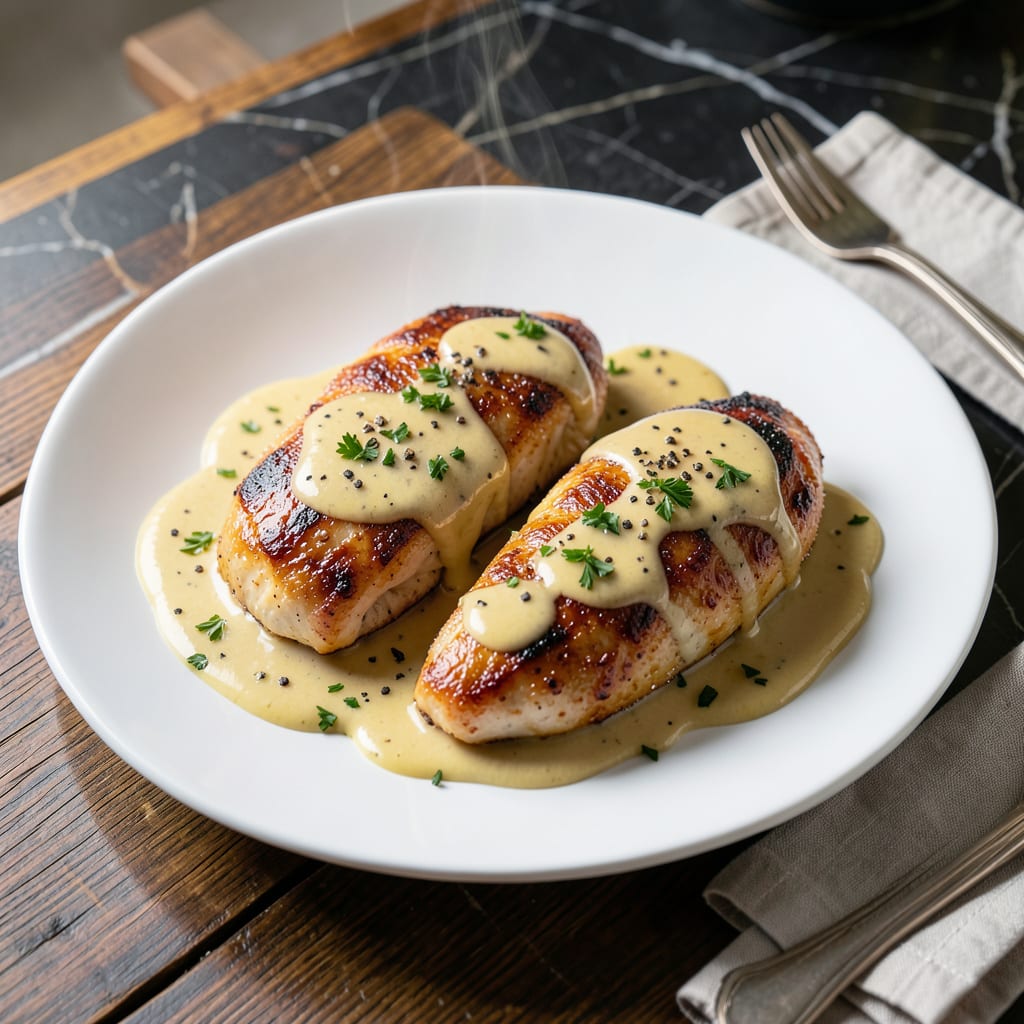
This recipe delivers perfectly seared chicken with a creamy, tangy mustard pan sauce that comes together in minutes. The key is using the fond from cooking the chicken to build deep flavor in the sauce.
You’ll achieve restaurant-quality results with simple ingredients and one pan. The Dijon mustard adds bold flavor without overpowering, while cream creates a velvety finish that clings to every bite.
Ingredients for Chicken Dijon Sauce
Simple ingredients deliver restaurant-quality chicken with a velvety mustard pan sauce in one pan.
| Ingredient | Amount | Notes |
|---|---|---|
| Boneless Skinless Chicken Breasts 🍗 | 1 ½ lb | Pounded to even thickness |
| All-Purpose Flour 🌾 | ¼ cup | For dredging chicken |
| Kosher Salt 🧂 | 1 tsp | Plus more to taste |
| Black Pepper 🌶️ | ½ tsp | Freshly ground preferred |
| Olive Oil 🫒 | 2 tbsp | Divided, for cooking |
| Unsalted Butter 🧈 | 2 tbsp | For sauce base |
| Shallots 🧅 | 2 whole | Finely minced |
| Garlic Cloves 🧄 | 2 cloves | Minced for sauce |
| Dijon Mustard 🟡 | 2 tbsp | High-quality for best flavor |
| Dry White Wine 🍷 | ½ cup | For deglazing pan |
| Chicken Broth 🥣 | ½ cup | Low-sodium preferred |
| Heavy Cream 🥛 | ½ cup | Full-fat for richness |
| Fresh Thyme Leaves 🌿 | 1 tsp | Chopped, or 1/2 tsp dried |
| Fresh Parsley 🌿 | 2 tbsp | Chopped, for garnish |
[recipeingredientscaler]
The chicken quality matters here. Boneless, skinless breasts from Whole Foods or Costco work well—look for even thickness or pound them yourself. Dijon mustard is non-negotiable; Maille or Grey Poupon are reliable brands. The heavy cream should be full-fat (the light stuff can curdle). For the wine, any dry white you’d drink works perfectly.
No white wine? Substitute chicken broth with a splash of lemon juice. Shallots can be replaced with yellow onion at half the amount. If you’re avoiding dairy, coconut cream works in the sauce. The thyme can be dried at one-third the amount. For extra richness, a teaspoon of whole-grain mustard adds texture.
The sauce keeps 2-3 days in the fridge but doesn’t freeze well. Cooked chicken will stay good for 4 days. Reheat gently to avoid separating the sauce. Best served immediately for that perfect velvety texture.
Why You’ll Love This Recipe
- One Pan Wonder: I sear the chicken in olive oil, then make the Dijon sauce right in the same pan—minimal cleanup, maximum flavor.
- Crave-Worthy Sauce: The tangy Dijon with a hint of creaminess clings to every bite of tender chicken. Honestly, I could drink it with a straw.
- Weeknight Hero: Between us, this is my Tuesday night lifesaver—fancy enough for guests but unfussy enough for a solo dinner.
- Stretches Further: Leftovers taste even better the next day, and the chicken stays juicy. I’ll be real: I always make extra.
Step-by-Step Instructions for Chicken Dijon Sauce
Master this method and you’ll create a rich, tangy pan sauce that elevates simple chicken to restaurant quality.
Step 1: Pound and Season the Chicken Breasts
Place the 1.5 lb boneless skinless chicken breasts between plastic wrap and pound to an even ½-inch thickness with a meat mallet. This ensures even cooking and prevents dry, overdone edges while the center finishes.
Pat the chicken dry with paper towels, then season both sides with the 1 tsp kosher salt and ½ tsp black pepper. Lightly dredge each piece in the 0.25 cup all-purpose flour, shaking off any excess. The flour creates a light crust that helps thicken the sauce later.
Step 2: Sear the Chicken to Golden Perfection
Heat 1 tbsp olive oil in a large skillet over medium-high heat until shimmering. Add the chicken and cook undisturbed for 4-5 minutes per side until golden brown and cooked through to 165°F internal temperature.
Don’t move the chicken during searing—this builds a flavorful fond on the pan that becomes the base for your sauce. Transfer the cooked chicken to a plate and tent with foil to keep warm.
Step 3: Build the Dijon Sauce Foundation
In the same skillet, reduce heat to medium and add the remaining 1 tbsp olive oil and 2 tbsp unsalted butter. When the butter melts, add the 2 finely minced shallots and cook for 2-3 minutes until softened and translucent.
Add the 2 minced garlic cloves and 1 tsp fresh thyme leaves, cooking for 30 seconds until fragrant. Stir in the 2 tbsp Dijon mustard and cook for 1 minute to mellow its sharpness slightly.
Step 4: Deglaze and Create the Creamy Sauce
Pour in the ½ cup dry white wine and scrape up all the browned bits from the bottom of the pan with a wooden spoon. Let the wine reduce by half, about 2-3 minutes.
Add the ½ cup chicken broth and ½ cup heavy cream, stirring to combine. Simmer for 3-4 minutes until the sauce thickens enough to coat the back of a spoon. Taste and adjust seasoning with additional salt if needed.
Step 5: Finish and Serve
Return the chicken to the skillet along with any accumulated juices. Spoon the sauce over the chicken and simmer for 1-2 minutes to heat through and allow the flavors to meld.
Garnish with the 2 tbsp chopped fresh parsley and serve immediately. The sauce should be velvety and rich, with a perfect balance of tangy mustard and creamy depth that complements the tender chicken beautifully.
Pro Tips For Making Chicken Dijon Sauce
- Pound the Chicken: Use the flat side of a meat mallet to gently pound the chicken breasts to an even ½-inch thickness—this guarantees they cook through in the same 4-5 minutes without drying out.
- Season the Flour: Mix a teaspoon each of kosher salt and black pepper right into the flour before dredging; it sticks better than sprinkling it on after and gives every bite real flavor.
- Skip the Crowding: I learned this the hard way—cook the chicken in batches so the pan stays hot; if you cram it all in, the pieces steam instead of searing and the crust never forms.
- Rest Before Saucing: Let the chicken rest 5 minutes on a plate before adding the Dijon sauce; the juices settle back in and the sauce clings instead of sliding right off.
Essential Equipment for chicken dijon sauce
Quality Skillet
Invest in a heavy-bottomed stainless steel skillet like All-Clad or Cuisinart for even heat distribution. A 12-inch pan gives you enough room to sear the chicken without crowding, which is crucial for building that flavorful fond. 🔥
Meat Mallet
A meat mallet helps pound the chicken to an even ½-inch thickness so it cooks uniformly. I use the flat side for pounding and the textured side for tenderizing. Look for one with a comfortable grip—OXO makes a great budget-friendly option.
Wooden Spoon
Use a wooden spoon to deglaze the pan—it won’t scratch your skillet and helps scrape up all those delicious browned bits. A 12-inch spoon gives you plenty of reach. I keep one dedicated to my skillet for just this purpose.
Instant-Read Thermometer
An instant-read thermometer ensures your chicken reaches 165°F without overcooking. I love the ThermoWorks ThermoPop for its accuracy and speed. Check the thickest part of each breast for doneness.
Whisk
A balloon whisk helps emulsify the sauce smoothly as you incorporate the cream and wine. A 10-inch whisk works well in a 12-inch skillet. It’s also perfect for stirring the flour dredge.
This simple tool makes all the difference in achieving that velvety texture. 💛
Nutrition Facts
Frequently Asked Questions
Can I use chicken thighs instead of breasts?
Boneless thighs work great and stay juicier. Reduce cooking time to 3-4 minutes per side since they’re more forgiving. Just ensure they reach 165°F internally.
What if my sauce is too thin?
Simmer it longer to reduce further. For quick fixes, mix 1 tsp cornstarch with 1 tbsp cold water and stir into the sauce. It should thicken within 1-2 minutes.
Can I make this sauce ahead of time?
The sauce is best fresh but can be made 1 day ahead. Reheat gently over low heat, stirring constantly. Add a splash of cream if it separates.
Is there a dairy-free alternative for the cream?
Yes, use full-fat coconut milk or cashew cream. Both provide richness without curdling. The flavor will differ slightly but still pair well with the mustard.

- Jollof Rice Sauce Recipe: West African Tomato and Spice Infusion - September 25, 2026
- Japanese Rice Soup Recipe: Umami-Rich Comfort in a Bowl - September 25, 2026
- Homemade Cream Of Rice Recipe: Silk-Smooth Breakfast in Minutes - September 25, 2026