
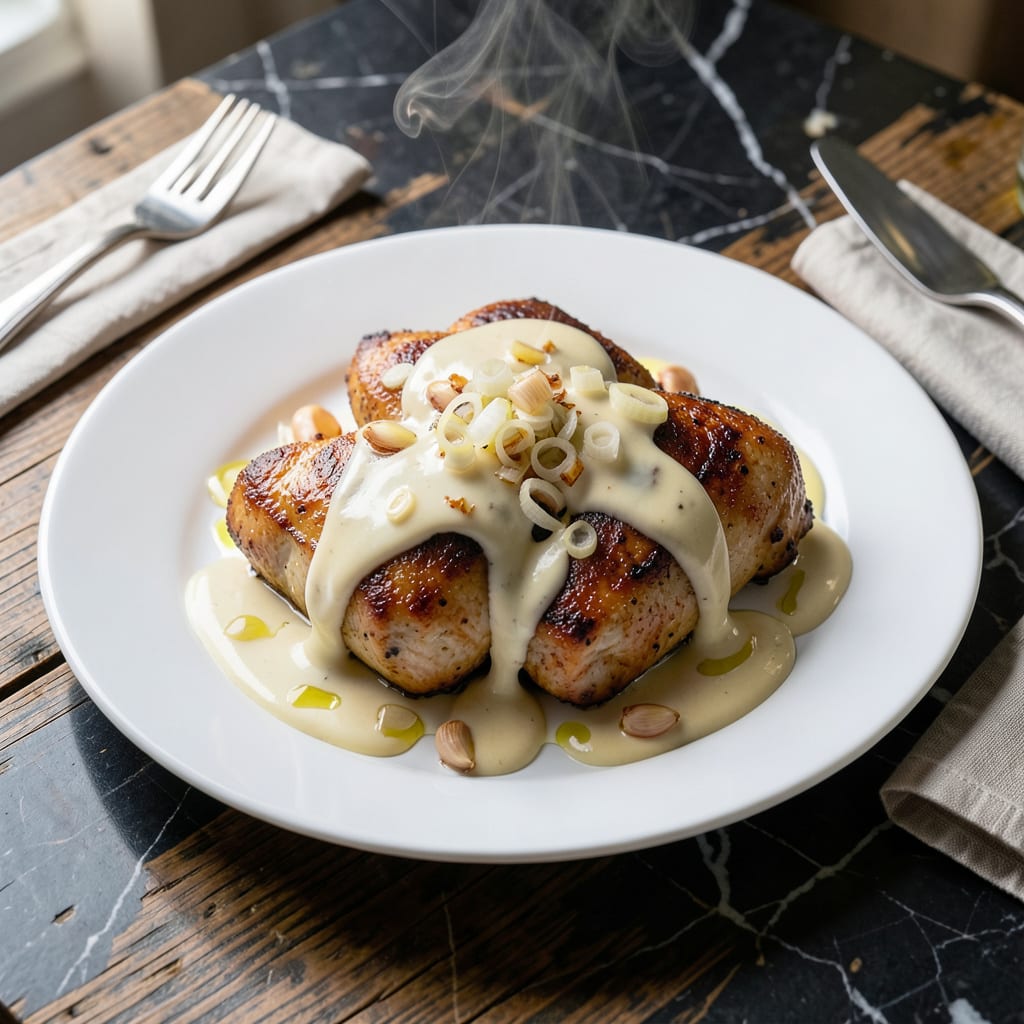
This creamy, tangy sauce transforms simple chicken into a perfect restaurant-quality dish. The emulsion of Dijon mustard and cream creates a velvety texture that clings beautifully to every bite.
I developed this method after years of testing ratios to achieve the ideal balance of sharp mustard flavor and smooth consistency. It pairs equally well with grilled, roasted, or pan-seared chicken.
Ingredients for Chicken Dijonnaise Sauce
Ten ingredients deliver that velvety, tangy emulsion for restaurant-quality chicken every time.
| Ingredient | Amount | Notes |
|---|---|---|
| Dijon Mustard 🟡 | ¼ cup | High-quality, smooth texture |
| Heavy Cream 🥛 | 1 cup | Full-fat for richness |
| White Wine Vinegar 🍷 | 1 tbsp | Balances tanginess |
| Shallots 🧅 | 1 whole | Finely minced for depth |
| Garlic Cloves 🧄 | 2 cloves | Minced for aromatic base |
| Unsalted Butter 🧈 | 2 tbsp | For sautéing aromatics |
| Dry White Wine 🍷 | ¼ cup | Acidic variety preferred |
| Chicken Stock 🍲 | ¼ cup | Low-sodium for control |
| Kosher Salt 🧂 | ½ tsp | Adjust to taste |
| Freshly Ground Black Pepper 🌶️ | ¼ tsp | For finishing touch |
[recipeingredientscaler]
The Dijon mustard is non-negotiable—Maille or Grey Poupon for that authentic sharpness. Heavy cream should be full-fat (the 36-40% kind) to achieve the proper emulsion. Whole Foods or Trader Joe’s carry both at peak freshness. Shallots and garlic form the aromatic base; look for firm, dry bulbs with no sprouting. The white wine should be something you’d drink—a crisp Sauvignon Blanc works beautifully.
No heavy cream? Half-and-half at double the volume (with a bit of butter whisked in) gets close. Out of white wine? Substitute champagne vinegar or additional white wine vinegar—just reduce the amount slightly. Shallots can be replaced with yellow onion at a 1:1 ratio, though the flavor will be slightly more pungent. For a dairy-free version, coconut cream works but may separate more easily.
The sauce holds beautifully for 3-4 days refrigerated in an airtight container. Reheat gently over low heat, whisking constantly to maintain the emulsion. Freezing isn’t recommended—the cream may separate upon thawing. Always make this fresh for the best texture and flavor.
Why You’ll Love This Recipe
- 5-Minute Sauce: I throw everything into one pan—shallots, garlic, then the cream and mustard—and it’s done before the chicken rests.
- Tangy Richness: The Dijon and white wine vinegar hit that perfect sharp-creamy balance, and the shallots add just enough sweetness.
- Dinner to Lunch: I double the sauce and drizzle it over roasted veggies the next day—honestly, it tastes even better cold.
- Pantry Hero: Between us, I always have these ingredients on hand, so it’s my go-to when I need a restaurant-worthy meal fast.
Step-by-Step Instructions for Chicken Dijonnaise Sauce
Master this technique and you’ll create a velvety, restaurant-quality sauce with bold mustard depth.
Step 1: Sauté the Aromatic Base
Heat 2 tbsp unsalted butter in a medium saucepan over medium heat until just foaming. Add 1 whole shallots, finely minced, and cook for 2-3 minutes until translucent and fragrant. The shallots should soften without browning—adjust heat as needed.
Add 2 cloves garlic cloves, minced, and cook for an additional 30 seconds. You’ll notice the garlic’s aroma intensify quickly; remove from heat immediately if it starts to brown to prevent bitterness. This base builds the foundational flavor for your sauce.
Step 2: Deglaze and Reduce
Pour in 0.25 cup dry white wine and 1 tbsp white wine vinegar, scraping up any browned bits from the bottom of the pan. Increase heat to medium-high and let the mixture reduce by half, about 3-4 minutes.
The liquid should become syrupy and coat the back of a spoon. This reduction concentrates the acidity and alcohol, balancing the richness of the cream. Watch for the edges to look slightly glazed—this visual cue signals it’s ready for the next addition.
Step 3: Emulsify with Cream and Mustard
Reduce heat to low and slowly whisk in 1 cup heavy cream. Maintain constant motion as you add 0.25 cup Dijon mustard and 0.25 cup chicken stock. The mixture will thicken noticeably as the mustard’s natural emulsifiers bind with the cream.
Simmer gently for 5-7 minutes until the sauce achieves a velvety consistency that ribbons off a spoon. Avoid boiling, which would cause separation. The color should transform to a pale, creamy yellow with visible flecks of mustard.
Step 4: Season and Finish
Remove from heat and stir in 0.5 tsp kosher salt and 0.25 tsp freshly ground black pepper. Taste and adjust seasoning carefully—the Dijon already contributes saltiness. The final sauce should coat the back of a spoon with a smooth, glossy finish.
Let it rest for 2 minutes before serving to allow the flavors to fully meld. The sauce will thicken slightly as it cools but should still pour easily. Serve immediately over chicken or other proteins while maintaining its silky texture.
Pro Tips For Making Chicken Dijonnaise Sauce
- Temper the Cream: Always warm your heavy cream slightly before adding it to the hot pan—I learned this the hard way after watching my sauce split into a greasy mess more than once.
- Mince the Shallots Fine: Dice those shallots as small as you can stand, about 1/8-inch pieces, so they melt into the sauce instead of floating around like crunchy confetti.
- Skip the Boil: Resist the urge to crank the heat high after adding vinegar; a gentle simmer keeps the acid from overpowering the mustard and cream.
- Use Room-Temp Mustard: Pull your Dijon out of the fridge 10 minutes early—cold mustard blends in sluggishly and can leave stubborn little lumps in your silky sauce.
Storing and Reheating This Recipe
Short-Term Refrigeration
Transfer cooled sauce to an airtight container—I use glass jars with screw-top lids. It keeps beautifully in the fridge at 40°F or below for up to 3-4 days. The flavors actually deepen as the shallots and garlic continue to infuse. ❄️
Long-Term Freezing
While not ideal, you can freeze this sauce for up to 1 month in a flat freezer bag. Leave ½ inch headspace for expansion. I don’t recommend this because the cream may separate upon thawing, requiring vigorous whisking to restore.
Gentle Stovetop Reheating
Warm over low heat while whisking constantly. Add 1-2 tbsp chicken stock if it’s too thick. Never boil—this will break the emulsion. It should reach 140°F within 5-7 minutes. 🔥
Microwave Method
Use 50% power in 30-second bursts, stirring between each. Cover with a damp paper towel to prevent drying. This takes about 1-2 minutes total for a single serving.
Serving Temperature
Serve warm, not hot. The ideal temperature is just above room temp, around 110-120°F, where the cream is fluid but the sauce still clings beautifully to your chicken. This preserves the velvety texture.
Nutrition Facts
Frequently Asked Questions
Can I use regular mustard instead of Dijon?
Dijon’s sharp, complex flavor is key, but yellow mustard works in a pinch. Use 1/3 more to match the intensity. The texture may be slightly thinner, and the tang less pronounced.
Why did my sauce separate?
This usually happens if boiled or reheated too quickly. To fix, remove from heat and whisk in 1 tsp cold water or cream until smooth. Keep heat at low next time.
How can I make it dairy-free?
Swap heavy cream for full-fat coconut cream. The flavor will be slightly different but still rich. Avoid almond milk—it’s too thin to emulsify properly.
What’s the best way to thicken it?
Simmer longer on low heat—reduction is the safest method. For a quick fix, mix ½ tsp cornstarch with water and stir in gently. Avoid flour, which can create lumps.

- Jollof Rice Sauce Recipe: West African Tomato and Spice Infusion - September 25, 2026
- Japanese Rice Soup Recipe: Umami-Rich Comfort in a Bowl - September 25, 2026
- Homemade Cream Of Rice Recipe: Silk-Smooth Breakfast in Minutes - September 25, 2026