
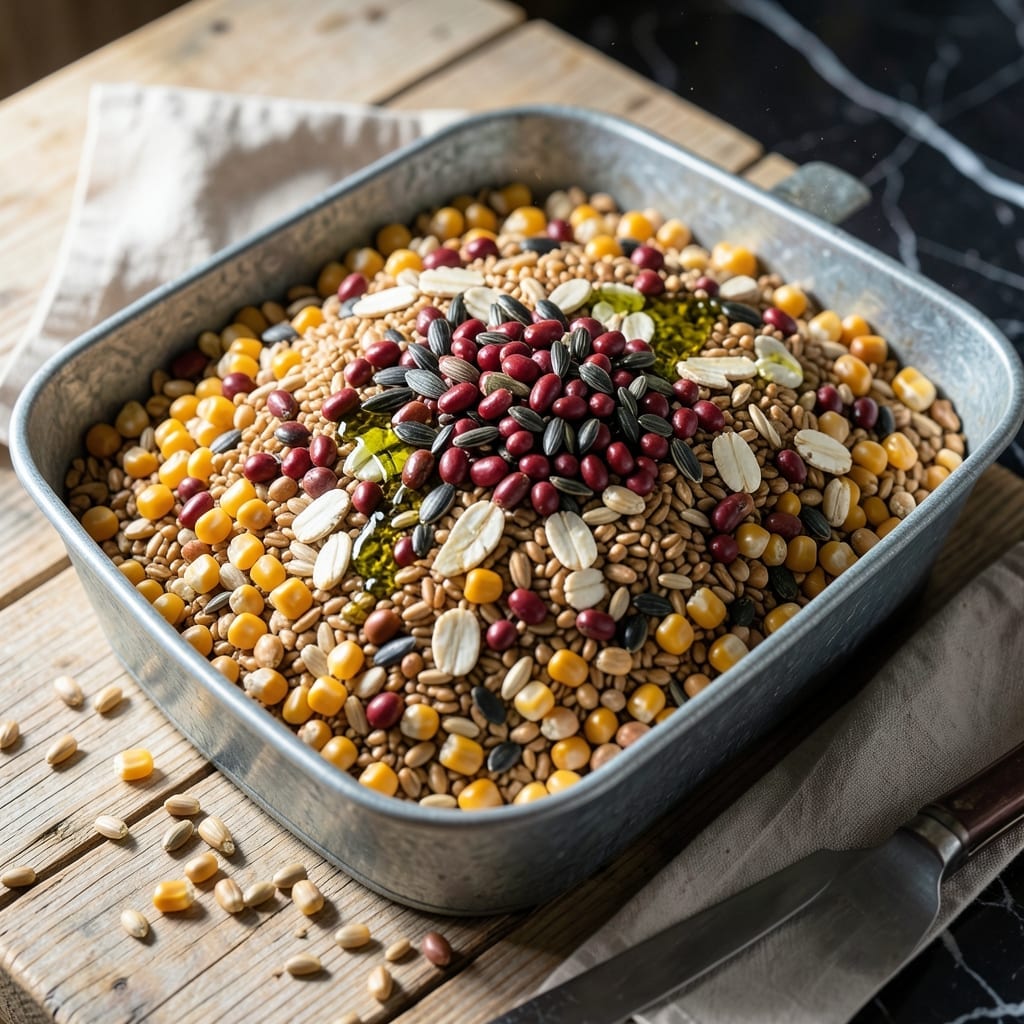
I started mixing my own chicken feed after noticing how much my hens loved the fresh grains from my garden. It’s surprisingly simple and gives me complete control over what my flock eats.
This homemade blend uses whole grains, seeds, and natural supplements that support egg production and overall health. No mystery ingredients—just real food you can see and recognize.
My chickens scratch through this mix with enthusiasm, and I’ve noticed shinier feathers and stronger eggs since making the switch. The best part? It costs less than commercial feeds.
Adjust the ratios based on your chickens’ needs and what’s available locally. Here’s how to make it at home.
Ingredients for Chicken Feed Mix
Whole grains and natural supplements come together for a flock-pleasing homemade blend.
| Ingredient | Amount | Notes |
|---|---|---|
| Whole Corn 🌽 | 5 cups | Cracked or whole kernel |
| Whole Wheat 🌾 | 4 cups | Hard red or white wheat |
| Whole Oats 🌾 | 3 cups | Old-fashioned or steel-cut |
| Barley 🌾 | 2 cups | Hulled or pearl barley |
| Sunflower Seeds 🌻 | 1 ½ cups | Raw, unsalted preferred |
| Peas 🌱 | 1 cup | Dried split peas |
| Soybean Meal 🌱 | 1 ½ cups | High protein supplement |
| Flaxseed 🌿 | ½ cup | For omega-3 boost |
| Oyster Shell Grit 🐚 | ½ cup | Calcium for strong eggshells |
| Kelp Meal 🌊 | ¼ cup | Natural mineral supplement |
| Grit 🪨 | ½ cup | Insoluble granite or oyster |
| Fish Meal 🐟 | ½ cup | Optional protein source |
The grains are the backbone here. Local feed stores often have the best prices on whole corn and wheat—Tractor Supply is my go-to for bulk purchases. Look for non-GMO if that’s a priority for your flock. Oats add fiber and keep the chickens full, while barley gives them something to scratch through. Sunflower seeds (the raw, unsalted kind) are a favorite treat for my hens.
No barley? Milled sorghum works as a substitute. Short on sunflower seeds? Pumpkin seeds or cracked safflower seeds are great alternatives. If you can’t find oyster shell grit, crushed eggshells (baked and ground) give a calcium boost. Want more protein? Mealworms or black soldier fly larvae can be added in small amounts. Flaxseed can be swapped for chia seeds if needed.
Store this mix in a cool, dry place in an airtight container—good for 2-3 months. Keep grit separate if your chickens free-range (they’ll get it naturally). Adjust ratios seasonally—more grains in winter, more greens in summer. Always provide fresh water alongside this feed.
Why You’ll Love This Recipe
- No-Fuss Mixing: I just dump all the whole grains and seeds in a bowl—no chopping, no measuring spoons, just simple scoops of corn, wheat, oats, barley, and sunflower seeds.
- Nutty Crunch: The toasted barley and sunflower seeds give it this warm, earthy flavor that my chickens go wild for every single morning.
- Feeds the Flock: I make a big batch on Sunday and it lasts all week, whether I’m filling the coop feeders or tossing a handful in the run for a treat.
- Penny-Wise Protein: Between us, this costs a fraction of store-bought feed, and I know exactly what’s going into my birds—no filler, just pure whole grains.
Step-by-Step Instructions for Chicken Feed Mix
Here’s how to combine these ingredients for a balanced, homemade blend your flock will love.
Step 1: Combine the Grain Base
In a large mixing container, start with the 5 cups Whole Corn and 4 cups Whole Wheat. These form the foundation of your mix, providing essential carbohydrates and energy for your chickens.
Add the 3 cups Whole Oats and 2 cups Barley next. I like to use a clean, dry container with a lid to make mixing easier. The oats and barley add fiber and additional nutrients that support digestion.
Stir these grains together thoroughly to ensure an even distribution. You’ll notice the textures vary—corn is firm, wheat is slightly softer, and oats are flaky. This variety keeps the chickens engaged and provides a range of nutrients.
Step 2: Add Protein and Healthy Fats
Now, incorporate the 1.5 cups Sunflower Seeds and 1 cup Peas. Sunflower seeds are a fantastic source of healthy fats, which help maintain shiny feathers and overall vitality. The peas add plant-based protein and a touch of color to the mix.
Follow this with the 1.5 cups Soybean Meal and 0.5 cup Fish Meal. Soybean meal is a powerhouse of protein, essential for muscle development and egg production. Fish meal, while optional, adds an extra protein boost that’s especially beneficial during molting or high-laying periods.
Mix well at this stage to prevent clustering. You want every scoop of feed to have a good balance of protein sources, ensuring your chickens get consistent nutrition in every bite.
Step 3: Incorporate Supplements for Optimal Health
Add the 0.5 cup Flaxseed to introduce omega-3 fatty acids, which promote heart health and improve the nutritional quality of eggs. The flaxseed’s small size means it blends easily, but give it a good stir to distribute evenly.
Next, add the 0.5 cup Oyster Shell Grit and 0.5 cup Grit. Oyster shell grit provides calcium, critical for strong eggshells, while the insoluble grit aids in digestion by helping chickens break down food in their gizzards.
Finally, sprinkle in the 0.25 cup Kelp Meal. This natural mineral supplement supports thyroid function and provides trace minerals that might be missing from their regular diet.
Step 4: Mix Thoroughly and Store Properly
Now, combine everything one final time. I find that using my hands or a large wooden spoon works best to ensure all ingredients are evenly distributed. You’ll know it’s well-mixed when you see a consistent blend of textures and colors throughout.
Transfer the completed feed into an airtight container. This keeps it fresh and prevents pests from getting in. Store it in a cool, dry place to maintain its nutritional value.
This blend yields 4 servings, enough to feed a small flock for several days depending on their size. Scoop out portions as needed, and watch your chickens enjoy their nutritious, homemade meal!
Pro Tips For Making Chicken Feed Mix
- Toast the Grains: Lightly roast the whole corn, wheat, and barley in a dry pan for 3-4 minutes until fragrant—I learned this the hard way after my first batch tasted flat.
- Crush for Consistency: Run the oats and sunflower seeds through a roller or pulse in a food processor so chickens don’t waste energy picking around whole pieces.
- Skip the Salt: Resist the urge to add salt or seasoning; chickens regulate their own intake and extra sodium can harm their digestion.
- Store Airtight: Keep the finished mix in a sealed metal bin—after losing a batch to rodents, I switched from plastic bags and never looked back.
Perfect Pairings for This Recipe
Feed Supplement Pairings
For an extra protein boost, offer mealworms or black soldier fly larvae as occasional treats. I sprinkle about ¼ cup per chicken once a week. These supplements are especially valuable during molting season when feather regrowth demands more protein. 💪
Fresh Greens Addition
Complement this mix with fresh greens like kale or spinach from your garden. Chickens love pecking at leafy greens, which provide vitamins and fiber. I hang bunches just out of reach to encourage natural foraging behavior.
Calcium Sources
In addition to the oyster shell grit in the mix, provide crushed eggshells separately. Bake and grind them first to kill any pathogens. This ensures your hens always have access to calcium for strong eggshells.
Seasonal Treats
During summer, freeze watermelon rinds or cucumber slices for a hydrating snack. In winter, warm cooked pumpkin (about ½ cup per chicken) helps maintain body heat. These treats keep your flock happy and healthy year-round. ✨
Grit Alternatives
If your chickens free-range, they may get enough grit naturally. Otherwise, offer insoluble granite grit in a separate container. This helps them grind food in their gizzards, improving digestion of the whole grains in this mix.
Water Management
Always provide fresh, clean water alongside this feed. Chickens drink about 1 pint per pound of feed consumed. In cold weather, use a heated waterer to prevent freezing and ensure consistent hydration.
Nutrition Facts
Frequently Asked Questions
Can I adjust the grain ratios?
Yes! Increase grains like corn for more energy in winter, or add more oats for fiber. Just keep the total protein sources balanced for your flock’s needs.
How often should I make fresh batches?
Mix a new batch every 2-3 months for peak freshness. Store in an airtight container in a cool, dry place to prevent spoilage.
What if my chickens won’t eat certain ingredients?
Try grinding larger grains or mixing in familiar treats. Chickens often need time to accept new textures or flavors.
Is this mix suitable for chicks?
No, chicks need higher protein (20-22%). Use a commercial starter feed until they’re 8-10 weeks old, then gradually introduce this blend.

- Jollof Rice Sauce Recipe: West African Tomato and Spice Infusion - September 25, 2026
- Japanese Rice Soup Recipe: Umami-Rich Comfort in a Bowl - September 25, 2026
- Homemade Cream Of Rice Recipe: Silk-Smooth Breakfast in Minutes - September 25, 2026