
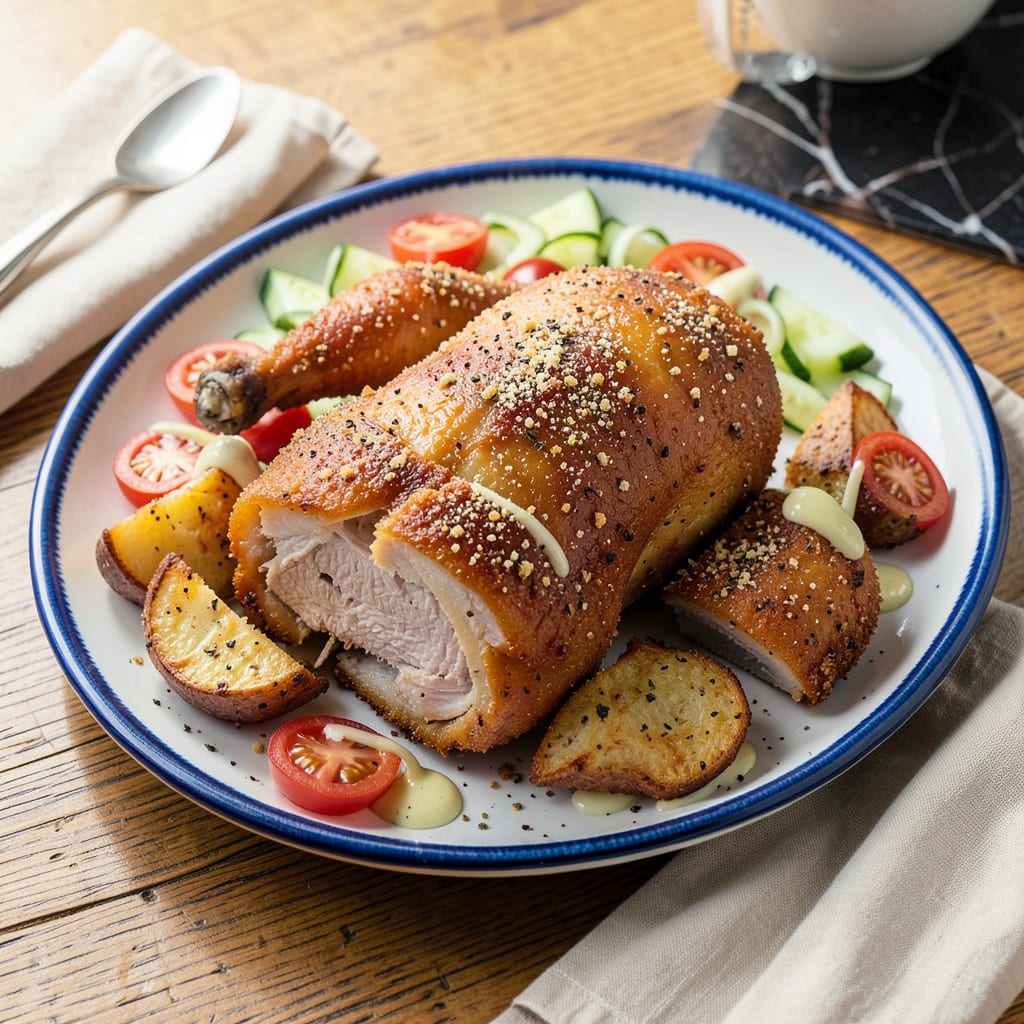
Chicken flour seasoning is a flavorful blend of spices mixed with flour to coat chicken before frying or baking. Common ingredients include salt, pepper, paprika, garlic powder, and onion powder, creating a crispy, savory crust with balanced seasoning.
This isn’t just about adding flavor—it’s about creating a textural experience that elevates your dish. 🔥 The flour acts as a binder that helps spices adhere evenly while forming that coveted golden-brown crust during cooking. I’ve found that the right balance transforms ordinary chicken into something extraordinary, whether you’re frying, baking, or air-frying. The magic happens when the starches in the flour caramelize, locking in moisture while delivering maximum crunch.
What sets this technique apart is its versatility—you can adjust the spice ratios to match any cuisine style. ✨ For Southern fried chicken, you might amp up the black pepper and cayenne, while a Mediterranean twist could include oregano and lemon zest. The flour-to-spice ratio is crucial: too much flour dulls the flavor, while too many spices can burn during cooking. My pro tip? Toast whole spices briefly before grinding for an extra depth that pre-ground versions can’t match.
💡 In This Article
- Key Ingredients That Define Chicken Flour Seasoning
- Pro Tips for Applying Chicken Flour Seasoning Like a Chef
Key Ingredients That Define Chicken Flour Seasoning
The foundation starts with all-purpose flour, which serves as the structural backbone. It creates that essential crispy crust by absorbing moisture from the chicken’s surface, then transforming into a golden-brown matrix during cooking. The starches in flour caramelize at 325-375°F, forming the signature crunch.
I always use unbleached flour for better browning and texture—it contains more protein that helps bind the coating. 🔥
Salt isn’t just for seasoning—it plays a chemical role by breaking down muscle proteins to help the coating adhere better. I recommend 1 teaspoon kosher salt per cup of flour for perfect balance. Black pepper adds more than heat; its piperine compound actually enhances flavor absorption.
Paprika brings vibrant color through its carotenoid pigments, but smoked paprika adds depth with compounds from the drying process that create subtle wood-fired notes. ✨
Garlic and onion powders are the flavor amplifiers. Their dehydrated forms concentrate allin and allicin compounds that bloom when exposed to heat, creating that rich, savory base. A 1:1 ratio of garlic to onion powder (about 1 tablespoon each per cup of flour) gives balanced umami without overpowering.
The powders disperse more evenly than fresh, ensuring every bite delivers consistent flavor. 💫
Herbs like thyme or oregano contribute aromatic complexity through their essential oils. When heated, these oils vaporize and infuse the crust with layered flavors. A pinch of baking powder (½ teaspoon per cup) creates microscopic air pockets for extra crispiness by releasing carbon dioxide during cooking.
This is the same principle that makes tempura so light and airy. ⚡
For heat lovers, cayenne pepper’s capsaicin compounds bind to fat molecules in the flour, creating a slow-building warmth rather than immediate spiciness. The flour actually helps distribute the heat more evenly across the chicken’s surface.
I’ve found that ¼ teaspoon cayenne per cup of flour gives noticeable but not overwhelming heat that builds with each bite. 🌟
The real magic happens when these ingredients interact during cooking. The Maillard reaction between the flour’s proteins and sugars creates hundreds of new flavor compounds at temperatures above 300°F. Meanwhile, the spices’ essential oils become more volatile, releasing their aromas.
This is why properly seasoned flour creates a crust that’s not just crispy, but deeply flavorful in every bite. 💛

- Jollof Rice Sauce Recipe: West African Tomato and Spice Infusion - September 25, 2026
- Japanese Rice Soup Recipe: Umami-Rich Comfort in a Bowl - September 25, 2026
- Homemade Cream Of Rice Recipe: Silk-Smooth Breakfast in Minutes - September 25, 2026