
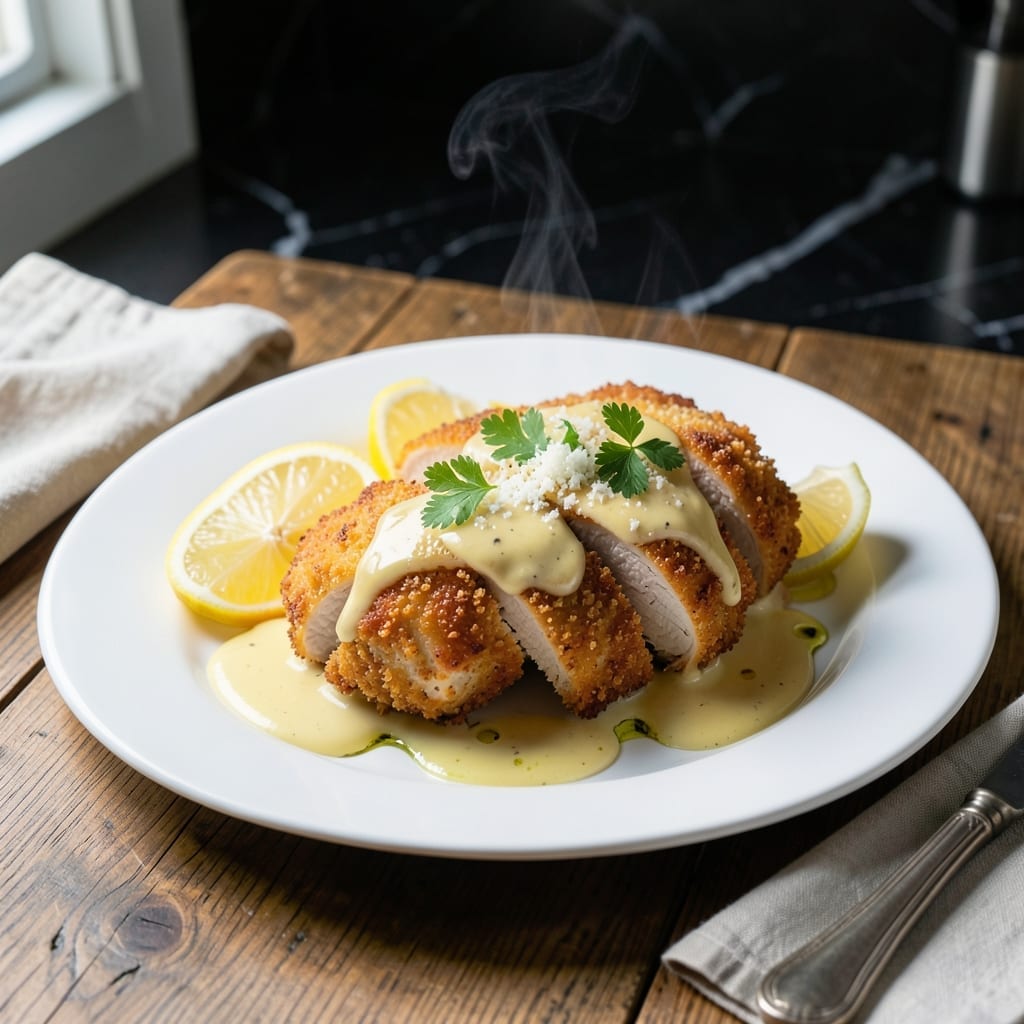
There’s a reason Chicken Frances remains a timeless classic—it delivers crispy, golden-brown cutlets with a tender interior every time.
This recipe relies on a simple but precise technique: dredging the chicken in flour, dipping in egg, and pan-frying to achieve that signature texture. The finishing touch is a bright lemon-butter sauce that ties everything together.
The result is a dish that’s both elegant and approachable, with layers of flavor from the Parmesan crust and tangy sauce. It’s a meal that feels special without requiring advanced skills.
Serve it with a side of roasted vegetables or a fresh salad for a complete dinner that’s sure to impress.
Ingredients for Chicken Frances
Elegant yet approachable ingredients create golden, Parmesan-crusted cutlets with a bright lemon finish.
| Ingredient | Amount | Notes |
|---|---|---|
| Chicken Breast Cutlets 🍗 | 1 ½ lb | Pounded to 1/4-inch thickness |
| All-Purpose Flour 🌾 | 1 cup | For dredging, plus extra for dusting |
| Large Eggs 🥚 | 3 whole | Beaten until uniform |
| Parmesan Cheese 🧀 | 1 cup | Freshly grated from wedge |
| Panko Breadcrumbs 🍞 | 1 ½ cups | Japanese-style for crispness |
| Unsalted Butter 🧈 | ¾ cup | Divided for frying and sauce |
| Olive Oil 🫒 | ¼ cup | For pan-frying cutlets |
| Garlic Cloves 🧄 | 3 cloves | Minced for lemon-butter sauce |
| Fresh Lemon Juice 🍋 | ¼ cup | About 2-3 lemons |
| Dry White Wine 🍷 | ½ cup | Sauvignon Blanc or Pinot Grigio |
| Chicken Stock 🥣 | ½ cup | Low-sodium preferred |
| Kosher Salt 🧂 | 1 ½ tsp | Diamond Crystal preferred |
| Freshly Ground Black Pepper 🌶️ | ½ tsp | Coarse grind recommended |
| Fresh Parsley 🌿 | ¼ cup | Chopped, for garnish |
| Granulated Sugar 🍚 | 0.125 tsp | Balances acidity in sauce |
The chicken quality is paramount here. Boneless, skinless breasts from a reputable purveyor like Whole Foods or your local butcher ensure tender results. Pound them uniformly to 1/4-inch thickness—this guarantees even cooking and maximum crispness. The Parmesan must be freshly grated from a wedge; pre-grated versions contain anti-caking agents that prevent proper melting and browning.
No white wine? Substitute with additional chicken stock plus 1 tbsp lemon juice. Panko can be replaced with regular breadcrumbs, though the texture won’t be as crisp. For a gluten-free version, use almond flour in place of all-purpose. The lemon juice is non-negotiable—it’s what gives the sauce its signature brightness. Meyer lemons (when in season) add a floral note that elevates the dish.
The cooked cutlets hold well in a 200°F oven for up to 30 minutes while you prepare the sauce. Leftovers (if any exist) keep in the refrigerator for 3-4 days, though the crust is best enjoyed fresh. Reheat gently in a skillet to revive some crispness—microwaving will make the breading soggy.
Why You’ll Love This Recipe
- One Pan Wonder: I love that everything comes together in a single skillet—no extra dishes piling up.
- Crispy Perfection: The panko and parmesan combo gives that golden crunch with every bite.
- Weeknight Hero: Honestly, it’s my go-to for busy evenings when I need dinner fast.
- Budget Stretcher: Chicken cutlets and pantry staples make this a wallet-friendly meal that still feels special.
Step-by-Step Instructions for Chicken Frances
Master the technique for achieving a golden crust and tender interior with this classic preparation.
Step 1: Prepare and Season the Chicken Breast Cutlets
Pat the 1.5 lb Chicken Breast Cutlets thoroughly dry with paper towels to ensure proper browning. Season both sides evenly with 1.5 tsp Kosher Salt and 0.5 tsp Freshly Ground Black Pepper. This step is crucial for developing flavor in every bite.
Place each cutlet between sheets of plastic wrap and pound to an even 1/4-inch thickness using a meat mallet. Uniform thickness guarantees even cooking and prevents dry spots. Set the prepared cutlets aside while you organize the breading station.
Step 2: Create the Breading Station and Coat the Cutlets
Set up three shallow dishes. Place the 1 cup All-Purpose Flour in the first, beat the 3 whole Large Eggs until uniform in the second, and combine the 1 cup Parmesan Cheese with 1.5 cups Panko Breadcrumbs in the third. The Panko ensures maximum crispness in the finished dish.
Dredge each cutlet in flour, shaking off excess, then dip in the beaten eggs, allowing any excess to drip off. Finally, press firmly into the Parmesan-Panko mixture, ensuring complete coverage. The pressure helps the coating adhere during frying. Place breaded cutlets on a wire rack to rest for 10 minutes before cooking.
Step 3: Pan-Fry the Cutlets to Golden Perfection
Heat 0.25 cup Olive Oil and 0.25 cup Unsalted Butter in a large skillet over medium-high heat until the butter stops foaming. Add the cutlets in a single layer, without crowding. Cook for 3-4 minutes per side until the coating is deep golden brown and crisp.
Transfer the cooked cutlets to a paper towel-lined plate to drain excess oil. The internal temperature should reach 165°F—use an instant-read thermometer to verify doneness. Keep the cutlets warm in a 200°F oven while you prepare the sauce.
Step 4: Craft the Lemon-Butter Sauce
In the same skillet, reduce heat to medium and add the remaining 0.5 cup Unsalted Butter. Once melted, add 3 cloves minced Garlic Cloves and sauté for 30 seconds until fragrant. Deglaze the pan with 0.5 cup Dry White Wine, scraping up any browned bits with a wooden spoon.
Add the 0.5 cup Chicken Stock, 0.25 cup Fresh Lemon Juice, and 0.125 tsp Granulated Sugar. Simmer for 3-4 minutes until the sauce reduces by half and thickens slightly. The sugar balances the acidity of the lemon, creating a harmonious flavor profile.
Step 5: Finish and Serve
Return the crispy cutlets to the skillet, spooning the sauce over them to coat evenly. Cook for an additional 1-2 minutes to allow the flavors to meld. The sauce should cling lightly to the breading without making it soggy.
Transfer to a serving platter, garnish with 0.25 cup chopped Fresh Parsley, and serve immediately. The contrast of the crisp Parmesan crust with the bright, buttery sauce defines this dish. Each serving delivers a perfect balance of texture and flavor.
Pro Tips For Making Chicken Frances
- Pound the Cutlets: Use a meat mallet to pound the chicken breasts to an even ¼-inch thickness—this guarantees they cook through without drying out, and the breading adheres better.
- Double-Dredge for Crunch: Dip the cutlets in flour, then egg, then panko mixed with parmesan, then repeat the egg and panko step; I learned this the hard way after my first batch had bald spots.
- Skip Cold Chicken: Let the cutlets sit at room temperature for 15 minutes before cooking, or the outside will brown while the inside stays raw.
- Use Fresh Panko: Old panko absorbs moisture and turns to mush—fresh breadcrumbs make a real difference in getting that golden, crispy crust.
Troubleshooting Perfect Results
Breading Won’t Stick
If your coating isn’t adhering, the chicken might still be damp. Pat it completely dry with paper towels before dredging. I also let the breaded cutlets rest for 10 minutes on a wire rack to help the coating set. The flour layer is crucial—don’t skip it, as it creates a base for the egg to cling to. 💡
Soggy Crust
Overcrowding the pan lowers the oil temperature, causing soggy breading. Cook in batches with 1 inch between cutlets. Use medium-high heat and ensure the butter and oil are hot before adding chicken. The oil should shimmer but not smoke.
Sauce Too Thin
If your lemon-butter sauce isn’t thickening, simmer it longer. Reduce the 0.5 cup Chicken Stock and 0.5 cup Dry White Wine by half before adding butter. A cornstarch slurry (1 tsp cornstarch + 1 tbsp water) can save it in a pinch. Stir constantly while simmering.
Burnt Butter
Butter burns easily at high heat. After frying the chicken, pour out excess oil and wipe the pan. Reduce heat to medium before adding butter for the sauce. Browned butter bits are flavorful, but blackened butter tastes bitter and ruins the dish.
Dry Chicken
Pounding to 1/4-inch thickness ensures even cooking. Overcooking dries out the meat—pull cutlets when they reach 165°F internal temperature. Resting in a 200°F oven while making the sauce keeps them warm without overcooking.
Sauce Separating
If your sauce breaks, it’s likely too hot. Remove from heat immediately and whisk vigorously to emulsify. Adding a splash of cold water (1-2 tbsp) while whisking can bring it back together. Keep the heat at medium or lower when making the sauce. ✨
Nutrition Facts
Frequently Asked Questions
Can I use chicken thighs instead of breasts?
Yes, boneless skinless thighs work well and stay juicier. Pound them to 1/4-inch thickness for even cooking. They may need 1-2 extra minutes per side to reach 165°F.
Why rest the breaded cutlets before frying?
Resting for 10 minutes helps the coating adhere better and prevents it from sliding off during cooking. This step ensures a crispier, more uniform crust.
Can I make this gluten-free?
Replace all-purpose flour with almond flour and use gluten-free panko. The texture will be slightly different but still delicious.
How do I keep the cutlets warm while making sauce?
Place them on a wire rack in a 200°F oven. This keeps them crisp while you prepare the lemon-butter sauce. Avoid stacking to prevent sogginess.

- Jollof Rice Sauce Recipe: West African Tomato and Spice Infusion - September 25, 2026
- Japanese Rice Soup Recipe: Umami-Rich Comfort in a Bowl - September 25, 2026
- Homemade Cream Of Rice Recipe: Silk-Smooth Breakfast in Minutes - September 25, 2026